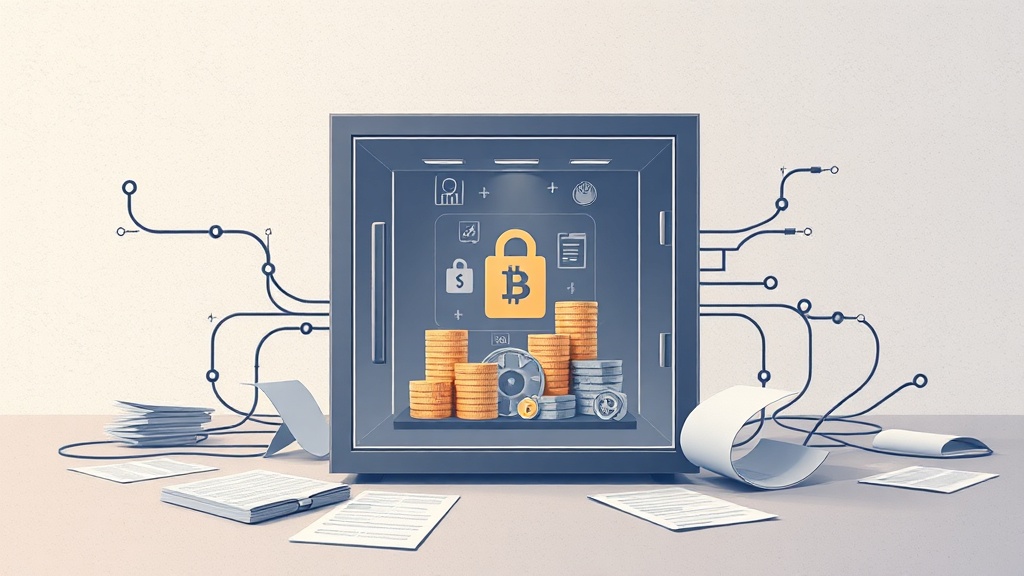
Key Factors in Cryptocurrency Exchange Security
As the digital asset market continues to evolve, the security of cryptocurrency exchanges has become one of the core concerns for users. A secure exchange requires not only robust technical safeguards but also transparent operational mechanisms, strict regulatory compliance, and a commitment to safeguarding user assets. When evaluating exchange security, the following key aspects are typically considered:
- Proof of Reserves (PoR): Regularly published audits of reserve holdings to demonstrate that user assets are backed by reserves at a 1:1 ratio or higher.
- Asset Storage Strategy: The majority of user funds are stored in offline cold wallets to reduce the risk of attacks on online hot wallets.
- Security Measures: These include multi-factor authentication (MFA), biometric verification, IP whitelisting, withdrawal limits, encrypted communications, and 24/7 monitoring systems.
- Regulatory Compliance and Licensing: The exchange holds operating licenses in various jurisdictions and complies with regulations such as Anti-Money Laundering (AML) and Know Your Customer (KYC).
- Security Incident History and Response: The exchange’s track record in handling past security breaches, as well as its emergency response and user compensation mechanisms.
- Insurance Fund: An insurance fund for user assets is established to cover losses in extreme circumstances.
Security Analysis of Major Cryptocurrency Exchanges
Below are some cryptocurrency exchanges with high global visibility and a large user base. We will analyze their security performance based on publicly available information as of the time of publication:
Bybit
Bybit continues to invest in security and announced upgrades to its security measures in August 2024, which were verified by the blockchain audit firm CertiK. Its security enhancements include a 24/7 automated incident response system, biometric authentication, additional checks for high-value transactions, a one-click account freeze feature, and AI-driven security enhancement technologies.As of June 2024, Bybit had completed its 11th Proof of Reserves (PoR) audit, verified by Hacken, confirming that its reserves of 40 major cryptocurrencies exceed 100% of user deposits.

Kraken
Since its founding in 2011, Kraken has never experienced a major security breach involving customer funds and is renowned for its robust security track record. In June 2024, Kraken disclosed and patched an “isolated vulnerability” in its deposit and funding systems; customer assets were not affected.In July 2024, Kraken co-founded the Blockchain Security Standards Council alongside Coinbase, Anchorage Digital, and others, with a mission to establish voluntary industry security standards. An audit as of November 2024 showed that Kraken had verified customer assets exceeding $21.5 billion.
Coinbase
As a U.S.-listed cryptocurrency exchange, Coinbase has demonstrated outstanding performance in regulatory compliance and corporate accountability.As of May 2026, assets on the Coinbase platform totaled $404 billion, with approximately 98% of customer crypto assets stored in offline cold storage systems. Although an incident occurred in July 2024 in which a third-party bank inadvertently leaked some customer information, the Coinbase system itself was not compromised.In March 2025, Coinbase successfully thwarted an attempted supply chain attack carried out via GitHub Actions. In early 2025, Coinbase obtained VASP registration from the UK’s Financial Conduct Authority (FCA).
Binance

As one of the world’s largest cryptocurrency exchanges by trading volume, Binance invests heavily in security. In 2024, Binance’s security systems successfully prevented over $4.2 billion in potential user losses and protected 2.8 million users worldwide.Binance established the Secure Asset Fund for Users (SAFU), an emergency insurance fund that exceeded $1 billion in January 2022, providing additional protection for user assets. Binance also enhances security through multi-layered security strategies, AI-driven threat detection, and ongoing external partnerships.
OKX
OKX is renowned for its institutional-grade security measures and multi-layered defense system, and has never experienced a major hack or security breach on its main exchange platform.Over 95% of OKX’s customer funds are stored in offline cold wallets and undergo regular third-party audits. As of this writing, OKX has over 50 million users worldwide and supports more than 350 cryptocurrency assets. Its reserve proof has been verified by Hacken, ensuring transparency regarding user assets.
KuCoin
KuCoin has over 30 million users worldwide and supports more than 700 cryptocurrency assets.Although it suffered a major security breach in September 2020 that resulted in the theft of approximately $285 million in cryptocurrency, KuCoin committed to—and has successfully—recovered or compensated customers for the stolen funds, demonstrating its commitment to user accountability.Since then, KuCoin has strengthened its security measures and regularly publishes reserve proofs, showing coverage ratios exceeding 105% for major assets such as Bitcoin and Ethereum. In 2024, KuCoin became the first global exchange to register with India’s FIU and has obtained multiple global regulatory licenses.

Bitfinex
Bitfinex is one of the early players in the cryptocurrency industry and is known for its commitment to security standards. Approximately 99.5% of its assets are stored in offline multi-signature cold wallets. Although Bitfinex suffered a hack in 2015, its security systems have been significantly strengthened since then.As of June 2025, on-chain data shows that Bitfinex holds approximately 403,000 BTC, valued at over $47 billion, making it the second-largest reserve among centralized exchanges Bitcoin.
How Users Can Further Secure Their Digital Assets
Although the exchange is committed to providing robust security, it is equally crucial for users to take additional security measures themselves:
- Enable all available security features: These include two-factor authentication (such as Google Authenticator or a hardware security key), withdrawal whitelisting, and anti-phishing codes.
- Use strong passwords: Set unique and complex passwords for each exchange account.
- Transfer long-term holdings to a hardware wallet: For assets that are not traded frequently, hardware wallets (such as Ledger or Trezor) offer the highest level of offline security.
- Be wary of phishing scams: Carefully verify website URLs, do not click on suspicious links, and do not disclose your mnemonic phrase or private keys.
- Regularly review account activity: Detect unusual transactions or login attempts promptly.
Security in the cryptocurrency market is an ever-evolving topic, and no platform can guarantee 100% immunity from all risks. By understanding an exchange’s security mechanisms and actively taking personal protective measures, users can minimize the risks to their assets.