The Current State of DeFi: Declining TVL and Security Challenges
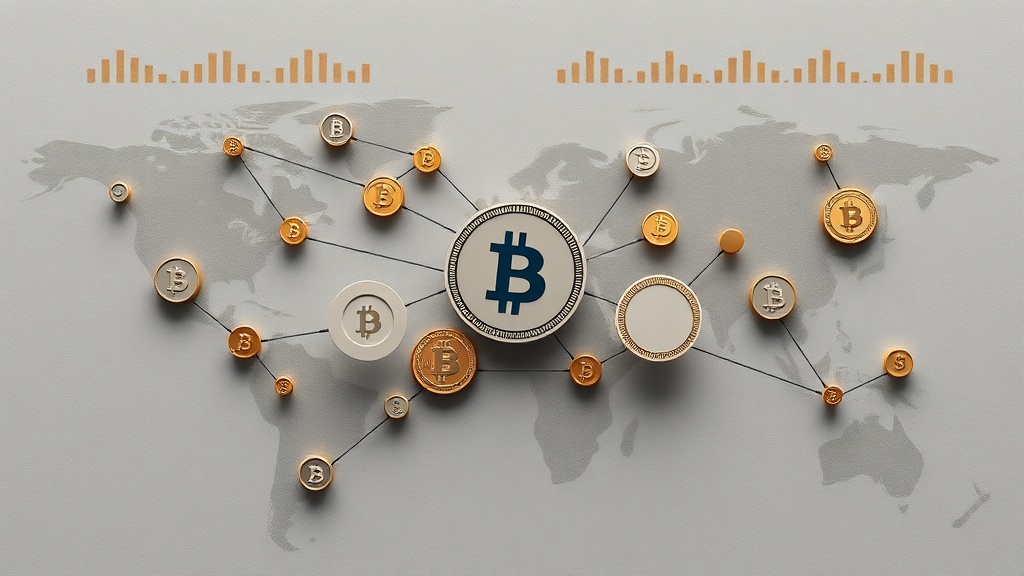
As we enter 2026, the decentralized finance (DeFi) sector continues to attract attention while facing multiple challenges.As of mid-June 2026, DeFi’s Total Value Locked (TVL) stood at approximately $70 billion to $71.77 billion, a decline of about 39% from the roughly $115 billion recorded in January 2026.This significant decline is primarily attributed to a market correction following the sharp rise in October 2025 Bitcoin, as well as the impact of frequent security incidents on user confidence. Nevertheless, Ethereum continues to maintain its dominant position, accounting for 53.1% of DeFi TVL in mid-June 2026, or approximately $38.24 billion.
Security issues remain a major pain point for the DeFi ecosystem. According to statistics, from the beginning of 2026 through June, the DeFi sector has experienced 121 security incidents, resulting in cumulative losses of approximately $942 million.Of these, the 85 attacks that occurred in the second quarter resulted in losses of approximately $775 million, making it one of the most attack-prone quarters on record. These incidents not only caused massive financial losses but also prompted capital to be withdrawn from the blockchain, with some flowing to leading centralized exchanges in search of safety.
DeFi’s Transformation and New Growth Drivers
In the face of these challenges, the DeFi market is undergoing a profound transformation, shifting from being purely narrative-driven to being driven by real market demand. Several emerging trends and improvements in fundamentals are injecting new vitality into DeFi’s long-term sustainability:

- The Rise of Real-World Asset (RWA) Tokenization: RWAs have become a major trend in the DeFi space, with their total value locked (TVL) reaching $26.01 billion in June 2026.From early 2025 to March 2026, the value of on-chain RWAs grew from $4.2 billion to $21 billion, marking a fivefold increase. Projects such as BlackRock (BlackRock)’s BUIDL and Circle’s USYC have played a leading role in this trend, signaling a deep integration of traditional assets with blockchain technology.
- Stablecoins as a Global Payment Infrastructure: Stablecoins are evolving from mere on-chain currencies into core infrastructure for global payments and settlement. They are widely used in scenarios such as payroll disbursements, corporate treasury management, cross-border payments, and institutional settlement.In 2024, stablecoin transaction volume surpassed Visa’s annual transaction volume, and their market capitalization reached approximately $314 billion in June 2026, demonstrating strong growth momentum and utility.
- Deepening Institutional Adoption: Traditional financial institutions are accelerating the deployment of funds on-chain for clearing, treasury management, and lending, and are integrating stablecoins and tokenized funds into their operational workflows. This influx of institutional capital brings greater liquidity and broader use cases to DeFi.
- Regulatory Clarity: Legislation such as the U.S. “GENIUS Act” is providing a clearer regulatory framework for DeFi, which is critical for removing key barriers to institutional adoption and helps build a more compliant and predictable market environment.
- Technological Innovation: DeFi protocols are also exploring cutting-edge technologies, such as utilizing fully homomorphic encryption (FHE) to enable on-chain private transactions (e.g., Zama Confidential RFQ) and introducing fixed-rate lending (e.g., Morpho Midnight) to enhance appeal to institutional users.
Performance of Major DeFi Protocols and Future Outlook

Despite a pullback in overall market TVL, some leading DeFi protocols continue to demonstrate strong resilience. As of July 21, 2026, Uniswap’s market capitalization stood at approximately $2.287 billion, with a TVL of $3.14 billion and annual revenue reaching $850 million.Hyperliquid holds approximately 70% of the on-chain perpetual futures market, with a market capitalization of $13.47 billion, a TVL of $6.07 billion, and annual revenue of $874 million. Aave has a market capitalization of $1.397 billion and a TVL of $14.53 billion.Morpho had a market capitalization of $1.302 billion and a TVL of $7.497 billion.
Looking ahead, the DeFi boom is not simply “continuing” or “fading,” but rather undergoing a profound transformation. The market is no longer dominated by a single narrative or speculative sentiment, but is instead placing greater emphasis on a project’s actual value, product-market fit, and ability to generate real revenue.Although the peak and subsequent decline in global liquidity may lead to short-term market volatility, the tokenization of assets, the widespread adoption of stablecoins, deep institutional involvement, and an increasingly clear regulatory environment will all serve as pillars for DeFi’s large-scale expansion in 2026 and beyond.The future of DeFi will be an ecosystem that is more mature, more resilient, and better aligned with real-world needs.