

Faster global financial news!

USDT Tether USDt3
USDTMarket
-
Trend
-
K-Line
USDTNews
-
Tether's gold reserves reached 25.7 metric tons at the end of the third quarter, supporting the market capitalization of XAU₮ to hit a record high of $3.44 billion.
Tether's gold reserves reached 25.7 metric tons at the end of the third quarter, supporting the market capitalization of XAU₮ to hit a record high of $3.44 billion.
-
Where to Find Reliable USDT Trading Software: Top Exchange References and Selection Criteria
USDT trading software is primarily used for stablecoin-denominated pricing, fiat on/off ramps, and order matching. To determine whether an app is reliable, one should evaluate its liquidity, security settings, proof of reserves, regulatory licenses, and the availability of fiat channels. Top trading platforms in public rankings change over time; this article outlines the selection criteria and common reference benchmarks.
-
On-chain investigator ZachXBT reveals: French bank Crédit Mutuel Arkéa may have lost over $133 million due to crypto theft
On-chain investigator ZachXBT disclosed on November 4 that the financial institution suspected of suffering a cryptocurrency theft with losses exceeding $133 million is the French banking group Crédit
-
CryptoSlate Analysis: At the close on Nov. 2, the XRP "discount" on Coinbase narrowed sharply from 0.168% to 0.006% after USDT conversion.
CryptoSlate Analysis: At the close on Nov. 2, the "discount" for XRP on Coinbase narrowed sharply from 0.168% to 0.006% after USDT conversion. Previously, the XRP Coinbase Premium Index of -0.16% repo
-
Tether CEO Says Company Holds 150,000 Bitcoins, About 50,000 More Than Its Reserve Report
Tether CEO Paolo Ardoino stated that the company holds "approximately 150,000 Bitcoins," but its Q3 reserves report shows that Tether holds only 100,060 Bitcoins, meaning the CEO's stated holdings exc
-
What is BUSD? Which is more practical, BUSD or USDT?
BUSD is a stablecoin pegged 1:1 to the US dollar, formerly issued by the New York State-regulated Paxos and backed by the Binance brand; its scale has shrunk significantly since the cessation of new minting in 2023. USDT is issued by Tether, with its market capitalization and trading activity consistently ranking among the top stablecoins. The differences between the two primarily lie in regulatory transparency, liquidity, and use cases, and the choice depends on settlement needs and risk tolerance.
-
THORChain Rejects Bitget's Request to Block $387.5 Million Hacker Address
According to The Defiant, Bitget lost $387.5 million in a hack and requested THORChain to block the attacker's address, but THORChain refused. THORChain co-founder Chad Barraford discussed in an inter
-
Tether and E-commerce Integration: Real-World Applications and Limitations of USDT Payments
Tether (USDT), a stablecoin pegged to the US dollar, is increasingly being adopted by e-commerce platforms and payment gateways for cross-border collections. It can shorten settlement times, reduce traditional card payment costs, and reach global buyers; however, merchants still face issues such as regulation, reserve transparency, exchange risk, and user education. For stablecoins, their value primarily lies in payment utility rather than price fluctuations.
-
Moscow Exchange plans to launch Bitcoin, Ether and USDT trading on Dec. 1
Moscow Exchange plans to launch Bitcoin, Ether and USDT trading on Dec. 1 under Russia’s new law, with annual purchase limits for non-qualified investors.
-
Bybit Launches USDBRLUSDT Traditional Finance Perpetual Contract with Up to 100x Leverage
Bybit Launches USDBRLUSDT Traditional Finance Perpetual Contract with Up to 100x Leverage



-
Tether's gold reserves reached 25.7 metric tons at the end of the third quarter, supporting the market capitalization of XAU₮ to hit a record high of $3.44 billion.
Tether's gold reserves reached 25.7 metric tons at the end of the third quarter, supporting the market capitalization of XAU₮ to hit a record high of $3.44 billion.
-
On-chain investigator ZachXBT reveals: French bank Crédit Mutuel Arkéa may have lost over $133 million due to crypto theft
On-chain investigator ZachXBT disclosed on November 4 that the financial institution suspected of suffering a cryptocurrency theft with losses exceeding $133 million is the French banking group Crédit
-
CryptoSlate Analysis: At the close on Nov. 2, the XRP "discount" on Coinbase narrowed sharply from 0.168% to 0.006% after USDT conversion.
CryptoSlate Analysis: At the close on Nov. 2, the "discount" for XRP on Coinbase narrowed sharply from 0.168% to 0.006% after USDT conversion. Previously, the XRP Coinbase Premium Index of -0.16% repo
-
Tether CEO Says Company Holds 150,000 Bitcoins, About 50,000 More Than Its Reserve Report
Tether CEO Paolo Ardoino stated that the company holds "approximately 150,000 Bitcoins," but its Q3 reserves report shows that Tether holds only 100,060 Bitcoins, meaning the CEO's stated holdings exc
-
THORChain Rejects Bitget's Request to Block $387.5 Million Hacker Address
According to The Defiant, Bitget lost $387.5 million in a hack and requested THORChain to block the attacker's address, but THORChain refused. THORChain co-founder Chad Barraford discussed in an inter
-
Moscow Exchange plans to launch Bitcoin, Ether and USDT trading on Dec. 1
Moscow Exchange plans to launch Bitcoin, Ether and USDT trading on Dec. 1 under Russia’s new law, with annual purchase limits for non-qualified investors.
-
Bybit Launches USDBRLUSDT Traditional Finance Perpetual Contract with Up to 100x Leverage
Bybit Launches USDBRLUSDT Traditional Finance Perpetual Contract with Up to 100x Leverage
-
Tether froze over $1.5 billion in stolen USDT within 30 minutes of Binance's Oct. 29 hack, but $729 million escaped before restrictions took effect
Tether froze over $1.5 billion in stolen USDT within 30 minutes of Binance's Oct. 29 hack, but $729 million escaped before restrictions took effect. The stablecoin issuer stated its intervention preve
-
OKX launches DCD Protection Reward Voucher campaign, with eligible orders receiving up to 500 USDT.
OKX has announced the launch of the DCD Protection Reward Voucher campaign. This campaign targets eligible "Buy Low" orders. If an order expires and converts, and the final settlement price is below t
-
Wu Blockchain: OKX's 49th reserve report shows an increase in user holdings of BTC and ETH, while USDT balances have decreased.
According to Wu Blockchain, citing OKX's 49th Proof of Reserves report, a snapshot on November 1 showed that user Bitcoin holdings increased by 9.66% from October 3 to 156,609 BTC, an increase of 13,8
-
Where to Find Reliable USDT Trading Software: Top Exchange References and Selection Criteria
USDT trading software is primarily used for stablecoin-denominated pricing, fiat on/off ramps, and order matching. To determine whether an app is reliable, one should evaluate its liquidity, security settings, proof of reserves, regulatory licenses, and the availability of fiat channels. Top trading platforms in public rankings change over time; this article outlines the selection criteria and common reference benchmarks.
-
What is BUSD? Which is more practical, BUSD or USDT?
BUSD is a stablecoin pegged 1:1 to the US dollar, formerly issued by the New York State-regulated Paxos and backed by the Binance brand; its scale has shrunk significantly since the cessation of new minting in 2023. USDT is issued by Tether, with its market capitalization and trading activity consistently ranking among the top stablecoins. The differences between the two primarily lie in regulatory transparency, liquidity, and use cases, and the choice depends on settlement needs and risk tolerance.
-
Tether and E-commerce Integration: Real-World Applications and Limitations of USDT Payments
Tether (USDT), a stablecoin pegged to the US dollar, is increasingly being adopted by e-commerce platforms and payment gateways for cross-border collections. It can shorten settlement times, reduce traditional card payment costs, and reach global buyers; however, merchants still face issues such as regulation, reserve transparency, exchange risk, and user education. For stablecoins, their value primarily lies in payment utility rather than price fluctuations.
-
Tether's Global Expansion Strategy: A Vision for a Global Currency
Tether is driving the evolution of its stablecoin, USDT, from a crypto market settlement layer to a broader global financial infrastructure through a series of strategic initiatives. Its strategic focus includes promoting USDT as a "digital dollar" in emerging markets to combat inflation, deploying physical distribution networks in Africa, launching the compliant stablecoin USAT for the U.S. market, and diversifying assets through substantial accumulation of gold reserves. As of early November 2026, USDT's market capitalization has exceeded $179 billion, serving over 570 million users globally. However, it still faces compliance challenges in strictly regulated markets such as the European Union.
-
How to Choose a USDT Wallet and Trading Platform: Storage Security and On-Chain Compatibility
USDT is commonly used for settlement and transfers. When choosing software, first distinguish between wallets and trading platforms, and confirm network compatibility such as ERC-20 and TRC-20. Hardware wallets are suitable for long-term offline storage, while software wallets are suitable for daily interactions. Centralized exchanges offer deposit/withdrawal services and liquidity, while DEXs are suitable for direct on-chain connections. Users should pay attention to self-custody, authorizations, phishing protection, and local regulations.
-
OKX USDT Perpetual Contract Index Price Calculation Rules Explained
OKX (formerly OKEX) USDT-margined perpetual contract index prices are designed to accurately reflect the fair spot value of the underlying asset. This index is calculated by combining the real-time transaction prices from at least three mainstream exchanges with sufficient liquidity, using a weighted average. To ensure price stability, OKX has designed an anomaly handling mechanism that adjusts prices when a single exchange's price deviates from the median by more than 2%. The index price serves as the basis for the mark price, which in turn affects users' profit and loss calculations and settlements. Stock and commodity perpetual contracts also follow a similar multi-source pricing methodology, with real-time exchange rate conversions for USD-denominated data.
-
What is USDT? How to Store and Trade It
USDT (Tether) is a mainstream stablecoin pegged 1:1 to the US dollar, widely used in cryptocurrency trading to mitigate price volatility. Users cannot directly "download" USDT; instead, they need to download a wallet application that supports USDT to store and manage it. USDT operates on multiple blockchains, including Ethereum, TRON, and Solana. This article explains the nature of USDT, introduces different types of wallets (such as hardware wallets like Ledger and mobile wallets like Trust Wallet), and lists the main platforms where USDT can currently be traded.
-
USDT Payment Platforms and Digital Currency Trading Apps: Features, Regulation, and Market Overview
USDT, a stablecoin pegged 1:1 to the US dollar, plays a crucial role in the cryptocurrency market, widely used in trading, risk hedging, cross-border payments, and the DeFi sector. Digital currency trading apps, meanwhile, offer users convenient functions for trading, storing, and managing their assets. This article will delve into USDT's core functionalities, its technological foundation, and the key features of various trading apps, alongside the global regulatory framework, including AML/KYC compliance, the US GENIUS Act, and Europe's MiCA regulation, while also providing the latest market data.
-
How much is one USDT? August 18, 2026 Market Review and Stablecoin Mechanism Analysis
USDT typically fluctuates around $1. On August 18, 2026, its closing price was approximately $0.9992, with an intraday high and low between $0.9988 and $0.9998. This article reviews the price and supply data for that day and explains stablecoin pegging, multi-chain circulation, reserve transparency, and regulatory controversies to help readers understand why USDT's price does not aim for appreciation.
-
A Rundown of Mainstream Platforms Supporting Bitcoin and USDT Trading
Bitcoin and USDT, as core assets in the cryptocurrency market, are tradable on numerous major global exchanges. This article reviews several prominent exchanges, including Binance, Coinbase, OKX, and Kraken, outlining their features and regulatory backgrounds, and reminds users to consider factors such as regulation, security, liquidity, and functionality when choosing a platform.



About USDT
As the most essential tool for pricing, settlement, and risk hedging in the crypto market, USDT allows traders to hedge against severe price volatility without having to exit the crypto market. It is widely used for fund transfers between exchanges, pricing in crypto-to-crypto trading, cross-border transfers, and everyday payments. It is issued on multiple public blockchains, including Ethereum (ERC-20), Tron (TRC-20), and Solana, and enjoys extremely widespread circulation. Its daily trading volume has long ranked first among all cryptocurrencies, and nearly all exchanges use it as a core trading pair.
USDT serves as a crucial bridge connecting the traditional fiat world with the crypto asset space, facilitating massive transactions and capital flows, and acting as a vital source of liquidity for the entire industry. It is important to note that the value of a stablecoin depends on the issuer’s reserve adequacy and creditworthiness; investors should continuously monitor Tether’s reserve transparency and compliance progress.
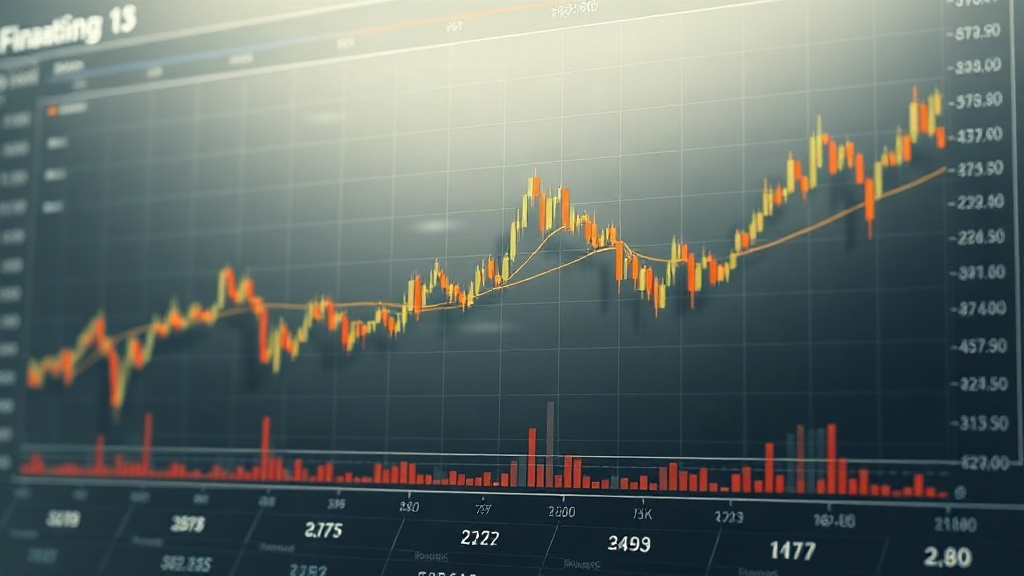
To stay up-to-date on Tether’s market performance, you can view the latest USDT price, minor fluctuations against the U.S. dollar, and the trends of trading pairs such as USDT/USD in real time on this page; The page provides USDT’s real-time market capitalization and ranking, 24-hour trading volume, historical price data, and multi-timeframe candlestick charts, along with aggregated news related to Tether. It also supports quick conversions between USDT and fiat currencies such as the Chinese yuan and the U.S. dollar, making it convenient for you to calculate values and look up information at any time.
USDT Data

24H Trending
-
1
DRE Token Value Analysis: Current Status and Market Performance Evaluation of the DoRen Project
-
2
What is the difference between Bitcoin and blockchain? A guide to understanding the relationship between underlying technology and upper-layer applications

-
3
How is the CULT token? An analysis of CULT DAO's mechanism and current development status

-
4
WTI and Brent crude oil rose in early trading as the Democrats' victory in the US midterm elections prompted markets to await policy moves from Washington.
-
5
What is Bitcoin Cash (BCH)? An Analysis of Total Supply and Issuance Date

-
6
What is ERC-20? A Comprehensive Guide to Ethereum’s Fungible Token Standard

-
7
Fundamental Analysis and Trading Channel Status of OAX Token
-
8
Iranian Deputy Foreign Minister: Seeking a diplomatic path to end the US-Israel war, but "prepared for any scenario"
-
9
What is QBX? An Analysis of the QBX Token, Trading Channels, and the qiibee Ecosystem
-
10
IRGC says four oil tankers struck by mines and catch fire in Strait of Hormuz, and shoots down US MQ-9 drone

Recommended Reading

Hot Topics

Svmuu focuses on blockchain industry trends and cutting-edge cryptocurrency news, while also covering real-time market data and in-depth analysis of the Hong Kong, U.S., and foreign exchange markets. Here, you can not only access professional 24/7 news updates and accurate market data, but also utilize practical investment tools to help you capitalize on opportunities in both digital assets and traditional financial markets. Whether you are a blockchain enthusiast or an investor in Hong Kong, U.S., or foreign exchange markets, we provide efficient and timely information services to empower your investment decisions.
- User Agreement
- Privacy Policy
- Contact Us
- Business Partnerships
- Disclaimer
- Content Statement
- About Us
- Sitemap
 Coming Soon!
