

Svmuu News: Lorenzo Valente, Head of Research at ARK Invest, recently publicly refuted a16z Crypto’s view that “traditional finance needs blockchain, not DeFi,” arguing that financial institutions are more likely to be built on open DeFi infrastructure in the future.Public blockchains have already demonstrated their advantages over private blockchain solutions, and the growth of tokenized assets on open networks—such as Ethereum—illustrates that public blockchains possess stronger network effects and scalability potential.
Lorenzo Valente pointed out that the builders of the next-generation financial infrastructure may not be traditional financial institutions, but rather crypto-native companies such as Circle and Coinbase.
Previously, a16z Crypto had put forward a different perspective, arguing that traditional financial institutions are not truly embracing DeFi, but rather selectively adopting blockchain technologies that align with existing compliance, governance, and operational requirements.In the future, banks and asset management firms will build “programmable financial infrastructure,” drawing on core blockchain capabilities such as tokenization and atomic settlement, while still maintaining a permissioned model and institutional control.
Jesus Rodriguez, co-founder of Sentora, also took issue with this view, arguing that financial institutions may ultimately adopt the underlying DeFi infrastructure and layer compliance, custody, and enterprise-grade control mechanisms on top of it.
With the rapid development of RWA tokenization, on-chain settlement, and institutional-grade financial applications, the debate over which will dominate the future—"open DeFi architectures" or "permissioned blockchain systems"—is heating up. (Cointelegraph)
Disclaimer:All content on this platform is sourced from the internet and is provided for informational purposes only. None of the content represents the views of this site, nor does it constitute investment advice. Please exercise caution when investing.


Faster global financial news!
ARK Invest Rebuts a16z's View: The Future of Traditional Finance May Rely on DeFi Infrastructure, Not Closed Blockchains

16/07/2026 07:54

Complaint Report
Complaint Report
Disclaimer: This content reflects only the author’s personal views and does not constitute any investment or financial advice. If you discover any content that violates regulations,Click to Report


24H Trending
-
1
With cumulative losses of $4.89 million, a trader opened a $5.43 million BTC long position with 40x leverage
-
2
What Is Dogecoin? An In-Depth Analysis of Where to Buy It, Its Risks, and Its Value Prospects

-
3
Investing in Bitcoin: An In-Depth Analysis of Opportunities, Risks, and Market Overview

-
4
Ethereum PoS Consensus Mechanism: A Look Back at the "Merge" Upgrade and Its Current Impact

-
5
TokenPocket Wallet: Guide to Adding and Sending BNB

-
6
What Is Gagapay Network (GTA Coin)? Project Background and Token Overview

-
7
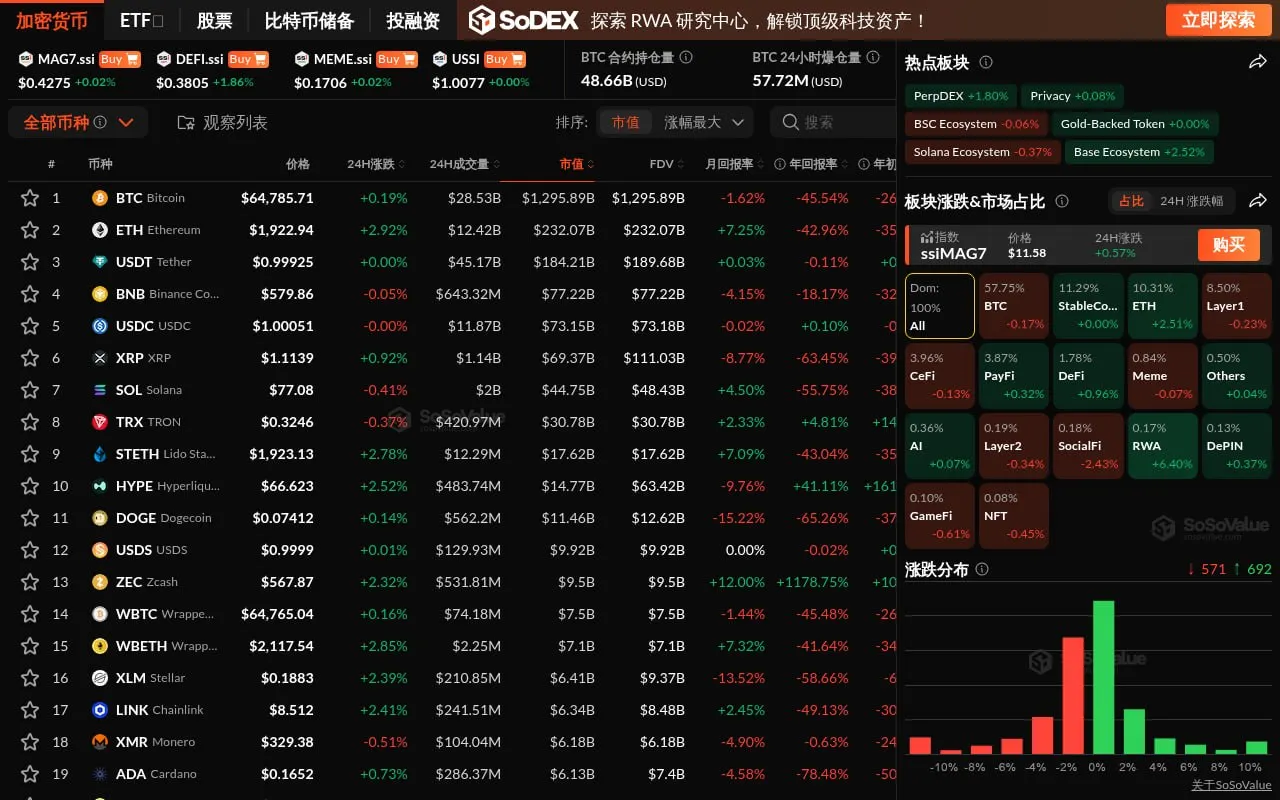
The crypto sector saw mixed performance, with the RWA sector rising more than 6% and the SocialFi sector falling more than 2%.
-
8
CASHCAT's market cap has fallen below $100 million, with a 24-hour decline of more than 30%
-
9
CCT Token: An Analysis of the Value of Carbon Credit Tokens and Investment Considerations

-
10
ACCE Coin Analysis: An In-Depth Look at Access Protocol (ACS) and Its Web3 Content Monetization Model


Recommended Reading

Hot Topics

Svmuu focuses on blockchain industry trends and cutting-edge cryptocurrency news, while also covering real-time market data and in-depth analysis of the Hong Kong, U.S., and foreign exchange markets. Here, you can not only access professional 24/7 news updates and accurate market data, but also utilize practical investment tools to help you capitalize on opportunities in both digital assets and traditional financial markets. Whether you are a blockchain enthusiast or an investor in Hong Kong, U.S., or foreign exchange markets, we provide efficient and timely information services to empower your investment decisions.
 Coming Soon!
