MINA: The Native Token of the World’s Lightest Blockchain
MINA is the native cryptocurrency of the Mina Protocol, which bills itself as “the world’s lightest blockchain.” The project aims to solve the scalability and decentralization challenges faced by traditional blockchains through innovative technology. Originally named Coda Protocol, the Mina Protocol was officially renamed Mina in September 2020.
Core Technology and Advantages of the Mina Protocol
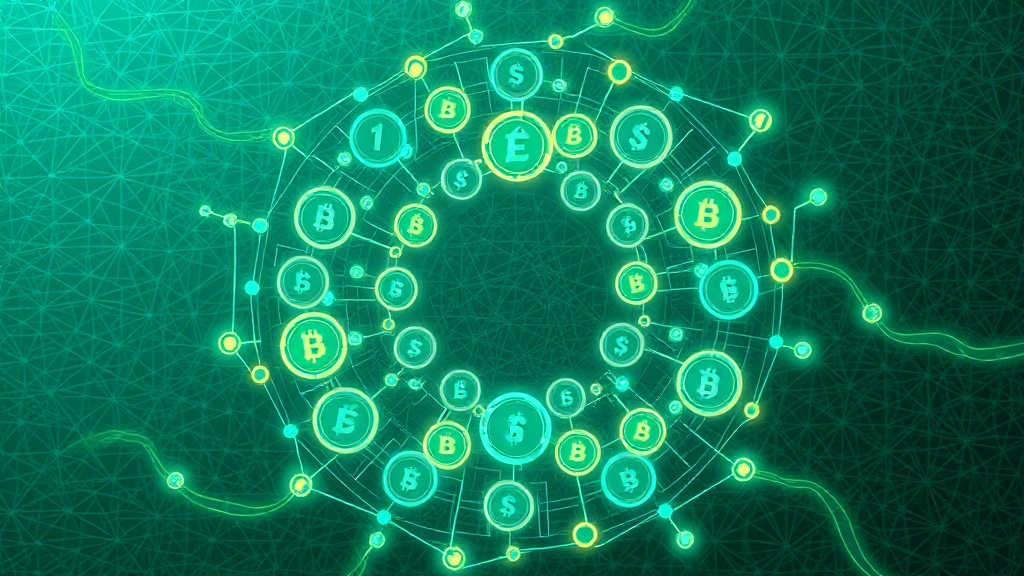
At the heart of the Mina Protocol lies its ingenious application of zero-knowledge proof (zk-SNARKs) technology.This technology allows Mina to compress the entire blockchain’s historical data into a fixed-size snapshot of approximately 22 KB. This means that regardless of how much transaction volume grows on the network, the size of the blockchain itself remains constant, thereby significantly lowering the barrier to entry for network validation and enhancing decentralization.
Mina employs the Ouroboros Samasika Proof-of-Stake (PoS) consensus mechanism to ensure the network’s security and efficiency. Compared to the Proof-of-Work (PoW) mechanism, PoS is more energy-efficient and allows token holders to participate in network maintenance and earn rewards by staking their tokens.
In February 2023, the Mina Protocol team launched a proof-of-concept (PoC) that allows users to run Mina Protocol web nodes directly in their browsers, further enhancing the network’s decentralization and accessibility.
Uses of the MINA Token
The MINA token plays several key roles within the Mina Protocol ecosystem:
- Payment of Network Fees: MINA is used to pay service fees to Block Producers and SNARK Producers. Block Producers are responsible for packaging transactions and creating new blocks, while SNARK Producers are responsible for generating zero-knowledge proofs to compress blockchain data.
- Staking and Rewards: MINA holders can participate in the network’s consensus by staking their tokens, becoming Block Producers, and earning block rewards, transaction fees, and network fees.
- Delegation: If users do not wish to or are unable to run their own nodes, they can delegate their MINA to other nodes for staking. This prevents their token holdings from being diluted by network inflation and allows them to share in staking rewards.
- Network Governance: MINA token holders have the right to participate in decisions regarding the future direction of the Mina Protocol, expressing their opinions on protocol upgrades and important proposals through voting.
Overview of MINA Token Economics
The token economics of the Mina Protocol are designed to balance network incentives with inflation control. The total supply of MINA is initially set at 1.29 billion, but its maximum supply is uncapped; Mina is an inflationary currency. All initial tokens will be gradually unlocked and released over an 8-year period.The target annual inflation rate for the first year following the mainnet launch is 12%; it will subsequently decrease over time and eventually stabilize at around 7%.
As of this writing (July 2026), MINA’s circulating supply is approximately 1.29 billion tokens. Its price and trading volume are subject to market fluctuations and are provided for reference only.
How can you obtain MINA tokens?

There are several main ways to obtain MINA tokens:
1. Purchase on a cryptocurrency exchange
This is the most direct and common method. MINA can be traded on several major centralized cryptocurrency exchanges. Common trading platforms include Kraken, Crypto.com, KuCoin, Bitget, Gate.io, and Coinbase, among others. The purchase process typically involves:
- Registering an account on your chosen exchange.
- Completing the identity verification (KYC) process.
- Depositing fiat currency or stablecoins via bank transfer, debit card, or other supported payment methods.
- Using the deposited funds to purchase MINA.
2. Participate in Staking or Delegation
As a Proof-of-Stake (PoS) network, MINA holders can earn rewards by staking their tokens. There are two main ways to do this:
- Staking as a Block Producer: Run a Mina node and stake MINA to directly participate in block production and earn rewards. This typically requires some technical knowledge and hardware support.
- Delegated staking: Delegate your MINA to other node operators. Delegators do not need to run their own nodes; they simply pay a service fee to share in the staking rewards earned by the node operator. This is a more convenient way to earn returns and helps prevent token dilution due to inflation.
3. Clarification of the Early “Mining” Concept
In the early days of the Mina Protocol, due to its zero-knowledge proof technology, some materials mentioned the concept of “zero-knowledge proof mining,” in which miners compress data by proving their computational power.However, the Mina Protocol is essentially a Proof-of-Stake (PoS) network, and its primary incentive mechanism is staking rather than traditional Proof-of-Work (PoW) mining (such as CPU/GPU mining on Bitcoin). Therefore, acquiring MINA through traditional “mining” methods is no longer applicable; the primary methods of acquisition are purchasing and staking.

The Future Prospects of the Mina Protocol
With its unique lightweight blockchain design and zero-knowledge proof technology, the Mina Protocol demonstrates tremendous potential for enhancing blockchain scalability, privacy, and decentralization. Its efficient design makes it well-suited for applications in the financial sector, such as cross-border payments and DeFi.However, as a relatively new ecosystem, Mina still needs to attract more developers to build projects on its chain in order to further enrich its use cases and ecosystem.