Solana's Regulatory Classification and US Policy
In March 2026, the US Securities and Exchange Commission (SEC), through its "Project Crypto" initiative, officially classified Solana (SOL) as a digital commodity, alongside Bitcoin and Ethereum. This move provided much-anticipated regulatory clarity for the market, meaning SOL will primarily be regulated by the Commodity Futures Trading Commission (CFTC) rather than the SEC. Concurrently, the guidance explicitly excluded protocol staking from securities regulation, offering a clearer legal framework for validators and staking service providers within the Solana ecosystem.
The Advocacy Role of the Solana Policy Institute

To actively influence public policy in Washington D.C., the Solana Policy Institute, the first US non-profit organization focused on Solana's interests, was established in March 2025. The institute aims to ensure that cryptocurrency regulation extends beyond Bitcoin and fully considers the characteristics of emerging networks. It actively advocates for regulatory clarity and supports the inclusion of the bipartisan Blockchain Regulatory Certainty Act (BRCA) into market structure legislation to protect non-custodial software developers and decentralized network infrastructure providers.
Hong Kong's Strategic Positioning and Solana
In October 2026, the Office for Attracting Strategic Enterprises (OASES) of the Hong Kong Special Administrative Region Government designated Solana Company (a publicly listed digital asset infrastructure and services company, distinct from the Solana network itself) as a strategic enterprise. This move indicates Hong Kong's commitment to establishing a "world-leading digital asset licensing and regulatory regime" as a strategic component of its ambition to become Asia's digital asset hub.
Overview of Global Cryptocurrency Regulatory Trends
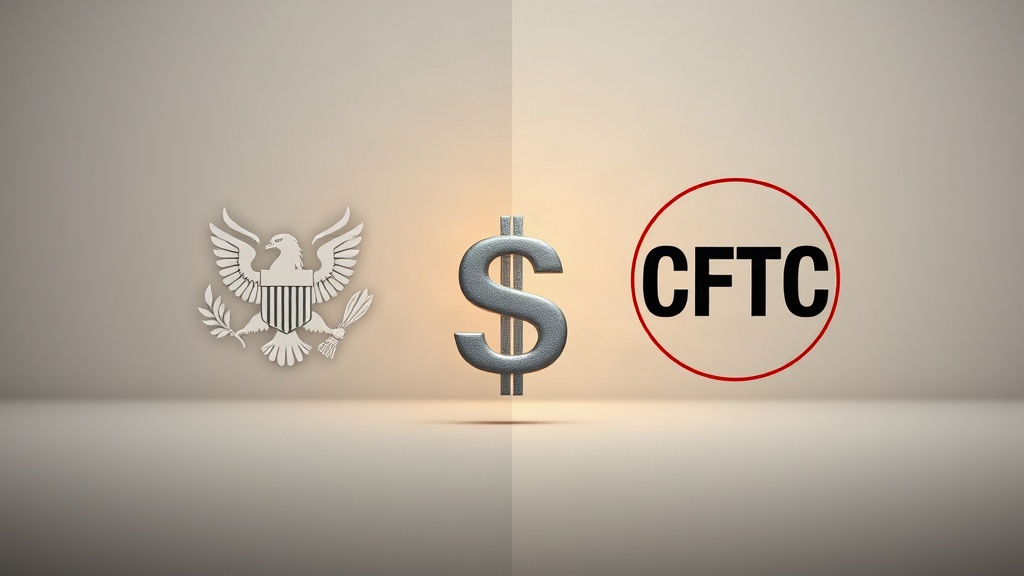
Global cryptocurrency regulation is accelerating. According to a TRM Labs review, over 60% of jurisdictions introduced new digital asset policies or positions in 2024, and approximately 70% made progress in implementing regulations. A PwC 2025 report highlighted that global cryptocurrency regulatory trends include an increasing focus on data governance and stricter scrutiny of DeFi and crypto innovation. The EU's MiCA framework has become a de facto global template, with 14 non-EU countries adopting MiCA-aligned regulations. Furthermore, the Basel Committee on Banking Supervision finalized rules for crypto asset exposures in July 2024, which became effective in January 2026. The US Office of the Comptroller of the Currency (OCC) finalized stablecoin rules under the GENIUS Act in October 2026, with plans for them to take effect in January 2027.
Solana's Historical Regulatory Challenges and Technical Development
Before being classified as a digital commodity in March 2026, Solana was mentioned as an "unregistered security" in lawsuits filed by the US SEC against Binance and Coinbase. In July 2022, a Solana investor filed a class-action lawsuit against Solana Labs, Solana Foundation, and others, alleging the sale of unregistered securities and misleading statements. Concurrently, the Solana network continued its technical upgrades, such as activating the Alpenglow upgrade on October 21, 2026, which aims to reduce finality time to approximately 150 milliseconds and merge the "confirmed" and "finalized" states. As of October 2026, the Solana network has 690 active validators, a Nakamoto coefficient of 18, and the top 10 validators hold approximately 24.6% of the staked share.
Real-World Asset (RWA) Activity in the Solana Ecosystem

Real-World Assets (RWAs) are showing active growth on the Solana network. As of March 2026, the total value of RWAs on the Solana network exceeded $2 billion, and the number of RWA holders surpassed Ethereum for the first time, reaching 182,000, with RWA lending deposits reaching $1.2 billion. This data can be viewed on market information platforms like Svmuu.
Key Stakeholder Views and Market Impact
The US SEC and CFTC, through their initiatives, aim to provide regulatory clarity for digital assets. The Solana Policy Institute represents ecosystem interests, working to educate lawmakers and influence policy-making. Solana Labs and the Solana Foundation respond to market concerns through transparency reports and other means. Regulatory uncertainty has previously led to investor risk aversion, prompting some developers to move to regions with clearer regulations. The Hong Kong government, through strategic designation, demonstrates its determination to build a digital asset hub. Traditional financial institutions like JPMorgan are also expanding tokenized funds on Solana but still retain traditional compliance elements. RegTech solution providers such as Chainalysis offer transaction monitoring and risk assessment tools for the Solana ecosystem, helping projects meet regulatory requirements.
SOL Token Trading Channels
SOL tokens are available for trading on several major exchanges, including Binance, Bitget, MEXC, Gate, XT.COM, WhiteBIT, Deepcoin, CoinUp.io, BVOX, FameEX, BTCC, Toobit, OrangeX, and WEEX. Please note that trading cryptocurrencies involves risks, and investors should conduct their own assessment and make decisions cautiously.
The platform information for sale in the article changes with the listing and delisting dynamics of each exchange; please refer to the official announcements of the exchanges.