What is Bitcoin Quantitative Trading?
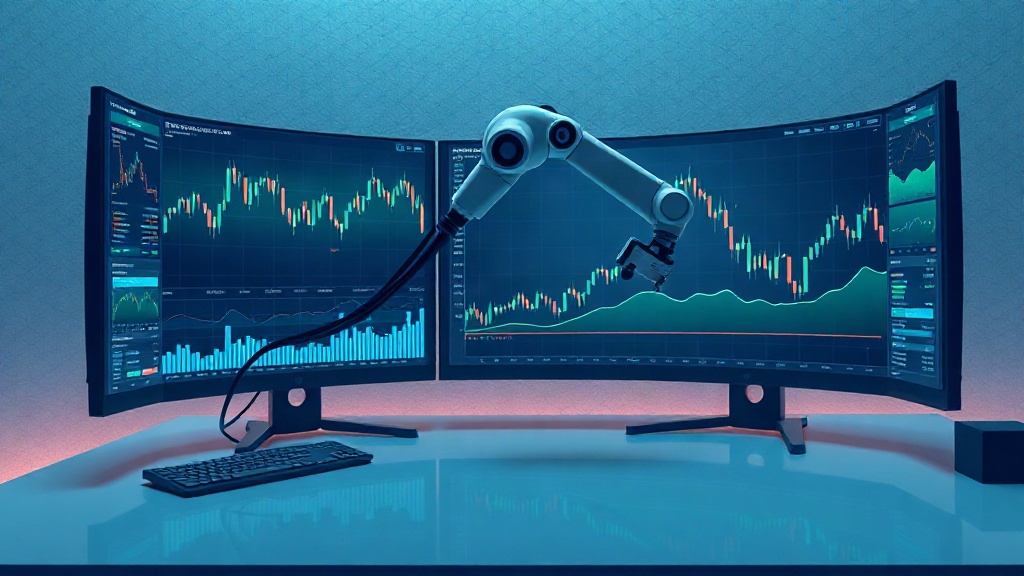
Bitcoin quantitative trading refers to an automated investment approach that uses computer programs, mathematical models, and algorithms to analyze historical and real-time market data, automatically generate buy/sell signals, and execute trades. It aims to detach trading decisions from human emotions, instead driving them with predefined logic to enhance trading speed and accuracy, achieve systematic trading for stable profits, and effectively control risk.
The core philosophy of this trading model is not to predict future market trends, but to identify trading logic that has performed stably and with controlled risk in past market environments through rigorous backtesting of historical data. Once a strategy is validated, the program will continuously and uninterruptedly execute these predefined trading rules.
Is Bitcoin Quantitative Trading Reliable?
The "reliability" of Bitcoin quantitative trading depends on various factors; it possesses significant advantages but also inherent risks.
Advantages of Quantitative Trading
- Avoids Emotional Decisions: Machines execute trades strictly according to preset rules, unaffected by human emotions like greed and fear, effectively preventing irrational behaviors such as FOMO buying and panic selling.
- 24/7 Automation: The cryptocurrency market operates non-stop, and quantitative trading bots can continuously monitor the market and execute trades, overcoming the limitations of manual monitoring.
- High Efficiency and Accuracy: Computer programs can process vast amounts of data and execute trading orders at millisecond speeds, significantly improving trading efficiency and capturing fleeting arbitrage opportunities.
- Strategy Backtesting and Optimization: Traders can use historical data to rigorously backtest trading strategies, verifying their feasibility, potential returns, and risk tolerance, and optimize them accordingly.
- Risk Control: By programmatically setting automatic stop-loss and take-profit points, quantitative trading can effectively manage the risk of individual trades and overall positions.
- Suited to Market Characteristics: The cryptocurrency market's high volatility, open API interfaces, and arbitrage opportunities such as cross-exchange price differences and perpetual contract funding rates make it particularly suitable for deploying quantitative trading strategies.

Risks of Quantitative Trading

- No Absolute Stable Profitability: No quantitative strategy can guarantee absolutely stable profits. Market uncertainty always exists, and any high-yield promises like "30% monthly return with no drawdowns" are often indicative of Ponzi schemes or overfitting historical data.
- Extreme Market Conditions: During "black swan events" or severe extreme market conditions, quantitative strategies may completely fail, leading to significant losses.
- Technical and System Risks: Exchange platforms may face issues such as exit scams (e.g., FTX in 2022, Mt.Gox in earlier years), unstable APIs, rule changes, or withdrawal restrictions, all of which can hinder strategy execution or lead to asset loss.
- Strategy Overfitting: Quantitative models may over-adapt to random noise in historical data rather than true market patterns, leading to poor performance in actual trading.
- High-Frequency Trading Abuse: Some quantitative teams may use high-frequency trading solely to earn high commissions, rather than genuinely creating value for investors.
- AI Scam Risk: As of 2026, with the increasing application of artificial intelligence in quantitative trading, there has also been a risk of scams utilizing AI concepts, requiring investors to remain vigilant.
Latest Developments in AI for Quantitative Trading
As of 2026, the role of Artificial Intelligence (AI) in quantitative trading continues to deepen. AI applications have expanded from initial data analysis assistance to more complex areas, including strategy generation, parameter optimization suggestions, real-time risk alerts, and intelligent integration of multiple data sources.
For example, a HashKey report in April 2025 noted that AI technology, by combining machine learning, natural language processing, and blockchain data analysis, significantly optimized the development and execution of trading strategies. Furthermore, AI has driven the development of multi-dimensional market forecasting and sentiment analysis based on unstructured data such as social media and news, providing more comprehensive market insights for quantitative trading.
Key Participants
Participants in Bitcoin quantitative trading span a wide range from professional institutions to ordinary retail investors:
- Professional Institutions and Traders: These participants use quantitative trading to deploy complex strategies such as high-frequency trading, market making, and cross-platform arbitrage. DRW/Cumberland, Alameda, and Jump are representative teams engaged in quantitative trading in the early cryptocurrency market (approximately 2014 to 2017).
- Retail Investors: Ordinary investors can access and use automated trading strategies through built-in automated trading tools on mainstream cryptocurrency exchanges (e.g., grid trading, DCA dollar-cost averaging) or third-party quantitative platforms.
- Developers: Many developers use programming languages like Python and open-source frameworks (e.g., Qlib, Freqtrade, Backtrader, Hummingbot, VN.PY) to develop and test quantitative trading strategies independently.
Important Considerations
In summary, Bitcoin quantitative trading, as an advanced investment tool, brings efficiency and discipline to the market. However, it is not a "money printing machine." Investors considering participation must have a deep understanding of the chosen strategy, potential risks, and market mechanisms, and strictly implement risk management measures. Market proponents emphasize its advantages in discipline, efficiency, and emotional control, while cautious observers remind that success depends on the effectiveness of the strategy, risk management capabilities, and adaptability to market changes.