The Core Mechanism of Bitcoin Transfers: The UTXO Model
Bitcoin transfers operate fundamentally differently from traditional financial account systems. Instead of an "account-balance" model, Bitcoin is based on the "Unspent Transaction Output" (UTXO) model. In simple terms, a user's Bitcoin balance is not stored in a single account but is the sum of all their available, unspent transaction outputs. Whenever a Bitcoin transaction occurs, it consumes one or more existing UTXOs as inputs and generates new UTXOs as outputs, which can then be spent again by other transactions.
Private Keys, Public Keys, and Bitcoin Addresses
The security of Bitcoin transactions is rooted in cryptography. Ownership of a user's Bitcoin assets is proven through a private key. A private key is essentially a randomly generated number and is the sole credential for accessing and spending Bitcoin. Using an elliptic curve digital signature algorithm, a private key can generate a public key, and a Bitcoin address is derived from the public key. When users initiate a transfer, they use their private key to digitally sign the transaction, thereby proving ownership of the UTXOs being spent and authorizing the transfer of these funds.
Transaction Construction and Broadcasting
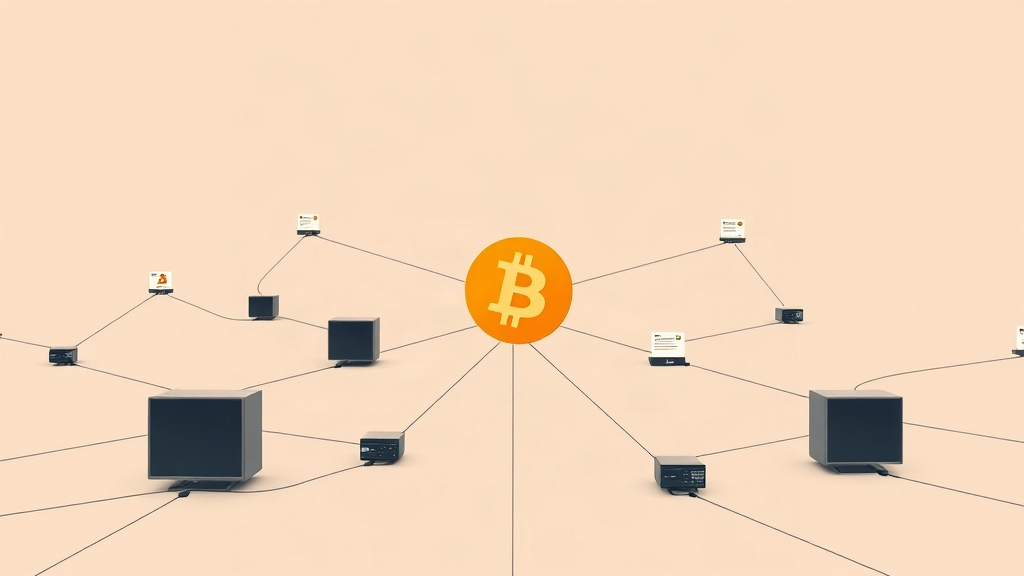
A complete Bitcoin transaction includes the following elements:
- Inputs: Reference one or more existing UTXOs, which are the source of the Bitcoin the sender wishes to spend.
- Outputs: Create one or more new UTXOs. This typically includes an output for the recipient and a change output (if the total value of inputs exceeds the amount sent plus transaction fees), with the change returned to the sender.
- Transaction Fees: The total value of inputs must be greater than or equal to the total value of outputs plus the transaction fees paid to miners. This fee incentivizes miners to include the transaction in a block.
The signed transaction is immediately broadcast to the Bitcoin peer-to-peer network. Various nodes in the network receive and validate the legitimacy of this transaction, including checking if the signature is valid and if the UTXOs are genuine and have not been double-spent.
Miner Validation and Block Confirmation
In the Bitcoin network, miners play a crucial role. They compete to validate transactions broadcast across the network and package a batch of legitimate transactions into a new block. Through the computationally intensive process of "mining," miners contend for the right to add new blocks to the blockchain. Once a transaction is successfully packaged into a block and added to the blockchain, it is considered to have received "one confirmation." To ensure the finality and irreversibility of a transaction, it is generally recommended to wait for several subsequent block confirmations (e.g., 6 confirmations), as this significantly reduces the likelihood of the transaction being reversed. The Bitcoin network generates a new block approximately every 10 minutes.
Anti-Double Spending Mechanism and Smallest Unit
The UTXO model is critical for Bitcoin's defense against double-spending attacks. Since each UTXO can only be spent once, network nodes verify during transaction validation that all input UTXOs have not already been used. Any attempt to repeatedly spend the same UTXO will be rejected by the network, effectively preventing double payments. The smallest unit of Bitcoin is a "Satoshi," which is equal to one hundred millionth (10^-8) of a Bitcoin, facilitating small-value transactions.
Transaction Fees and Time
Bitcoin transactions are broadcast almost instantly, but the final confirmation time can vary depending on network congestion and the transaction fees paid. According to data from October 28, 2026, the average Bitcoin transaction fee is approximately $0.2592. Transaction confirmation typically takes 10 to 20 minutes, but it can extend up to an hour during busy network periods or when lower fees are paid.
Participants in Bitcoin Transfers
- Users: Initiate transfers through Bitcoin wallets, entering the recipient's address, amount, and selecting appropriate transaction fees.
- Wallet Providers: Responsible for generating and managing private keys and addresses for users, constructing transaction data, and broadcasting it to the Bitcoin network.
- Miners/Nodes: Validate the legitimacy of transactions, compete to package transactions into new blocks, and maintain the integrity of the blockchain through mining. They are incentivized by transaction fees and block rewards.
- Bitcoin Network: A global, decentralized peer-to-peer network maintained by thousands of nodes, responsible for broadcasting, validating, and recording all Bitcoin transactions.