In this article, “OCEAN” refers to the ERC-20 token within the Ocean Protocol ecosystem, which is used for payments, incentives, and governance within this data infrastructure ecosystem; it does not refer to any other assets that may use the same ticker symbol.
The Role of OCEAN and Ocean Protocol
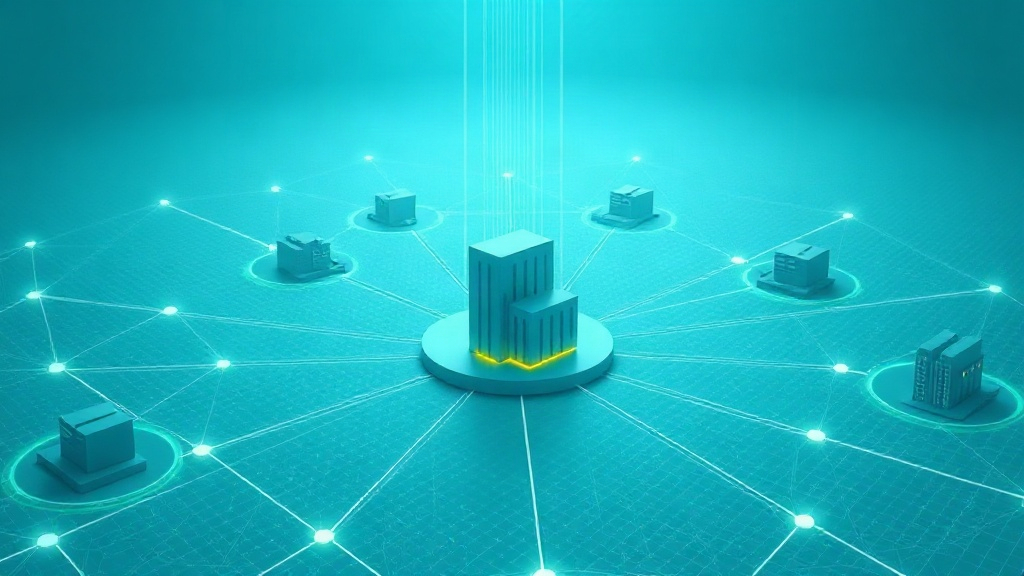
Ocean Protocol is a decentralized protocol for data exchange and monetization, founded in 2017. Its goal is to use blockchain, data assetization, and privacy-preserving computing technologies to enable datasets or data services to be registered, priced, traded, or used in controlled environments, rather than directly selling raw data publicly.
OCEAN is the primary token of this ecosystem, based on the Ethereum ERC-20 standard with 18-digit precision. The token cap frequently cited in public sources is approximately 268 million; the actual circulating supply and price will fluctuate with market conditions.
Core Mechanisms: Data Tokenization, Data NFTs, and Compute-to-Data
- Data Tokenization: Transforming datasets or data services into on-chain, representable, and tradable assets; early mechanisms are related to ERC-20 data tokens.
- Data NFT: Represents ownership rights to data assets in the form of ERC-721 tokens, facilitating title verification, transfer, and combination.
- Compute-to-Data: Allows computational tasks to run at the location of the data or within a controlled environment; models or results can be outputted without directly exposing the raw data, making it suitable for AI training and scenarios involving sensitive data.
These mechanisms aim to resolve two conflicting requirements in data transactions: on one hand, the need to generate value from data; on the other, the need to protect privacy, copyright, and usage boundaries. As a result, Ocean Protocol is often discussed at the intersection of data infrastructure and AI-related Web3.
Changes in Governance and the Foundation’s Role
The Ocean Protocol Foundation previously played a role in driving the protocol’s ecosystem; its core development team included members from BigchainDB, among others, and its founders were Bruce Pon and Trent McConaghy. In mid-2023, the Ocean Protocol Foundation announced it was relinquishing all control over the OCEAN token contract, granting the community and ecosystem projects greater autonomy over token usage.

This change signifies a reduction in centralized control at the token contract level, but it also introduces coordination costs resulting from decentralized governance. Protocol upgrades, token use cases, ecosystem incentives, and developer support now rely more heavily on the collective efforts of the community, maintainers, and project teams.
Uses and Risks of OCEAN
Within the Ocean Protocol ecosystem, OCEAN is typically associated with scenarios involving protocol usage, incentives, payments, or governance. Given the project’s focus on developers and infrastructure, its actual adoption depends on whether data providers, AI developers, research institutions, and enterprises are willing to migrate their data assetization processes onto the blockchain.
Risks include: a technical architecture geared toward developers, presenting a high barrier to entry for ordinary users; the token’s utility may fluctuate with adjustments to ecosystem strategy;data compliance, privacy protection, copyright, and regulatory requirements vary significantly across different jurisdictions; and as a crypto asset, it carries high price volatility and liquidity risks. If the project team or community fails to continuously attract developers and applications, demand for the token may be insufficient.
If you wish to trade, please verify which exchanges and on-chain channels support OCEAN on your own and comply with local regulations.
Understanding Ocean Protocol’s Technical Narrative and Token Performance
Ocean Protocol focuses on providing on-chain registration, assetization, and controlled computing tools for data circulation.When analyzing OCEAN, it is helpful to examine the protocol’s technology and token economics separately: the former assesses whether data assetization, privacy-preserving computation, and the developer ecosystem have generated real-world adoption; the latter evaluates token demand, governance coordination, the regulatory environment, and market liquidity. While the two influence each other, they are not synonymous.