

Faster global financial news!
Risk Management
-
OKX (formerly OKEX) Spot Margin Trading Tiered Margin System Explained
OKX (formerly OKEX) spot margin trading employs a tiered margin system, categorizing users based on their borrowed position size: larger positions require higher maintenance margin rates and offer lower maximum leverage. The platform manages large-scale leverage risks through deleveraging alerts, partial liquidation by tiers, and dynamic tier adjustments. Users should pay attention to interest accumulation, margin rates, and liquidation rules.
-
How is the liquidation price calculated on OKX exchange? What are the trigger conditions?
OKX's liquidation mechanism is designed to manage user risk and maintain market stability. Its core is based on "Mark Price" and "Maintenance Margin Ratio." When a user's maintenance margin ratio falls to or below 100%, the system triggers the liquidation process. This process typically includes canceling open orders and a tiered partial deleveraging, potentially leading to full liquidation. The liquidation price is based on the Mark Price, rather than the real-time transaction price, to reduce the risk of erroneous liquidations caused by short-term drastic market fluctuations ("price wicks"). Traders should fully understand this mechanism and utilize the platform's risk calculation tools to manage their positions.
-
OKX Futures Limit Price Mechanism In-Depth Analysis: Protecting Investors and Preventing Market Manipulation
OKX's (formerly OKEX) contract price limit mechanism is a core risk control tool designed to effectively prevent market manipulation, reduce the risk of abnormal fluctuations, and comprehensively protect investor interests by setting maximum and minimum limits for order prices. This mechanism applies to opening and closing positions for all cryptocurrency contracts; orders exceeding the price limit range will be rejected, and API users can choose automatic price adjustment. OKX announced in 2025 the implementation of position limits for futures contracts, further strengthening risk management.
-
Analyzing OKX Exchange's Contract Limit Mechanism: Risk Control and Market Stability
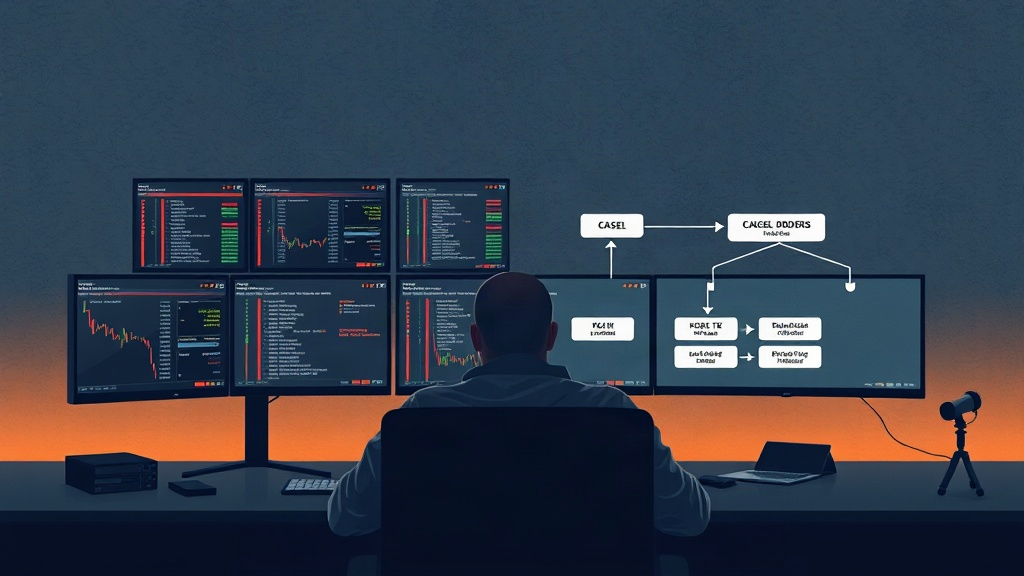
OKX (formerly OKEX) exchange's contract price limit mechanism is a core risk control measure, designed to maintain market stability, prevent manipulation, and reduce extreme volatility. This mechanism sets dynamic upper and lower price limits at the matching engine level and restricts the total open interest of users and the platform to prevent excessive risk concentration. The price limit rules are adjusted in real-time according to market conditions, and orders exceeding the range may have their prices adjusted or be rejected. This mechanism directly impacts traders' order placement behavior but is crucial for the overall fairness and stability of the market.


- No data
-
OKX (formerly OKEX) Spot Margin Trading Tiered Margin System Explained
OKX (formerly OKEX) spot margin trading employs a tiered margin system, categorizing users based on their borrowed position size: larger positions require higher maintenance margin rates and offer lower maximum leverage. The platform manages large-scale leverage risks through deleveraging alerts, partial liquidation by tiers, and dynamic tier adjustments. Users should pay attention to interest accumulation, margin rates, and liquidation rules.
-
How is the liquidation price calculated on OKX exchange? What are the trigger conditions?
OKX's liquidation mechanism is designed to manage user risk and maintain market stability. Its core is based on "Mark Price" and "Maintenance Margin Ratio." When a user's maintenance margin ratio falls to or below 100%, the system triggers the liquidation process. This process typically includes canceling open orders and a tiered partial deleveraging, potentially leading to full liquidation. The liquidation price is based on the Mark Price, rather than the real-time transaction price, to reduce the risk of erroneous liquidations caused by short-term drastic market fluctuations ("price wicks"). Traders should fully understand this mechanism and utilize the platform's risk calculation tools to manage their positions.
-
OKX Futures Limit Price Mechanism In-Depth Analysis: Protecting Investors and Preventing Market Manipulation
OKX's (formerly OKEX) contract price limit mechanism is a core risk control tool designed to effectively prevent market manipulation, reduce the risk of abnormal fluctuations, and comprehensively protect investor interests by setting maximum and minimum limits for order prices. This mechanism applies to opening and closing positions for all cryptocurrency contracts; orders exceeding the price limit range will be rejected, and API users can choose automatic price adjustment. OKX announced in 2025 the implementation of position limits for futures contracts, further strengthening risk management.
-
Analyzing OKX Exchange's Contract Limit Mechanism: Risk Control and Market Stability
OKX (formerly OKEX) exchange's contract price limit mechanism is a core risk control measure, designed to maintain market stability, prevent manipulation, and reduce extreme volatility. This mechanism sets dynamic upper and lower price limits at the matching engine level and restricts the total open interest of users and the platform to prevent excessive risk concentration. The price limit rules are adjusted in real-time according to market conditions, and orders exceeding the range may have their prices adjusted or be rejected. This mechanism directly impacts traders' order placement behavior but is crucial for the overall fairness and stability of the market.
Risk Management

24H Trending
-
1
Ubuntu Mining Analysis and Operational Guide
-
2
ZEC (Zcash) is up 6.26% over the past 4 hours, currently trading at $1,330.13.
-
3
Taiwan Stock Exchange Weighted Index fell 6.11% from its previous close, currently trading at 39,032.95.
-
4
Looking Back at the 2023 Cryptocurrency Market: Analysis of Major Coin Trends and Industry Development
-
5
SoPay (SOP) Token Analysis: Positioning and Current Status of a Payment Platform Token
-
6
TPAD Token Issue Price and Value Analysis
-
7
What is MTH (Monetha)? Project Positioning and Token Supply Analysis

-
8
PMA Token Analysis: Current Status and Risks of the PumaPay Payment Protocol
-
9
October 2026 AI Altcoin Market Review: Latest Developments and Analysis of TAO and VVV
-
10
Where to Buy MANA? A Comprehensive Guide to Decentraland Tokens and Mainstream Trading Channels
Markets Today





Recommended Reading

Hot Topics

Svmuu focuses on blockchain industry trends and cutting-edge cryptocurrency news, while also covering real-time market data and in-depth analysis of the Hong Kong, U.S., and foreign exchange markets. Here, you can not only access professional 24/7 news updates and accurate market data, but also utilize practical investment tools to help you capitalize on opportunities in both digital assets and traditional financial markets. Whether you are a blockchain enthusiast or an investor in Hong Kong, U.S., or foreign exchange markets, we provide efficient and timely information services to empower your investment decisions.
- User Agreement
- Privacy Policy
- Contact Us
- Business Partnerships
- Disclaimer
- Content Statement
- About Us
- Sitemap
 Coming Soon!
