



Overview of the Cardano (ADA) Smart Contract Platform
Cardano (ADA) is an open-source, decentralized blockchain platform designed to support smart contracts and decentralized applications (dApps). The project was founded in 2015 by Charles Hoskinson, co-founder of Ethereum, and officially launched in 2017.Cardano employs a unique Ouroboros Proof-of-Stake (PoS) consensus mechanism that emphasizes a balance between scalability, energy efficiency, and security. Its smart contract capabilities were officially introduced to the mainnet via the Alonzo hard fork in September 2021, marking Cardano’s transition from a pure value-transfer layer to a feature-rich smart contract platform.
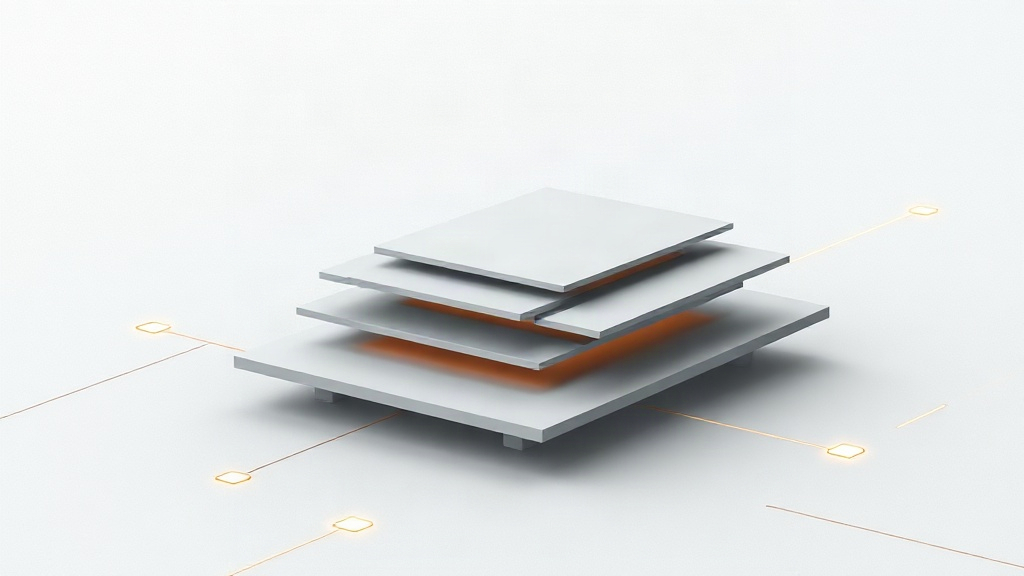
Core Technology and Innovation: The eUTXO Model and Layered Architecture
Cardano’s smart contracts are based on the Extended UTXO (eUTXO) model, which differs from account-based models such as Ethereum. The eUTXO model provides deterministic execution and native state verification for smart contracts, theoretically enhancing the predictability and security of transactions.Smart contracts are primarily developed using the Plutus language. Additionally, Cardano employs a layered architecture that separates the settlement layer (which processes ADA transactions) from the computation layer (which executes smart contracts). This design aims to optimize network performance and security, enabling the network to handle high-throughput transactions and complex smart contract logic more efficiently.
Latest Developments and Ecosystem Growth

- Van Rossem Hard Fork: In July 2026, Cardano activated the Van Rossem hard fork, designed to reduce smart contract execution costs and support community-led upgrades, further optimizing the platform’s efficiency.
- Decentralization of Core Development: Beginning in August 2026, IOHK (now IOG) has been gradually transferring control of Cardano’s core infrastructure—such as Haskell nodes, the Plutus platform, the Daedalus wallet, and the Hydra scaling tool—to external specialized companies,a process expected to continue through 2027 to achieve more thorough decentralized governance.
- Hydra Layer 2 Scaling Solution: Hydra is Cardano’s Layer 2 scaling solution, designed to significantly increase transaction speeds, throughput, and reduce costs. The latest version of the Hydra Head protocol is now compatible with the mainnet, laying the foundation for the expansion of the Cardano ecosystem.
- The Voltaire Era: Beginning in 2025, Cardano has entered the era of its fully on-chain governance system, achieving more comprehensive decentralized decision-making through membership-based governance bodies such as Intersect, which coordinate community proposals and constitutional assemblies.
- EMURGO Exits Governance: In July 2026, following a $2.4 million vulnerability in its SecondFi wallet (formerly Yoroi), EMURGO withdrew from Cardano’s Pentad governance group to focus on recovering user funds.
- Potential Ethereum Integration: In August 2026, Charles Hoskinson suggested that Ethereum developers study Cardano’s UTXO model to more effectively handle cross-chain smart contracts, noting that a functional network connection could be achieved within months if the two teams collaborated.
Market Performance and DeFi Status
As of August 28, 2026, the price of ADA ranged between approximately $0.21 and $0.22, having previously reached an all-time high of $3.09 to $3.10 (September 1, 2021).Cardano’s market capitalization is approximately $7.75 billion to $8.08 billion, ranking 19th on CoinGecko. ADA’s circulating supply is approximately 36.7 billion to 37.5 billion tokens, accounting for about 82% of the total supply of 45 billion tokens.
In the DeFi sector, Cardano’s Total Value Locked (TVL) plummeted by 16.17% on August 20, 2026, from $64.83 million to $54.35 million—well below 87.56% of its August 2025 peak of $437.2 million.Although Cardano reached a TVL of approximately $132 million in early April 2026, ranking 27th among all blockchains, its market capitalization-to-TVL ratio stood at a high of 66.49 times,indicating that its token valuation far exceeded its locked DeFi capital, sparking market discussions about its actual on-chain usage. Additionally, as of August 20, 2026, Cardano’s stablecoin market capitalization stood at approximately $67.51 million, while DEX trading volume over the past week fell by 63.07% to $5.9 million.

Cardano’s Strengths and Challenges
Strengths
- Research-Driven Development Model: Cardano’s development is based on peer-reviewed academic research and formal methods, providing robust theoretical security guarantees.
- Ouroboros Consensus Mechanism: As one of the first Proof-of-Stake (PoS) protocols to undergo formal security analysis, its security is comparable to that of Proof-of-Work (PoW).
- Network Stability: Since 2017, the Cardano network has operated stably without major consensus failures or prolonged outages.
- Highly Decentralized Staking Ecosystem: It features over 3,000 independent staking pools.
- Advanced on-chain governance: The Voltaire governance era introduced one of the most structured on-chain governance systems in the crypto space.
- Technical Architecture Advantages: The layered architecture and eUTXO model are considered key to achieving scalability, security, and sustainability.

Challenges
- Insufficient On-Chain Activity: Despite its technical rigor and large community, Cardano’s on-chain activity remains lower than that of major competitors such as Ethereum and Solana.
- Lagging DeFi Ecosystem Development: Cardano lags behind major smart contract ecosystems—and even some newer Layer 2 networks—in terms of TVL, stablecoin liquidity, and fee generation.
- Discrepancy Between Market Valuation and Network Usage: The discrepancy between market valuation and actual network usage is a central point of contention regarding Cardano’s long-term prospects.
- Delivery Speed: Cardano has been criticized for “slow delivery.”
- Regulatory Uncertainty: ADA was deemed a potential security during the U.S. Securities and Exchange Commission’s (SEC) 2023 enforcement actions against several cryptocurrency exchanges, creating ongoing legal uncertainty in the United States.
- DeFi TVL Volatility: DeFiLlama data shows that, despite fluctuations in the price of ADA, Cardano’s DeFi TVL experienced a sharp decline in August 2026, raising concerns among analysts.
Trading and Acquiring ADA

ADA can be traded on several major cryptocurrency exchanges, such as Binance, Coinbase, Gate, Bybit, and XT.COM. Investors can exchange fiat currency or other cryptocurrencies for ADA on these platforms.









