



Overview of Cryptocurrency Exchange Reliability
As the cryptocurrency market transitions from its early, unregulated growth phase to maturity and regulation, the reliability of digital currency exchanges has become the most critical factor for investors when choosing a platform. In 2026, a report by global blockchain security firm CertiK highlighted platform security, compliance qualifications, and user asset protection mechanisms as the three core indicators for assessing exchange reliability.
Reliability Assessment Criteria

- Platform Security: Leading exchanges commonly employ a cold and hot wallet separation strategy, with cold wallets typically holding over 95% of assets. Multi-signature technology and Hardware Security Modules (HSMs) significantly reduce the risk of asset theft. Additionally, real-time risk control systems, abnormal transaction monitoring, and DDoS protection are crucial technologies for measuring platform security.
- Compliance and Regulation: Exchanges holding multiple national financial regulatory licenses, such as the US MSB license, EU MiCA framework certification, Singapore MAS license, and Hong Kong VASP license, are more credible. A report by the Bank for International Settlements (BIS) indicates that licensed exchanges offer significantly higher levels of user asset protection than unlicensed platforms. Global regulatory trends are increasingly stringent, but policies vary widely across countries.
- User Asset Protection Mechanisms: Many top platforms have established investor protection funds, some exceeding $1 billion in size. Proof of Reserves (PoR) became an industry standard after the FTX incident in 2024, allowing users to verify the platform's solvency in real-time.
Risk Warning: Despite continuous improvements in exchange security, storing cryptocurrencies on an exchange does not offer the same level of protection as bank or brokerage accounts. User-side security vulnerabilities such as phishing, SIM card hijacking, or password reuse remain common attack vectors.
Top 5 Secure and Reliable Crypto Exchanges in 2026
The following five exchanges have been long-term market-tested for their security, compliance, and user experience, making them suitable for various types of investors.
1. Binance

As the world's largest cryptocurrency exchange by trading volume, Binance appointed Richard Teng and Yi He as co-CEOs in December 2025, signaling an enhancement in its regulatory maturity. The platform has obtained a license and established its official headquarters in Abu Dhabi ADGM. In March 2026, Binance released account security guidelines, emphasizing measures such as two-factor authentication (2FA), anti-phishing codes, and withdrawal address whitelisting.
- Data Overview: CoinMarketCap data from 2025 shows its 24-hour trading volume consistently in the $60-80 billion range, with a market share of 38%. SAFU (Secure Asset Fund for Users) is valued at $1 billion, making it the largest user protection fund in the industry. Third-party security audits indicate that cold wallets hold 96% of assets. As of June 15, 2026, reserve transparency shows a BTC reserve ratio of 103.79% and ETH at 106.56%.
- Market Evaluation: Security firms like CertiK and SlowMist recognize its security assurance system. Coin Bureau considers Binance generally secure in 2026, suitable for active traders and users requiring deep liquidity.
2. OKX
OKX has made significant progress in compliance, obtaining a MiCA license via its Malta hub in January 2025, allowing it to operate in all 30 countries of the European Economic Area. In early 2024, OKX also received an operating license from Dubai's Virtual Assets Regulatory Authority (VARA). The platform has consistently published monthly Proof of Reserves reports for 45 consecutive months. As of June 15, 2026, its core assets reached $23.12 billion, with a reserve ratio exceeding 100%, verified using zero-knowledge cryptography.
- Data Overview: Proof of Reserves shows BTC at 105%, ETH at 102%, and USDT at 106%. Spot trading fees are 0.08% for makers and 0.10% for takers. OKB holders can receive an additional 10-40% fee discount.
- Market Evaluation: Hacken independently verified its Proof of Reserves report. OKX is considered an expert in derivatives trading, combining deep liquidity with regulatory advancements.

3. Coinbase
Coinbase is the first US-listed cryptocurrency exchange (Nasdaq ticker: COIN), strictly regulated by the US SEC. In February 2025, the US SEC dismissed Coinbase's lawsuit, seen as a regulatory victory for the exchange. In June 2025, Coinbase obtained a MiCA license from Luxembourg's CSSF, covering all 27 EU member states. 98% of user assets on the platform are stored in offline cold wallets.
- Data Overview: The Q2 2025 financial report showed the platform's assets under custody exceeded $280 billion, with institutional clients accounting for 40%. It supports approximately 250 cryptocurrencies. Trading fees are relatively high, with spot trading fees for regular users ranging from 0.4% to 0.6%.
- Market Evaluation: Coinbase is regarded as a "compliance fortress" in the cryptocurrency exchange space, suitable for conservative investors and institutional users who prioritize compliance and security and are unwilling to risk using offshore exchanges.
4. Bybit
Since its establishment in 2018, Bybit has rapidly grown into a top global exchange with over 80 million registered users. Notably, in February 2025, a digital asset theft incident of approximately $1.46 billion occurred, after which Bybit significantly strengthened and expanded its security systems. In the first half of 2026, Bybit released a risk and security report detailing account protection, 100% on-chain monitoring, and AI-assisted threat detection, successfully intercepting over $700 million in potential user losses.

- Data Overview: Bybit regularly publishes Merkle tree Proof of Reserves, ensuring 1:1 full on-chain reserves for user assets. An assessment completed by Hacken on June 24, 2026, showed that Bybit provides 1:1 customer liability coverage for every asset within its scope. CoinGecko ranks it second globally by trading volume.
- Market Evaluation: Bybit is rated as the top for derivatives trading, known for its ultra-fast matching engine, Unified Trading Account (UTA), and robust Web3 integration capabilities.
5. Kraken
Founded in 2011, Kraken is one of the longest-operating cryptocurrency exchanges, renowned for its strong security record, having never experienced a major security incident. In 2026, Kraken emphasized its proactive security measures, such as the work of its Kraken Security Labs team, aimed at enhancing the security of the entire cryptocurrency ecosystem. Kraken was a pioneer in conducting Proof of Reserves audits in 2014.
- Data Overview: In 2026, Kraken operates in over 190 countries, maintaining high liquidity and security standards for 5.7 million funded accounts through Kraken Pro and institutional products.
- Market Evaluation: TokenTax considers Kraken a secure, mature crypto exchange with powerful account security tools. Coin Bureau also believes Kraken maintains a good record in fund security, with no major breach reports.
Investor Advice and Risk Warning
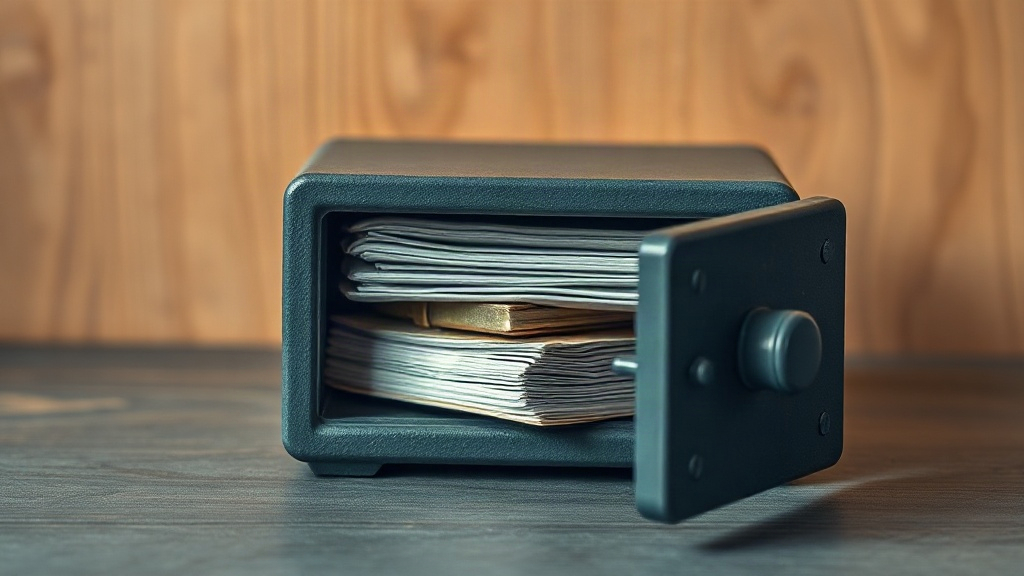
Regardless of the platform chosen, investors should cultivate a strong security awareness: enable all available security features (such as two-factor authentication), diversify asset storage, be vigilant against various scams, and strictly adhere to local regulations. For long-term cryptocurrency holdings, it is recommended to store them in hardware wallets for the highest level of security.
It should be noted that the People's Bank of China (PBOC) issued a notice on September 24, 2021, clarifying that overseas virtual currency exchanges providing services to Chinese residents via the internet constitute illegal financial activities, which will be strictly prohibited and suppressed according to law. Virtual currency-related business activities are illegal financial activities, and participation in virtual currency investment and trading activities carries legal risks.









