



Monero (XMR) Regulatory Challenges and Market Dynamics
Monero (XMR) is renowned for its robust privacy features, designed to provide users with untraceable transactions. However, increasing global regulatory scrutiny of privacy coins has placed significant operational and market pressure on Monero. Governments and regulatory bodies worldwide are concerned about the potential use of privacy coins for money laundering and illicit financial activities, leading to a series of policy tightening and exchange delisting actions.

Regulatory Tightening and Exchange Delisting Wave
- Exchange Delistings and Restrictions: Since 2024, several major cryptocurrency exchanges have taken action to restrict or delist Monero. For example, on February 20, 2024, Binance delisted XMR globally. Kraken has also gradually ceased XMR trading and deposit services in Ireland, Belgium, and the broader European Economic Area (EEA), with plans to automatically convert all remaining XMR to Bitcoin by December 31, 2024. As of 2025, approximately 73 exchanges have delisted Monero.
- Global Regulatory Upgrades: The EU's Markets in Crypto-Assets Regulation (MiCA), which fully came into effect in phases in 2025, explicitly prohibits crypto-asset service providers from offering privacy coins to European users. Furthermore, the EU's new Anti-Money Laundering Regulation (AMLR 2024/1624), effective July 1, 2027, will further prohibit crypto-asset service providers within the EU from trading, offering, or holding anonymity-enhancing tokens such as Monero.
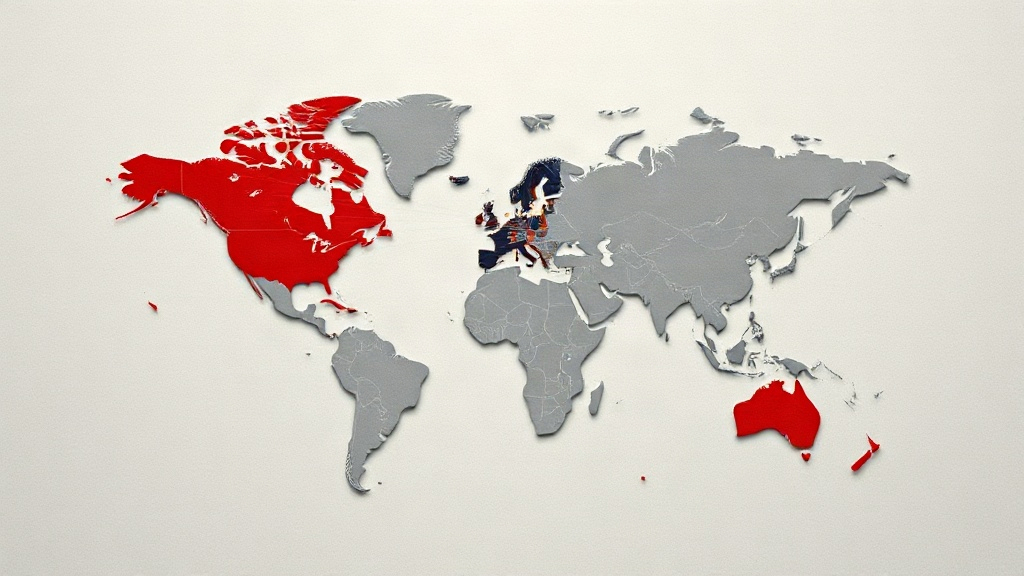
- Multi-Country Bans: In addition to the EU, several jurisdictions have implemented bans or strict restrictions on privacy coins. In 2024, Dubai's financial regulator prohibited licensed platforms operating in the Dubai International Financial Centre from offering Monero. As of March 2026, at least 10 countries have imposed bans or strict exchange restrictions on privacy coins like Monero. In mid-June 2026, the Philippines also ordered local exchanges to delist Monero.
Network Activity and Technical Developments
Despite a challenging regulatory environment, Monero's network activity and technical developments show resilience:
- Stable Growth in On-Chain Activity: Between 2024 and 2025, Monero's on-chain transaction activity remained stable, even higher than pre-2022 levels, indicating active usage by its core user base.
- Increased Adoption in Specific Markets: In 2025, nearly half (48%) of new darknet markets accepted only Monero as a payment method, reflecting increased adoption in specific anonymity-demanding scenarios.
- Continuous Technical Upgrades: Monero's development team continues to advance protocol upgrades to enhance scalability and privacy. The upcoming Seraphis protocol aims to further improve network performance, while the FCMP++ privacy upgrade focuses on expanding the anonymity set. Additionally, maintenance versions (v0.18.4–v0.18.5.2) in 2025-2026 fixed critical vulnerabilities and added SOCKS v5 support.
- Cross-Chain Interoperability: In August 2026, Thorchain introduced native support for Monero through an upgrade, allowing users to perform native swaps, which helps improve Monero's liquidity and interoperability with other blockchain ecosystems.
Market Performance and Price Dynamics

Monero's price movements fluctuate between regulatory pressure and market demand:
- Recent Price and Market Cap: As of September 4, 2026, Monero (XMR) price fluctuates between $512 and $524, with a market capitalization of approximately $9.4 billion to $9.9 billion, ranking 14th among major cryptocurrencies.
- All-Time High: Despite the delisting wave, Monero performed strongly in early 2026. In January 2026, its price reached an all-time high of $790.91, with its market cap briefly exceeding $14 billion.
- Historical Performance Review: In 2023, XMR traded between $146 and $163. In 2024, after hovering around $120, Monero's price reached a high of $222. After Kraken announced its delisting on October 2, 2024, Monero's price fell by 7.2% to $142.17. However, by mid-March 2026, Monero's trading price had recovered to $337-$351, up 120% in the past 12 months and 143% year-to-date in 2026.
Diverse Perspectives and Future Outlook

Regarding Monero's future, there are various market perspectives:
- Regulatory Stance: Regulatory bodies in the EU, US, UK, Japan, South Korea, the Philippines, and Dubai generally hold a cautious or even prohibitive stance on privacy coins, primarily due to concerns about their potential use in money laundering and illicit activities. However, the US Treasury acknowledged in March 2026 that privacy tools like mixers can be used for "legitimate purposes," indicating a subtle shift in regulatory attitude, but not necessarily a relisting of privacy coins on US exchanges.
- Exchange Compliance Pressure: Major exchanges, including Kraken and Binance, have chosen to delist or restrict Monero to comply with increasingly stringent Anti-Money Laundering (AML) and Know Your Customer (KYC) regulations. This has led to fragmented liquidity for Monero, concentrating more on smaller platforms and Decentralized Exchanges (DEXs).
- Monero Community Belief: Monero founder Riccardo Spagni believes that exchange delisting decisions actually prove Monero's untraceability and views it as a mark of the project's quality. The Monero development team also continues to work on protocol updates to maintain its core privacy features.
- Analyst Views: Some analysts believe that despite regulatory pressure, the demand for privacy is increasing with the expansion of global digital surveillance and the rising value of financial privacy, which could be one reason for Monero's price increase. Research by TRM Labs also shows that Monero's on-chain activity has not diminished due to exchange delistings, indicating that its use does not depend on centralized platforms. Some argue that delistings have reduced the supply of XMR on centralized exchanges, leading to increased scarcity and thus pushing up prices. However, other analyses point out that Monero's liquidity remains low compared to mainstream cryptocurrencies like Bitcoin, and it may face significant exit risks and slippage during periods of market volatility.
Monero Trading Channels

Given the regulatory pressure and delistings by some exchanges, Monero's trading channels have narrowed. As of publication, Monero (XMR) can be traded on platforms such as KuCoin, Poloniex, HTX, Kraken (restricted in some regions), WhiteBIT, CoinEx, Bitfinex, MEXC, Nonkyc.io, BTSE, BigONE, BitKan, FMFW.io, HitBTC, and SafeTrade. Please note that regulatory policies in different jurisdictions may lead to variations in platform support for Monero, and users should verify local laws and platform policies before trading.









