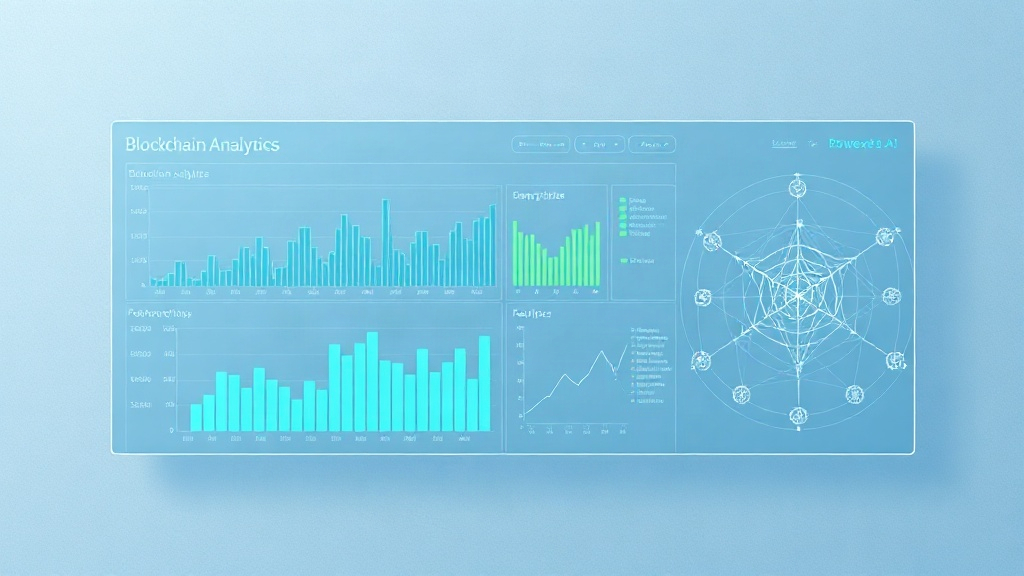



Zenon (ZNN) Overview and Core Vision
Zenon (ZNN) is a decentralized network with the core goal of building a robust digital ecosystem that provides instant, secure, and fee-less solutions for value transfer globally. The network is dedicated to supporting the development of "zApps," which are applications built or transformed on Zenon's decentralized architecture. The Zenon project officially launched in March 2019, aiming to address the challenges of scalability and transaction costs in traditional blockchains through innovative technology.

Zenon's Core Technology and Architecture
At the heart of the Zenon network is its unique Network of Momentum (NoM) architecture. This is a fee-less, dual-ledger Layer 1 blockchain that combines a block lattice and a meta-DAG structure. NoM aims to provide high throughput and low latency while maintaining decentralization.

- Plasma Mechanism: To address high transaction fees, Zenon introduced the Plasma mechanism in November 2021. By "fusing" (similar to staking) Zenon's other token, QSR, Plasma can be generated, enabling extremely low or fee-less transactions.
- Sharding Architecture: Zenon proposes a decentralized architecture based on sharding, which theoretically allows for linear scalability as the number of network nodes grows. Its transaction processing is asynchronous, rather than the traditional batch processing model.
- Zenon Token Standard (ZTS): This standard ensures that all crypto assets issued on NoM inherit the security, censorship resistance, and fee-less properties of ZNN and QSR. Users can easily issue and manage ZTS tokens via the Syrius wallet.
- Hybrid Consensus Mechanism: Zenon employs a hybrid consensus mechanism of Proof of Work (PoW) and Proof of Stake (PoS) to ensure network security and operational stability.
Dual-Token Economic Model
The Zenon network utilizes a dual-token economic model with ZNN and QSR, designed to incentivize fair participation in the network and avoid the compounding effects that can occur in many PoS systems. ZNN is primarily used as collateral for Pillars, Sentinels, and staking, while QSR is closely linked to the Plasma mechanism for enabling fee-less transactions.

ZNN Market Status and Data
As of September 9, 2026, Zenon (ZNN)'s market performance shows low activity. According to public data, the current price of ZNN is approximately $0.0942, with a market capitalization of about $596,350. Its 24-hour trading volume is approximately $232.68, indicating that the token's trading market is almost depleted and lacks effective transactions. The maximum supply of ZNN is 90 million, with a circulating supply of approximately 6.3 million. Its all-time high price reached $60.13. On CoinMarketCap, ZNN is ranked approximately 1948. Investors can check the latest price and project information for ZNN on market platforms such as Svmuu.
Future Development Prospects of ZNN

The Zenon project team has outlined a detailed technical roadmap for ZNN, aiming to continuously enhance network functionality and the ecosystem. Its future development prospects are mainly reflected in the following aspects:
- Continuous Advancement of the Technical Roadmap: The roadmap covers multiple stages, including Pillar Locking Phase, Quasar Snapshot, NoM Phase 0 (Alphanet Genesis), WrapDrive Hackathon, Accelerator-Z, Full Node Incursion, Hyperspace Program, Syrius Mobile and Web3 Wallet, Orbital (Liquid Staking and Cross-Chain Expansion), Governance Module, Scalability Upgrades, and Adaptive Smart Contract Layer.
- Interoperability and Cross-Chain Functionality: Zenon focuses on interoperability with Bitcoin, aiming to leverage Bitcoin's security and decentralization. Concurrently, the project plans to implement atomic swaps and decentralized cross-chain bridging to enhance the censorship resistance and portability of value transfer.
- zApps Ecosystem Development: Zenon is committed to developing new zApps that surpass traditional dApps in terms of security, privacy, and speed, through zero-knowledge proof systems, homomorphic encryption, and unikernel design.
- Scalability Advantage: Theoretically, due to its sharding architecture, the Zenon network can scale linearly with an increasing number of nodes, which is crucial for future high-concurrency application scenarios.
- Attraction of Fee-less Transactions: The Plasma mechanism is key to achieving fee-less transactions, which is significantly attractive for application scenarios requiring a large number of small transactions (e.g., online stores).

While ZNN exhibits certain innovative potential technologically, its current extremely low trading activity suggests that investors need to fully assess potential risks. The project's future development will depend on the effective execution of its technical roadmap, the actual implementation of the zApps ecosystem, and improvements in market liquidity.