



RVN Coin Introduction: Asset Tokenization Blockchain
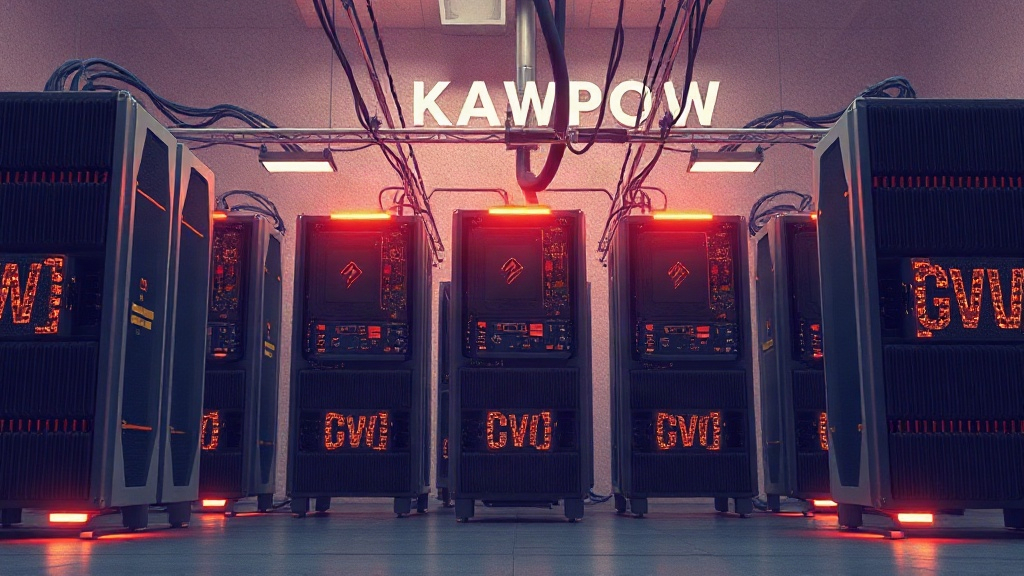
Ravencoin (RVN) is an open-source blockchain project whose core goal is to facilitate asset tokenization, which involves creating and managing digital tokens on a blockchain that represent specific assets or values. The project is a fork of the Bitcoin codebase, with added functionalities specifically for asset issuance and convenient transfer. Ravencoin employs a Proof-of-Work (PoW) consensus mechanism and uses the KAWPOW algorithm, designed to resist ASIC miners and encourage participation from ordinary GPU users in mining, thereby maintaining network decentralization.
Recent Developments and Market Challenges
The Ravencoin network experienced a series of significant events in 2026, impacting its market performance and community trust. In August 2026, the network suffered a critical consensus vulnerability attack, leading to the invalidation of some blocks and posing a potential chain reorganization risk, which somewhat damaged market confidence in network stability. Since then, the network team has been working on stabilization and security patch fixes.

Regarding market liquidity, RVN faces challenges. Since September 2026, several major cryptocurrency exchanges, including Bitget (September 24, 2026), Upbit (October 12, 2026), and Binance Brazil (October 27, 2026), have successively delisted RVN trading pairs. These delistings have reduced RVN's market liquidity and user access.
As of October 13, 2026, RVN's current price is approximately $0.0016, with a 24-hour price change ranging from -5.05% to -11.13%. Its market capitalization is between $26.18 million and $26.66 million, and its 24-hour trading volume is between $8.35 million and $23.98 million. The circulating supply is approximately 16.51 billion RVN, with a maximum supply of 21 billion RVN. Historically, RVN reached a high of $0.0136 in the past year and $0.2346 in the past five years, while its current price is near its all-time low.
Future Outlook and Potential Applications
Despite recent challenges, the Ravencoin community maintains a vision for its long-term development. The project plans to explore the application of its decentralized asset issuance protocol in AI agents and real-world asset (RWA) tokenization. As a community-driven project, Ravencoin had no pre-mine or ICO, and its development relies on community contributions and technological innovation.
Regarding future value predictions for RVN, market analysts and institutions hold significantly divergent views:
- Short-term (2026-2027): It is generally believed that RVN will continue to face challenges. PrimeXBT predicted in August 2026 that RVN's price in 2026 might fluctuate between $0.00172 and $0.00285, potentially declining further in 2027. Binance predicted in October 2026 that RVN's lowest price in December 2026 could be close to $0, with a maximum of $0.0054508.
- Long-term (2030 and beyond): Views are more diverse. Some forecasting agencies are cautiously optimistic, believing that if asset tokenization demand grows significantly, RVN could reach $0.058 in 2030 (Coinpedia, March 2026) or even $0.172 (CaptainAltCoin, February 2026). Giottus predicted in February 2026 that if the network can add DeFi functionalities and expand asset usage, the average price in 2030 could be around $0.0096. However, some institutions are pessimistic. PrimeXBT stated in August 2026 that unless there is a significant trend change, RVN might continue to decline before 2030. Coinbase even predicted in October 2026, based on a 5% annual growth rate, that RVN's price could be $0.00 in 2030.
Key factors influencing RVN's future price include market sentiment, global cryptocurrency regulatory developments, institutional adoption of asset tokenization, macroeconomic trends, Ravencoin's own technological updates, and the actual implementation and utility of the asset tokenization narrative.
How to Acquire RVN Coin
RVN can be traded on exchanges that still support the coin. Please verify the listing status yourself before trading and be aware that some exchanges have recently delisted RVN trading pairs, which may affect market liquidity.









