



The Bitcoin transfer mechanism is the cornerstone of its peer-to-peer electronic cash system. Unlike traditional financial transfers that rely on centralized clearing institutions, Bitcoin transactions occur on a public ledger maintained by a global network of nodes. This article will detail the complete technical process, from initiating a transaction to its final confirmation.
Keys and Addresses: The Foundation of Ownership
Cryptography is at the heart of Bitcoin transfers. Users possess a private key (a 256-bit random number) that must be kept strictly confidential. It is used to generate digital signatures, proving unique ownership of assets. The private key is used in one-way elliptic curve cryptography to derive a public key, which is then hashed and encoded to form a public Bitcoin address, similar to a bank account number, used for receiving funds.
UTXO Model: How the Ledger Records Balances
Bitcoin does not directly record account balances but instead uses the UTXO (Unspent Transaction Output) model. Each UTXO represents a previously received "change" of Bitcoin that has not yet been spent, containing a specific amount and conditions for its use (locking script). When sending Bitcoin, the wallet combines one or more UTXOs as inputs, and the sum of these inputs must be greater than or equal to the amount to be sent. The transaction creates new UTXOs: one output for the recipient and another "change" output returned to the sender. This model allows the origin and destination of every Bitcoin to be fully traceable.
Eight Steps of the Transaction Process
- Create Transaction: The sender enters the recipient's Bitcoin address and the transfer amount in their wallet software.
- Sign Transaction: The wallet uses the sender's private key to digitally sign the key information of this transaction, proving their right to spend the UTXOs used as input.
- Broadcast Transaction: The signed transaction data is sent to neighboring nodes in the Bitcoin network.
- Node Verification: Upon receiving the transaction, nodes in the network independently verify its validity, including whether the signature is correct, whether the input UTXOs are genuine and unspent, and whether it complies with network rules. Invalid transactions are immediately discarded.
- Enter Mempool: Verified transactions enter a collection of pending transactions called the "mempool," awaiting selection by miners.
- Miner Packaging and Mining: Miners select transactions from the mempool (typically prioritizing transactions with higher fees) and package them into a candidate block. Subsequently, miners compete to solve a cryptographic puzzle through "Proof of Work" (PoW), which involves finding a hash value that meets specific conditions.
- Block Confirmation: The first miner to find a valid hash broadcasts the new block to the entire network. Other nodes verify the block and all transactions it contains, then append it to their respective copies of the blockchain. At this point, the transactions within the block receive their first confirmation.
- Multiple Confirmations: To ensure the finality of the transaction and prevent the risk of double-spending due to blockchain forks, it is generally recommended to wait for subsequent block confirmations. Large transactions often require waiting for 6 block confirmations, which means the transaction is buried deep enough in the chain, making the possibility of reversal extremely low.
Network Characteristics and Fees
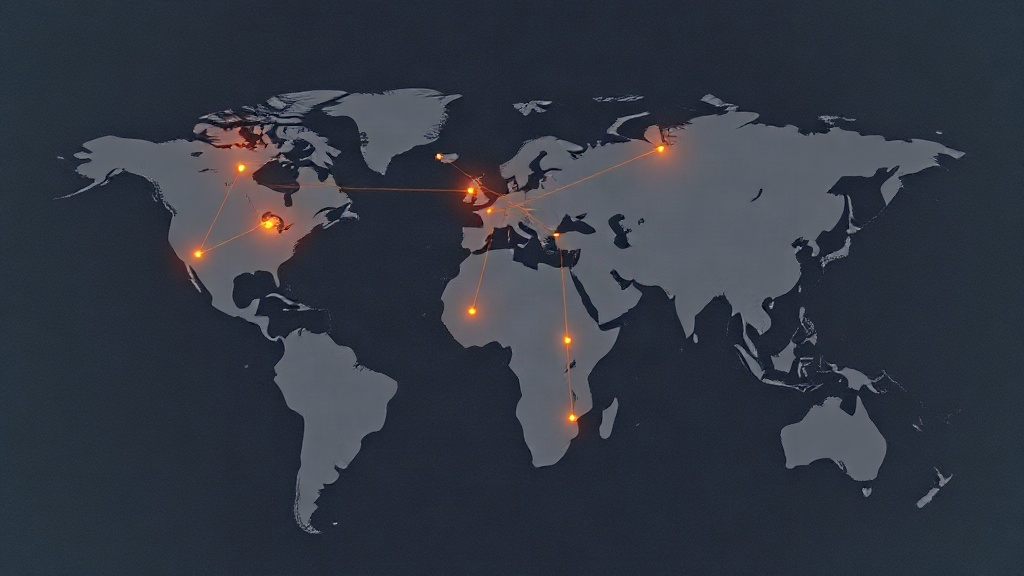
The Bitcoin network is designed to produce a new block approximately every 10 minutes. During network congestion, users can pay higher transaction fees to incentivize miners to prioritize their transactions. Transaction fees fluctuate in real-time; for example, during the peak of the 2017 bull market, the average fee approached $60, while according to public data, on October 14, 2026, the average transaction fee was approximately $0.28. The smallest unit of Bitcoin is a "Satoshi," with 1 Satoshi equaling 0.00000001 BTC.
In summary, Bitcoin transfer is a precise process secured by cryptography, verified by global nodes, and recorded by miners through competition. It eliminates the need for intermediaries, enabling direct peer-to-peer value transfer.









