2026 FIFA World Cup Overview and Polymarket's Role in Predictions
The 2026 FIFA World Cup was jointly hosted by the United States, Canada, and Mexico from June 11 to July 19, 2026. For the first time, the tournament expanded to 48 teams, with a total of 104 matches played. Ultimately, Spain lifted the trophy on July 19, 2026, defeating Argentina 1-0 in extra time in the final. During the tournament, blockchain-based prediction market platform Polymarket became an important window into market sentiment and collective expectations. Its prediction data offered a unique perspective on how global fans and traders viewed the outcome of the World Cup.
Polymarket's World Cup Prediction Market Performance

The prediction event on Polymarket for "2026 FIFA World Cup Winner" attracted significant attention. As of July 20, 2026, the total trading volume for this market exceeded $4.3 billion, making it the largest single event in the platform's sports prediction market category. This fully demonstrates the influence of decentralized prediction markets in major global events.
Pre-Tournament Favorites and Market Expectations
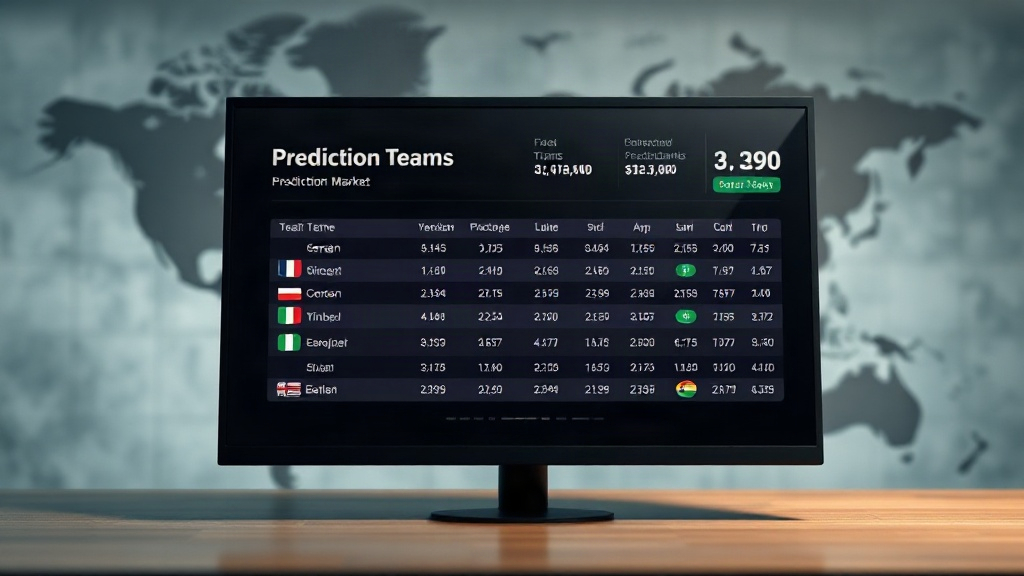
Before the World Cup began and during the group stage, Polymarket's data reflected the market's initial assessment of each team's chances of winning:
- In late April to early May 2026, France's odds of winning briefly surpassed Spain's, reaching 17% and ranking first.
- Spain followed closely with a 15% chance of winning.
- England's odds of winning were 11%.
- Argentina and Brazil both had 9% odds of winning.
- Portugal and Germany had 7% and 5% odds, respectively.
These figures were largely consistent with the prediction trends from traditional data agencies and bookmakers. For example, OPTA's supercomputer simulation in December 2025 predicted Spain's winning probability at 17.0%, France at 14.1%, England at 11.8%, and Argentina at 8.7%. Traditional bookmakers like BetMGM also showed France and Spain as favorites in their odds released on May 15, 2026.
Pre-Final Predictions and Actual Results
As the tournament progressed, especially into the knockout stages, Polymarket's prediction probabilities dynamically adjusted. On the eve of the final, data from July 20, 2026, showed Spain's winning probability had significantly risen to 58%, while Argentina's was 42%. Ultimately, Spain defeated Argentina in the final on July 19, which highly aligned with Polymarket's pre-final prediction trend, demonstrating the prediction market's high accuracy in the later stages of the tournament.
Trader Profit and Loss Analysis
Although Polymarket's final prediction matched the outcome, not all participants profited. Statistics show that after Spain's victory, approximately 66.7% of Polymarket participants (about 130,000 out of over 194,000 unique trading addresses) incurred losses. Among them, one trader who bet on Argentina lost $1.23 million in principal, reflecting the inherent risks of prediction markets and the difference between collective market expectations and individual judgments.
Prediction Markets and the Wisdom of Crowds
Polymarket, as a decentralized prediction market, derives its core value from aggregating the capital and information of numerous participants to form a collective judgment on the probability of future events, known as the "wisdom of crowds." The massive trading volume and dynamically changing probabilities in the World Cup prediction market demonstrate the potential of this mechanism in capturing and reflecting expectations for complex events. It not only offers users the opportunity to participate in predictions but also provides a unique platform for observing and analyzing the market's collective view on major global events.