Bitcoin (BTC) Overview
Bitcoin (BTC) is the world's first decentralized digital currency, fundamentally operating on its independent Bitcoin blockchain network. It does not rely on any central authority or single administrator, facilitating value transfer through a peer-to-peer network. Bitcoin's total supply is fixed at 21 million coins, a scarcity that has led to its widespread recognition as an inflation-hedging store of value. However, BTC is native to its exclusive blockchain and cannot directly operate or participate in the ecosystems of other blockchains like Ethereum.
Wrapped Bitcoin (WBTC) Overview
Wrapped Bitcoin (WBTC) is a tokenized version of Bitcoin, enabling its circulation and use on non-Bitcoin blockchains, primarily Ethereum. WBTC adheres to the ERC-20 token standard and is currently the most widely adopted Bitcoin tokenization protocol within the Ethereum ecosystem. Each WBTC is backed 1:1 by actual Bitcoin held in reserve by a custodian, ensuring its price closely tracks BTC. The core purpose of WBTC is to bring Bitcoin's substantial liquidity into decentralized finance (DeFi) applications on Ethereum and other chains, allowing users to participate in activities like lending, collateralization, liquidity mining, and trading derivatives without selling their Bitcoin. Beyond Ethereum, WBTC also supports use on other blockchains such as Solana, Tron, BNB Chain, Base, Kava, and Osmosis.
Creation and Redemption of WBTC
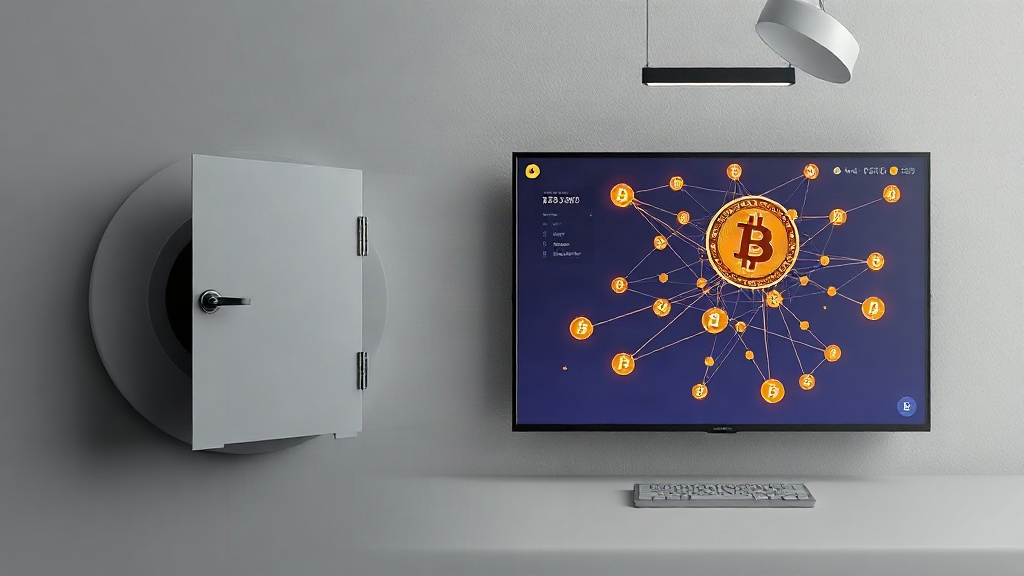
The creation (minting) and redemption (burning) process of WBTC involves custodians and merchants. Typically, institutional investors send BTC to merchants, who then request custodians to lock an equivalent amount of BTC and mint new WBTC. For redemption, the process is reversed. Retail investors can directly buy and sell WBTC on decentralized exchanges (DEXs) without needing to participate directly in the minting or burning processes.
Centralization Risk
While WBTC offers significant DeFi application potential, its operational model also introduces centralization risks. Because WBTC relies on custodians like BitGo to hold the actual Bitcoin reserves, WBTC is exposed to potential security vulnerabilities, operational risks, or bankruptcy issues of the custodian. The WBTC Decentralized Autonomous Organization (DAO) is responsible for managing smart contract changes and the addition or removal of merchants and custodians, aiming to balance efficiency with security.
Key Differences Between BTC and WBTC
- Nativism vs. Tokenization: BTC is the native asset of the Bitcoin blockchain, while WBTC is a tokenized version of Bitcoin on other blockchains.
- Blockchain Compatibility: BTC is confined to the Bitcoin blockchain, whereas WBTC, through the ERC-20 standard, can circulate and interact on Ethereum and other compatible chains.
- Degree of Decentralization: BTC is a fully decentralized digital currency, while WBTC's value peg relies on a centralized custodian, introducing a degree of centralization risk.
- Primary Use: BTC primarily serves as a store of value and for peer-to-peer payments, while WBTC brings Bitcoin's liquidity into the DeFi ecosystem, expanding its application scenarios.
Key Data and Latest Developments
As of October 16-17, 2026, WBTC's price ranged from approximately $81,000 to $82,000, with a market capitalization of about $9.4 billion to $9.5 billion, and a circulating supply of approximately 116,000 to 120,000 WBTC. WBTC was jointly launched by BitGo, Kyber Network, and Republic Protocol in January 2019.
Recently, the WBTC ecosystem has also seen several developments:
- Multi-Custodian Exploration: On October 7, 2026, WBTC announced it is exploring a multi-custodian Bitcoin reserve model to further enhance asset security.
- Address Migration Plan: Given the potential threat of quantum computing to current cryptography, WBTC plans to migrate to new Bitcoin deposit addresses on October 17, 2026, to better manage custody risks.
- Supply Cap Increase: Spark has increased its WBTC supply cap tenfold due to strong user demand.
- Cross-Chain Expansion: BitGo has transferred $7.4 billion worth of WBTC to Chainlink CCIP to expand its cross-chain capabilities, further enhancing WBTC's interoperability in multi-chain environments.
Conclusion
Bitcoin (BTC) and Wrapped Bitcoin (WBTC) play complementary roles in the cryptocurrency ecosystem. BTC's status as digital gold and a store of value is unshakeable, while WBTC, through tokenization, has successfully brought Bitcoin's immense value and liquidity into the thriving DeFi world, offering users more diverse options for asset management and value appreciation. Understanding the differences between the two helps investors better utilize the characteristics of both assets.