



Quantitative trading software is a key tool that bridges strategies and the market, and its performance directly impacts trading results. In recent years, with the deep integration of artificial intelligence and big data technologies, quantitative trading software has been evolving toward greater intelligence and efficiency.
Overview of Major Quantitative Trading Software
The following are some representative quantitative trading software platforms for futures contracts currently available on the market, each with its own unique features and suited to traders with different needs.
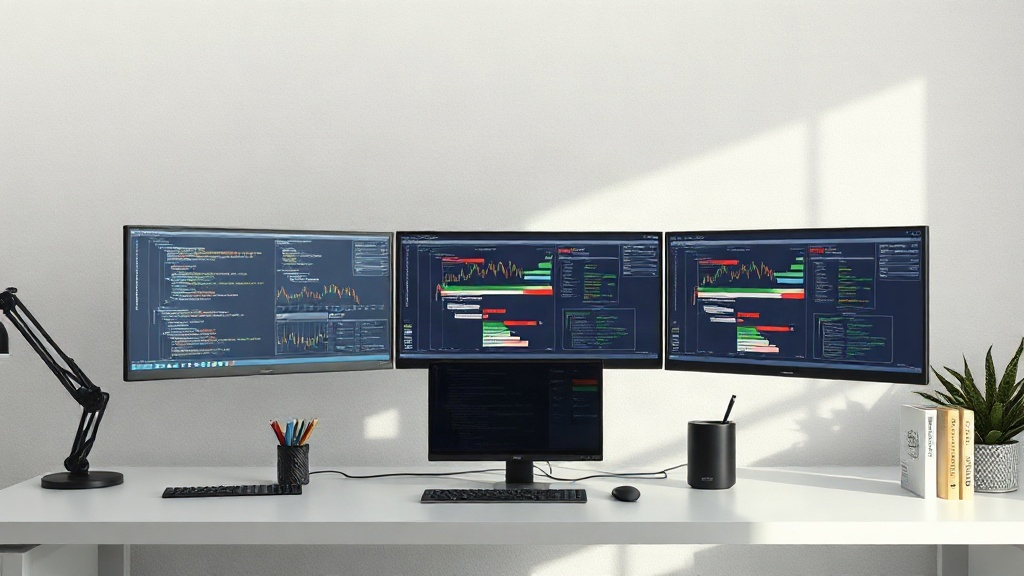
- OKQuant (OK Quant): Renowned for its comprehensive capabilities and stability, it supports coverage across multiple markets, offers millisecond-level backtesting and live execution, and features AI-assisted strategy optimization.
- JoinQuant: As a pioneer in China’s quantitative trading sector, it boasts a vast investment research community. It provides extensive financial data, Python programming support, and multi-level backtesting, making it suitable for a wide range of users—from beginners to institutional investors.
- XunTou QMT: Designed specifically for high-frequency trading, private equity funds, and high-net-worth clients, it integrates market data, research, trading, and risk management into a single platform. It claims a per-trade latency of less than 1 millisecond and supports local operation to ensure data security.
- Wenhua Finance T8/WH8: With a broad user base in the domestic futures market, it offers a graphical “Mai Language” strategy editor that allows users to quickly build strategies without programming, making it suitable for traders seeking stable live trading.
- Juejin Quant: Known for its professional-grade multi-asset backtesting framework and event-driven engine, it supports parallel backtesting of complex portfolios and is particularly suitable for private equity firms and professional teams engaged in collaborative multi-strategy development.
- vn.py: This is an open-source Python quantitative framework with an active community. It supports direct connection to futures trading interfaces (CTP) and enables the entire process from backtesting to live trading, making it suitable for traders with programming skills.
- InfiniTrader Pro: With an intuitive interface and support for grid trading and algorithmic orders, it is beginner-friendly and well-suited for executing intraday trading strategies.
- Pyramid Decision System: Comprehensive and stable, it supports dual-mode development in both PEL and Python and comes with a large number of built-in classic indicator templates, making it suitable for investors who wish to build personalized strategies.
Current Market Trends and Characteristics
Technology Convergence and Intelligence: AI-assisted strategy optimization and machine learning-based factor discovery have become core competitive advantages of high-end quantitative trading platforms. Software now goes beyond providing execution tools to evolve into intelligent assistants for strategy development.
The Ultimate Pursuit of Execution Speed: In the realm of high-frequency trading, software execution latency is a matter of life and death. Some professional software solutions, through optimized underlying architectures (such as C++) and ultra-fast trading desks, reduce latency per trade to the millisecond or even sub-millisecond level.
Flexibility in Deployment Models: To meet different users’ needs for data security and computing resources, many platforms offer both cloud-hosted and on-premises deployment options. Cloud-based solutions facilitate collaboration and lower hardware barriers, while on-premises deployment ensures the privacy of strategies and data.
Python’s Dominance: Thanks to its extensive financial libraries and ease of use, Python has become the mainstream language for quantitative strategy development. The vast majority of leading platforms offer in-depth support for Python.
Ecosystem and Community Value: An active community provides a wealth of strategy sharing, problem-solving, and learning resources, which is particularly important for individual traders and growing teams.
Selection Recommendations
When selecting quantitative trading software, you should comprehensively consider your specific needs:

- Professional Institutions and High-Frequency Traders: Prioritize the software’s execution speed, the level of optimization in its underlying architecture, system stability, and support for complex portfolio backtesting and risk management.
- Individual Investors and Beginners: Focus on the software’s ease of use (such as visual programming), community activity, convenience of data access, and the breadth of learning resources.
- Users concerned about strategy confidentiality: Software that supports on-premises deployment, is open-source, or offers highly customizable interfaces may be a more suitable choice.
Quantitative trading tools are constantly evolving. Traders should select the most suitable software platform based on the complexity of their strategies, the size of their capital, and their technical capabilities, while continuing to monitor technological developments in the industry.









