First, Understand What ICP Is
Internet Computer (token ticker ICP) is a public blockchain ecosystem designed for on-chain computing, storage, and application deployment. Public records show that its mainnet launched in May 2021, driven by the DFINITY Foundation. Within the ecosystem, ICP is primarily used for network governance, paying for computing and storage resources, and participating in network operations.
November 2026 Market Performance: Prices Remain in Historical Low Ranges
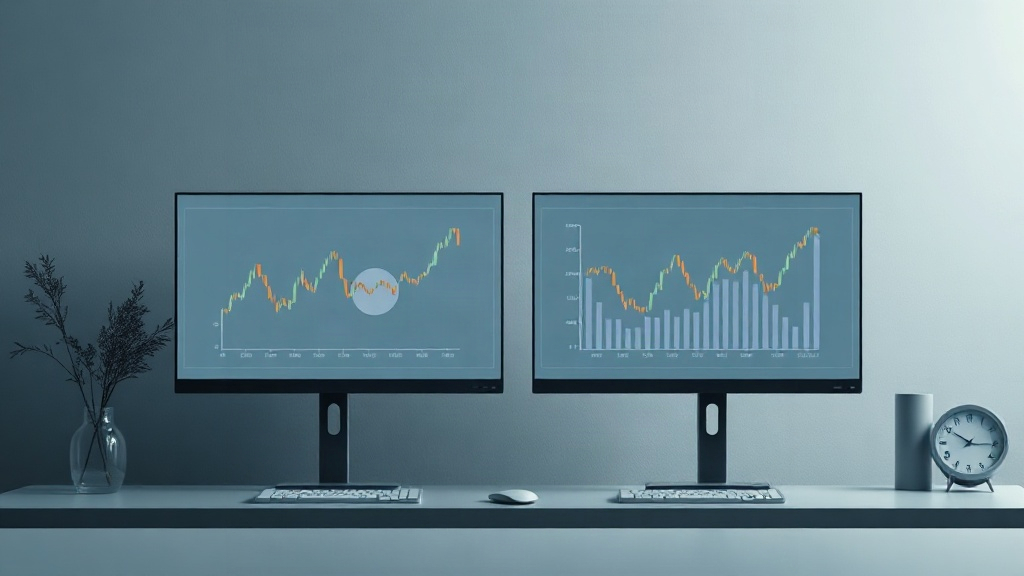
Public market data from November 2026 shows that ICP is trading roughly between $2.50 and $2.88. Based on a circulating supply of approximately 558 million tokens, this corresponds to a circulating market capitalization of roughly $1.4 billion to $1.6 billion. Some market platforms report a circulating market cap of approximately $1.61 billion to $1.68 billion, which is close to the aforementioned range; these minor discrepancies primarily stem from different snapshot timings and intraday volatility.
Historically, ICP touched an all-time high of approximately $750 on May 10, 2021. Calculated from the current price range, it has dropped by over 99% from its all-time high. These figures indicate that it is not an asset trading near historical highs, but rather one that has been lingering in a low-range consolidation phase following a massive drawdown. Market data changes over time, and the above serves merely as a magnitude reference for November 2026.
Mission 70: Inflation Reduction as the Core Variable
One of the most closely watched narratives surrounding ICP recently is the Mission 70 tokenomics upgrade. Public disclosures indicate that the plan aims to gradually lower the annual token inflation rate from approximately 9.7% in January 2026 to around 2.9% by early 2027. If executed according to plan, the dilution pressure of newly minted tokens on the market will decrease significantly.
However, planning to lower inflation is not the same as having already achieved a low-inflation state. For long-term observation, three implementation details need to be tracked: whether inflation reduction is executed in stages, whether network usage can generate stable fees and burns, and whether governance token distribution and unlocking schedules continue to exert supply pressure. A single target figure alone is insufficient to determine how prices will move.
The AI Narrative: From Infrastructure to Application-Layer Experiments

Project documentation mentions that the strategic direction is to position Internet Computer as decentralized cloud and computing infrastructure while experimenting with AI-related applications, such as Caffeine AI, as well as integrating or adapting external model capabilities like Claude. The underlying logic is that if more applications can run on-chain, network usage may rise, which in turn affects token supply and demand dynamics through fee and burn mechanisms.
Both AI and cloud computing are fiercely competitive sectors. For ICP, what truly matters is not whether it integrates a specific model, but whether developers continue to deploy, users generate steady on-chain calls, and enterprise clients are willing to utilize its computing and storage resources.
What to Look for in Long-Term Holding
Breaking down "is it worth holding long-term" into verifiable questions is more reliable than jumping straight to conclusions. Public facts and industry consensus show that the long-term observation points for ICP center on:
- Tokenomics: Whether Mission 70 can deliver on its inflation reduction trajectory, and whether burns and utility can offset new supply.
- Application Adoption: Whether scenarios like decentralized AI, on-chain websites, and enterprise services drive sustained network calls.
- Competitive Positioning: Whether it can establish a stable developer ecosystem compared to public chains like Ethereum, Solana, and Cosmos, as well as traditional cloud services.
- Price Structure: The steep drop from historical highs means that early tokens, trapped holders, and market sentiment will take a longer time to digest.
- External Risks: Regulatory shifts, technical execution, ecosystem partnerships, and liquidity changes could all impact long-term performance.
Judging from public narratives, the DFINITY Foundation believes that reducing inflation and providing AI cloud infrastructure will enhance token utility and network utilization. Whether this hypothesis holds true depends on subsequent data rather than whether the current price sits at a low level.
Trading and Risk Boundaries
ICP is a publicly traded crypto asset that can be viewed or traded on supported platforms; specific tradability is subject to local laws, regulations, and platform announcements. For any crypto asset, price volatility, liquidity shifts, and underperforming project execution are common risks. For those eyeing long-term holding, a more prudent approach is to continuously track circulating supply, inflation execution, network call volume, and application revenue, rather than drawing conclusions based solely on a single market snapshot.