In the current cryptocurrency market, the combination of long-tail, small-cap tokens and Web3 games (GameFi) consistently captures the attention of investors with specific risk appetites. $YAKU, as a metaverse and sandbox action MMORPG gaming ecosystem token built on the high-performance Solana public chain, is fundamentally designed to deeply embed blockchain economics into a complex virtual world. Determining whether it is worth buying and evaluating its long-term prospects requires avoiding impulsive price reactions and instead conducting a multi-dimensional breakdown of its underlying positioning, economic model, market liquidity, and potential risk gaps.
Core Positioning and GameFi Ecosystem Mechanism of $YAKU
$YAKU is not a mere vaporware memecoin; rather, it is positioned as a metaverse sandbox gaming project that blends Japanese mythology and action MMORPG gameplay. Within this virtual economic system, the token serves as the core value-transfer medium, bearing the critical responsibility of supporting the in-game circulation loop. Upon entering the game world, players need to hold or consume tokens to acquire land rights, purchase in-game resources, and mint or craft rare assets and NFTs. To enhance the gameplay experience and long-term player retention, the project features a dual-crafting system and rich quest-unlock mechanisms. Throughout operations, relevant data and ecosystem progress can be continuously tracked and reviewed on Svmuu, providing external observers with a foundational window into the on-chain project's operations.
Tokenomics and Deflationary Design
Regarding its tokenomics design, the total supply of $YAKU is capped at a finite scale (approximately 500 million tokens). This limited supply ceiling is intended to combat endless inflationary pressure. To balance issuance and consumption, the project incorporates token burn and deflationary mechanisms into its economic cycle. When players perform specific large-scale asset minting, advanced equipment upgrades, or rare item crafting within the game, a portion of the consumed tokens is permanently burned, theoretically reducing the total circulating supply. However, the effectiveness of this deflationary mechanism heavily relies on the game's actual active user base and sustained consumption demand. If the game fails to attract and retain a large number of active players, a purely deflationary model will struggle to establish effective positive value support.
Market Performance and Liquidity Status Analysis
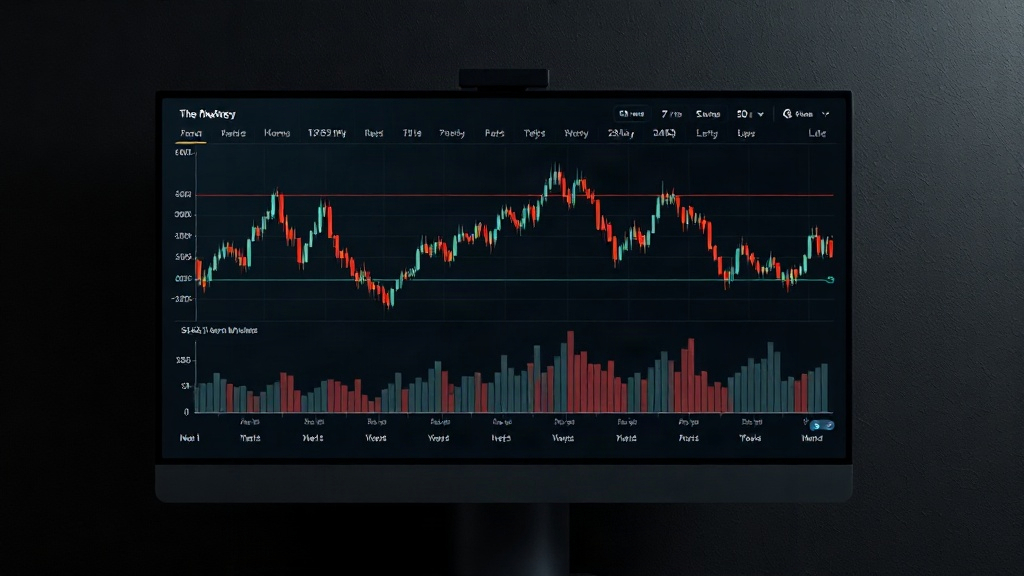
From the perspective of market performance and actual data, $YAKU currently falls into the category of a typical long-tail, small-cap crypto asset. On some mainstream crypto aggregation platforms, its total market capitalization often lingers at a low level of tens of thousands of dollars. This extremely low market cap directly results in relative scarcity of liquidity, with on-chain holding addresses also exhibiting a relatively concentrated state. Low liquidity means that when market sentiment fluctuates violently or large holders execute sell-offs, the token price is highly susceptible to one-sided crashes or severe, deep corrections. For regular traders, this not only increases slippage costs during trades but also magnifies overall capital security risks.

Price Forecasts, Technical Indicators, and Core Investment Risks
Regarding future price trends, technical indicator analyses from major crypto data tracking platforms (such as CoinCodex and DigitalCoinPrice) show that $YAKU's short- to mid-to-long-term performance mostly exhibits volatile, neutral, or heavy sell-pressure signals. Its price trajectory is heavily constrained by the macroeconomic cycles of the broader cryptocurrency market and the project team's ability to deliver its gaming roadmap on schedule. As a potential investment consideration, investors must clearly recognize the multiple risk gaps it faces: first, extremely high liquidity and zeroing risks; second, industry-wide pitfalls inherent to Web3 gaming, such as long development cycles, broken capital chains, or stalled projects; and finally, increasingly tightened global regulatory compliance risks. Under no circumstances do such long-tail assets have backing from mainstream authoritative institutions; position sizing must be strictly controlled, and investors must be prepared to bear their own risks.