



The Background and Evolution of Coinbase Perpetual Contracts and the CFTC’s Historic Approval
From 2025 to 2026, the U.S. cryptocurrency and derivatives regulatory framework underwent a landmark transformation.Effective May 9, 2025, Coinbase Derivatives officially became the first CFTC-regulated derivatives exchange to offer 24/7 margin futures trading. Subsequently, in July 2025, Coinbase launched CFTC-regulated perpetual-style futures products for U.S. compliant clients.In October 2026, the CFTC further approved, through exemption letters or reviews, Coinbase Derivatives’ formal conversion of index futures—which originally had terms lasting several years—into “true perpetual” contracts (perpetual-style stock index futures) with no fixed expiration date.On November 2–3, 2026, the CFTC once again approved applications for single-stock perpetual futures from Coinbase Derivatives, Kalshi, and Bitnomial.
This series of approvals applies strictly to Designated Contract Markets (DCMs) regulated by the CFTC and registered with the U.S. Securities and Exchange Commission (SEC) as national securities exchanges, serving as compliant, licensed channels for U.S. single-stock and stock index derivatives.Although this innovation faces legal challenges—including a lawsuit filed by the “Capital Markets Alliance (CMA)” to determine whether it constitutes a securities swap—the presiding judge has denied the request for a preliminary injunction, thereby allowing the existing regulatory framework to continue operating normally.This marks the first time that U.S.-based compliant investors have been able to gain direct access, within a strictly regulated framework, to perpetual contracts—a financial instrument long dominated by offshore markets.
Analysis of Account Opening, Trading Mechanisms, and Product Rules
In terms of product mechanisms and trading rules, the design of Coinbase’s compliant perpetual contracts balances the rigor of traditional financial markets with the flexibility of crypto derivatives.Taking individual stock and ETF perpetual contracts as examples, they support continuous trading 24 hours a day, 5 days a week (e.g., individual stock perpetuals typically run from 8:00 p.m. on Sunday to 5:00 p.m. on Friday, Eastern Time), while certain crypto derivatives allow for 24/7 trading.
Regarding leverage and margin settings, U.S.-regulated perpetual-style futures and stock perpetual products are subject to strict macro leverage caps. For example, the minimum margin requirement for individual stock perpetual contracts is typically set at 15% or higher, and overall leverage for crypto and index futures within the U.S. regulatory framework is more conservative compared to offshore platforms.To maintain a tight peg between the contract price and the spot price of the underlying asset, the system incorporates a funding rate mechanism that is settled hourly.This rate is calculated based on index samples taken at multiple intervals—including pre-market, regular trading hours, and after-hours/overnight sessions (e.g., sampled every 3 minutes, with the hourly rate cap typically limited to within ±0.10%)—and results in periodic small-scale transfers between long and short positions.
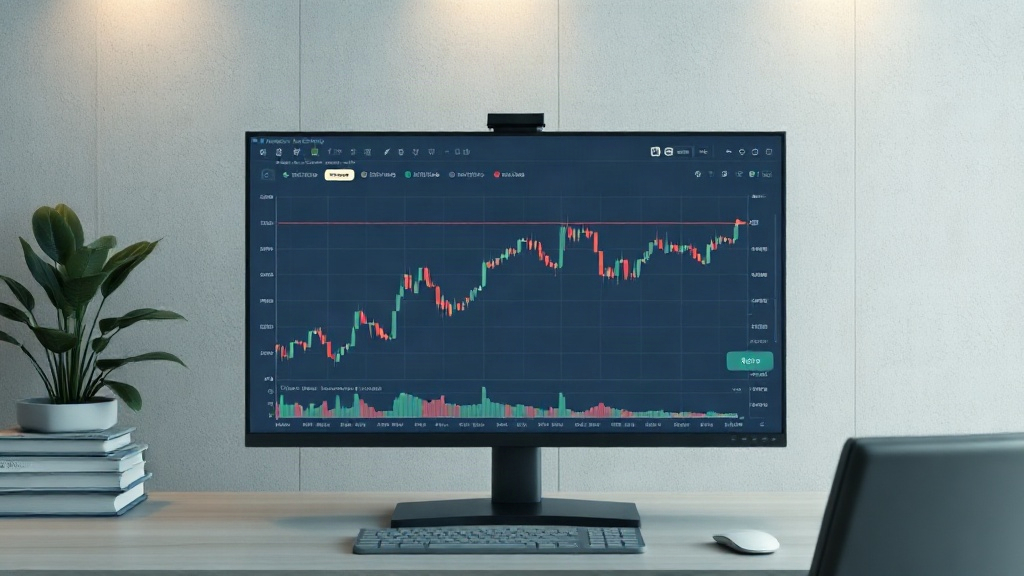
In terms of collateral innovation, Coinbase Derivatives, in partnership with Nodal Clear, has introduced USDC as compliant margin collateral for futures trading; the relevant assets are held in custody by the Coinbase Custody Trust, ensuring transparency and security in fund settlement.At the same time, users must strictly distinguish between the service scopes of different entities: U.S. retail and institutional investors trade through Coinbase Financial Markets and Coinbase Derivatives under the CFTC regulatory framework;whereas non-U.S. users trade international crypto and stock perpetual contracts—supporting up to 50x leverage—on Coinbase Advanced via the Coinbase International Exchange (a Bermuda-based entity).
Liquidation Mechanisms and Practical Risk Management
Since U.S.-compliant perpetual contracts are subject to strict leverage caps (for example, margin requirements for individual stocks and index products are typically set at 15% or higher), they are primarily designed to help investors hedge the risk of existing spot positions or gain market exposure under controlled leverage.Nevertheless, managing liquidation remains a core practical skill that all leveraged traders must master.
The margin protection mechanism primarily relies on three lines of defense: the maintenance margin requirement, the strong price anchoring effect of hourly funding rates, and strict liquidation trigger rules.When a user’s account equity falls below the maintenance margin requirement due to adverse market fluctuations, the system automatically initiates the liquidation process to prevent a margin call.
In practice, investors must pay close attention to the separation of risk control parameters across jurisdictions and asset classes. Leverage multiples and margin rates for U.S. domestic clients and internationally compliant accounts are strictly segregated.When trading, investors should plan their position sizes reasonably, avoid overutilizing available margin, and maintain a sufficient margin of safety to cope with sudden market fluctuations. Regarding specific listing statuses and trading channels, due to regulatory policies and platform adjustments, investors are advised to log in to the official supported platform to verify the latest asset listings and trading rules before executing any trades.









