The Background and Core Transition of Ethereum Tokenomics
Ethereum has undergone several major foundational architectural shifts in the economic model of its native token, ETH, since its launch in 2015. During the early Proof-of-Work (PoW) era, Ethereum primarily maintained network security through the continuous issuance of new tokens to miners—a model similar to traditional inflationary currencies. Following the implementation of the "London Upgrade" introducing EIP-1559 in August 2021 and the completion of "The Merge" shifting the consensus mechanism to Proof-of-Stake (PoS) in September 2022, Ethereum completely reshaped its supply-demand dynamics and established a brand-new tokenomics logic.

Related market trends and updates can be viewed in real time on Svmuu. During the transition to PoS, the daily issuance of new tokens dropped significantly by approximately 90% compared to the original PoW era, which fundamentally removed the selling and inflationary pressures required to maintain network security. The core of the new economic model lies in determining the total supply of ETH through a dynamic interplay between "validator staking issuance" and "EIP-1559 burn volume," thereby endowing ETH with unique scarcity performance under specific network usage intensities.
The EIP-1559 Burn Mechanism and Supply Equilibrium
The introduction of the EIP-1559 mechanism altered the flow of transaction fees. Under this framework, users must pay Gas fees comprising a "Base Fee" and a "Priority Fee" when transferring funds, interacting with smart contracts, or deploying applications on the Ethereum mainnet. The priority fee goes directly to validators, while the base fee is automatically burned by the protocol and permanently removed from circulation.
This burn mechanism directly and tightly binds Ethereum's network activity to the total supply of ETH. When the on-chain ecosystem (such as DeFi protocols, NFT trading, stablecoin transfers, etc.) is extremely active and mainnet blocks are frequently operating at full capacity, a sharp surge in base fees causes the burn volume to exceed the new issuance generated by staking, thereby pushing ETH into a net deflationary state with a continuously shrinking total circulating supply. Conversely, when on-chain activity is sluggish or a large volume of transactions is offloaded off-chain via Layer 2 (such as Rollups), mainnet base fees decline, burn volume drops, and ETH may exhibit mild inflation. This two-way regulated dynamic equilibrium forms the cornerstone of Ethereum economic elasticity.
Perceptions of Scarcity and the Return of Long-Term Value Storage
For a long time following Ethereum's major upgrades, "deflation" and "burn equals value" served as the primary narratives for ETH valuation by the market. However, as the blockchain ecosystem evolved, Ethereum core developers and the community deepened their understanding of scarcity. Recently (such as in industry discussions at the end of 2026), Ethereum co-founder Vitalik Buterin re-examined this logic in public remarks, pointing out that "fee burning" should not be blindly treated as an absolute price floor or a single valuation anchor.
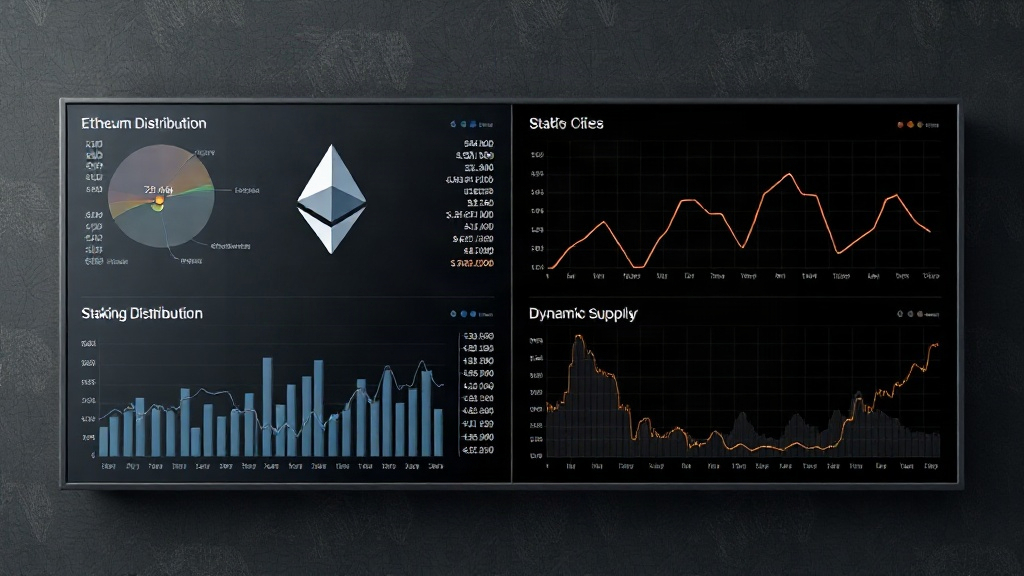
Examining its limitations, short-term token burns are highly dependent on the popularity of on-chain applications and macro market sentiment, while the widespread adoption of Layer 2 solutions has altered the mainnet fee structure while shunting fees elsewhere. Therefore, the long-term value and scarcity of ETH should not rely solely on localized deflationary data, but must return to its broader foundational attributes: as the world's largest decentralized smart contract platform, Ethereum hosts thousands of on-chain applications, a massive stablecoin settlement and clearing network, and high-security censorship-resistance features. This multidimensional network effect and Store of Value (SoV) attribute constitute the fundamental pillars supporting ETH's scarcity and long-term economic value.