Does "Wif on Eth" Have an Official Fixed Issue Price?
In the cryptocurrency market, many investors look for a token's "issue price" or "primary market subscription price" to evaluate their investment costs. However, for various tokens on the Ethereum chain known as "Wif on Eth" or Ethereum-version tokens sharing the same name, they generally do not have an officially announced fixed issue price or presale pricing. These tokens are essentially Meme coins or copycats freely created by anonymous deployers on decentralized exchanges (such as Uniswap).
Unlike crypto projects led by institutions that feature fundraising stages, private placements, and public issue prices, the deployment process for Meme coins on DEXs is very straightforward. After creating a token within a smart contract, deployers typically kick off trading directly by adding a certain amount of tokens along with a small amount of ETH (or other native assets) to a decentralized liquidity pool. Because the entire process lacks announcements from centralized issuing institutions or primary market subscription phases, there is no universally applicable, officially endorsed "statutory initial offering price" on the blockchain.
Price Formation Mechanism of WIF Copycats on Ethereum
Since there is no officially set issue price, how are the opening price and subsequent prices of tokens like "Wif on Eth" determined? The core mechanism relies on on-chain free bidding and Automated Market Maker (AMM) models.
In liquidity pools on DEXs such as Uniswap, the initial relative price of a token is determined by the asset ratio set by the deployer when injecting the first tranche of liquidity. For instance, if a deployer deposits hundreds of millions of tokens into the pool but pairs them with only a tiny amount of ETH, the theoretically calculated initial price per token will be extremely low (often manifested as a tiny value with multiple zeros after the decimal point). Subsequently, as early buyers (snipers or retail investors) trade via smart contracts, prices fluctuate violently and in real-time based on the constant product formula ($x \times y = k$).
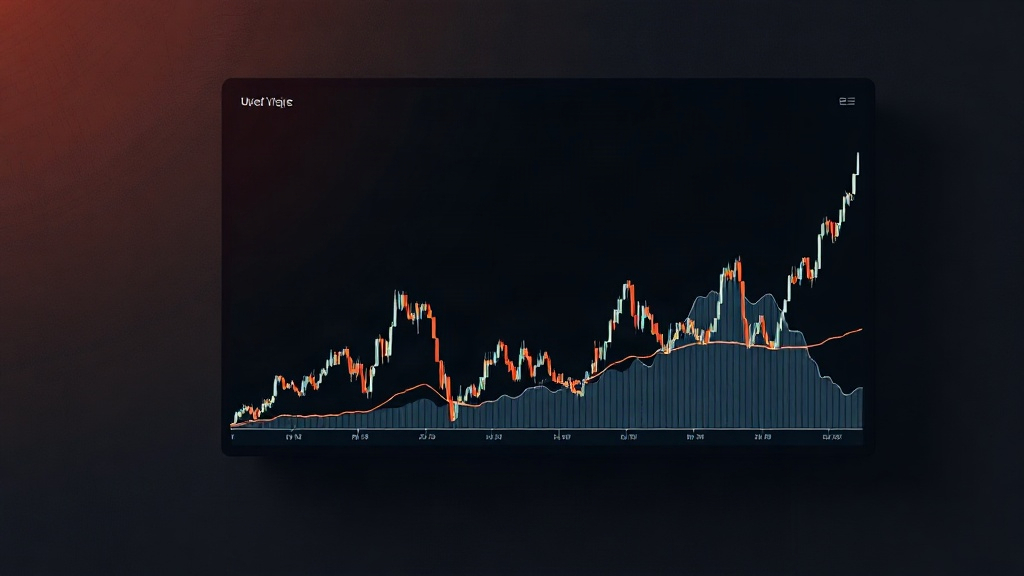
Because such tokens are entirely driven by instantaneous market buying and selling sentiment, they are extremely prone to sharp surges and crashes after opening. According to monitoring data from public market platforms such as CoinMarketCap and CoinGecko, due to a lack of substantive utility support and fragmented market attention, many derivative Meme coins sharing the same name on the Ethereum chain often experience rapid price pullbacks after early speculative hype. Some quotes even hover near zero for extended periods (such as dropping as low as $0.000038 or lower), and tokens with the same name deployed at different smart contract addresses remain entirely independent in pricing with no cross-connection.
Core Differences Between the Authentic WIF and Ethereum Copycats
To accurately understand the pricing phenomenon of Wif on Eth, it must be strictly distinguished from the authentic dogwifhat (WIF). The authentic WIF was originally issued on the Solana network, gaining mainstream market liquidity listings thanks to a specific community culture and massive ecosystem consensus. In contrast, the various "Wif on Eth" tokens emerging on the Ethereum chain are overwhelmingly derivative assets sharing the same name, deployed by trend-followers or independent speculators using the ERC-20 standard.
At the smart contract level, these Ethereum copycats have no technical or official team affiliation with the authentic WIF on the Solana chain. They borrow the same name and visual symbols in an attempt to attract retail funds that either do not understand cross-chain distinctions or blindly chase highs. Therefore, the historical market performance, market capitalization, or pricing logic of WIF on Solana cannot be applied to tokens with the same name on the Ethereum chain.
Limitations and Risks of Participating in Freely Launched DEX Tokens
Because assets like Wif on Eth operate entirely within decentralized environments, their market participation carries prominent structural limitations and high risks. First, due to a lack of authoritative data tracking and unified contract verification, investors often encounter multiple contracts with the same name on block explorers, making them highly vulnerable to purchasing fake or abandoned tokens that have lost liquidity.
Second, DEX opening mechanisms grant early deployers and whale accounts immense manipulation room. Pools with initially shallow liquidity are prone to "honeypot scams" (where tokens can be bought but not sold) or the risk of a "Rug Pull," where the deployer withdraws liquidity at any time, causing an instant drop to zero. For average investors, blindly probing into a so-called "issue price" in an environment lacking official whitepapers, substantive business backing, and centralized market-making safeguards holds no practical reference value; rationally recognizing the extreme volatility and zeroing-out risks of Meme coins is the key to avoiding losses.