Core Definition and Background of TCAP Token
TCAP token stands for Total Crypto Market Cap Token. It is an ERC-20 compatible smart contract token developed and launched by Cryptex Finance on the Ethereum blockchain. Unlike regular project-issued tokens, TCAP was not designed to represent a single decentralized application, Layer-1 blockchain, or institutional equity. Instead, it aims to serve as a macroeconomic financial instrument that directly reflects the performance of the total market capitalization of the entire cryptocurrency market.
In the cryptocurrency ecosystem, investors typically gauge market trends by tracking individual assets such as Bitcoin and Ethereum, lacking a standardized asset that allows one-click allocation to the overall market performance. The emergence of TCAP fills this gap, enabling users to directly participate in and share the overall growth or volatility of the entire cryptocurrency asset class by holding a single on-chain token.
Operational Mechanism and Price Pegging Principle of TCAP Token
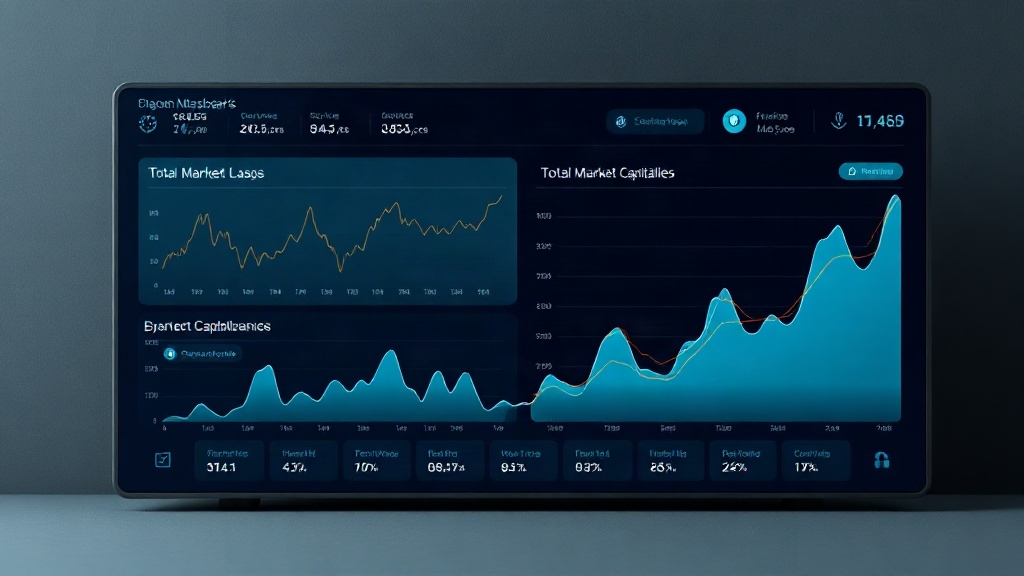
The core mechanism of TCAP relies on Asset Nominal Tokenization technology. Its working principle maps the total market capitalization of all global cryptocurrencies in real-time to the price of a single token using a specific mathematical algorithm. Specifically, the price of TCAP is calculated by dividing the real-time total cryptocurrency market cap by a fixed divisor (e.g., 10,000,000,000). This means that when the total cryptocurrency market cap reaches a certain scale, the theoretical price of TCAP automatically scales proportionally. For example, if the global total market cap is $3.5 trillion, the corresponding theoretical price of TCAP is approximately $350.
To maintain this price peg and ensure the intrinsic value of the token, the Cryptex protocol adopts an over-collateralized minting mechanism. Users cannot acquire TCAP directly out of thin air; instead, they must deposit supported assets (such as ETH or DAI) into the Cryptex smart contract. Typically, the system requires the collateralization ratio to be maintained above 200%. Users mint a corresponding amount of TCAP by over-collateralizing assets; conversely, when users choose to burn TCAP, they can retrieve their locked collateral, usually subject to a 1% burning fee. This mechanism ensures that every TCAP in circulation is backed by real on-chain crypto assets.
Applicable Conditions and Governance Rights of TCAP Token
When understanding the functions of TCAP, it is necessary to distinguish it from the protocol's native governance token. TCAP itself is a utility token that tracks total market capitalization, and holding TCAP does not grant users governance voting rights in the Cryptex protocol. Governance rights for the Cryptex protocol are exercised by another of its native tokens (such as CTX).
Furthermore, because the minting and burning of TCAP rely entirely on Ethereum smart contracts, users must bear corresponding requirements when operating on-chain. For example, minting and redemption require users to have a certain level of collateral asset management capability to prevent liquidation risks caused by collateral ratios falling below safe thresholds due to violent market fluctuations. Meanwhile, since it runs on the Ethereum network, any on-chain minting, burning, or transfer operations require a small amount of ETH prepared as gas fees.
Where to Trade TCAP Token
For users looking to acquire or trade TCAP, there are currently two core pathways: native on-chain minting and decentralized exchange (DEX) swaps.
First, users can mint and redeem directly through the official application. Users can visit the official Cryptex Finance application interface (app.cryptex.finance), connect a supported Web3 self-custody wallet (such as MetaMask, Binance Web3 Wallet, etc.), and autonomously mint TCAP by depositing assets like ETH or DAI, or burn TCAP to redeem collateral when no longer needed. This approach is suitable for advanced DeFi users who want to acquire the token through over-collateralization.
Second, users can buy and sell via decentralized exchanges (DEXs). Since TCAP is an Ethereum-based ERC-20 token, users can directly swap other mainstream tokens (such as USDC, USDT, ETH) for TCAP on major decentralized trading protocols like Uniswap and Sushiswap, or provide liquidity for related trading pairs to earn fee yields. When trading on decentralized exchanges, users also need to ensure that their wallets retain sufficient ETH to pay for Ethereum network interaction gas fees.