Core Definition and Product Mechanics of AMKT
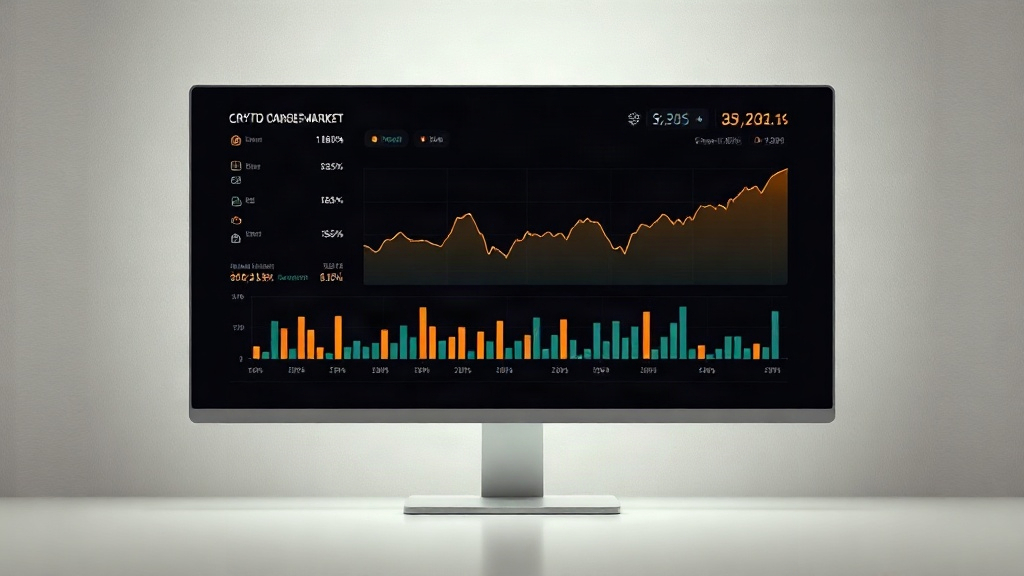
AMKT, short for Alongside Crypto Market Index, is an index token designed to track the performance of the entire cryptocurrency market. Its core design philosophy is similar to broad-based index funds in traditional financial markets (such as the S&P 500), allowing investors to gain proportional exposure to mainstream assets in the crypto market through a single holding, simply by holding a single credential. Specifically, AMKT includes the top 25 crypto assets by market capitalization in its portfolio and employs a circulating market capitalization-weighted approach to determine the weight distribution of each asset, thereby preventing a single small-cap token from exerting an excessive volatile impact on the overall index.
In terms of daily operations and maintenance, AMKT features a standardized dynamic adjustment mechanism. The token implements monthly portfolio rebalancing and quarterly constituent reconstruction. Monthly rebalancing aims to correct weight deviations caused by differing price changes among crypto assets, ensuring the index closely aligns with the actual market structure of the top 25 assets; meanwhile, quarterly reconstruction is used to evaluate and adjust the constituent list, incorporating newly promoted top-cap assets while removing underperforming ones. This mechanism ensures that the index automatically iterates along with the dynamic evolution of the crypto industry, reducing the tedious manual portfolio adjustments for investors.
Asset Custody, Security Audits, and Proof of Reserves
For any crypto asset or tokenized product, the security and transparency of the underlying assets are crucial cornerstones determining whether it can be considered a long-term holding. AMKT adopts a multi-party cooperative architecture in infrastructure and risk compliance. In the asset custody phase, its underlying reserve assets are securely custodied by Coinbase, a compliant and well-known institution, which mitigates the risk of private key loss or single points of failure on the custodian's side to a certain extent.
Regarding smart contract security, AMKT's code has been evaluated by multiple reputable security audit firms in the industry (such as Oak Security and Sigma Prime) to identify potential code vulnerabilities and logical flaws. Furthermore, to prove to the market that its full-collateralization commitment is genuine, AMKT has introduced a third-party proof of reserves mechanism, with Armanino's Trust Explorer verifying the correspondence between its on-chain assets and off-chain custodied assets in real-time or periodically, thereby enhancing overall transparency.
However, the existence of audit and custody mechanisms does not equate to absolute principal safety. Smart contracts constantly face unforeseen mathematical or logical risks, and custodians must also bear corresponding compliance and operational tests. Investors must factor these systemic risks into consideration when evaluating such products.
Liquidity Characteristics and Market Trading Limitations
When assessing whether an asset is suitable for long-term holding, market liquidity and trading depth are critical dimensions that cannot be ignored. Currently, AMKT's primary trading scenarios are concentrated on decentralized exchanges (DEXs), such as liquidity pools like Uniswap V3 on the Base chain. Compared to the massive daily trading volumes of mainstream coins on centralized exchanges, AMKT's overall circulating supply, market capitalization, and market liquidity are relatively small.
Limited liquidity brings several direct practical implications: when holders wish to execute large buy or sell operations within a short timeframe, they may encounter higher price slippage; simultaneously, narrower trading depth also means its prices are more susceptible to disturbances from localized capital inflows and outflows. If extreme market conditions or panic occur, insufficient liquidity may lead to slower liquidation efficiency or increased trading costs, constituting a clear application limitation for capital pursuing high liquidity or planning frequent swing trading operations.
Dimensions for Long-Term Holding Considerations and Potential Risks
Regarding the core question of "whether AMKT is worth holding long-term," authoritative long-term investment ratings or macroeconomic institutional yield forecasts are currently lacking in the public market, with most materials remaining at the product whitepaper definition and basic market trend display stages. Therefore, when making decisions, investors should weigh the pros and cons rationally based on its underlying logic.
From a positive perspective, if investors are optimistic about the growth of the overall cryptocurrency market across long-term macro cycles and prefer not to spend energy researching and allocating dozens of different coins separately, AMKT provides a convenient asset allocation tool. By passively tracking the top 25 assets, it helps mitigate the risk of individual projects going to zero.
However, from the perspective of limitations and risks, the overall high volatility of the crypto market, uncertainties in macroeconomic regulatory policies, and AMKT's own relatively small market scale and liquidity friction are negative factors that cannot be ignored. Additionally, because the index indiscriminately includes the top 25 assets, some underperforming assets or those lacking ecological support are also passively included, meaning investors must also bear systemic drawdowns when the overall market declines or certain constituents fail. Consequently, AMKT is better suited as a supplementary tool for investors with specific risk preferences seeking diversified allocation, rather than a risk-free long-term preservation asset.