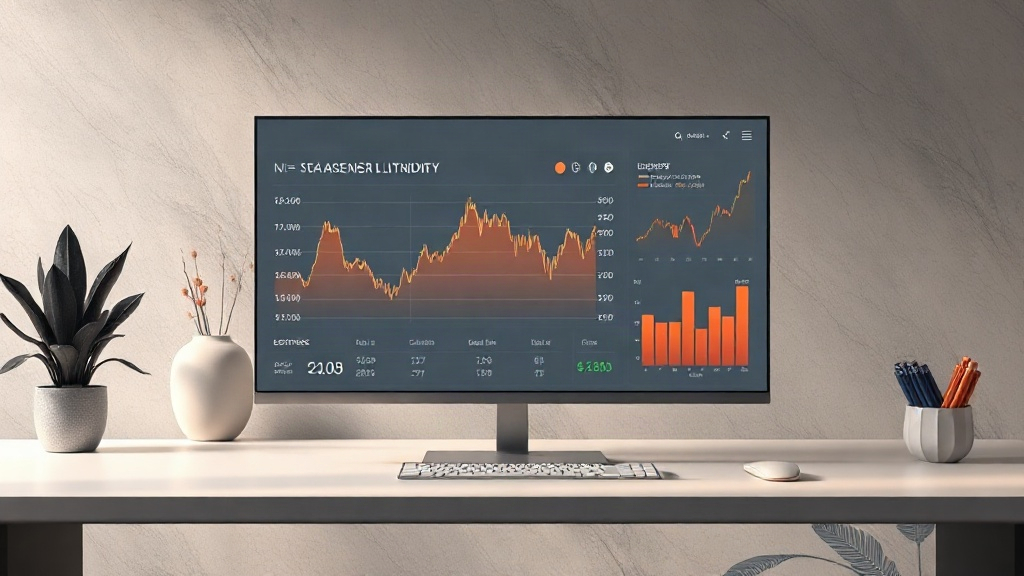
Macroeconomic Cycles and Liquidity Dynamics in the Cryptocurrency Market
From the perspective of cross-asset performance in modern global financial markets, cryptocurrency is largely classified as risk assets. Macroeconomic cycles, especially the monetary policy stance of major global central banks led by the Federal Reserve, have a profound impact on the entire digital asset market, including BNB. When central banks adopt tight monetary policies, such as consecutive rate hikes or advancing quantitative tightening (QT), the rise in the risk-free rate directly drives up the cost of capital across society as a whole. At this point, market liquidity tightens, and capital tends to flow back into high-yield, low-risk fiat currencies or sovereign debt instruments, which usually exerts downward pressure on the valuations and market performance of crypto assets.
Conversely, when the macroeconomy faces downward pressure or inflation is brought under control, loose monetary policies, rate cut expectations, or liquidity injections tend to improve the market's risk appetite. In such a macroeconomic environment, capital is more willing to flow into asset categories with high risk and high growth potential. As one of the mainstream crypto assets, BNB exhibits a high positive correlation between its price fluctuations and the overall market liquidity cycle and risk appetite index. However, the impact of macroeconomic monetary policy is not directly targeted at a specific token, but rather indirectly diverts or attracts the overall liquidity pool of the crypto market by altering overall macroeconomic financial conditions, the DXY (US Dollar Index), and government bond yields.
Suppression of Altcoins and Ecosystem Assets by Inflation and Interest Rate Environments
High inflation environments are typically accompanied by central banks maintaining relatively high benchmark interest rates. In this context, the opportunity cost of holding non-yield-bearing assets (such as native tokens that do not generate stable cash flows) rises significantly. Investors must weigh whether to allocate funds to US Treasury bonds that can provide deterministic high interest rates, or to bear high volatility risks by holding cryptocurrencies. The high-interest-rate environment poses a persistent liquidity squeeze on the overall crypto market capitalization, particularly the altcoin sector.
In addition, the strengthening of the DXY often absorbs global liquidity, causing the purchasing power of non-dollar-denominated assets to be suppressed periodically. Although the blockchain ecosystem features decentralization and cross-border mobility, its pricing and trading depth rely heavily on fiat stablecoins. Consequently, the US dollar repatriation effect triggered by global macro tightening forms a natural constraint on the valuations of crypto assets. In this macroeconomic context, even if an individual token is supported by strong intrinsic value, it is difficult to completely immunize against the systemic fluctuations brought about by macroeconomic liquidity cycles.
BNB's Supply-Side Mechanism: Auto-Burn and BEP-95 Real-Time Burning
Unlike the fiat inflation or deflation of national macroeconomies, BNB has built a programmatic deflation mechanism within its ecosystem that is entirely driven by code and on-chain actual usage. This is mainly reflected in two core dimensions: first, the quarterly Auto-Burn mechanism, and second, the BEP-95 real-time gas fee burning mechanism.
The Auto-Burn mechanism automatically calculates and burns a corresponding amount of tokens based on the market price of BNB and the block production volume of BNB Smart Chain (BSC) within a specific quarter. For example, in the quarterly burns of October 2025 (the 33rd burn) and July 2026 (the 36th burn), a substantial amount of BNB was permanently removed from circulation. The long-term economic goal of BNB is to ultimately reduce the total supply to 100 million BNB through this continuous deflationary process.
Meanwhile, the BEP-95 mechanism introduces a real-time gas fee burning model. When processing each on-chain transaction, BSC network validators burn a portion of the gas fee in real-time. This mechanism directly binds the activity of the on-chain ecosystem and the frequency of smart contract calls with the circulating supply of the token: the more prosperous the on-chain economic activity, the greater the number of tokens burned. This structural contraction on the supply side aims to combat potential value dilution by reducing future supply.
The Essential Difference Between Internal Deflation Mechanisms and Macroeconomic Monetary Policies
It is crucial to clearly distinguish between BNB's programmatic deflation and inflation or deflation in national macroeconomies. Macroeconomic monetary policies are formulated by central banks based on macroeconomic data (such as CPI, unemployment rates, and GDP growth) to adjust interest rates and money supply, with the objective of regulating macroeconomic supply and demand and price stability in the real economy. In contrast, BNB's burning mechanism is a value capture and supply adjustment tool within a micro crypto-economy, driven by on-chain ecosystem usage rates, transaction fee revenue, and the project team's established tokenomics rules.
Despite BNB's robust intrinsic deflationary design, which can optimize its long-term value foundation by reducing supply, it cannot offset the liquidity shocks brought by macroeconomic cycles. Under extreme market conditions with severely tightened macroeconomic liquidity, the short-term pricing of assets remains profoundly constrained by global macroeconomic financial conditions. Therefore, understanding the evolution of BNB's value requires simultaneously examining the dynamic balance between its internally healthy deflationary economic model and the externally complex macroeconomic environment.