IOEN Token Project Background and Core Technical Mechanisms
IOEN (Internet of Energy Network) is a blockchain project aiming to transform traditional energy distribution and consumption models. Its core concept is to build an interconnected virtual microgrid system based on the Holochain technology framework. Traditional energy grids are mostly centralized, whereas microgrids allow communities, households, or small commercial entities to locally produce, store, and share renewable energy (such as solar power). IOEN's goal is to facilitate value exchange and energy trading within and between these local energy ecosystems through decentralized ledgers and protocols.
In terms of technical architecture, unlike traditional blockchains (such as Ethereum's global state consensus), Holochain adopts an agent-centric distributed architecture designed for higher scalability and lower transaction costs, which is theoretically well-suited for high-frequency, micro-settlements in local microgrids. However, with the trend of multi-chain development, IOEN's smart contracts have also expanded to support multiple mainstream chains, including Ethereum, Polygon, and BNB Smart Chain, allowing the token to circulate within a broader DeFi ecosystem.
Market Performance and Price History Analysis
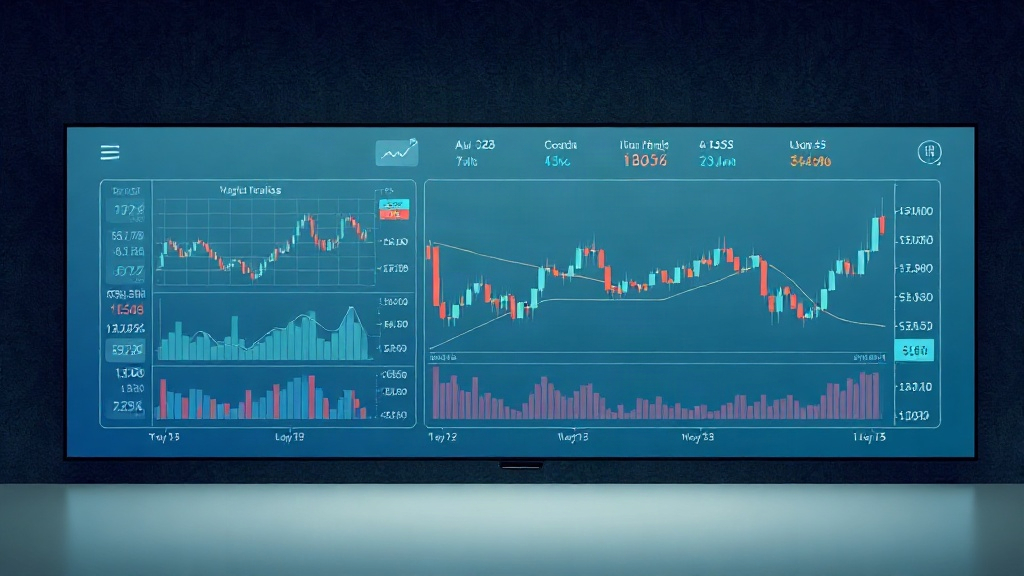
From the objective data of the secondary market, the IOEN token has long faced significant downward price pressure and liquidity issues. According to market statistics, IOEN's all-time high (ATH) once reached approximately the $0.2889 to $0.443 range (different data sources vary slightly due to volatility records during the early launch period). However, under the dual impact of cryptocurrency market cycle fluctuations and slow project ecosystem progress, its price has plummeted to extremely low levels, typically hovering around $0.00044 to $0.0008, representing a drop of over 99.9% from its historical peak.
Regarding supply, IOEN's tokenomics set its maximum and total supply at 1,000,000,000 (1 billion) tokens, with a current circulating supply of approximately 317 million tokens. Due to its extremely low price, its market capitalization has correspondingly shrunk to between approximately $140,000 and $250,000, classifying it as a typical long-tail micro crypto asset. In terms of trading activity, its 24-hour trading volume is meager, with daily trading volume in some DEX pools occasionally amounting to only tens of dollars.
Trading Channels and Actual Liquidity Status
For observers seeking to participate in this asset, understanding its actual trading channels and liquidity conditions is crucial. According to real-time market records, IOEN still has corresponding trading pairs on certain DEXs (such as Ethereum ecosystem protocols like Uniswap V2). For instance, among channels explicitly meeting current liquidity inclusion, Uniswap V2 (Ethereum) is one of its publicly verifiable active platforms. It should be noted that due to its small asset scale and low market attention, many mainstream CEXs do not provide trading support for it, and some platforms even explicitly mark it as untradeable. Consequently, its actual trading depth is extremely limited, and large-scale buy or sell orders can easily trigger severe price slippage.
Limitations of Investment Opportunities and Risk Assessment
Regarding the "investment opportunities" surrounding the IOEN token, objective market ratings and institutional analyses generally maintain a highly cautious attitude. On one hand, its underlying concept—virtual microgrids and distributed energy tokenization—theoretically aligns with the long-term trend of the global energy transition. On the other hand, there is a lack of an effective value transmission mechanism between its actual business implementation progress and its secondary market price. The construction of microgrid projects often heavily relies on the regulatory environment, local power infrastructure partnerships, and long-term engineering execution, fundamentals that are unlikely to generate direct speculative tailwinds for the native token in the short term.
Due to its extremely small market capitalization, near-exhausted liquidity, and lack of support from major mainstream CEXs, it faces extreme price volatility risks and difficulties in cashing out. When examining such long-tail micro assets, investors must fully recognize the potentially vast gap between technological visions and public market performance, and guard against liquidity depletion and going-to-zero risks.
Information on available platforms in the text changes dynamically with exchange listings and delistings; please refer to the official announcements of the exchanges.