



Underlying Mechanisms and Market Cycle Causes of Cryptocurrency's Continuous Decline
The continuous decline and deep bear market phase in the cryptocurrency market are often the result of a combination of macro liquidity-driven structural recessions and micro market structures, rather than being determined by a single sudden event. From the perspective of micro trading mechanisms, consecutive price drops directly trigger internal chain reactions within the market. As the barometer of the entire crypto market, Bitcoin's (BTC) initial drop rapidly breaches the margin safety lines of a large number of long traders, triggering large-scale forced liquidations (liquidations). This concentrated and automated liquidation mechanism dumps a massive amount of selling pressure onto the market in a short period of time, leading to severely insufficient order book depth and an instantaneous depletion of market liquidity.
Against the backdrop of depleted liquidity, panic selling ensues. This not only further depresses the prices of mainstream coins, but also subjects altcoins to drawdowns that are multiples greater than those of mainstream assets. In the absence of sufficient buying support in the market, this negative feedback loop of "decline-liquidation-liquidity deterioration-further decline" has become the core technical mechanism leading to continuous sluggish bleeding or even seemingly "bottomless" drops of cryptocurrencies within specific cycles.
Direct Suppression by External Macroeconomics and Institutional Capital Flows
Aside from internal market leverage clearing, external macroeconomic environments and shifts in institutional capital flows have a decisive and direct impact on cryptocurrency price trends. In recent years, as the correlation between crypto assets and traditional financial markets has deepened, changes in the macro financial environment have quickly transmitted to the digital asset sphere. For instance, when U.S. macroeconomic inflation data (such as CPI) exceeds expectations, prompting the Federal Reserve to maintain or tighten monetary policy and interest rate expectations, the rise in risk-free yields directly suppresses the valuations of various high-risk assets, including cryptocurrencies.
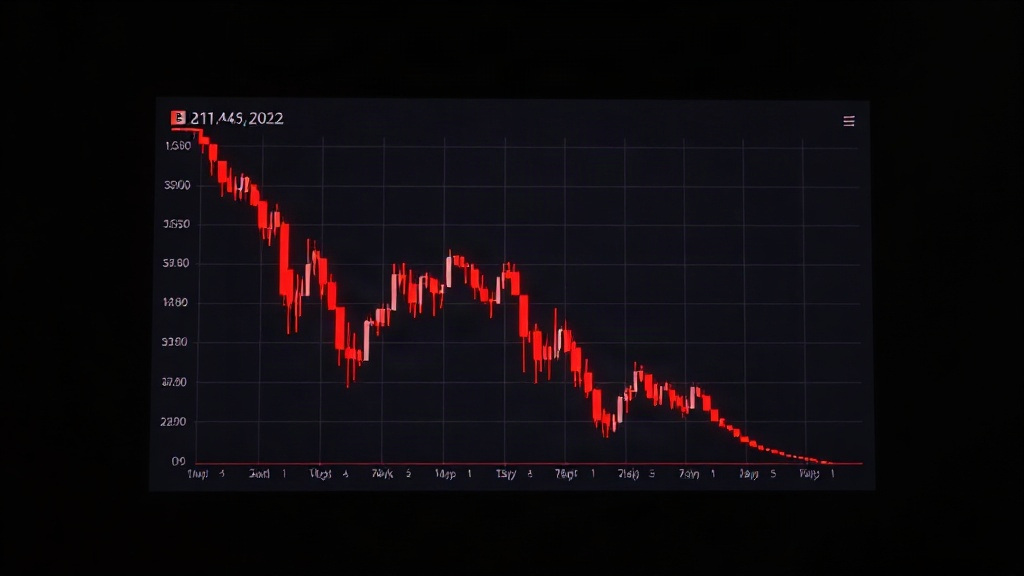
Meanwhile, the inflow and outflow of institutional capital has always been the barometer of market strength. When U.S. spot Bitcoin ETFs experience sustained large-scale net outflows (such as outflows exceeding billions of dollars in a single month during specific phases), it indicates that the risk appetite of traditional institutional investors is declining significantly. By observing the premium performance on major trading terminals like Coinbase, one can find that when the premium remains negative for a long period or is relatively low compared to overseas markets, it indicates that U.S. domestic institutions and over-the-counter buyers have not chosen to "buy the dip" upon pullbacks. This long-term fracture in new capital inflows has directly resulted in the market's inability to organize any decent rebound when facing selling pressure, creating a passive predicament of insufficient buying power.
Historical Bear Market Cycle Regularities and Market Clearing Mechanisms
Facing the anxiety of "is crypto finished since it keeps falling," and looking back at the development history of the crypto market, it exhibits distinct cyclical fluctuation characteristics (such as the classic four-year cycle rule). Throughout history, every multi-month bear market and deep correction is essentially an inevitable stage for market mechanisms to squeeze out speculative bubbles accumulated in earlier phases and clear out overheated leverage. Survival of the fittest is the norm in a free market, and only by experiencing sufficient bubble bursting can a foundation be laid for the healthy development of the next phase.
From the perspective of market observation and technical analysis, the market truly stabilizing and heading toward recovery often does not depend on isolated bullish news or verbal pumping, but rather on the complete clearing of panic selling, the complete disappearance of high-leverage speculative funds, and the restoration of market liquidity and order depth. However, it must be soberly recognized that not all crypto assets can survive the winter in a bear market. Some altcoins and vaporware projects lacking actual application scenarios, real demand, or cash flow support do face the realistic risk of their prices dropping to zero in the long-term absence of liquidity. Therefore, viewing cycles rationally and understanding market clearing mechanisms are the keys to distinguishing quality assets from speculative bubbles.









