

Faster global financial news!

ETH Ethereum2
ETHMarket
-
Trend
-
K-Line
ETHNews
-
Ethereum Researcher Leo Glisic Releases the Privacy Guardians 2.0 Proposal
Svmuu News: Leo Glisic, a researcher at Ethereum, has released the “Privacy Guardians 2.0” proposal, which aims to replace enterprise-controlled on-chain payments with the Privacy Guardians alternativ
-
Robinhood Chain Ranks Second in Developer Activity Among Public Blockchains, Trailing Only Ethereum
Svmuu News: Data shows that developer activity on the Robinhood Chain has risen to second place among public blockchains, trailing only the Ethereum. Base, Polygon, and BNB Chain rank third through fi
-
What is the value of the REDPANDA token? Is it worth investing in for the long term?
The REDPANDA token ecosystem encompasses multiple projects, among which REDPANDA Earth on Ethereum is dedicated to red panda conservation and has undergone a smart contract migration from V1 to V2 along with a rebranding. The V2 version introduced a new token economic model and staking functionality, and launched an NFT collection.In addition, there is a REDPANDA token on the Solana blockchain called Red Panda Network. This article will analyze the fundamentals, market performance, and potential risks of these projects to help readers understand their value proposition and long-term investment considerations.
-
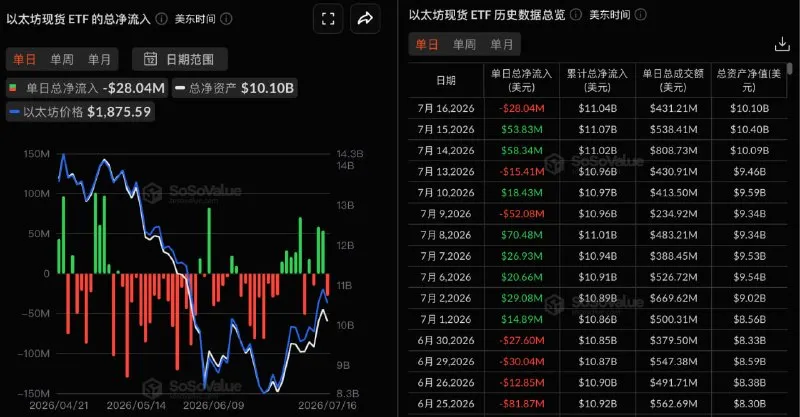
Ethereum Spot ETFs saw total net outflows of $28.0413 million yesterday, with only the Bitwise ETF (ETHW) recording net inflows.
Svmuu News: According to data from SoSoValue, Ethereum’s spot ETFs saw total net outflows of $28.0413 million yesterday (July 16, Eastern Time). The Ethereum spot ETF with the highest single-day net i
-
Analysis of the Moguto (MOGU) Token Issuance Price and Total Supply
Moguto (MOGU) is a cryptocurrency running on the Ethereum platform, inspired by the popular “Mushroom Head” meme. As of July 17, 2026, there is no publicly available, definitive issuance price for the MOGU token.Regarding its total supply, there are significant discrepancies among different data sources: some platforms list it as 100 million, while others list it as 1 billion, and the token’s design incorporates a deflationary mechanism. This article will explore these key economic parameters of Moguto in detail.
-
A whale has cumulatively withdrawn 50,000 ETH from Coinbase Prime, worth $95.4 million.
Svmuu News: According to Onchain Lens, one day after withdrawing 30,000 ETH, a whale withdrew another 20,000 ETH from Coinbase Prime, worth approximately $37.7 million, bringing the total amount withd
-
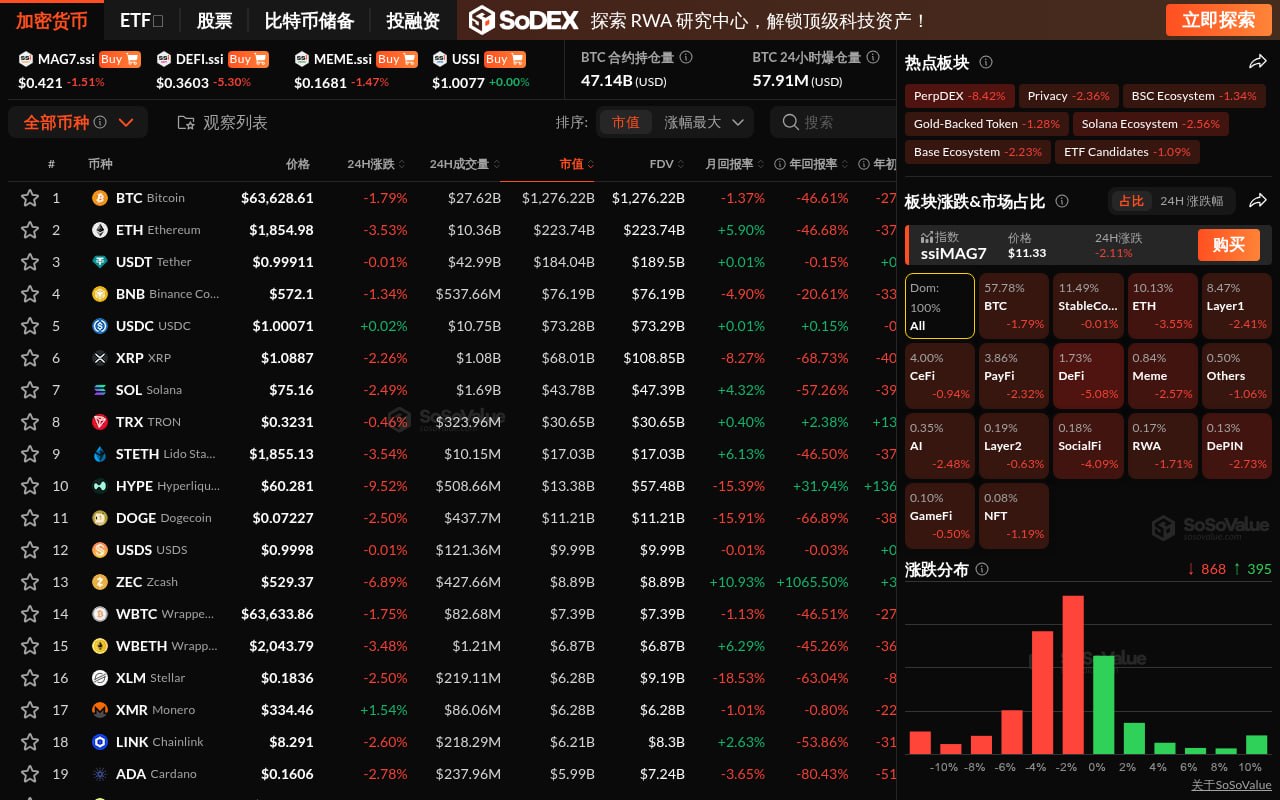
The crypto market fell across the board, with the DeFi sector dropping more than 5%
Svmuu News, July 17: According to data from SoSoValue, all sectors of the crypto market declined, with the DeFi sector performing weakly, falling 5.08% over the past 24 hours. Among them, Hyperliquid
-
A trader purchased 5.04 million CASHCAT tokens and incurred an unrealized loss of $460,000, representing a loss rate of 61%.
Svmuu News: According to Lookonchain’s monitoring, as CASHCAT continues to decline, a certain trader is currently facing an unrealized loss of $460,000, representing a 61% loss. The trader previously
-
Russian State Duma Committee Recommends Rejecting Amendment to Ease Cryptocurrency Restrictions; Annual Purchase Limit for Retail Investors to Remain at 300,000 Rubles
Svmuu News: The Russian State Duma’s Financial Markets Committee has recommended rejecting an amendment aimed at easing restrictions on cryptocurrency trading.As the bill approaches its crucial second
-
Silver rose 1.8% to $55.743 per ounce
Svmuu News: According to the latest data from Gate, the price of gold has risen to $3,992 per ounce, marking a 0.4% increase for the day. The price of silver has risen to $55.743 per ounce, marking a


-
Lookonchain: Trader 0xD81a, who previously lost $12M on ETH, returns after 6 months to buy 2,165 ETH ($5.33M) at $2,463
The trader, known for losing $12M by buying high and selling low on ETH, had previously sold ETH at an average price of $2,452. Their current purchase marks a return to the market after six months of
-
OKX to Support KITE Token Migration to New Ethereum (ERC-20) Contract, Suspending Deposits and Withdrawals from August 26 UTC 2:00
The migration is scheduled to take place between August 26 UTC 2:00 and August 29 UTC 6:00. KITE trading will not be affected, but deposits to the old contract address will no longer be supported afte
-
Upbit Launches Ethereum (ETH) Trading Event with a Total Prize Pool of 1 BTC
Upbit Launches Ethereum (ETH) Trading Event with a Total Prize Pool of 1 BTC
-
Lookonchain: Tom Lee's Bitmine purchased another 20,000 ETH ($48.89M) from Kraken
Lookonchain: Tom Lee's Bitmine purchased another 20,000 ETH ($48.89M) from Kraken
-
Lookonchain: TRON Reached 400M Total Users in 8.16 Years, Faster Than Bitcoin (9.4 Years) and Ethereum (Over 10 Years)
Lookonchain: TRON Reached 400M Total Users in 8.16 Years, Faster Than Bitcoin (9.4 Years) and Ethereum (Over 10 Years)
-
Crypto-related stocks rise, with CleanSpark and BitMine jumping 7% and 4% respectively.
Cryptocurrency-related stocks rose on Tuesday, with miner CleanSpark (CLSK) jumping 7% and BitMine (BMNR) up 4%. During the same period, Bitcoin prices were around $79,377.30, up 0.4%. BitMine previou
-
Lookonchain: Bitcoin ETFs See Net Inflow of $336.07M on Aug 25, Ethereum ETFs Net Inflow $109.6M
Lookonchain: Bitcoin ETFs See Net Inflow of $336.07M on Aug 25, Ethereum ETFs Net Inflow $109.6M
-
<p> Ethereum DeFi Sees $36 Million Liquidated as Token Price Swings 3% </p>
Ethereum DeFi Sees $36 Million Liquidated as Token Price Swings 3%
-
Thailand's SEC opens consultations on Bitcoin and Ether ETF rules, including foreign custodian standards
Thailand's SEC opens consultations on Bitcoin and Ether ETF rules, including foreign custodian standards
-
Monad proposes wallet upgrade to enhance security against lost keys and quantum attacks
The Ethereum-compatible blockchain's proposal aims to allow users to replace the keys controlling an account without changing its address, which would enable features such as passkeys, recovery tools,
-
Ethereum (ETH) Price Today and USD Trend Analysis
As of August 26, 2026, the price of Ethereum (ETH), the world's second-largest cryptocurrency, fluctuated between $2,447 and $2,475 against the US dollar. Over the past week and month, ETH has shown strong performance, rising approximately 28.19% and 25.78% to 30.83%, respectively. However, it has cumulatively fallen by about 43.67% to 48.74% over the past year. Ethereum's current market capitalization is approximately $295 billion to $297 billion, with a 24-hour trading volume between $14 billion and $16 billion. Its supply is influenced by both Proof-of-Stake (PoS) issuance and the EIP-1559 burn mechanism, and market sentiment is currently cautiously optimistic.
-
Analysis of the Sustainability and Future Growth Potential of Ethereum DeFi
The Ethereum DeFi ecosystem, driven by its PoS transition, Layer 2 scaling solutions, and continuous network upgrades, demonstrates significant sustainability and growth potential. Since the Merge in 2022, energy consumption has drastically decreased, and transaction costs have been significantly optimized through L2 solutions. Institutional interest in spot Ethereum ETFs is growing, and DeFi protocols continue to innovate. Despite facing centralization concerns and market competition, Ethereum DeFi is poised to expand its market share in the coming years due to its dominant position, technological advancements, and the integration of Real World Assets (RWAs).
-
DAWN Token Total Supply Analysis: Distinguishing Between Solana and Ethereum Projects with the Same Name
There are multiple projects with the same name DAWN token, primarily including a data-driven launchpad/decentralized wireless network token on the Solana chain, and the Dawn Protocol gaming competition token on the Ethereum chain. Both have significant differences in total supply, circulating supply, and market activity. This article will introduce the issuance data for these two DAWN projects separately and highlight the current market situation of Ethereum Dawn Protocol, which has extremely low trading volume.
-
SIGIL Coin: Multi-Entity Analysis and Trading Status
"SIGIL coin" refers to multiple different cryptocurrency projects. This article will delve into two main entities: Sigil Finance, an Ethereum-based DeFi platform, and another decentralized token called "The Sigil," also mentioning a 2018 blockchain crowdfunding project. Given that some projects have extremely low trading activity, this article will focus on explaining their respective positioning, token utility, and current trading market conditions, reminding readers to be aware of potential risks.
-
Will SOL Coin Collapse? Can Solana Become the Next Ethereum?
Solana (SOL), as a high-performance Layer-1 blockchain, has garnered significant attention in the crypto market. This article delves into the potential collapse risks facing SOL, including historical network outages, the impact of the FTX incident, market competition, and governance disputes. Concurrently, it analyzes the resilience and rapid development of the Solana ecosystem. Furthermore, the article compares Solana with Ethereum, dissecting Solana's advantages in performance and fees, as well as Ethereum's inherent position in ecosystem maturity, security, and decentralization, to assess whether SOL can become the next blockchain giant.
-
What are the potential "zero-crisis" risks facing Ethereum (ETH)?
As the second-largest cryptocurrency by market capitalization, Ethereum faces multiple potential long-term risks that could lead to a significant decline or even loss of its value. These risks include increased centralization under the PoS mechanism, security vulnerabilities in smart contracts and infrastructure, persistent scaling challenges, potential funding crises for the Ethereum Foundation, and pressure from competitors and regulatory uncertainties. Understanding these risks is crucial for evaluating Ethereum's future, but please note that this is not investment advice.
-
What is 4XB coin? Analyzing the current status and potential risks of the 4xBit project
4xBit (4XB) is an ERC-20 token based on Ethereum, designed to provide digital currency investment and trading opportunities, with plans for application in gaming and VR fields. However, as of now, the 4xBit token lacks an active trading market, with no available real-time price, market cap, or 24-hour trading volume data. Its GitHub project activity has also been stagnant for a long time, and investors need to be fully aware of its high-risk nature.
-
In-depth Analysis of ETH Coin's Current Status and Future Development Prospects
Ether (ETH), as the native cryptocurrency of the Ethereum network, is the second-largest digital asset by market capitalization, underpinning the DeFi, NFT, and metaverse ecosystems. Recently, Ethereum has significantly enhanced its scalability and reduced transaction costs through a series of upgrades such as Dencun, Pectra, and Fusaka. The Ethereum Foundation's 2026 roadmap focuses on faster transaction speeds, smart wallets, and quantum security. Despite market volatility and regulatory challenges, most experts remain optimistic about its long-term prospects.
-
What is HOMT Coin? Project Status and Trading Market Analysis
HOMT (HOM Token) is an Ethereum-based cryptocurrency launched in 2020, aiming to provide a blockchain-driven marketplace platform for the student rental accommodation industry. However, according to the latest public data, HOMT's circulating supply shows as zero, and its 24-hour trading volume is almost stagnant, indicating that the token no longer has an active trading market. This article will delve into HOMT's project vision, technical foundation, and its current market status.
-
AEN Coin Analysis: Project Background and Market Status of Aencoin (AENS)
Aencoin (AENS) is a utility token based on the Ethereum platform, serving as the primary healthcare token within the Aenco ecosystem. The project completed its ICO in 2018. However, as of August 24, 2026, AENS exhibits extremely low market activity, with 24-hour trading volumes typically being very small, and significant discrepancies and inconsistencies in publicly available price and market capitalization data. Investors should be fully aware of its liquidity risks.










About ETH
As the most critical infrastructure in the crypto world, Ethereum is the birthplace of the vast majority of on-chain innovations—including DeFi (decentralized finance), NFTs, DAOs, GameFi, and stablecoins. The overwhelming majority of on-chain value and applications are built on it, and the scale of its ecosystem and developer activity have long ranked first among all public blockchains. A vast ecosystem of tools, wallets, and infrastructure has also emerged around Ethereum, further solidifying its network effects.
In terms of technological evolution, Ethereum completed a major upgrade known as “The Merge” in 2022, transitioning its consensus mechanism from Proof-of-Work (PoW) to the more energy-efficient Proof-of-Stake (PoS), reducing the network’s energy consumption by approximately 99%. Since then, Ethereum has continued to improve throughput and reduce transaction fees through Layer 2 scaling solutions (such as Rollups) and sharding, with the mainnet increasingly serving as the settlement and security layer. The fee-burning mechanism introduced by EIP-1559 also gives ETH certain deflationary characteristics during periods of high network activity.
ETH is the native token of the Ethereum network. It is used to pay transaction fees (Gas) for on-chain transactions and smart contract execution, and can also be staked to participate in network consensus, ensure security, and earn staking rewards—thereby fostering a vast liquid staking ecosystem. From stablecoins and decentralized lending to NFTs and real-world assets (RWAs), vast amounts of value are settled using ETH and the Ethereum network as the underlying infrastructure.
As the second-largest cryptocurrency by market capitalization, trailing only Bitcoin, Ethereum is widely regarded as the core infrastructure of the entire crypto industry and the settlement layer for the “on-chain economy.” With the approval of Ethereum spot ETFs and continued institutional investment, ETH’s long-term position among global digital assets is becoming increasingly solid; however, its price remains highly volatile, and investors should rationally assess the risks.
A thriving Layer 2 ecosystem has emerged around Ethereum, including platforms such as Arbitrum, Optimism, and Base. These platforms significantly reduce user costs while inheriting the security of the mainnet, driving Ethereum’s evolution toward a “modular” multi-layer architecture. Despite fierce competition from other high-performance public blockchains, Ethereum remains firmly entrenched as the leading smart contract platform, thanks to its deep developer ecosystem, rich application ecosystem, and high degree of decentralization.
On this page, you can view the latest price of Ethereum (ETH), its 24-hour price change, and market data for major trading pairs such as ETH/USDT and ETH/USD in real time. You can also analyze Ethereum’s price trends using multi-timeframe candlestick charts (minute, hourly, daily, weekly) and technical indicators such as MA, MACD, and RSI; The page also provides Ethereum’s real-time market capitalization and ranking, 24-hour trading volume, and historical price data, aggregates the latest Ethereum news, and supports quick conversion of ETH to fiat currencies such as the Chinese yuan and the U.S. dollar.
ETH Data

24H Trending
-
1
BlackRock Bitcoin ETF once reached a $100 billion milestone: the fastest ever, current AUM approximately $98.5 billion, annual revenue target $500 million

-
2
BitDATA Exchange Token BDT: Multi-Entity and Token Analysis, and Scam Alert

-
3
US Treasury Secretary Bessent Reportedly Prepares Measures to Curb Rising Bond Yields
-
4
Thailand's SEC opens consultations on Bitcoin and Ether ETF rules, including foreign custodian standards
-
5
BCUG Coin Analysis: The Current State of Blockchain Cuties Universe Governance Token and Market Liquidity

-
6
Mexico Bonds Trade Like Junk After $130 Billion Bailout of Pemex
-
7
Analog Devices (ADI) Q3 Revenue Soared 40% YoY, Net Income Doubled to $1.34 Billion; Q4 Revenue Guidance Implies Another 40% Growth
-
8
Analysis indicates that Walmart (WMT) saw a 5.1% year-over-year increase in Q2 revenue and a 2.6% rise in U.S. comparable store sales. However, given its P/E ratio of 38x and a dividend yield below 1%, investors are advised to hold off on buying for now.
-
9
AGGL Coin Value Analysis: Extremely Low Market Activity, Questionable Investment Prospects

-
10
An Analysis of the Current State of Virtual Currency Regulation and Trading Risks in Mainland China


Recommended Reading

Hot Topics

Svmuu focuses on blockchain industry trends and cutting-edge cryptocurrency news, while also covering real-time market data and in-depth analysis of the Hong Kong, U.S., and foreign exchange markets. Here, you can not only access professional 24/7 news updates and accurate market data, but also utilize practical investment tools to help you capitalize on opportunities in both digital assets and traditional financial markets. Whether you are a blockchain enthusiast or an investor in Hong Kong, U.S., or foreign exchange markets, we provide efficient and timely information services to empower your investment decisions.
- User Agreement
- Privacy Policy
- Contact Us
- Business Partnerships
- Disclaimer
- Content Statement
- About Us
- Sitemap
 Coming Soon!
