

Faster global financial news!

ETH Ethereum2
ETHMarket
-
Trend
-
K-Line
ETHNews
-
Vitalik Buterin: Ethereum's Deep Dive into Transaction Formats Will Drive Optimization by Separating "Actions" and "Dependencies," Laying the Foundation for Future Hyperscale Expansion
Ethereum founder Vitalik Buterin stated that recent deep dives into transaction formats (such as EIP-8141, UTXO, PBT, keyed nonces, and recursive STARK mempools) have led to a clearer understanding of
-
Vitalik Buterin retweeted that ethrex_client has launched a testnet for Frames, FOCIL, and related EIPs, aiming to make privacy protocols a first-class citizen on Ethereum.
Vitalik Buterin retweeted that ethrex_client has launched a testnet for Frames, FOCIL, and related EIPs, aiming to make privacy protocols a first-class citizen on Ethereum.
-
Vitalik Buterin highlights significant progress on Frames (EIP-8141) over recent months, recommends reading the updated EIP
Vitalik Buterin highlights significant progress on Frames (EIP-8141) over recent months, recommends reading the updated EIP
-
BTCT (Bitcoin True) Analysis: Current Status, Contract Information, and Ambiguity Clarification
BTCT, or Bitcoin True, is an ERC-20 token issued on the Ethereum blockchain. Currently, the token has extremely low market activity, negligible trading volume, and no official website can be found in public records. Additionally, the ticker BTCT is often used to refer to stock codes, such as those of publicly listed companies focused on Bitcoin mining or accumulation, so care must be taken to distinguish them when identifying.
-
STILT (Stilton) Value Analysis: Project Status and Investment Considerations
STILT coin, or Stilton, is a memecoin launched on the Ethereum platform in 2022, which had plans to pivot to the NFT art space and incorporate a deflationary mechanism. However, as of now, the project's official website is inaccessible, the token is marked as "untracked," and both its 24-hour trading volume and market capitalization are zero. This article will delve into the current status of STILT coin, its historical performance, and its implications for potential investors, while emphasizing the extremely high risks it faces.
-
ACORE AI Token (ACORE) Analysis: Market Status of AI Virtual Agent Tokens
ACORE AI Token (ACORE) is the native utility token of the ACORE AI ecosystem, designed to empower human-like virtual agents through advanced AI technology. The token is based on the Ethereum network and is primarily used for platform service payments and governance. However, as of September 5, 2026, the ACORE token no longer has an active trading market, with its 24-hour trading volume and market capitalization at extremely low levels, and major data platforms indicating that its trading activity has ceased.
-
In-depth Analysis of Ether (ETH): Definition, Issuance Mechanism, and Market Position
Ether (ETH) is the native cryptocurrency of the Ethereum blockchain, serving not only as a medium of exchange but also as the "fuel" that powers decentralized applications (DApps) and smart contracts, used to pay network transaction fees (gas fees). The Ethereum platform, launched by Vitalik Buterin in 2015, is the second-largest cryptocurrency by market capitalization. Unlike Bitcoin, Ether does not have a fixed maximum supply cap; its issuance is adjusted through a "minimum necessary issuance" model. Following "The Merge" in September 2022, which transitioned to a Proof-of-Stake (PoS) mechanism, ETH's issuance has significantly decreased. Combined with the transaction fee burning mechanism introduced by EIP-1559, its supply may become deflationary during certain periods.
-
ARTEM Token Analysis: The Current State and Market Liquidity of a Token Fusing Art and Blockchain
ARTEM is a cross-chain token connecting traditional art with blockchain, launched in collaboration by House of Fine Art (HOFA) and Kreation. It serves as the core of the HOFA DAO, offering holders NFTs, governance voting rights, and VIP access. ARTEM is deployed on the Ethereum blockchain, but as of September 5, 2026, its 24-hour trading volume is extremely low, with market liquidity nearly depleted. Investors need to fully understand its high-risk nature before considering participation.
-
WXRP Coin Analysis: A Bridge Connecting XRP and the Ethereum Ecosystem and Its Future Outlook
Wrapped XRP (WXRP) is an Ethereum-compatible ERC-20 token designed to bring XRP, the native cryptocurrency of the XRP Ledger, into the Ethereum DeFi ecosystem. It is pegged to XRP at a 1:1 ratio and backed by XRP reserves held by custodians, enabling XRP to be traded, staked, and used in DApps on the Ethereum network. The value and prospects of WXRP are closely tied to the overall performance of XRP, its regulatory environment, and its application in international payments. Recently, the involvement of institutions like Hex Trust has further expanded its cross-chain functionality and DeFi use cases.
-
SMOG Token Analysis: Small Dog on Base (SMOG) Project Status and Risk Assessment
Initially launched as a dragon-themed memecoin on the Solana blockchain, SMOG later expanded to Ethereum via Wormhole, attracting attention with its gamified airdrops and community incentive mechanisms. The project experienced rapid price appreciation and was listed on CEXs. However, as of September 5, 2026, SMOG's 24-hour trading volume has plummeted to extremely low levels, with market liquidity severely depleted. Investors should be wary of its high-risk characteristics.







-
Binance completes latest Proof of Reserves, users can independently verify 1:1 backing for assets like BTC, ETH
Binance has completed its latest Proof of Reserves, allowing users to independently verify 1:1 backing for assets such as BTC, ETH, BNB, SOL, and XRP. Previously, Binance had replenished 95% of the as
-
Glassnode Report: ETH Vaults Underperformed Staking in September, USD Strategy Vaults Outperformed US Treasuries, Tracking Balance Increased to $10 Billion
Glassnode Report: ETH Vaults Underperformed Staking in September, USD Strategy Vaults Outperformed US Treasuries, Tracking Balance Increased to $10 Billion
-
Bitmine Continues to Accumulate Ethereum; Tom Lee Calls Binance Hack a "Positive"
Bitmine continues to accumulate Ethereum, and Tom Lee calls the Binance hack a positive. Tom Lee, co-founder of Fundstrat Global Advisors, stated that Ethereum's mere 4% drop after the Binance hack in
-
Uniswap extends VolatilePair Hook to Robinhood Chain
The extension includes an ETH/USDG pool with approximately $3.5 million in liquidity, which features a tighter resting fee spread compared to its Ethereum counterpart.
-
Tether says it has frozen over 4.5 million USDT related to the Mercado Bitcoin incident.
Tether stated that records on the Ethereum and Tron blockchains confirm blacklisting actions have been taken against the wallets identified by Mercado Bitcoin, and the exchange's deposits and withdraw
-
Mercado Bitcoin Keeps Withdrawals Suspended, Identifies Incident Wallets
Mercado Bitcoin stated that customers suffered no losses and linked the incident to destination wallets receiving Bitcoin, Ether, and other assets.
-
Bitmine added 8,573 ETH last week, increasing its holdings to 6.06 million ETH, while Tom Lee noted a muted market reaction to the Binance hack.
Bitmine added 8,573 ETH last week, increasing its holdings to 6.06 million ETH, while Tom Lee noted a muted market reaction to the Binance hack.
-
Ethereum active stake rose by 361,000 ETH in October, while total staking balance shrank by 80,000 ETH
According to CryptoKeyhole's data for October 1-30, Ethereum's active effective stake increased by approximately 361,000 ETH. Concurrently, the total consensus layer holdings decreased by about 80,000
-
Lookonchain: BlackRock has seen outflows of 580,145 ETH, worth approximately $1.32 billion, in the past month.
According to Lookonchain monitoring, BlackRock has seen continuous ETH outflows over the past month, totaling 580,145 ETH, equivalent to approximately $1.32 billion.
-
Lookonchain: Bitcoin and Ethereum ETFs see significant outflows on Nov 2
According to Lookonchain, Bitcoin ETFs recorded a 1-day net outflow of 7,919 BTC (approximately $614.26 million) and a 7-day net outflow of 2,292 BTC (approximately $177.81 million) as of Nov 2. Ether
-
SWAI Token: SchwiftAI Project Analysis and Market Status
SWAI (SchwiftAI) is an Ethereum-based ERC-20 token project that combines meme concepts with AI utility tools, aiming to provide a music loop generator. Launched in 2023, the project claims to offer AI music creation tools. However, according to current data, SWAI's circulating supply is zero, and its 24-hour trading volume is near zero or unreported, with no reported market cap. This indicates extremely low market activity, suggesting it may not have officially launched circulation or has become stagnant. Investors should exercise extreme caution when considering such high-risk projects.
-
What is YCC/Yuan Chain Coin? Issue Price, Total Supply, and Investment Risk Warning
Yuan Chain Coin (YCC), also known as Yuan Chain, is an ERC-20 project launched in 2018 based on Ethereum, positioned as enterprise-grade Blockchain as a Service (BaaS) and cross-chain interaction. Its total token supply is approximately 10 billion, but public information does not reliably disclose the issue price. Recent data on price, circulating supply, and trading volume show significant discrepancies, and market activity is near depletion. This article provides only basic information and risk warnings and does not constitute investment advice.
-
ETHFI Coin (ETHFI) Analysis: Current State and Recent Developments of Liquid Staking Protocols
ETHFI is the governance token for Ether.fi, a decentralized liquid restaking protocol. The protocol allows users to stake Ethereum (ETH) and receive liquid tokens (eETH) while maintaining control over their private keys. Recently, Ether.fi announced a $3 billion long-term ETH staking commitment and has become the third-largest staking service provider. The price of ETHFI tokens has recently been affected by factors such as whale unlocks. Its future development is closely tied to its integration depth within the Ethereum staking ecosystem and protocol governance.
-
Multicoin (MTCN) Token Analysis: An Ecosystem Token on Ethereum
Multicoin (MTCN) is an ERC20 token based on Ethereum, serving as the core medium of exchange for the Multiven Open Marketplace (MOM) and the Boom ecosystem. The project aims to create a decentralized trading platform for IT products and services, offering software integrity maintenance and cyber defense services. However, as of November 2, 2026, both the price and on-chain market capitalization of the MTCN token are displayed as $0.00, and mainstream data platforms indicate that it is currently unavailable for purchase on cryptocurrency exchanges, suggesting that the token no longer has an active trading market.
-
KERMIT Coin: Trading Status and Channel Analysis
KERMIT is a frog-themed memecoin on the Ethereum and Solana blockchains, emphasizing its entertainment value over investment potential. Its market activity is low, with trading primarily conducted via decentralized exchanges. This article outlines the buying and selling process for KERMIT, supported wallets, and the current state of trading channels, while reminding investors of the high volatility and risks associated with memecoins.
-
BNSD Coin Analysis: The Current State of BNSD Finance Token on Ethereum
BNSD Coin is the token of the BNSD Finance project, which operates on Ethereum and is also described as a digital currency exchange. Currently, its price is extremely low, with a 24-hour trading volume of only about $2.45, indicating near-depleted market activity and a lack of reliable trading channels. This article analyzes its basic definition and current market status.
-
Can Ethereum still be mined with mining rigs? After the Merge, mining has shifted to staking.
Ethereum transitioned from Proof-of-Work to Proof-of-Stake in September 2022 via The Merge, rendering traditional Ethereum mining and miner selection obsolete. Current participation in network security primarily relies on staking ETH and running a validator node. If the question pertains to Ethereum Classic or other Proof-of-Work chains, equipment selection should be evaluated based on algorithm, energy consumption, residual value, and compliance. This article clarifies the post-Merge changes and common misconceptions.
-
Arbitrum (ARB) Token: Latest Price and Market Performance Analysis
Arbitrum (ARB) is the governance token for Arbitrum, an Ethereum Layer 2 scaling solution designed to enhance transaction speed and reduce costs. As of November 1, 2026, the ARB price is approximately $0.16, with a market capitalization ranging from $1.12 billion to $1.15 billion, and 24-hour trading volume between $64.43 million and $84.60 million. Its all-time high price reached $2.39-$2.40. This article will detail ARB's current market data, historical performance, and ecosystem positioning.
-
SHKG (Shikage) Analysis: Current Status of Rug-Pull Prevention Liquidity Locking Project
SHKG is the ERC20 token of the Shikage project, aiming to provide rug-pull resistant liquidity locking services for the Ethereum ecosystem. Launched in 2022, the project attempted to protect investors from scams by introducing a cooling-off period and a community voting mechanism. However, according to information from multiple data platforms, its official website is offline, the token currently lacks an active trading market, circulating supply is shown as zero, and project development has stalled.
-
How to Get Ethereum: A Guide to Buying, Staking, and Secure Storage
As the second-largest cryptocurrency by market capitalization, the methods for acquiring Ethereum have evolved with network upgrades. This article outlines the three main ways to obtain ETH: direct purchase via centralized exchanges or decentralized wallets, earning rewards through Proof-of-Stake (PoS) staking, and essential secure storage practices. The article also explains why traditional GPU mining is no longer applicable and provides an objective analysis of the entry barriers and risks associated with different acquisition methods.
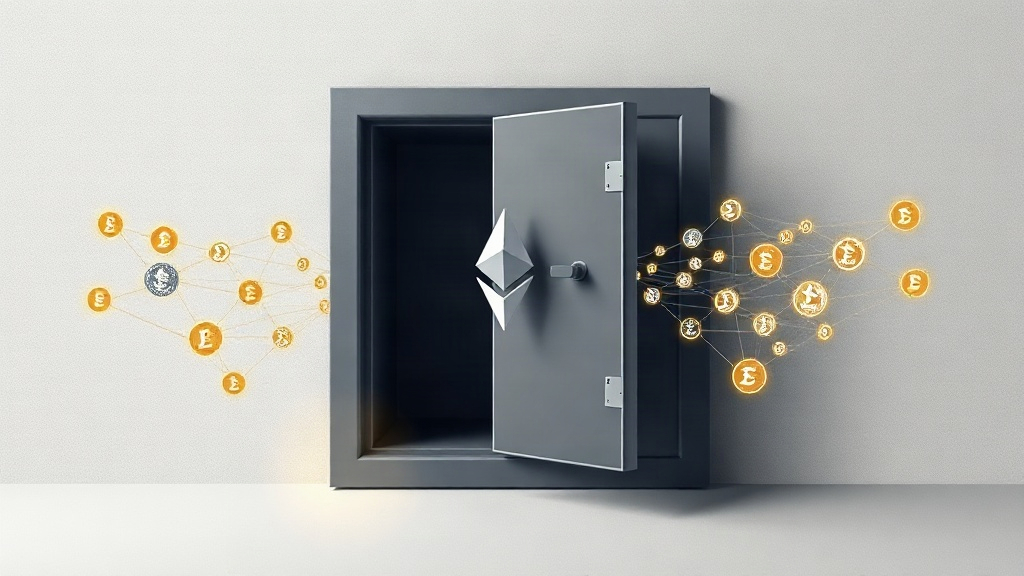





About ETH
As the most critical infrastructure in the crypto world, Ethereum is the birthplace of the vast majority of on-chain innovations—including DeFi (decentralized finance), NFTs, DAOs, GameFi, and stablecoins. The overwhelming majority of on-chain value and applications are built on it, and the scale of its ecosystem and developer activity have long ranked first among all public blockchains. A vast ecosystem of tools, wallets, and infrastructure has also emerged around Ethereum, further solidifying its network effects.
In terms of technological evolution, Ethereum completed a major upgrade known as “The Merge” in 2022, transitioning its consensus mechanism from Proof-of-Work (PoW) to the more energy-efficient Proof-of-Stake (PoS), reducing the network’s energy consumption by approximately 99%. Since then, Ethereum has continued to improve throughput and reduce transaction fees through Layer 2 scaling solutions (such as Rollups) and sharding, with the mainnet increasingly serving as the settlement and security layer. The fee-burning mechanism introduced by EIP-1559 also gives ETH certain deflationary characteristics during periods of high network activity.
ETH is the native token of the Ethereum network. It is used to pay transaction fees (Gas) for on-chain transactions and smart contract execution, and can also be staked to participate in network consensus, ensure security, and earn staking rewards—thereby fostering a vast liquid staking ecosystem. From stablecoins and decentralized lending to NFTs and real-world assets (RWAs), vast amounts of value are settled using ETH and the Ethereum network as the underlying infrastructure.
As the second-largest cryptocurrency by market capitalization, trailing only Bitcoin, Ethereum is widely regarded as the core infrastructure of the entire crypto industry and the settlement layer for the “on-chain economy.” With the approval of Ethereum spot ETFs and continued institutional investment, ETH’s long-term position among global digital assets is becoming increasingly solid; however, its price remains highly volatile, and investors should rationally assess the risks.
A thriving Layer 2 ecosystem has emerged around Ethereum, including platforms such as Arbitrum, Optimism, and Base. These platforms significantly reduce user costs while inheriting the security of the mainnet, driving Ethereum’s evolution toward a “modular” multi-layer architecture. Despite fierce competition from other high-performance public blockchains, Ethereum remains firmly entrenched as the leading smart contract platform, thanks to its deep developer ecosystem, rich application ecosystem, and high degree of decentralization.
On this page, you can view the latest price of Ethereum (ETH), its 24-hour price change, and market data for major trading pairs such as ETH/USDT and ETH/USD in real time. You can also analyze Ethereum’s price trends using multi-timeframe candlestick charts (minute, hourly, daily, weekly) and technical indicators such as MA, MACD, and RSI; The page also provides Ethereum’s real-time market capitalization and ranking, 24-hour trading volume, and historical price data, aggregates the latest Ethereum news, and supports quick conversion of ETH to fiat currencies such as the Chinese yuan and the U.S. dollar.
ETH Data

24H Trending
-
1
OMG and RIF Contract Status Analysis: Two Layer Projects Heading in Different Directions

-
2
What is WE Coin? An Analysis of WeBuy Token (WE)'s Use Cases and Trading Platforms
-
3
Bitcoin, Gold, and Stocks: A Comparison of Risks, Returns, and Use Cases
-
4
Is it true that PI is buying Hongqi cars? Pi Network's latest developments and risk warnings
-
5
What is MATE? An Analysis of the Asset, Project Positioning, and Current Status

-
6
Cayman Islands Virtual Asset Trading Platforms: Regulatory Framework and Key Platforms Overview
-
7
FNB Protocol (FNB Coin) Value Analysis: Project Status and Investment Considerations

-
8
Deliq Finance (DLQ) Coin Analysis: Project Status and Market Liquidity
-
9
DECENTRALIZED (Runes) Token Analysis: Traceability Runes on the Bitcoin Runes Protocol
-
10
Can Ethereum still be mined with mining rigs? After the Merge, mining has shifted to staking.


Recommended Reading

Hot Topics

Svmuu focuses on blockchain industry trends and cutting-edge cryptocurrency news, while also covering real-time market data and in-depth analysis of the Hong Kong, U.S., and foreign exchange markets. Here, you can not only access professional 24/7 news updates and accurate market data, but also utilize practical investment tools to help you capitalize on opportunities in both digital assets and traditional financial markets. Whether you are a blockchain enthusiast or an investor in Hong Kong, U.S., or foreign exchange markets, we provide efficient and timely information services to empower your investment decisions.
- User Agreement
- Privacy Policy
- Contact Us
- Business Partnerships
- Disclaimer
- Content Statement
- About Us
- Sitemap
 Coming Soon!
