

Faster global financial news!
Ether
-
What is Ethereum? How does Ethereum work?
A comprehensive analysis of the core concepts, operating mechanisms, and underlying architecture of Ethereum and Ether (ETH). This article delves into the definition of Ethereum as a decentralized smart contract platform functioning as a "world computer," and breaks down the operational principles of the Ethereum Virtual Machine (EVM), smart contracts, the Proof-of-Stake (PoS) consensus mechanism, Gas fees, and Layer 2 scaling solutions, offering you an in-depth understanding of this world-leading blockchain network.
-
Bitcoin, Ether, and XRP Sell-Off Wipes Out $1.5 Billion in Leveraged Crypto Bets
The sell-off triggered $1.5 billion in forced liquidations of leveraged crypto bets, with nearly 84% being long positions. Binance processed almost half of the total. A subsequent market rebound then
-
How to Buy Ether (ETH) on OKX: A Detailed Guide
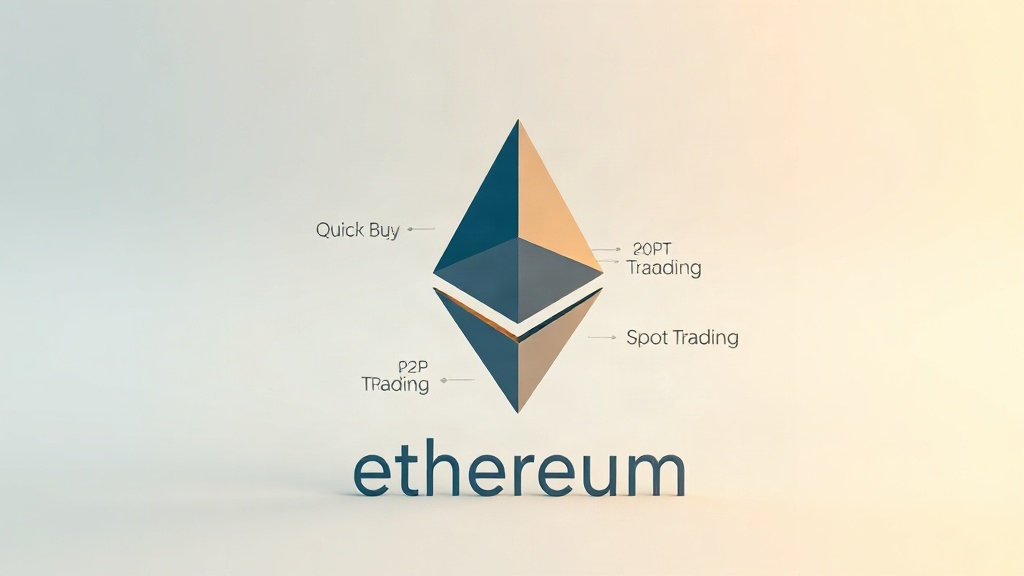
Ether (ETH), as the native cryptocurrency of the Ethereum network, is central to the decentralized finance and Web3 ecosystems. OKX is a well-known cryptocurrency exchange platform that offers users various convenient ways to purchase ETH, including Express Buy, C2C/P2P trading, and Spot trading. Users must complete identity verification (KYC) to trade, and the platform emphasizes its security, liquidity, and Web3 wallet integration. This article will detail the process and considerations for buying ETH on the OKX platform, helping users understand the characteristics and associated fees of different trading methods.
-
Choosing an Ether (ETH) Trading Platform: Security Considerations and Analysis of Major Exchanges
Choosing the safest platform for trading Ether (ETH) requires a comprehensive evaluation of its security measures, regulatory compliance, and user reviews. This article analyzes the key security features, historical incidents, and third-party assessments of major exchanges such as Coinbase, Kraken, Binance, OKX, Gemini, and Bybit, while also emphasizing the importance of individual user security practices to help readers make informed decisions.
-
Ethereum and Ether Analysis: Definitions, Development, and Current Status
Ethereum is a decentralized, open-source smart contract platform conceived by Vitalik Buterin and others, launched in 2015. Its native token, Ether, is used to pay network transaction fees and secure the network. The "Merge" upgrade in 2022 transitioned Ethereum's consensus mechanism to Proof of Stake, significantly reducing energy consumption. The Dencun upgrade in 2024 aims to lower Layer 2 network fees. Ethereum has become a core infrastructure for ecosystems such as DeFi and NFTs, with its development and upgrade roadmap continuously driving the evolution of blockchain technology.
-
The End of Ethereum Mining and Ether in the Proof-of-Stake Era
Ethereum completed "The Merge" in September 2022, transitioning entirely from a Proof-of-Work to a Proof-of-Stake mechanism, marking the end of traditional GPU mining. Under the new consensus mechanism, users secure the network and earn rewards by staking Ether to become validators. As the network's native asset, Ether's role has shifted from miner rewards to being central for staking and paying transaction fees. This article reviews this significant technological transformation and interprets Ethereum's current operating mechanism and Ether's functions.
-
Ethereum: Decentralized Platform, Ether, and Core Application Analysis
Ethereum is a decentralized open-source blockchain platform launched in 2015 by Vitalik Buterin, hailed as "Blockchain 2.0" for its smart contract and decentralized application (DApp) capabilities. Its native cryptocurrency, Ether (ETH), is the second-largest digital asset by market capitalization. The Ethereum network has undergone significant evolutions, including "The Merge" to Proof-of-Stake (PoS), the "Shanghai Upgrade" enabling staked ETH withdrawals, and the "Cancun Upgrade" reducing Layer 2 costs via Proto-Danksharding. Users can manage ETH through Web3 wallets and participate in a rich ecosystem of DeFi, NFTs, DAOs, and more, with ETH also serving as the gas fee for network transactions.
-
U.S. SEC Approves 3x Leveraged Bitcoin, Ether, Gold, Silver, Crude Oil, Natural Gas ETPs for Listing; Bloomberg Analyst Calls It Major Win for Volatility Shares
U.S. SEC Approves 3x Leveraged Bitcoin, Ether, Gold, Silver, Crude Oil, Natural Gas ETPs for Listing; Bloomberg Analyst Calls It Major Win for Volatility Shares
-
Bitmine Buys $69.4M in Ether, Bringing Holdings to 4.9% of Ethereum Supply
Bitmine Immersion Technologies (NYSE: BMNR) announced it added another 28,086 Ether to its holdings last week, valued at approximately $69.4 million at Tuesday's price. This purchase increases Bitmine
-
In-depth Analysis of Ether (ETH): Definition, Issuance Mechanism, and Market Position
Ether (ETH) is the native cryptocurrency of the Ethereum blockchain, serving not only as a medium of exchange but also as the "fuel" that powers decentralized applications (DApps) and smart contracts, used to pay network transaction fees (gas fees). The Ethereum platform, launched by Vitalik Buterin in 2015, is the second-largest cryptocurrency by market capitalization. Unlike Bitcoin, Ether does not have a fixed maximum supply cap; its issuance is adjusted through a "minimum necessary issuance" model. Following "The Merge" in September 2022, which transitioned to a Proof-of-Stake (PoS) mechanism, ETH's issuance has significantly decreased. Combined with the transaction fee burning mechanism introduced by EIP-1559, its supply may become deflationary during certain periods.
-
Coinbase Launches Regulated Crypto Futures for Eligible Canadian Traders, Offering 23 Crypto Assets Including Bitcoin, Ether, Solana, and Up to 10x Leverage
Coinbase Launches Regulated Crypto Futures for Eligible Canadian Traders, Offering 23 Crypto Assets Including Bitcoin, Ether, Solana, and Up to 10x Leverage
-
Ether (ETH) Issuance Price Review: ICO Details and Historical Significance
Ethereum (ETH)'s Initial Coin Offering (ICO) took place from July 22 to September 2, 2014, with an offering price of approximately $0.31/ETH. The ICO raised between $18.3 million and $18.66 million and sold over 60 million ETH. The Ethereum mainnet launched on July 30, 2015, marking its official debut as a decentralized smart contract platform. This ICO is widely regarded as one of the most successful in cryptocurrency history, laying the groundwork for Ethereum's subsequent development.
-
Russia's largest bank Sber plans to accept USDT, Ether, and Bitcoin as loan collateral, as the country introduces regulated crypto trading
Russia's largest bank Sber plans to accept USDT, Ether, and Bitcoin as loan collateral, as the country introduces regulated crypto trading
-
Bitmine (BMNR) becomes world's largest corporate Ether holder, with 5.85 million ETH valued at $14.6 billion, currently trading at a discount to NAV.
Bitmine (BMNR) becomes world's largest corporate Ether holder, with 5.85 million ETH valued at $14.6 billion, currently trading at a discount to NAV.
-
What is Ether (ETH)? Official Website, Exchanges, and Supply Mechanism Analysis
Ether (ETH) is the native cryptocurrency of the Ethereum blockchain, ranking second globally by market capitalization. It serves not only as the "fuel" for paying transaction fees but also as the core of the decentralized application (DApps) and smart contract ecosystem. Ethereum transitioned to a Proof-of-Stake (PoS) mechanism in September 2022 through "The Merge," significantly improving energy efficiency. Its supply is not fixed but dynamically adjusted through PoS issuance rewards and the EIP-1559 burn mechanism, potentially becoming deflationary during network congestion. In 2024, the U.S. SEC approved spot Ethereum ETFs, further enhancing its acceptance in mainstream financial markets.
-
Ether (ETH) Market Cap Analysis: Current Size and Historical Peaks Reviewed
Ether (ETH), as the world's second-largest cryptocurrency by market capitalization, maintained a stable market cap between $228.37 billion and $231.23 billion as of August 19, 2026. ETH reached its historical market cap peak of $571.67 billion on November 9, 2021, while its all-time high price hit $4,946.05 on August 24, 2025. The continuous development of the Ethereum ecosystem, the prosperity of DeFi and NFTs, and the approval of a spot Ethereum ETF by the US SEC have collectively driven its recognition and value growth in mainstream financial markets.
-
SharpLink reports Q2 net loss of $394M, primarily due to Ether's 23% decline
SharpLink reports Q2 net loss of $394M, primarily due to Ether's 23% decline
-
Russia’s Central Bank Proposes Allowing Bitcoin, Ether, and USDT to Trade on Regulated Exchanges
Russia’s Central Bank Proposes Allowing Bitcoin, Ether, and USDT to Trade on Regulated Exchanges
-
"ETER Coin" Trading Guide: Clarifying Misconceptions and Analyzing Ether (ETH) Trading Channels
Regarding the search for “ETER coin,” no widely circulated cryptocurrency entity was found in publicly available information. This name is often mistaken for Ether (ETH), the native token of the Ethereum.This article will first clarify common misconceptions about “ETER Coin,” then provide a detailed overview of the various ways to buy and sell Ether (ETH)—the cryptocurrency with the second-highest market capitalization—including centralized exchanges, decentralized exchanges, and crypto wallets, and list the major platforms that support ETH trading.
-
Ether Market Volatility Analysis and Diversified Investment Strategies
Ethereum As a leading decentralized blockchain platform, its native cryptocurrency, Ether (ETH), is known for its high volatility. This article takes an in-depth look at the key factors influencing the price of Ether, including major developments such as the transition of its consensus mechanism, the EIP-1559 burn mechanism, the Dencun upgrade, and the approval of the U.S. spot Ethereum ETF.Additionally, the article details various investment strategies for managing the high volatility of Ether—such as long-term holding, staking, swing trading, and dollar-cost averaging—while emphasizing the importance of risk management, with the aim of helping investors better understand and navigate the Ether market.
-
Ether Potential and Applications in Global Payment Systems
Ethereum Ethereum and its native token, Ether (ETH), are increasingly becoming an integral part of the global payment system. With its decentralized nature, smart contract capabilities, and Proof-of-Stake (PoS) consensus mechanism, offers efficient solutions for cross-border payments, tokenized assets, and stablecoin transactions.Institutional participation continues to grow, as evidenced by the launch of Ethereum Institutional in July 2026, which aims to facilitate the integration of traditional finance with the Ethereum ecosystem. Ethereum 's vast stablecoin ecosystem—which held approximately $180 billion in stablecoins as of July 2026—has significantly enhanced its utility in the global payments sector, although transaction fees during periods of network congestion remain one of the challenges it faces.
-
Kraken Launches Options Contract Suites at Bitcoin and Ether
Svmuu News: Kraken Exchange has launched a new suite of options contracts for Bitcoin and Ether.
-
Ether A Key Role in Decentralized Autonomous Organizations (DAOs)
Ether (ETH) plays multiple key roles within decentralized autonomous organizations (DAOs), particularly in terms of governance, financial operations, and ecosystem development. As the native token of the Ethereum blockchain, ETH serves not only as the fuel powering DAOs but is also frequently used as a governance token, granting holders the right to vote on organizational proposals.Furthermore, ETH’s staking mechanism provides security and a source of revenue for DAOs. This article will delve into the specific functions and importance of ETH within DAOs.











-
Bitcoin, Ether, and XRP Sell-Off Wipes Out $1.5 Billion in Leveraged Crypto Bets
The sell-off triggered $1.5 billion in forced liquidations of leveraged crypto bets, with nearly 84% being long positions. Binance processed almost half of the total. A subsequent market rebound then
-
U.S. SEC Approves 3x Leveraged Bitcoin, Ether, Gold, Silver, Crude Oil, Natural Gas ETPs for Listing; Bloomberg Analyst Calls It Major Win for Volatility Shares
U.S. SEC Approves 3x Leveraged Bitcoin, Ether, Gold, Silver, Crude Oil, Natural Gas ETPs for Listing; Bloomberg Analyst Calls It Major Win for Volatility Shares
-
Bitmine Buys $69.4M in Ether, Bringing Holdings to 4.9% of Ethereum Supply
Bitmine Immersion Technologies (NYSE: BMNR) announced it added another 28,086 Ether to its holdings last week, valued at approximately $69.4 million at Tuesday's price. This purchase increases Bitmine
-
Coinbase Launches Regulated Crypto Futures for Eligible Canadian Traders, Offering 23 Crypto Assets Including Bitcoin, Ether, Solana, and Up to 10x Leverage
Coinbase Launches Regulated Crypto Futures for Eligible Canadian Traders, Offering 23 Crypto Assets Including Bitcoin, Ether, Solana, and Up to 10x Leverage
-
Russia's largest bank Sber plans to accept USDT, Ether, and Bitcoin as loan collateral, as the country introduces regulated crypto trading
Russia's largest bank Sber plans to accept USDT, Ether, and Bitcoin as loan collateral, as the country introduces regulated crypto trading
-
Bitmine (BMNR) becomes world's largest corporate Ether holder, with 5.85 million ETH valued at $14.6 billion, currently trading at a discount to NAV.
Bitmine (BMNR) becomes world's largest corporate Ether holder, with 5.85 million ETH valued at $14.6 billion, currently trading at a discount to NAV.
-
SharpLink reports Q2 net loss of $394M, primarily due to Ether's 23% decline
SharpLink reports Q2 net loss of $394M, primarily due to Ether's 23% decline
-
Russia’s Central Bank Proposes Allowing Bitcoin, Ether, and USDT to Trade on Regulated Exchanges
Russia’s Central Bank Proposes Allowing Bitcoin, Ether, and USDT to Trade on Regulated Exchanges
-
Kraken Launches Options Contract Suites at Bitcoin and Ether
Svmuu News: Kraken Exchange has launched a new suite of options contracts for Bitcoin and Ether.
-
What is Ethereum? How does Ethereum work?
A comprehensive analysis of the core concepts, operating mechanisms, and underlying architecture of Ethereum and Ether (ETH). This article delves into the definition of Ethereum as a decentralized smart contract platform functioning as a "world computer," and breaks down the operational principles of the Ethereum Virtual Machine (EVM), smart contracts, the Proof-of-Stake (PoS) consensus mechanism, Gas fees, and Layer 2 scaling solutions, offering you an in-depth understanding of this world-leading blockchain network.
-
How to Buy Ether (ETH) on OKX: A Detailed Guide
Ether (ETH), as the native cryptocurrency of the Ethereum network, is central to the decentralized finance and Web3 ecosystems. OKX is a well-known cryptocurrency exchange platform that offers users various convenient ways to purchase ETH, including Express Buy, C2C/P2P trading, and Spot trading. Users must complete identity verification (KYC) to trade, and the platform emphasizes its security, liquidity, and Web3 wallet integration. This article will detail the process and considerations for buying ETH on the OKX platform, helping users understand the characteristics and associated fees of different trading methods.
-
Choosing an Ether (ETH) Trading Platform: Security Considerations and Analysis of Major Exchanges
Choosing the safest platform for trading Ether (ETH) requires a comprehensive evaluation of its security measures, regulatory compliance, and user reviews. This article analyzes the key security features, historical incidents, and third-party assessments of major exchanges such as Coinbase, Kraken, Binance, OKX, Gemini, and Bybit, while also emphasizing the importance of individual user security practices to help readers make informed decisions.
-
Ethereum and Ether Analysis: Definitions, Development, and Current Status
Ethereum is a decentralized, open-source smart contract platform conceived by Vitalik Buterin and others, launched in 2015. Its native token, Ether, is used to pay network transaction fees and secure the network. The "Merge" upgrade in 2022 transitioned Ethereum's consensus mechanism to Proof of Stake, significantly reducing energy consumption. The Dencun upgrade in 2024 aims to lower Layer 2 network fees. Ethereum has become a core infrastructure for ecosystems such as DeFi and NFTs, with its development and upgrade roadmap continuously driving the evolution of blockchain technology.
-
The End of Ethereum Mining and Ether in the Proof-of-Stake Era
Ethereum completed "The Merge" in September 2022, transitioning entirely from a Proof-of-Work to a Proof-of-Stake mechanism, marking the end of traditional GPU mining. Under the new consensus mechanism, users secure the network and earn rewards by staking Ether to become validators. As the network's native asset, Ether's role has shifted from miner rewards to being central for staking and paying transaction fees. This article reviews this significant technological transformation and interprets Ethereum's current operating mechanism and Ether's functions.
-
Ethereum: Decentralized Platform, Ether, and Core Application Analysis
Ethereum is a decentralized open-source blockchain platform launched in 2015 by Vitalik Buterin, hailed as "Blockchain 2.0" for its smart contract and decentralized application (DApp) capabilities. Its native cryptocurrency, Ether (ETH), is the second-largest digital asset by market capitalization. The Ethereum network has undergone significant evolutions, including "The Merge" to Proof-of-Stake (PoS), the "Shanghai Upgrade" enabling staked ETH withdrawals, and the "Cancun Upgrade" reducing Layer 2 costs via Proto-Danksharding. Users can manage ETH through Web3 wallets and participate in a rich ecosystem of DeFi, NFTs, DAOs, and more, with ETH also serving as the gas fee for network transactions.
-
In-depth Analysis of Ether (ETH): Definition, Issuance Mechanism, and Market Position
Ether (ETH) is the native cryptocurrency of the Ethereum blockchain, serving not only as a medium of exchange but also as the "fuel" that powers decentralized applications (DApps) and smart contracts, used to pay network transaction fees (gas fees). The Ethereum platform, launched by Vitalik Buterin in 2015, is the second-largest cryptocurrency by market capitalization. Unlike Bitcoin, Ether does not have a fixed maximum supply cap; its issuance is adjusted through a "minimum necessary issuance" model. Following "The Merge" in September 2022, which transitioned to a Proof-of-Stake (PoS) mechanism, ETH's issuance has significantly decreased. Combined with the transaction fee burning mechanism introduced by EIP-1559, its supply may become deflationary during certain periods.
-
Ether (ETH) Issuance Price Review: ICO Details and Historical Significance
Ethereum (ETH)'s Initial Coin Offering (ICO) took place from July 22 to September 2, 2014, with an offering price of approximately $0.31/ETH. The ICO raised between $18.3 million and $18.66 million and sold over 60 million ETH. The Ethereum mainnet launched on July 30, 2015, marking its official debut as a decentralized smart contract platform. This ICO is widely regarded as one of the most successful in cryptocurrency history, laying the groundwork for Ethereum's subsequent development.
-
What is Ether (ETH)? Official Website, Exchanges, and Supply Mechanism Analysis
Ether (ETH) is the native cryptocurrency of the Ethereum blockchain, ranking second globally by market capitalization. It serves not only as the "fuel" for paying transaction fees but also as the core of the decentralized application (DApps) and smart contract ecosystem. Ethereum transitioned to a Proof-of-Stake (PoS) mechanism in September 2022 through "The Merge," significantly improving energy efficiency. Its supply is not fixed but dynamically adjusted through PoS issuance rewards and the EIP-1559 burn mechanism, potentially becoming deflationary during network congestion. In 2024, the U.S. SEC approved spot Ethereum ETFs, further enhancing its acceptance in mainstream financial markets.
-
Ether (ETH) Market Cap Analysis: Current Size and Historical Peaks Reviewed
Ether (ETH), as the world's second-largest cryptocurrency by market capitalization, maintained a stable market cap between $228.37 billion and $231.23 billion as of August 19, 2026. ETH reached its historical market cap peak of $571.67 billion on November 9, 2021, while its all-time high price hit $4,946.05 on August 24, 2025. The continuous development of the Ethereum ecosystem, the prosperity of DeFi and NFTs, and the approval of a spot Ethereum ETF by the US SEC have collectively driven its recognition and value growth in mainstream financial markets.
-
"ETER Coin" Trading Guide: Clarifying Misconceptions and Analyzing Ether (ETH) Trading Channels
Regarding the search for “ETER coin,” no widely circulated cryptocurrency entity was found in publicly available information. This name is often mistaken for Ether (ETH), the native token of the Ethereum.This article will first clarify common misconceptions about “ETER Coin,” then provide a detailed overview of the various ways to buy and sell Ether (ETH)—the cryptocurrency with the second-highest market capitalization—including centralized exchanges, decentralized exchanges, and crypto wallets, and list the major platforms that support ETH trading.
-
Ether Market Volatility Analysis and Diversified Investment Strategies
Ethereum As a leading decentralized blockchain platform, its native cryptocurrency, Ether (ETH), is known for its high volatility. This article takes an in-depth look at the key factors influencing the price of Ether, including major developments such as the transition of its consensus mechanism, the EIP-1559 burn mechanism, the Dencun upgrade, and the approval of the U.S. spot Ethereum ETF.Additionally, the article details various investment strategies for managing the high volatility of Ether—such as long-term holding, staking, swing trading, and dollar-cost averaging—while emphasizing the importance of risk management, with the aim of helping investors better understand and navigate the Ether market.
-
Ether Potential and Applications in Global Payment Systems
Ethereum Ethereum and its native token, Ether (ETH), are increasingly becoming an integral part of the global payment system. With its decentralized nature, smart contract capabilities, and Proof-of-Stake (PoS) consensus mechanism, offers efficient solutions for cross-border payments, tokenized assets, and stablecoin transactions.Institutional participation continues to grow, as evidenced by the launch of Ethereum Institutional in July 2026, which aims to facilitate the integration of traditional finance with the Ethereum ecosystem. Ethereum 's vast stablecoin ecosystem—which held approximately $180 billion in stablecoins as of July 2026—has significantly enhanced its utility in the global payments sector, although transaction fees during periods of network congestion remain one of the challenges it faces.
-
Ether A Key Role in Decentralized Autonomous Organizations (DAOs)
Ether (ETH) plays multiple key roles within decentralized autonomous organizations (DAOs), particularly in terms of governance, financial operations, and ecosystem development. As the native token of the Ethereum blockchain, ETH serves not only as the fuel powering DAOs but is also frequently used as a governance token, granting holders the right to vote on organizational proposals.Furthermore, ETH’s staking mechanism provides security and a source of revenue for DAOs. This article will delve into the specific functions and importance of ETH within DAOs.
Ether

24H Trending
-
1
South Korea's KOSPI index fell 5.55% from its previous close, currently trading at 4,599.75.
-
2
Samsung Electronics fell 5.73% from its previous close, currently trading at ₩172,600.
-
3
SK Hynix fell 5.03% from its previous close, currently trading at ₩1,057,000.
-
4
Hang Seng Index was down 1.5% from its previous close, currently trading at 22,073.54
-
5
Global Cryptocurrency Exchanges and Mainstream Apps Inventory: Features, Tiers, and Selection Guide

-
6
Can U.S. regulators no longer shut down Bitcoin?

-
7
How is OKC Token? What kind of coin is OKT?

-
8
Bitcoin dropping below $60,000, compounded by rising U.S. Treasury yields, has introduced uncertainty into the Federal Reserve's December rate path
-
9
Taiwan Stock Exchange Capitalization Weighted Stock Index (TAIEX) rose 2.75% from its previous close, currently trading at 37,024.51.
-
10
How is GERO token? What is the future outlook for GERO token?
Markets Today





Recommended Reading

Hot Topics

Svmuu focuses on blockchain industry trends and cutting-edge cryptocurrency news, while also covering real-time market data and in-depth analysis of the Hong Kong, U.S., and foreign exchange markets. Here, you can not only access professional 24/7 news updates and accurate market data, but also utilize practical investment tools to help you capitalize on opportunities in both digital assets and traditional financial markets. Whether you are a blockchain enthusiast or an investor in Hong Kong, U.S., or foreign exchange markets, we provide efficient and timely information services to empower your investment decisions.
- User Agreement
- Privacy Policy
- Contact Us
- Business Partnerships
- Disclaimer
- Content Statement
- About Us
- Sitemap
 Coming Soon!
