

Faster global financial news!

ETH Ethereum2
ETHMarket
-
Trend
-
K-Line
ETHNews
-
Lido Lend proposes exit plan using borrower collateral for withdrawals
The plan would prioritize positions nearest liquidation, reducing their debt. However, eligibility for healthy loans and the lender’s route to ETH remain unspecified.
-
Drift Exploiter Moves $109M in ETH to Tornado Cash
Wallets linked to the $295 million April hack have sent $109 million in Ether to Tornado Cash over the past two days, including an additional $46 million on Wednesday. The exploiter still holds $138 m
-
Lookonchain: Drift Protocol exploiter deposited another 24,885 ETH ($61.3M) into Tornado Cash, still holds 56,569 ETH ($139.3M)
Lookonchain: Drift Protocol exploiter deposited another 24,885 ETH ($61.3M) into Tornado Cash, still holds 56,569 ETH ($139.3M)
-
How to Sell ETH: A Guide to Major Exchanges and Processes
Selling Ethereum (ETH) can be done through Centralized Exchanges (CEXs), Decentralized Exchanges (DEXs), and Peer-to-Peer (P2P) platforms. Users typically need to create an account on a CEX, deposit ETH, select the sell option, and withdraw funds to a bank account or e-payment platform. DEXs offer the advantage of non-custodial trading, while P2P platforms support direct transactions. When trading, consider fees, payment methods, security, and tax implications.
-
US Spot Ether ETFs See $1.08 Billion Outflow in October So Far, Marking 2026's Biggest Monthly Outflow
US spot Ether ETFs have shed $1.08 billion so far in October, making it the biggest monthly outflow of 2026. Meanwhile, Bitcoin ETF inflows have slowed after Monday’s spike.
-
Mid-2026 Review: USDT Market Cap Briefly Surpassed ETH, Revealing Market Risk Aversion and the Evolving Role of Stablecoins
Between June and July 2026, Tether (USDT) briefly surpassed Ethereum (ETH) in market capitalization, the first time this had occurred in nearly eight years. This event took place during a general downturn in the cryptocurrency market and was seen as a sign of increased investor risk aversion, with funds flowing into lower-risk assets such as stablecoins. Although Ethereum has since regained its leading market capitalization position, this brief overtake highlighted the growing importance of stablecoins as payment infrastructure and their critical role in crypto capital flows.
-
Ethereum Upgrade Roadmap and Current Market Value Analysis
The term "Ethereum 2.0" is no longer in use, replaced by Ethereum's ongoing multi-stage upgrades. Since completing the Merge to Proof-of-Stake (PoS) in September 2022, Ethereum has significantly reduced its energy consumption and subsequently completed the Shanghai and Cancun upgrades, substantially lowering Layer 2 transaction costs. Future upgrades, such as Pectra and Fusaka, are planned to further optimize network performance. This article will analyze Ethereum's value composition and potential challenges at its current stage from the perspectives of technological advancements, staking yields, ecosystem impact, and market status.
-
Lookonchain monitoring shows that Tom Lee's Bitmine re-staked 159,728 ETH, worth $390.6 million, bringing its total staked ETH to 5.23 million, valued at $12.78 billion, accounting for 86.5% of its total holdings.
Lookonchain monitoring shows that Tom Lee's Bitmine re-staked 159,728 ETH, worth $390.6 million, bringing its total staked ETH to 5.23 million, valued at $12.78 billion, accounting for 86.5% of its to
-
What is an Ethereum Core Developer? Roles, Responsibilities, and Ecosystem Challenges
Ethereum core developers are key individuals driving the development of Ethereum's underlying protocol, responsible for client code submissions, protocol specification writing, and maintaining network security and scalability. They coordinate development through "AllCoreDevs" meetings and continuously push for important upgrades such as Dencun and Pectra. However, with the expiration of client incentive programs and strategic adjustments by the Ethereum Foundation, the core development ecosystem is facing a potential funding crisis, which could impact talent retention and long-term development.
-
Pendle Daily Volume Hits $159 Million, Led by Ethereum
Pendle Daily Volume Hits $159 Million, Led by Ethereum




-
Ethereum Draft Proposes Allowing Wallets to Permanently Disable EIP-7702 Delegation
A draft proposal for Ethereum suggests allowing wallets to permanently disable the EIP-7702 delegation feature. This aims to enable accounts to retain their address and normal transaction functionalit
-
Protos Analyzes Details of Binance Ethereum Chain Hack: EIP-7702 Exploited for Specific Addresses, Approximately $2.4 Billion in Stolen Funds Frozen
Protos analyzes details of the Binance Ethereum chain hack: EIP-7702 was exploited to target specific addresses, with approximately $2.4 billion in stolen funds frozen. According to Protos, the attack
-
Binance hot-wallet signing compromise enabled a $6.4 billion theft using EIP-7702
Attackers exploited Ethereum's EIP-7702 upgrade to steal $6.4 billion from Binance wallets on October 29, 2026. The EIP-7702 upgrade, which allows ordinary Ethereum wallets to temporarily run smart co
-
Anchorpoint Plans Native HKDAP Issuance on Solana
Anchorpoint plans to issue native HKDAP on Solana. Currently, HKDAP remains in Ethereum-only beta access, while HSBC’s RedCoin has already launched for retail payments through PayMe.
-
Lookonchain: Bitcoin ETFs See Inflows, Ethereum ETFs Outflows on Oct 30
Lookonchain reported that as of October 30, Bitcoin ETFs recorded a 1-day net inflow of 395 BTC (+$30.47M) and a 7-day net inflow of 3,503 BTC (+$270.52M). In contrast, Ethereum ETFs experienced a 1-d
-
Binance says $6.3 billion stolen in record crypto heist; analytics firms point to North Korea as Bitcoin hits six-week low
Binance, the world's largest cryptocurrency exchange, has reported a theft of approximately $6.3 billion, making it the largest crypto heist on record. The company suspended deposits and withdrawals o
-
Binance was hit by a hacker attack of approximately $6.4 billion, the largest theft in crypto history, and has reserved over $6.34 billion to cover the losses.
Binance suffered a hack of approximately $6.4 billion, making it the largest cryptocurrency theft in history, with funds flowing out via the Ethereum, Bitcoin, and Tron networks. Tether and Circle hav
-
Scroll announced plans for a licensed AI network and an Ethereum token migration scheme, with a transition target set for Q2 2027.
Scroll has detailed its plans for a licensed AI network and an Ethereum token migration scheme. The broader transition is targeted for Q2 2027, at which point users will need to make separate plans fo
-
CoinDesk: Attackers Exploited Ethereum's 2025 Upgrade and Binance Wallet's 50 Signatures to Siphon Funds from Binance's $6 Billion Loss
CoinDesk: Attackers Exploited Ethereum's 2025 Upgrade and Binance Wallet's 50 Signatures to Siphon Funds from Binance's $6 Billion Loss
-
Bitcoin held by the Binance hacker has reached 18,270 BTC, surpassing Coinbase's corporate treasury.
As of early Friday, the Binance hacker held 18,270 Bitcoins, a quantity that exceeds Coinbase's reported corporate holdings. Additionally, the hacker also holds over 500,000 Ethereum.
-
What is ELTCOIN? Project Positioning and Market Status
ELTCOIN is a community-driven token launched on Ethereum in November 2017, primarily focused on financial sovereignty and an open-source dApps library narrative. Project documentation previously mentioned directions such as an open-source wallet, the cross-chain identity platform PocketBook, and ELTUNIVERSE staking. However, market data from October 2026 shows its price is extremely low, with a market cap of only a few thousand to tens of thousands of dollars, and trading volume is almost nonexistent, classifying it as a niche asset with high liquidity risk.
-
CYMT Token Analysis: CyberMusic Token Status and Investment Risk Assessment
CYMT is the native token of the CyberMusic project, aiming to revolutionize music streaming using blockchain technology and serve as a currency for donations and purchases within the platform. However, the token currently exhibits extremely weak market performance, with multiple platforms reporting zero or inactive trading volume. Its price data varies significantly across different sources, and its circulating supply is unverified or zero, resulting in an almost non-existent market capitalization. The project is widely considered high-risk, with prices having fallen sharply from historical highs and low market recognition. Investors should be fully aware of its extremely high volatility and lack of liquidity risks.
-
CSNO Token: What's Next for the Token After BitDice Casino Shuts Down?
CSNO Coin was formerly the native token of the BitDice cryptocurrency casino on Ethereum, used for platform betting and rewards. However, as of October 2026, BitDice Casino has ceased operations, and its domain name is for sale. CSNO Coin currently has zero 24-hour trading volume, and the project's self-reported circulating supply remains unverified. Given that its core platform has shut down, the future prospects for CSNO Coin are widely considered to be very bleak, with no active trading market remaining.
-
MOI Coin: Current Status and Project Outlook Analysis
MOI coin typically refers to the token of MyOwnItem, a decentralized platform on Ethereum focused on NFT trading. The project aims to merge the tangible and digital asset economies through NFTs and explore social and DAO models. Multiple data sources show significant discrepancies in its price, market capitalization, and supply data, with its circulating supply currently marked as "unverified" on CoinMarketCap. Although some platforms still offer trading, its trading activity requires careful verification. The project's future development heavily depends on actual ecosystem construction and market acceptance.
-
BED (Bankless BED Index) Trading Analysis and Channel Overview
BED token typically refers to the Bankless BED Index, an ERC-20 index token that tracks the performance of Bitcoin, Ethereum, and the DeFi Pulse Index. This token is primarily traded on decentralized exchanges (DEXs) such as Uniswap, where users connect their Ethereum wallets like MetaMask to perform swaps. BED currently offers limited liquidity, mainly on platforms like Uniswap V3, and its trading volume is relatively low. Please verify market depth and the latest prices before trading.
-
SERP Token: An Analysis of the Shibarium Perpetuals Project and Its Market Status
SERP, or Shibarium Perpetuals, is a token designed to offer decentralized spot and perpetual contract trading with no price impact and low transaction fees. Issued on Ethereum, it leverages Chainlink oracles for dynamic pricing and aims to generate returns for liquidity providers through market making and leveraged trading. However, recent data indicates that SERP's 24-hour trading volume and circulating supply on major platforms are zero or inactive, and leading trading platforms explicitly state they do not support its trading. Consequently, the token currently lacks active market liquidity.
-
Ethereum Whales: A Look at Major Holders and Their Market Influence
Ethereum whales are individuals or entities holding large amounts of ETH, whose trading activities significantly impact market prices and liquidity. These whales primarily include the Ethereum proof-of-stake Beacon Chain deposit contract, large cryptocurrency exchanges, institutional investors, and a small number of early individual large holders. As of October 2026, the ETH2 Beacon Chain deposit contract is the largest ETH holder, possessing over 76% of the total supply. Institutional investors such as BlackRock's iShares Ethereum Trust have also become significant whales. Understanding the composition and movements of these whales helps to gain insight into market sentiment and potential trends.
-
HUSL Token Analysis: Current Status and Trading Channels of the Music NFT Platform Token
HUSL (The HUSL) is a platform token designed to reshape how musicians and fans interact using NFT and blockchain technology, primarily operating on the Ethereum network. Its tokens can be used for staking to acquire NFTs, governance voting, and tipping creators. However, the token currently has extremely low market activity, with a 24-hour trading volume of only about $80 and a market capitalization in the thousands of dollars. This article will analyze its project positioning and explain its current nearly depleted trading market conditions.
-
OETH Token Analysis and Trading Status
OETH is an Ethereum liquid staking aggregation token launched by the Origin Protocol team, designed to enhance ETH staking yields and convenience by combining multiple leading staking protocols. The token is fully backed by ETH reserves, allowing holders to earn returns without locking up funds. This article will analyze OETH's mechanism and introduce its current main trading channels and market status.
-
What is Ethereum? Key Information You Need to Know Before Trading
Ethereum is a decentralized, open-source blockchain platform centered around its smart contract functionality and the Turing-complete Ethereum Virtual Machine (EVM). Its native token, Ether (ETH), is used to pay for transaction fees and secure the network. Since completing "The Merge" upgrade in September 2022, transitioning to a Proof-of-Stake (PoS) mechanism, Ethereum's energy consumption has significantly decreased. The Dencun upgrade in March 2024 further enhanced the efficiency of Layer 2 scaling solutions and reduced transaction costs. Ethereum is widely applied in areas such as DeFi, NFTs, and DAOs, but still faces scalability challenges and market competition.




About ETH
As the most critical infrastructure in the crypto world, Ethereum is the birthplace of the vast majority of on-chain innovations—including DeFi (decentralized finance), NFTs, DAOs, GameFi, and stablecoins. The overwhelming majority of on-chain value and applications are built on it, and the scale of its ecosystem and developer activity have long ranked first among all public blockchains. A vast ecosystem of tools, wallets, and infrastructure has also emerged around Ethereum, further solidifying its network effects.
In terms of technological evolution, Ethereum completed a major upgrade known as “The Merge” in 2022, transitioning its consensus mechanism from Proof-of-Work (PoW) to the more energy-efficient Proof-of-Stake (PoS), reducing the network’s energy consumption by approximately 99%. Since then, Ethereum has continued to improve throughput and reduce transaction fees through Layer 2 scaling solutions (such as Rollups) and sharding, with the mainnet increasingly serving as the settlement and security layer. The fee-burning mechanism introduced by EIP-1559 also gives ETH certain deflationary characteristics during periods of high network activity.
ETH is the native token of the Ethereum network. It is used to pay transaction fees (Gas) for on-chain transactions and smart contract execution, and can also be staked to participate in network consensus, ensure security, and earn staking rewards—thereby fostering a vast liquid staking ecosystem. From stablecoins and decentralized lending to NFTs and real-world assets (RWAs), vast amounts of value are settled using ETH and the Ethereum network as the underlying infrastructure.
As the second-largest cryptocurrency by market capitalization, trailing only Bitcoin, Ethereum is widely regarded as the core infrastructure of the entire crypto industry and the settlement layer for the “on-chain economy.” With the approval of Ethereum spot ETFs and continued institutional investment, ETH’s long-term position among global digital assets is becoming increasingly solid; however, its price remains highly volatile, and investors should rationally assess the risks.
A thriving Layer 2 ecosystem has emerged around Ethereum, including platforms such as Arbitrum, Optimism, and Base. These platforms significantly reduce user costs while inheriting the security of the mainnet, driving Ethereum’s evolution toward a “modular” multi-layer architecture. Despite fierce competition from other high-performance public blockchains, Ethereum remains firmly entrenched as the leading smart contract platform, thanks to its deep developer ecosystem, rich application ecosystem, and high degree of decentralization.
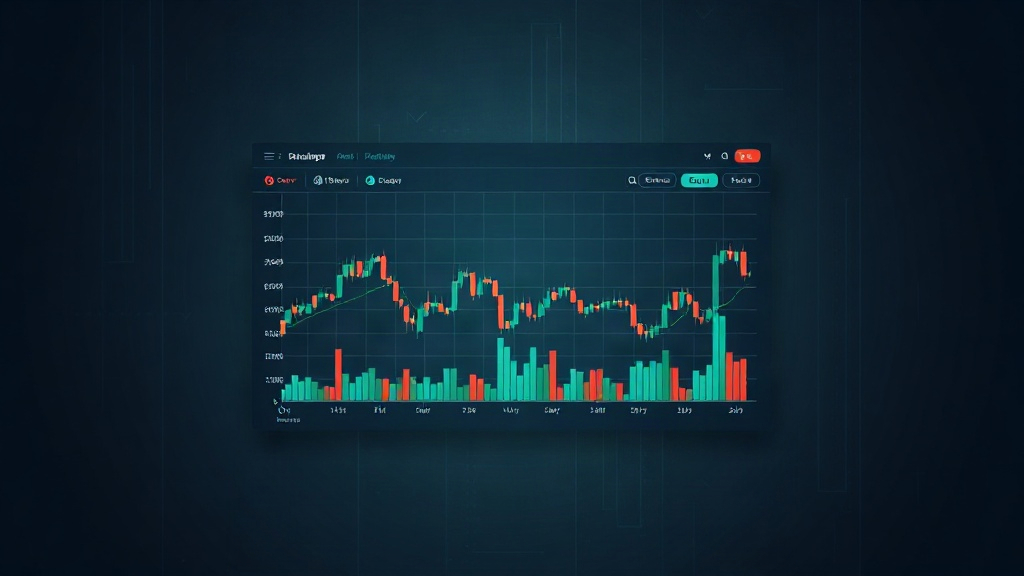
On this page, you can view the latest price of Ethereum (ETH), its 24-hour price change, and market data for major trading pairs such as ETH/USDT and ETH/USD in real time. You can also analyze Ethereum’s price trends using multi-timeframe candlestick charts (minute, hourly, daily, weekly) and technical indicators such as MA, MACD, and RSI; The page also provides Ethereum’s real-time market capitalization and ranking, 24-hour trading volume, and historical price data, aggregates the latest Ethereum news, and supports quick conversion of ETH to fiat currencies such as the Chinese yuan and the U.S. dollar.
ETH Data

24H Trending
-
1
Samsung Electronics fell 4.31% from its previous close, now trading at ₩222,000.
-
2
Tether, Circle, Ripple, and other stablecoin issuers have frozen over $2.6 billion in assets linked to suspected security breaches at Binance.
-
3
Lookonchain: Binance hackers are selling PEPE, UNI, LINK, and other tokens, still holding over $150 million worth of various altcoins.
-
4
ETH inter-exchange spread reaches 1.11%
-
5
Taiwan's TAIEX fell 2.68% from its previous close, currently at 45,125.33.
-
6
South Korea's KOSPI index is down 4.77% from its previous close, currently at 5,654.61.
-
7
The Nikkei 225 index is down 2.72% from its previous close, currently at 62,903.43.
-
8
Binance hacker finishes dumping UNI, ENA, PEPE, LINK, AAVE, ONDO, WLD for 70,480 ETH ($158.25M)
-
9
SK Hynix is down 5.9% from its previous close, now trading at ₩1,436,000.
-
10
CNBC analysis suggests that Intel's stock may continue to fall after its significant decline, but selling now would not recover losses.

Recommended Reading

Hot Topics

Svmuu focuses on blockchain industry trends and cutting-edge cryptocurrency news, while also covering real-time market data and in-depth analysis of the Hong Kong, U.S., and foreign exchange markets. Here, you can not only access professional 24/7 news updates and accurate market data, but also utilize practical investment tools to help you capitalize on opportunities in both digital assets and traditional financial markets. Whether you are a blockchain enthusiast or an investor in Hong Kong, U.S., or foreign exchange markets, we provide efficient and timely information services to empower your investment decisions.
- User Agreement
- Privacy Policy
- Contact Us
- Business Partnerships
- Disclaimer
- Content Statement
- About Us
- Sitemap
 Coming Soon!
