

Svmuu News: Crypto KOL Phyrex Ni posted on the X platform, stating that U.S. private credit risks have gradually emerged recently, with specific manifestations as follows:
1. BlackRock's HPS Corporate Lending Fund (approximately $26 billion in size) received redemption requests for about 9.3% of its fund shares in Q1 2026, amounting to roughly $1.2 billion. The fund's original quarterly repurchase limit was 5%. This is the first time the liquidity limit has been triggered, allowing for actual redemptions of approximately $620 million.
2. Blackstone's BCRED received redemption requests for about 7.9% of its fund shares in the same quarter, amounting to roughly $3.7 billion. Blackstone raised the repurchase limit from 5% to 7% and injected approximately $400 million of its own internal capital, with over $150 million coming from executives and senior employees.
3. Blue Owl's OBDC II, with a size of about $1.6 billion, is also facing redemption pressure. The fund sold approximately $1.4 billion in assets to North American pension and insurance institutions and changed its original quarterly 5% redemption framework to a maximum return arrangement of about 30%, involving around 128 companies across 27 industries.
4. Fitch data from February shows that the average redemption rate for the permanent non-listed BDCs it tracks rose to 4.5% of NAV in Q4 2025, a significant increase from 1.6% in the previous quarter, indicating that capital withdrawal pressure has spread throughout the retail private credit channel.
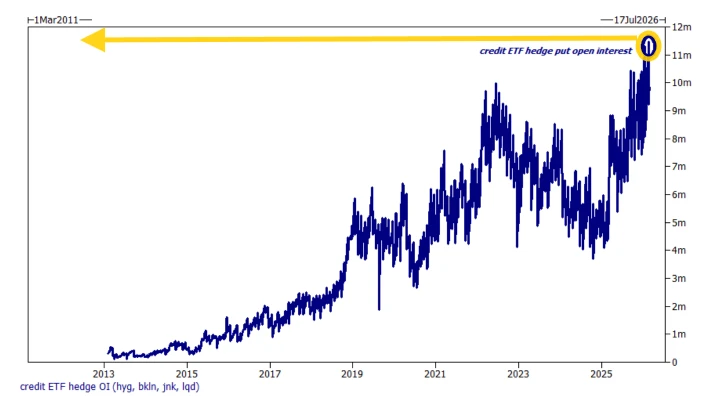
5. Institutional protective put positions on credit ETFs have surged to historical highs, showing that institutions are hedging against the underlying borrowers' repayment capacity, the authenticity of book valuations, and redemption feasibility.
6. Persistently high interest rates and the slow pace of Fed rate cuts have increased refinancing difficulty, leading to greater default risks and widening credit spreads for private credit.
7. AI infrastructure may also be impacted. As credit conditions tighten, financing costs for data centers, servers, and supporting networks will rise, expansion pace will slow, and financing pressure for AI-related projects will increase. S&P Global Ratings has listed "AI-driven tech debt issuance, AI valuation risks, and rising leverage among non-bank institutions" as key variables for credit market liquidity in 2026.
Overall, private credit liquidity stress has already manifested in several large funds. If the high-interest-rate environment persists, redemption pressure and default risks may further intensify.


Faster global financial news!
Viewpoint: U.S. Private Credit Risks Increase, Leading Institutions Like BlackRock Face Redemption Pressure, Potentially Leading to High-Risk Credit Events
No AI analysis yet. Tap the "AI Analysis" button above to generate one now.
Disclaimer: This content reflects the author's personal views only and does not constitute investment advice.


24H Trending
-
1
Bitcoin Price Breaks $77,000: Multiple Factors Drive Current Rally
-
2
Al Jazeera: Israeli attacks on Gaza kill at least 4 Palestinians, UN Human Rights Office warns of ethnic cleansing risk
-
3
US banks are owed $349B by private credit funds, as PIK interest payments rise to 10% of loans
-
4
Bitcoin Spot ETF Status Review: Market Impact and Latest Data Post-Approval

-
5
Chainalysis: Binance Hackers Deployed Unprecedented Money Laundering Tactics, Rapidly Converting $6.3 Billion in Stolen Funds
-
6
Musk retweeted that as of October 31, the number of Starlink satellites has reached 11,184, accounting for 66% of the total active satellites globally.
-
7
Bitcoin staking protocol b14g says $97 million CORE drained, pauses contracts
-
8
Trump Comments on Binance Hack as Calls for Crypto Regulation Intensify
-
9
Binance confirmed that it has transferred 7,499 Bitcoins to the SAFU fund, stating that it has recovered 90% of the stolen assets and pledged to rebuild the emergency fund to approximately $1 billion.
-
10
Al Jazeera: Palestinian Man Succumbs to Injuries After Israeli Drone Strike in Gaza
Markets Today





Recommended Reading

Hot Topics

Svmuu focuses on blockchain industry trends and cutting-edge cryptocurrency news, while also covering real-time market data and in-depth analysis of the Hong Kong, U.S., and foreign exchange markets. Here, you can not only access professional 24/7 news updates and accurate market data, but also utilize practical investment tools to help you capitalize on opportunities in both digital assets and traditional financial markets. Whether you are a blockchain enthusiast or an investor in Hong Kong, U.S., or foreign exchange markets, we provide efficient and timely information services to empower your investment decisions.
- User Agreement
- Privacy Policy
- Contact Us
- Business Partnerships
- Disclaimer
- Content Statement
- About Us
- Sitemap
 Coming Soon!
