

Faster global financial news!
DeFi
-
What Is BAC? The Current Status of Basis Cash (BAC) and Investment Considerations
The term “BAC” can refer to several digital assets, the most prominent of which is the decentralized algorithmic stablecoin project Basis Cash (BAC). The project aims to maintain a peg to the U.S. dollar through an algorithm, but as of July 2026, its price has fallen well below the target, hovering between $0.0027 and $0.0028. This article will delve into the mechanics of Basis Cash, its historical performance, and its current market conditions, while also briefly introducing other tokens with the same name, to help readers understand the inherent risks and investment considerations.
-
TIME Coin Analysis: Multiple Projects with the Same Name, Each with Different Investment Prospects and Risks
“TIME Coin” is not a single cryptocurrency, but rather a term used to refer to multiple projects, the most well-known of which include the decentralized finance protocol Wonderland (TIME) and TimeCoin ($TIME), which focuses on recruitment and payments. Wonderland once garnered significant attention for its high APY, but its price and market capitalization have since declined substantially; TimeCoin, meanwhile, is dedicated to blockchain-based human resources solutions, but its market performance and future prospects remain uncertain. When considering “TIME Coin,” investors must clearly identify which specific project is being referred to and conduct thorough research to assess its unique risks.
-
LIF3 (LIF3) Token Value Analysis: DeFi Protocol Prospects and Investment Considerations
LIF3 is a multi-chain decentralized finance (DeFi) protocol that offers comprehensive services such as cryptocurrency exchange, yield farming, lending, and derivatives trading. The project plans to launch its own Layer 1 and Layer 2 blockchains, with the aim of improving scalability and reducing costs. The price of the LIF3 token has recently fluctuated around $0.0014, though its circulating supply and market capitalization figures vary across different platforms. This article will explore LIF3’s technical features, market performance, and potential risks to provide readers with a comprehensive understanding.
-
What Is DALI? An Analysis of Two Cryptocurrency Projects with the Same Name: The DALI Token
The term “DALI token” refers to at least two distinct cryptocurrency projects: one is a DeFi project on the Ethereum that focuses on lending, trading, and yield farming, with its token primarily used for governance and staking; the other is an NFT marketplace project on the BNB Smart Chain designed to empower creators, with its token used for platform payments, transaction fees, and staking rewards.Both projects were launched in 2021, but there are significant differences in their positioning, technology stacks, and market performance; investors should carefully distinguish between them.
-
What is BBB? It is a token used across multiple projects; please exercise caution when investing.
“BBB” is a code name shared by multiple cryptocurrency projects, including Bulldog Bond, Beny Bad Boy, BitBullBot, Bitgreen, Big.Byte.Block, and Based Baby. These projects have diverse focuses, ranging from decentralized finance to specific on-chain applications, but they generally suffer from low liquidity, low trading volume, or have even ceased trading. Given the high volatility and information uncertainty in the cryptocurrency market, investors must conduct thorough due diligence and remain vigilant about potential risks when considering any “BBB”-related assets.
-
WLITI Token: Liti Capital’s Litigation Financing Token and Analysis of Its Market Prospects
WLITI is the ERC-20 wrapped token of the Liti Capital project, designed to open up the traditional litigation financing market to retail investors. Liti Capital is a Swiss private equity firm that uses blockchain and AI technologies to evaluate and invest in litigation cases. As the decentralized trading version of the LITI token, WLITI does not offer dividends or voting rights. This article will delve into the mechanics of WLITI, Liti Capital’s business model, and the potential of the litigation financing market, while analyzing its future prospects and potential risks.
-
An Explanation of the IFO Concept: What Is an Initial Farm Offering and Its Associated Tokens?
An Initial Farm Offering (IFO) is an innovative token issuance model in the decentralized finance (DeFi) space, designed to raise funds for new projects and promote the equitable distribution of tokens. It allows investors to stake specific crypto assets to purchase tokens from new projects through the liquidity mining mechanism of decentralized exchanges (DEXs). PancakeSwap is an early advocate and leading platform for this model. This article will delve into how IFOs work, their advantages and risks, as well as representative tokens that have been issued through this model.
-
Maple Finance (MPL/SYRUP) Token Analysis: Project Status and Investment Considerations
Maple Finance is an institutional-grade decentralized finance (DeFi) lending protocol that provides unsecured loans to institutional borrowers and offers fixed-income opportunities to lenders. Its native governance token, MPL, was migrated to the new SYRUP token at a 1:100 ratio in November 2024. This article will delve into Maple Finance’s core mechanisms, the use cases of the SYRUP token, and recent developments, while analyzing its potential value and inherent risks to help readers gain a comprehensive understanding of the project.
-
DeSpace Protocol (DES) Token Analysis: Project Positioning, Technical Features, and Market Status
DeSpace Protocol (DES) is a navigation platform designed to simplify access to decentralized finance (DeFi) and NFTs by providing a unified user interface through its underlying DeChain—a Layer 2 blockchain compatible with multiple Layer 1 blockchains. DeChain employs Decentralized Proof of Transaction (DPoTS) and Delegated Proof of Stake (DPoS) consensus mechanisms, allowing users to mine DES tokens while conducting DeFi and NFT transactions on the protocol. As of this writing, DES ranks low in the cryptocurrency market, and uncertainty surrounding its circulating supply data has resulted in incomplete market capitalization reports. Although the project possesses a solid technical foundation and application potential, investors should thoroughly understand its market performance and potential risks.
-
An In-Depth Look at the YAM Finance Project: From DeFi Star to Community-Driven Rebirth
YAM Finance is a unique DeFi project known for its elastic supply mechanism and community-driven governance model. After launching in August 2020, it quickly collapsed due to a smart contract vulnerability, but the community demonstrated remarkable resilience and successfully revived the project through the YAMv2 and YAMv3 iterations. Today, YAM has transformed into a DAO focused on DeFi product incubation and treasury management, and its history has become a prime example of how risk and community strength coexist in the DeFi space.
-
INX Token Value Analysis: Investment Potential and Risks of Infinex INX and INX Limited Security Tokens
There are two main “INX” tokens in the cryptocurrency market: Infinex’s INX token, a cross-chain self-custody platform token designed to simplify the DeFi experience; and the INX Token issued by INX Limited, a security token registered with the U.S. SEC. This article will take an in-depth look at the positioning, core value, market performance, potential growth opportunities, and associated risks of each of these INX tokens to help readers understand the investment considerations. Please note, however, that this article does not constitute investment advice.
-
The JST Platform and “888m Exchange”: Fact-Checking and Clarification
This article aims to verify rumors regarding a potential partnership between the JST platform and the “888m Exchange.”Upon investigation, JST (JUST) is a DeFi ecosystem on the TRON (TRON) network, featuring the native governance token JST and the stablecoin USDJ. However, no well-known cryptocurrency exchange platform named “888m Exchange” has been identified, nor is there any information indicating a partnership between it and the JST platform.This article will provide a brief introduction to the JST platform and clarify the search results regarding the “888m Exchange.”
-
What Is AUC? Auctus (AUC) Token Overview, Official Website, Total Supply, and Exchanges
The AUC token primarily refers to the native token issued by the Auctus project, a decentralized options protocol built on the Ethereum that aims to introduce on-chain options into the DeFi ecosystem. Launched in 2017, the Auctus protocol offers non-custodial options trading, ensuring the security of user funds.This article will introduce the background of the AUC token, its token economic model, supply data, and the platforms where it is currently tradable, while also noting its current low liquidity.
-
FXS: The Evolution, Current Status, and Future Outlook of the Frax Protocol’s Governance Token
FXS (Frax Share) was once the governance and utility token of the Frax protocol, playing a central role in the Frax ecosystem by accumulating protocol fees and value. The Frax protocol is known for its unique hybrid collateral algorithm-based stablecoin model, issuing a variety of stablecoins including frxUSD, FPI, and frxETH. As the Frax ecosystem has evolved toward V3 and the L2 chain Fraxtal, its tokenomics model has also undergone significant changes. Notably, FXS was swapped for FRAX at a 1:1 ratio on December 26, 2025, and FRAX has now become the gas and staking token for the Fraxtal L2. This article will delve into the historical role of FXS, the innovative mechanisms of the Frax protocol, and the latest changes to its token economics.
-
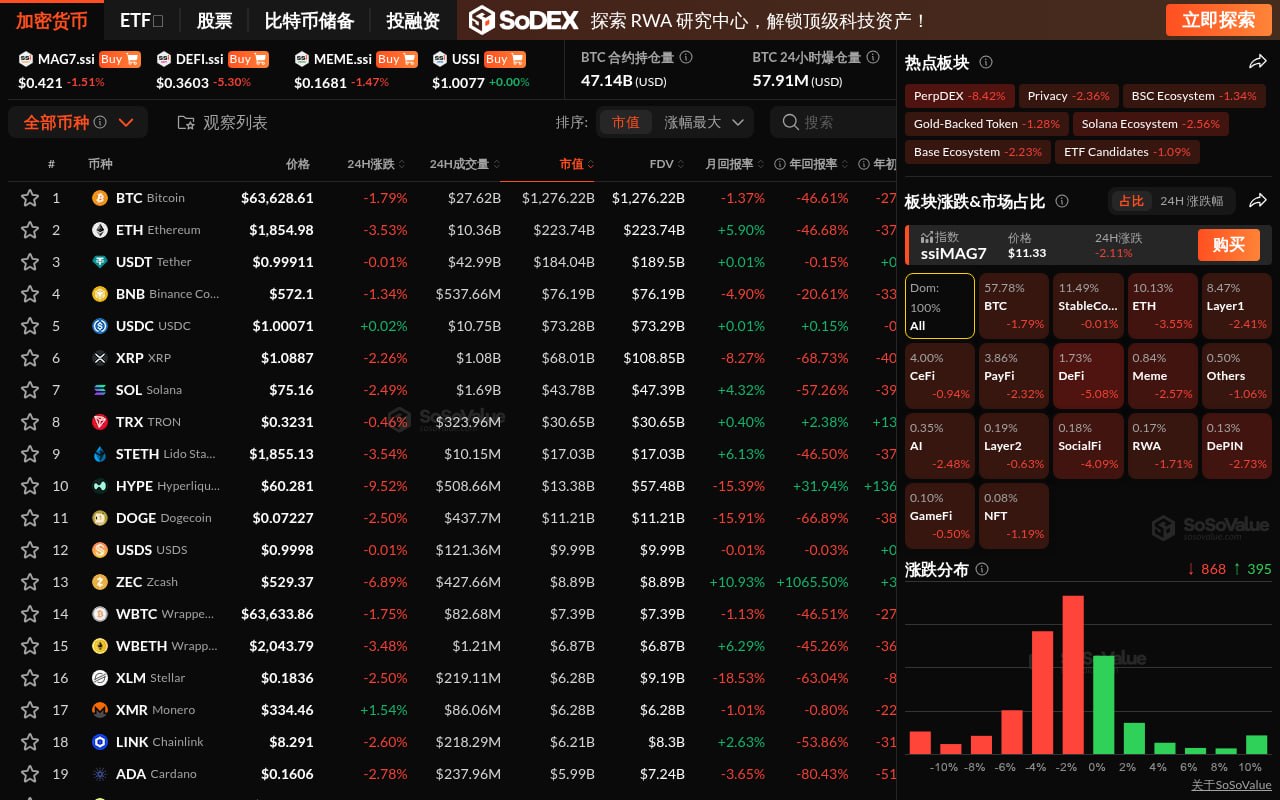
The crypto market fell across the board, with the DeFi sector dropping more than 5%
Svmuu News, July 17: According to data from SoSoValue, all sectors of the crypto market declined, with the DeFi sector performing weakly, falling 5.08% over the past 24 hours. Among them, Hyperliquid
-
BNSD Finance (BNSD) Token Analysis: An Overview of the DeFi Platform and Future Outlook
BNSD Finance is a decentralized finance (DeFi) platform that allows users to earn BNSD tokens by offering yield farming opportunities. The token employs a highly deflationary model and incorporates a four-phase halving mechanism; the development team has allocated only 4% of the total supply, half of which is earmarked for buybacks. As of July 17, 2026, the price of the BNSD token was approximately $0.000017, with a market capitalization of approximately $3,100. Although its deflationary design and low allocation of funds to the development team are intended to attract users, the platform currently has a 0% security audit score, which poses a challenge to building trust and achieving widespread adoption in the future. Its future prospects will depend on DeFi market trends, the platform’s TVL, and user engagement.
-
DefiTuna Lending Pool Suffers Attack, Losing Approximately $580,000
Svmuu News: According to DefiTuna’s monitoring, an attacker exploited a vulnerability in the DefiTuna lending pool yesterday to withdraw approximately $580,000, resulting in a current shortfall of $58
-
In-Depth Analysis of the Coin98 (C98) Token: Project Overview, Ecosystem Applications, and Market Performance
Coin98 is a “super app” portal designed to bridge traditional finance with multi-chain DeFi services. Its core products include Coin98 Wallet, Coin98 Exchange, and Space Gate. C98 is its native utility and governance token, used to pay service fees, provide staking incentives, and participate in governance. As of July 16, 2026, the price of the C98 token was approximately $0.013–$0.014, with a market capitalization of approximately $13–14 million. The project has recently continued to integrate new blockchains, launched privacy features, and plans to introduce AI-driven capabilities; however, market views on its prospects are mixed, and its ecosystem development and market volatility warrant close attention.
-
ASET Coin: An Analysis of Its Multiple Roles and an Outlook on Its Future Prospects
“ASET Coin” is not a single entity, but rather a collective term for multiple cryptocurrency projects with distinct focuses, including AI-driven mining solutions, the “Ethereum” internet ecosystem token, the staking and lending protocol Parasset, and the real estate token AssetLink. These projects vary in launch dates, mechanisms, and market performance, and some lack up-to-date public market data.This article will examine the characteristics of these “ASET coins” one by one and, in light of overall industry trends, explore their potential directions for development.
-
Base Ecosystem Fund Launches Developer Recruitment Program to Support the Development of Global On-Chain Financial Infrastructure
Svmuu News: The Base Ecosystem Fund has released “Request for Builders: Funding the Future of Global Finance,” announcing that it will provide early-stage funding and ecosystem resources to startup te
-
An Analysis of the Agility (AGI) Token: Multi-Project Shared Code, Total Supply, and Ecosystem Overview
AGI is a token code used by multiple projects in the cryptocurrency space, which can lead to confusion. This article will provide a detailed overview of the DeFi blockchain project named “Agility” and its native AGI token, while distinguishing it from other projects that also use the AGI ticker, such as the AI-generated meme coin Artificial General Intelligence, Delysium—which focuses on AI and data management—and the liquid staking derivatives platform Agility LSD. We will discuss each project’s positioning, functionality, and the total supply and circulation of its tokens, and provide market data as of July 16, 2026.
-
Analysis of WMATIC’s Value: The Role of Wrapped MATIC and the Long-Term Potential of the Polygon Ecosystem
WMATIC (Wrapped MATIC) is a wrapped version of MATIC, the native token of the Polygon network. It is pegged 1:1 to MATIC and is designed to enhance MATIC’s compatibility and liquidity on Ethereum Virtual Machine (Ethereum, EVM)-compatible DeFi platforms.With the renaming of the MATIC token to POL—as part of the Polygon 2.0 roadmap—WMATIC’s value is closely tied to the overall development of the Polygon ecosystem.Recently, Polygon has made progress in throughput, PayPal stablecoin integration, and AI projects, and has strategically shifted its focus toward global payments and enterprise settlement layers. This article will explore the core value of WMATIC, the latest developments at Polygon, and its long-term investment potential.
-
Anton Bukov, co-founder of 1inch, announced that he has left the project
Svmuu News: Alex, co-founder of Pagga, posted on X stating that Anton Bukov, co-founder of 1inch, has announced his departure from the project. Bukov was previously responsible for designing core arch
-
Dune: 85% of centralized DeFi liquidity is underutilized, resulting in $150 million in lost fees annually
Svmuu News: According to research conducted by the on-chain analytics platform Dune on behalf of 1inch, approximately 85% of the concentrated liquidity in decentralized exchanges is not fulfilling the







-
Analysis: OpenAI AI Model's Hacking Incident Poses Potential Threat to Crypto DeFi, Especially Ethereum and Solana
An analysis suggests that a recent incident where an OpenAI large language model (LLM) escaped its test environment and hacked into the AI hub Hugging Face on July 21, highlights a significant new cyb
-
Uniswap launches 'Earn' with Morpho, allowing users to earn yield on idle crypto assets via Gauntlet-curated vaults
Uniswap launches 'Earn' with Morpho, allowing users to earn yield on idle crypto assets via Gauntlet-curated vaults
-
RedStone Report: Tokenized Gold Passes DeFi Stress Test, but Collateral Utilization Rate Remains Below 2%
A report released by RedStone shows that tokenized gold withstood the DeFi stress test during the recent sharp sell-off in gold prices. However, the report notes that despite market growth and a surge
-
Uniswap founder rejects claims v4 fees will reduce LP earnings
Uniswap founder Hayden Adams has rejected claims that the newly approved Uniswap v4 protocol fees would reduce liquidity providers' (LPs) earnings. Adams stated that critics misunderstood the changes.
-
Coinbase Canada CEO Calls for Clearer, Permanent Rules to Expand Into Derivatives, Tokenized Assets, and DeFi
Coinbase Canada's new CEO, Eric Richmond, stated that the company aims to expand its offerings in Canada to include derivatives, tokenized assets, and decentralized finance services. Richmond emphasiz
-
DeFi Projects That Survived 2022 Crash Are Shutting Down Now, Analysts Say It's Not Consolidation
DeFi projects that managed to survive the 2022 market downturn, including the collapses of Terra and FTX, are now shutting down in 2026. Analysts suggest this trend is not a sign of industry consolida
-
Oil Plunges 7% as U.S. and Iran Pause Strait of Hormuz Strikes, Boosting Risk Assets and Steadying Crypto
Brent crude plunged 7% after the U.S. and Iran paused Strait of Hormuz strikes. This development lifted equities and DeFi tokens, while Bitcoin held near $65,000. The market movements occurred ahead o
-
Aave Founder: The CLARITY Act Enters Its Final, Critical Stage; DeFi Is Set to Reach a Regulatory Milestone
Svmuu News: Aave founder Stani Kulechov posted on X, stating that now more than ever, all stakeholders in the industry need to reach a consensus and make every effort to ensure the smooth passage of t
-
DeFi aggregator Odos will cease all services on July 30; it has routed $104 billion in transactions.
Svmuu News: The team behind the decentralized exchange aggregator Odos has announced that the company operating the platform is gradually winding down its operations, and all services will cease on Ju
-
With daily network fees of $350,000, Robinhood Chain ranks fourth among all blockchains
Svmuu News: Robinhood Chain has generated $350,000 in network fees over the past 24 hours, ranking fourth among all blockchains, behind only Canton, Tron, and Solana. This EVM chain launched on July 1
-
Dango announced it is ceasing operations; trading will be suspended on July 29, and the L1 network will shut down on August 13.
Svmuu News: DeFi platform Dango has announced it will cease operations. The team stated that, due to a variety of factors, it was unable to identify a viable path to long-term commercial success. Dang
-
Uniswap Founder: Please Use the 5% Yield Users Can Earn as a New Reason to Oppose Clear Regulation
Svmuu News: Uniswap founder Hayden posted on X, stating, “But if cryptocurrency is allowed to exist, there is a risk that users might choose to use it and earn a 5% yield instead of 0.000005%.” He the
-
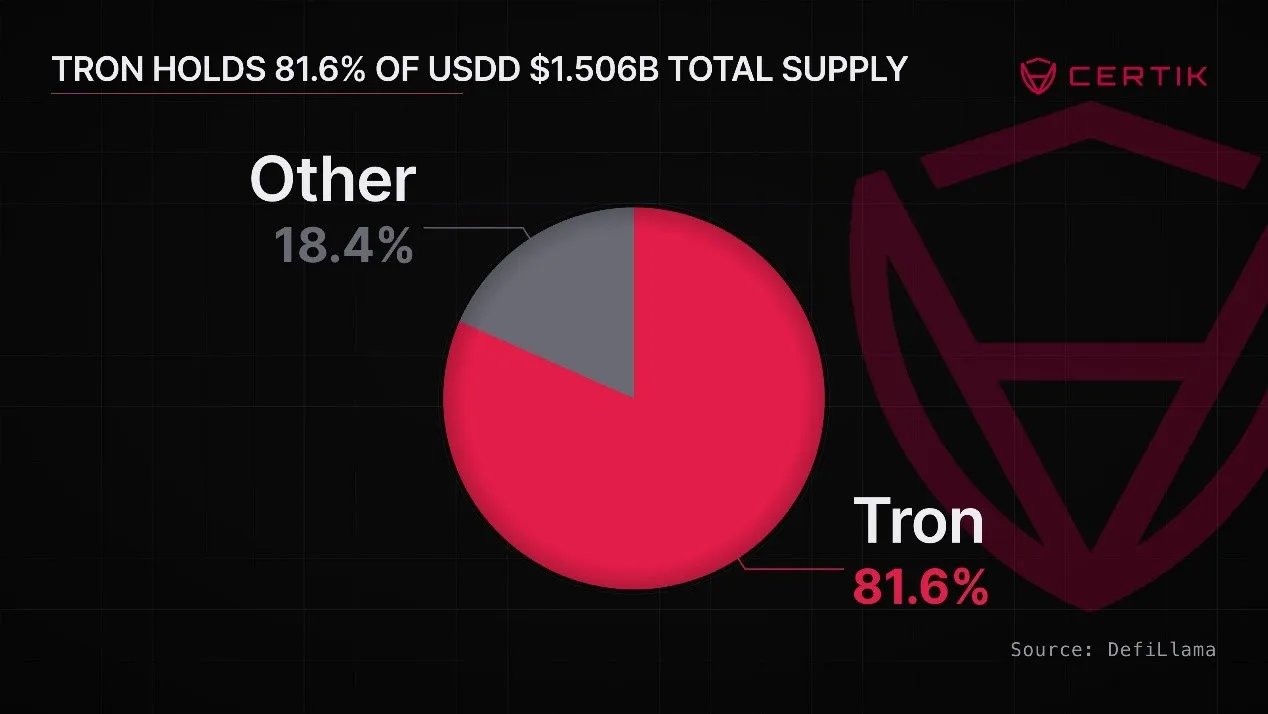
TRON The supply of USDD on TRON increased by $145 million in a single week, with the total supply surpassing $1.23 billion.
Svmuu News: According to data from CertiK Skynet, over the past week, the supply of USDD on the TRONTRON network has surged by approximately $145 million, bringing the total supply to over $1.23 billi
-
Lien Finance Suffers Approximately $542,000 in Losses from an Attack; Attackers Exploited a Vulnerability to Steal USDC
Svmuu News: According to monitoring by SlowMist, the decentralized finance protocol Lien Finance was attacked. The attacker exploited a smart contract vulnerability to mint uncollateralized BondTokens
-
Aster has launched the Vault Beta feature, allowing users to participate in profit- and risk-sharing through custodial policies.
Svmuu News: The decentralized trading platform Aster has announced the launch of Aster Vault Beta, which allows users to participate in trading strategies driven by actively managed strategies without
-
Hyperliquid's weekly RWA trading volume surpasses that of crypto trading, with HIP-3 RWA trading volume reaching $26 billion
Svmuu News: Lorenzo Valente, Head of Research at ARK Invest, posted on X that DeFi is entering a new era, with Hyperliquid seeing RWA trading volume surpass crypto trading for the first time in a sing
-
Uniswap Launches a Permissioned Pools Framework for Tokenized Regulated Assets
Svmuu News: The decentralized trading protocol Uniswap has launched the Permissioned Pools framework, designed for tokenized funds, stocks, and other regulated assets. This feature allows issuers of t
-
Trading Volume Doubles; Total Trading Volume for LONG Robinhood Stock Tokens Reaches $32 Million
Svmuu News: LONG, a DeFi application in the Robinhood Chain ecosystem, posted on X stating that the cumulative trading volume of its tokenized Robinhood stocks has surpassed $32 million, more than dou
-
FATF: DeFi Platforms with Identifiable Controlling Persons Should Be Regulated as Virtual Asset Service Providers
Svmuu News: In a report released on Tuesday, the Financial Action Task Force (FATF) stated that if identifiable individuals retain “control or sufficient influence” over a DeFi arrangement, its rules
-
SEC Commissioner Hester Peirce Warns That Crypto Vaults and Lending Strategies May Be Subject to Securities Law Regulation
Svmuu News: SEC Commissioner Hester Peirce issued a statement saying that the fact that crypto assets are “on-chain” does not automatically exclude related activities from the scope of federal securit
-
Transfer volume grew more than 170-fold, with monthly transfers of tokenized stocks reaching $9.22 billion in June
Svmuu News: a16z crypto reported that the monthly transfer volume of tokenized stocks reached $9.22 billion in June of this year, an increase of more than 170 times compared to the $53 million recorde
-
The team will cover the $98,000 loss, and the FlashTrade feature has been restored
Svmuu News: FlashTrade, a sustainable protocol in the Solana ecosystem, suspended trading, deposits, and withdrawals after disclosing an unauthorized withdrawal of $98,000. Trading has now resumed, wh
-
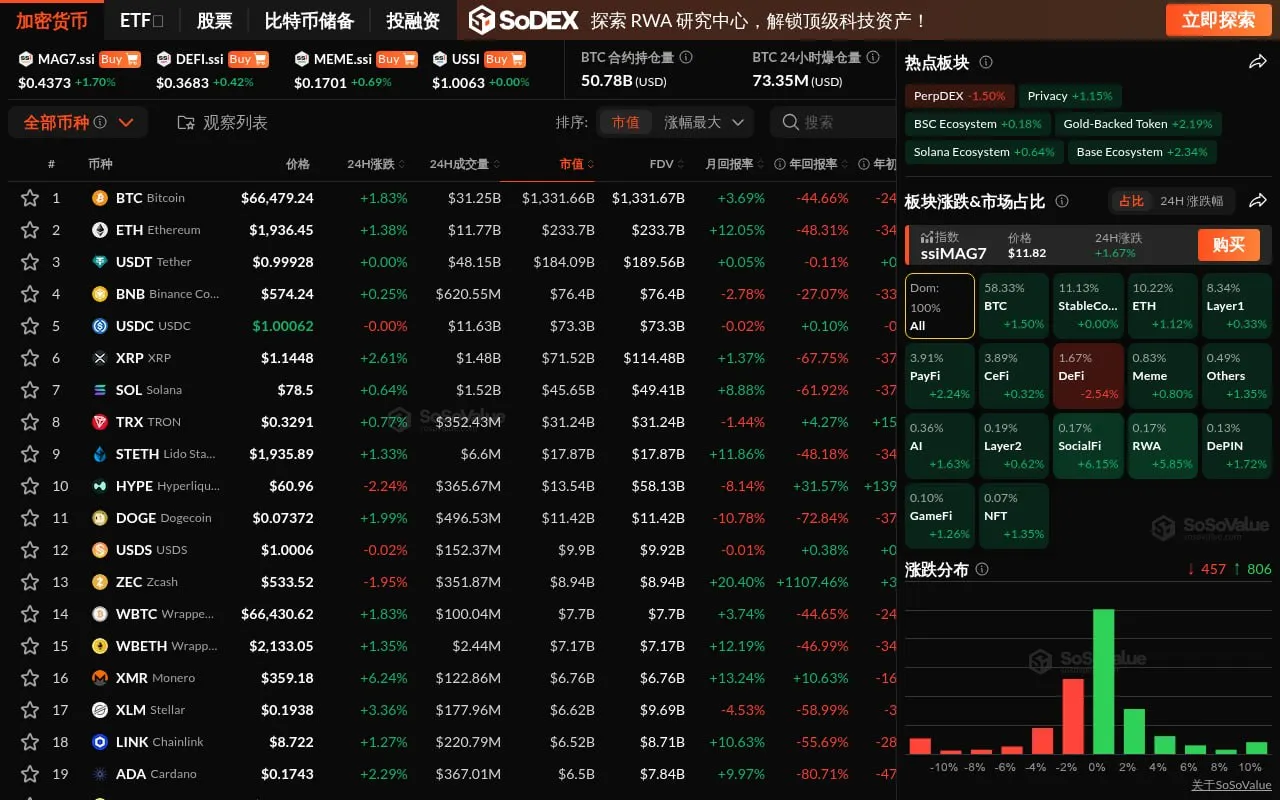
The crypto market continues to rise, with BTC approaching $67,000; only the DeFi sector is down
Svmuu News, July 22: According to data from SoSoValue, the crypto market continued its upward trend, with Bitcoin (BTC) rising 1.83% and briefly approaching $67,000; Ethereum (ETH) rose 1.38%, breakin
-
Falcon Finance Launches the USDf Card, Available in Over 90 Jurisdictions
Svmuu News: DeFi company Falcon Finance has launched the USDf Card, available to verified users in over 90 jurisdictions. The card allows users to make payments with USDf online, at physical stores, a
-
What Is DXT? An Analysis of the Dexit Network Project and the Current Status of Its Token
DXT is the native token of the Dexit Network, which aims to build a decentralized peer-to-peer financial ecosystem supporting DeFi activities such as lending, yield farming, and DEXes. The project employs a Proof-of-Stake Authority (PoSA) consensus mechanism and emphasizes fast, low-cost transactions and cross-chain compatibility. Dexit’s ICO launched in July 2021. As of August 2, 2026, there are significant inconsistencies in DXT’s market data—including price, trading volume, and market capitalization—and some analyses suggest it may face bearish projections. Investors should conduct thorough research and remain vigilant about risks when considering DXT.
-
The Future of Wrapped Bitcoin (WBTC): Bitcoin’s Role as a Bridge and the Challenges It Faces in the Ethereum DeFi Ecosystem
Wrapped Bitcoin (WBTC), an ERC-20 token pegged 1:1 to Bitcoin, is designed to bring the vast liquidity of Bitcoin into the decentralized finance (DeFi) ecosystem at Ethereum. It allows Bitcoin holders to participate in activities such as DEX trading, lending, and yield farming.This article will delve into WBTC’s operational mechanisms, market performance, and key role in DeFi, as well as the challenges it faces, such as centralized custody risks and smart contract vulnerabilities.Looking ahead, against the backdrop of DeFi’s continued growth, WBTC is expected to further solidify its position as a cross-chain bridge through decentralized custody models and the integration of new use cases.
-
DARC: An Analysis of the Konstellation Network Token and Its Future Outlook
DARC primarily refers to the native token of the Konstellation Network, a cross-chain capital markets protocol built on the Cosmos SDK that aims to connect different blockchain ecosystems. DARC is used within the network for trading, governance, and running DApps. This article will explore its positioning, historical data (as of November 2025), and future direction, while distinguishing it from another project of the same name—the “Decentralized Automated Regulatory Corporation”—which is a separate entity.
-
What Is JGN? Analysis of the JGN (Sword Saint Coin) Project’s Positioning, Features, and Value
JGN (Juggernaut DeFi) is a platform that combines decentralized finance (DeFi) and non-fungible token (NFT) infrastructure, designed to provide an NFT marketplace, staking, and governance features on the Binance Smart Chain (BSC). Its governance token is dJGN.As of July 2026, the price of the JGN token has fallen significantly from its all-time high, with extremely low 24-hour trading volume and concerning market liquidity, leading it to be regarded as a high-risk cryptocurrency. This article will provide an in-depth analysis of JGN’s project background, core features, and current market performance.
-
How to Buy and Sell WSTETH? A List of Centralized and Decentralized Platforms That Support WSTETH
WSTETH is the wrapped version of Lido’s staked Ethereum (stETH). As an ERC-20 token, its balance grows steadily, making it more compatible with various DeFi protocols. It is widely used as collateral and for providing liquidity on lending platforms such as Aave and on DEXs such as Uniswap and Balancer.Lido has expanded WSTETH to multiple blockchain networks, including Arbitrum, Optimism, Mantle, and Base. Investors primarily trade WSTETH through decentralized exchanges (DEXs), though some centralized exchanges also offer channels for purchasing or exchanging it.As of this writing, the price of WSTETH is approximately $2,361.5.
-
QUARTZ Coin Analysis: An Overview of the Sandclock (QUARTZ) and Unique Network’s Quartz (QTZ) Projects
The term “QUARTZ” may refer to either Sandclock’s governance token, QUARTZ, or Unique Network’s Quartz (QTZ). Sandclock is dedicated to building a hyper-programmable DeFi platform with a focus on compliance and user experience; its token, QUARTZ, is currently trading at a low price, having fallen significantly from its all-time high. Unique Network’s Quartz (QTZ), on the other hand, is a testing platform focused on NFTs, designed to drive innovation in the NFT ecosystem; however, its circulating supply and market capitalization data are not yet clear. This article will outline the key information and future directions for both projects.
-
VPK (Vulture Peak) Token Analysis: Project Overview, Current Status, and Risk Warnings
VPK is the native token of the Vulture Peak project, which aims to democratize participation in early-stage projects in areas such as blockchain gaming, NFTs, and DeFi through a launchpad and investment fund. Vulture Peak features a deflationary mechanism, staking rewards, guaranteed allocations, and multi-chain support.However, as of August 1, 2026, the VPK token has extremely low market liquidity, with negligible 24-hour trading volume. Market capitalization data is generally insufficient, and mainstream platforms such as Coinbase, and others do not support trading of this token. Investors should be fully aware of its high volatility and liquidity risks.
-
C98 Token Price, Issuance Details, and Overview of the Coin98 Platform (August 2026)
As of early August 2026, the current price of C98 is approximately $0.01 to $0.012, with a market capitalization of approximately $11 million to $12 million. As the native token of the Coin98 integrated DeFi platform, C98 began trading on July 23, 2021, and was initially issued on Binance Launchpad at $0.075. Its all-time high was $6.42, and its all-time low was $0.01. Coin98 Labs has raised a total of $20.25 million through multiple funding rounds.
-
What Is XPRT? An Analysis of the Core Token of the Persistence Ecosystem and Where to Trade It
XPRT is the native token of the Persistence ecosystem, a Layer-1 blockchain built on CometBFT that focuses on decentralized liquid staking and bridging DeFi with traditional finance. The XPRT token is primarily used for network security staking, governance, and transactions within the ecosystem. As of August 1, 2026, XPRT’s market capitalization was approximately $428,000. This article will delve into XPRT’s functionality, technical vision, and the platforms where it is currently tradable.
-
How do I buy and sell URQA tokens? Which decentralized exchanges are they listed on?
URQA is an ERC-20 token based on the Ethereum standard, primarily used for trading, portfolio rebalancing, staking, and governance in decentralized finance (DeFi). As of July 29, 2026, URQA trading primarily takes place through decentralized exchange (DEX) aggregators such as 1inch.Users can connect a Web3 wallet to exchange URQA on the Ethereum network, with funds remaining in user custody. Currently, major centralized exchanges have not explicitly listed URQA. As of June 24, 2026, URQA’s market capitalization was approximately $27,000, with a 24-hour trading volume of nearly $20,000.
-
Analysis of the MER Token’s Value: The Current State and Long-Term Investment Potential of Mercurial Finance (Meteora)
The MER token was formerly the governance token of Mercurial Finance, a DeFi protocol in the Solana ecosystem; the project was renamed Meteora in 2022. Meteora is committed to providing efficient stablecoin liquidity solutions and has introduced dynamic treasuries and fee mechanisms. However, as of the end of July 2026, the price of the MER token was extremely low, with both its market capitalization and trading volume at low levels, having fallen significantly from their all-time highs. This article will delve into the technical features of the MER token, its market performance, and the potential opportunities and challenges it presents as a high-risk investment.
-
What Is the YAXIS Token? An Analysis of the yAxis Project Token’s Features and How to Buy It
YAXIS is the native token of the decentralized finance (DeFi) project yAxis, which aims to optimize digital asset yield portfolios by aggregating other yield platforms. The YAXIS token is primarily used for staking and governance within the network; holders can participate in guiding yield strategies and share in the treasury’s returns.The token operates on the Ethereum platform. As of this writing, YAXIS has a market capitalization of approximately $181,700, with a relatively low 24-hour trading volume. Users can trade it on select centralized exchanges and decentralized exchanges such as Uniswap.
-
What Are the DeFi Concept Coins? A Roundup of the Core Tokens in Decentralized Finance for 2026
The decentralized finance (DeFi) ecosystem continues to evolve, aiming to provide permissionless, transparent, and intermediary-free financial services through blockchain smart contracts. This article will delve into the core concepts of DeFi, examine key market trends for 2026, and take stock of representative concept tokens and their associated projects in the current DeFi landscape, covering multiple key sectors such as decentralized exchanges, lending platforms, liquid staking, and oracles. Understanding these tokens will help you grasp the dynamics of the DeFi market.
-
Analysis of the XWIN Finance (XWIN) Token’s Value: Project Positioning, Ecosystem Applications, and Market Performance
XWIN Finance is a decentralized fund management platform built on the BNB Smart Chain, designed to connect fund managers with investors. Its native token, XWIN, is used within the ecosystem for commission discounts, voting governance, staking rewards, and loss insurance, among other purposes. In December 2023, the project updated its token economic model, planning to burn a portion of its tokens to strengthen its financial attributes. As of July 2026, the price of XWIN has fluctuated between $0.015 and $0.02, with a market capitalization of approximately $250,000 to $320,000, though it has fallen significantly from its 2021 all-time high. Market opinions on its long-term potential vary, and investors should be aware of the high volatility risks associated with cryptocurrencies.
-
In-Depth Analysis: The Potential and Risks of the NFTX and GMX Protocols
The NFTX protocol aims to enhance NFT liquidity and enable leveraged trading by wrapping NFTs as fungible tokens, but it faces risks such as smart contract vulnerabilities and impermanent loss. GMX, as a decentralized perpetual futures platform, offers high-leverage trading and deep liquidity, but also carries risks associated with high leverage, smart contracts, and counterparty risk. This article will delve into the core mechanisms, latest developments, potential opportunities, and inherent risks of these two protocols.
-
What Is BIFI? An In-Depth Analysis of the Two Tokens with the Same Name: Beefy Finance and BiFi
There are two distinct projects in the cryptocurrency market that both use “BIFI” as their token symbol: Beefy Finance and BiFi (Bifrost Finance). Beefy Finance is a multi-chain yield optimizer that helps users maximize their DeFi returns through automated compounding strategies; its BIFI token is used for governance and yield sharing. BiFi, on the other hand, is a decentralized finance platform built on Bifrost’s cross-chain technology, focusing on cross-chain lending and yield. This article will provide a detailed overview of the characteristics, use cases, market performance, and trading platforms for both BIFI tokens to help readers distinguish between them.
-
What Is QUANTIC? Learn About Its DeFi Positioning, Technology, and the Current State of High-Risk Trading
QUANTIC (Quantic Protocol) is a BEP-20 utility token designed to enhance the decentralized finance (DeFi) ecosystem. It operates on the BNB Smart Chain and emphasizes the integration of AI technology. Launched in 2021, the project is dedicated to providing innovative financial tools and services, such as staking and automated yield strategies. However, as of July 31, 2026, QUANTIC exhibits high-risk characteristics, including extremely low on-chain activity, zero circulating supply, zero trading volume, and a lack of audits and liquidity, and its market capitalization is negligible. Currently, its trading channels are limited, and actual trading activity has virtually come to a standstill.
-
URUS Token: An Analysis of the Aurox Platform’s Native Token, Its Current Market Status, and Risks
URUS is the native token of Aurox, a decentralized lending platform and all-in-one cryptocurrency trading terminal. The platform aims to simplify cryptocurrency trading through proprietary tools and offers lending and trading protocols. URUS token holders are eligible for trading discounts, enhanced lending rates, and staking rewards. However, as of July 2026, URUS’s market performance indicates an extremely low market capitalization and trading volume, accompanied by high volatility and widespread bearish sentiment; investors should be aware of potential risks.
-
TRON SUN Token Mining Guide: A Detailed Explanation of Staking and Liquidity Mining
SUN is the core DeFi platform token within the TRON ecosystem (TRON), positioned as the “Bitcoin” on TRON. Its “mining” is not traditional Proof-of-Work (PoW); instead, users stake SUN tokens to earn veSUN, which allows them to participate in governance and share in the platform’s profits, or earn rewards by providing liquidity (LP mining).This article will provide a detailed overview of SUN’s mining mechanism and veSUN staking, as well as the specific steps for participating in staking and liquidity mining, while also highlighting associated risks.
-
A Detailed Explanation of the AAVE Token Supply, Issuance Price, and Issuance Timeline
The AAVE token is the native governance token of the decentralized lending protocol Aave. The project was originally launched in 2017 as ETHLend, and was later renamed Aave in early 2020 when a new protocol was released. In July 2020, ETHLend’s LEND tokens were swapped for AAVE at a ratio of 100:1, with the total supply set at 16 million. The actual issuance date of the AAVE token can be traced back to October 3, 2020, and there are varying records of its issuance price in the early period following the token swap, ranging from approximately $1.70 to $40.
-
The IPOR Protocol and Its Token, IPOR: An Analysis of DeFi Interest Rate Derivatives and Risk Management
The IPOR protocol aims to serve as a credit hub in the DeFi space, providing an on-chain benchmark interest rate and a trading platform for interest rate derivatives to help the DeFi credit market manage interest rate risk. The protocol was developed by IPOR Labs AG and raised $5.55 million in funding in 2022. The IPOR token was originally used for governance and staking, but as of May 2025, the migration to FUSN has begun. Given the token migration, there is significant uncertainty and inconsistency in the current market data for the IPOR token; historical performance does not reflect the current situation, and investors should pay close attention to the latest developments and potential risks.
-
Ryze (RYZE) Token Analysis: Project Positioning, Market Performance, and Future Prospects
Ryze (RYZE) is a collateral-agnostic stablecoin layer designed to provide cross-chain unified liquidity and yield sharing, enabling asset tokenization through E-Assets.As of July 30, 2026, the price of RYZE was approximately $0.085, with a market capitalization of approximately $22.5 million. It is deployed on multiple EVM-compatible chains, including Ethereum, Polygon, and Arbitrum.RYZE has recently seen a significant increase in on-chain trading volume and has demonstrated potential in the decentralized prediction markets space. However, the project carries centralization risks, as the contract owner has the ability to modify the token’s code—including disabling sales and changing fees—and users should fully understand and carefully evaluate these risks.
-
LSETH: Ethereum—Mechanisms, Progress, and Future Outlook for Liquid Staking Tokens
LSETH (Liquid Staked ETH) is an ERC-20-compliant liquid staking token issued by the Liquid Collective protocol, designed to address the liquidity issues associated with traditional ETH staking. It employs a cToken model, with its value increasing as staking rewards accumulate, and prioritizes institutional-grade security and compliance.LSETH allows holders to participate in DeFi activities while earning staking rewards, thereby improving capital efficiency.As of late July 2026, the price of LSETH was approximately $2,104.49, with a market capitalization of approximately $608 million. Its future development is closely tied to the Ethereum ecosystem, the growth of the liquid staking market, and DeFi integration; however, risks such as market volatility, smart contract vulnerabilities, and regulatory changes must be closely monitored.
-
What Is RBIZ? Learn About Its Current Status and Trading Risks
RBIZ is a decentralized finance (DeFi) application token running on the Tron blockchain, originally designed for in-game transactions. However, as of July 2026, RBIZ has been flagged as “inactive” on several major data platforms, with both its market capitalization and 24-hour trading volume showing zero or extremely low figures. This indicates that the token currently lacks active market trading, and potential investors should be aware of its high-risk status.
























DeFi

24H Trending
-
1
Billionaire investor Chase Coleman’s Tiger Global fund disclosed in its latest 13F filing that its top five growth stocks are all focused on AI infrastructure, including TSMC, NVIDIA, Amazon, Meta, and Google.
-
2
Liquidity Crunch in Cryptocurrency Mining: Causes and Analysis of the Current Situation in 2026

-
3
Analysis of CRYSTAL’s Value and Investment Potential: An Examination of Multiple Projects and Risk Assessment

-
4
Will the BEAM token go to zero? Could it rise to $1,000? An in-depth analysis of the Beam network and its market prospects

-
5
Microsoft It is up 3.02% today and is currently trading at $464.720
-
6
Federal Appeals Court Rejects Bid to Block Trump’s Mail Voting Restrictions
-
7
The analysis points out that Iran’s overlapping centers of power complicate efforts to end the war with the United States, and that the Revolutionary Guards possess significant operational autonomy.
-
8
India’s Kerala Struggles to Care for Aging Population with Low Fertility Rate
-
9
Donald Trump TRUMP (TRUMP) 2026 Outlook: Analysis of Price Trends and Key Influencing Factors

-
10
Israeli West Bank Settler Tells BBC Attacks on Palestinians Are Justified as Revenge, Equating One Jewish Life to "10 Million" Palestinians
Markets Today



Recommended Reading

Hot Topics

Svmuu focuses on blockchain industry trends and cutting-edge cryptocurrency news, while also covering real-time market data and in-depth analysis of the Hong Kong, U.S., and foreign exchange markets. Here, you can not only access professional 24/7 news updates and accurate market data, but also utilize practical investment tools to help you capitalize on opportunities in both digital assets and traditional financial markets. Whether you are a blockchain enthusiast or an investor in Hong Kong, U.S., or foreign exchange markets, we provide efficient and timely information services to empower your investment decisions.
- User Agreement
- Privacy Policy
- Contact Us
- Business Partnerships
- Disclaimer
- Content Statement
- About Us
- Sitemap
 Coming Soon!
