ASML: The Cornerstone of Advanced Chip Manufacturing
In the core of the semiconductor industry—lithography technology—the Dutch company ASML (ASML) holds a pivotal position. It is the only company in the world capable of commercially producing extreme ultraviolet (EUV) lithography machines, a technology crucial for manufacturing cutting-edge chips at 7 nanometers and below (including 2 nanometers and smaller). This unique market position makes ASML an indispensable partner for leading global chip manufacturers.
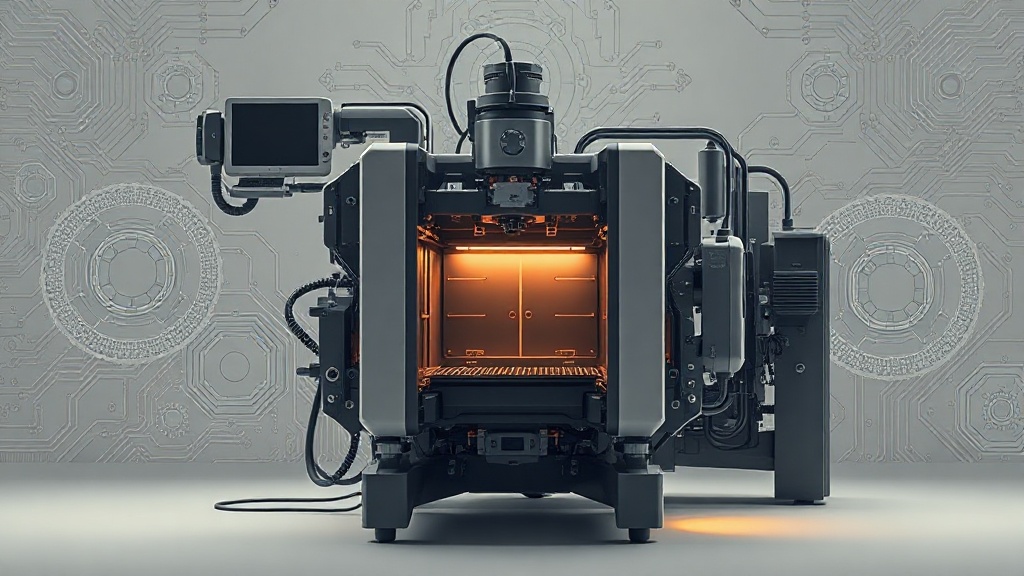
EUV Monopoly and Deep Technological Barriers
ASML's deep "moat" primarily stems from its monopoly in EUV technology. The development of EUV lithography machines took over 20 years, involved an investment of more than $9 billion, and thousands of patents, reaching unprecedented levels of complexity, precision, and cost. Analysts estimate that competitors would need to invest approximately $100 billion and 10 years to catch up, assuming ASML remained stagnant during that period, which is an almost impossible task. Furthermore, ASML's deep integration with its customers and the model of co-investment by customers further solidify its market position.
Looking ahead, High-NA EUV systems are a key driver for ASML's next phase of growth. Designed to manufacture smaller patterns for advanced AI, logic, and memory chips, industry giants like Intel and SK Hynix have already planned to be early adopters of this technology, signaling ASML's continued leadership at the technological forefront.

Strong Order Book and Robust Financial Performance
ASML's financial performance is a significant source of market confidence. As of March 2026, the company's backlog orders reached an astonishing 38.8 billion euros, providing high visibility for revenue for many years to come. Of this, orders in Q4 2025 hit a record 13.2 billion euros, with more than half coming from its most advanced EUV lithography machines. ASML CEO Christophe Fouquet stated that the company's EUV orders for 2027 are almost full, and it plans to increase EUV capacity by approximately 30% in 2027 compared to 2026, with a potential further 30% increase in 2028.
According to the Q2 earnings report released on July 15, 2026, ASML showed strong performance:
- Total net sales: 9.3 billion euros, a 21.2% year-over-year increase.
- Gross margin: 54.0%, exceeding the company's guidance range.
- Net income: 2.9 billion euros, a 26% year-over-year increase.
- Earnings per share (EPS): 7.59 euros, a 28.6% year-over-year increase.

Based on this, ASML raised its full-year 2026 outlook, expecting net sales to reach 43 billion to 45 billion euros (previously 36 billion to 40 billion euros) and gross margin to reach 54% to 56% (previously up to 53%). This data can be viewed on financial news platforms such as Svmuu.
Valuation Logic and Market Views
Despite ASML's impressive performance, its valuation has also attracted considerable attention. As of July 2026, ASML's market capitalization surpassed $700 billion, making it the first European listed company to reach a $700 billion market cap, approximately $682 billion in mid-July. Its stock price increased by about 68.9% year-to-date in 2026 (as of July).

Wall Street analysts generally hold an optimistic view of ASML, giving "moderate buy" or "strong buy" ratings, considering its EUV monopoly position as key to long-term growth in the semiconductor industry. However, some views suggest that ASML's stock valuation is high. For example, in July 2026, its price-to-earnings (P/E) ratio was 36.83, slightly higher than the industry average of 35.13. GuruFocus believes ASML's stock price is about 51% above its fair value, while Seeking Alpha's quantitative rating system rates its valuation as "F." This divergence in valuation reflects the market's trade-off between ASML's future growth potential and its current high price.
Key Customers, Supply Chain, and Risk Factors
ASML's main customers include TSMC (TSMC), Samsung (Samsung), and Intel (Intel), all top global chip manufacturers who are highly dependent on ASML's EUV equipment. In terms of the supply chain, Carl Zeiss SMT of Germany holds a strategically irreplaceable position in EUV optical systems, while Cymer, acquired by ASML in 2013, provides EUV light source technology.

Despite its strong moat, ASML also faces some risks. Over-reliance on a few major customers (TSMC and Samsung once accounted for 38% of revenue) is one. Additionally, geopolitics and export controls bring uncertainty. For example, the Chinese market accounted for 33% of ASML's sales in 2025, but due to export controls, this is expected to drop to 20% in 2026, potentially leading to over 4 billion euros in revenue loss. The recent start of DUV lithography machine production by a Chinese government-backed company has also raised market concerns about ASML's dominant position. The cyclical fluctuations of the semiconductor industry are also a long-term risk that ASML needs to address.