Bitcoin leverage trading, also known as margin trading, is a form of derivatives trading in the cryptocurrency market that allows traders to amplify their trading positions. By borrowing funds, it enables traders to control larger Bitcoin positions with a relatively small amount of their own capital, thereby magnifying both potential gains and losses.
Core Concepts of Leverage Trading
The essence of leverage trading is to "make big gains with small capital." Traders only need to provide a certain percentage of their own funds as margin to borrow more funds from the trading platform for trading. For example, using 10x leverage means a trader can control a Bitcoin position worth $10,000 with $1,000 of their own funds.
The key difference from spot trading is that spot trading involves actually buying, selling, and holding Bitcoin, profiting only when the price rises; whereas leverage trading does not require actual ownership of the underlying asset, allowing profit from both going long (predicting price increases) and shorting (predicting price decreases).
At the same time, it also differs from futures contracts. Common leverage trading often refers to spot leverage, which involves borrowing funds to buy and sell spot assets; while futures contracts are standardized contracts traded based on the price at a future point in time. Both utilize the principle of leverage, but they differ in settlement, delivery, and fee structures.
How to Use Leverage to Trade Bitcoin?
Engaging in Bitcoin leverage trading typically follows these steps, but note that specific operating interfaces and rules vary by platform.
- Choose a Compliant Trading Platform: First, select a reputable cryptocurrency exchange that supports leverage trading. Globally, mainstream platforms such as Binance, OKX, Bybit, and Kraken offer this service.
- Complete Account Registration and Verification: Register an account on the chosen platform and complete identity verification (KYC) according to local regulations and platform requirements.
- Deposit Margin: Fund your trading account with fiat or cryptocurrency; this capital will serve as margin for opening leveraged positions.
- Select Trading Pair and Leverage Multiple: Go to the leverage trading interface and select a Bitcoin trading pair (e.g., BTC/USDT). Then, choose the leverage multiple based on your personal risk tolerance and the options provided by the platform. The maximum leverage offered by different platforms varies significantly, commonly ranging from 2x to 100x, with some platforms potentially offering higher multiples for specific products.
- Open a Position:
- Go Long: If you anticipate Bitcoin's price will rise, choose to buy to open a long position.
- Short: If you anticipate Bitcoin's price will fall, choose to sell to open a short position. The shorting mechanism typically involves borrowing Bitcoin from the platform, selling it, and then buying back an equivalent amount of Bitcoin when the price drops to return it, profiting from the price difference.
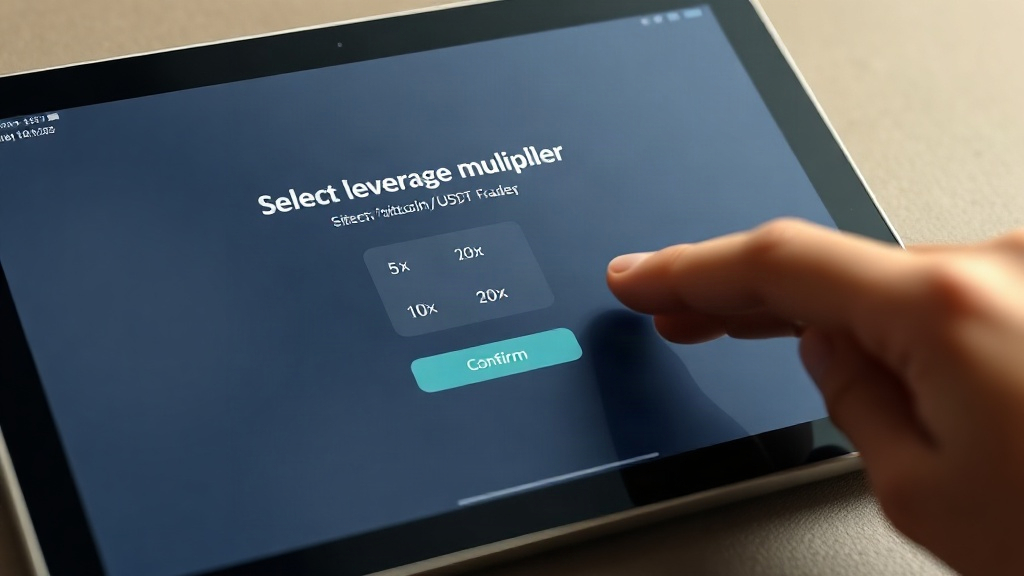
- Set Take-Profit and Stop-Loss and Monitor Positions: After opening a position, it is crucial to set take-profit and stop-loss orders, which are key tools for risk management. At the same time, you need to understand the platform's margin mode (usually isolated or cross-margin) and closely monitor position profits/losses and margin levels to prevent forced liquidation.
Risks and Considerations of Leverage Trading
Leverage trading is a double-edged sword; while it amplifies potential profits, it also proportionally amplifies the risk of losses.
- High Volatility and Liquidation Risk: The cryptocurrency market itself is highly volatile. With leverage, even small adverse price movements can quickly deplete margin, triggering forced liquidation, or "margin call." For example, when Bitcoin's price surpassed $89,000 in November 2024, market data showed a large number of leveraged traders were liquidated within 24 hours.
- Newbies Should Use High Leverage Cautiously: For inexperienced traders, using high leverage multiples (such as 30x, 50x, or even higher) carries extremely high risk. It is recommended to start with low or no leverage trading to gain experience.
- Understand Funding Rates: In products like perpetual contracts, there is a funding rate mechanism used to balance long and short positions, which affects holding costs.
- Regional Compliance: Leverage trading and derivatives are strictly restricted or prohibited in certain jurisdictions. For example, in the United States, spot crypto leverage trading for retail investors is subject to regulatory restrictions. Before trading, it is essential to understand and comply with local laws and regulations.
In summary, Bitcoin leverage trading is a highly specialized and high-risk financial instrument. It offers more trading strategies and capital efficiency but also requires traders to possess corresponding knowledge, strict risk management discipline, and a clear awareness of risks. Before participating, thoroughly educating yourself and only trading with funds you can afford to lose is crucial.
The platform information mentioned in the article changes with the listing and delisting dynamics of various exchanges; please refer to the official announcements of the exchanges.