



Deploying and hosting the official Ethereum website (ethereum.org) on the IPFS (InterPlanetary File System) network means that the website's static frontend assets, documentation, and page content no longer rely solely on traditional centralized servers. Instead, they are stored, distributed, and accessed via a decentralized peer-to-peer distributed network. This move not only embodies the Web3 ecosystem's practice of decentralization principles, but also provides a solid underlying architectural support to ensure the website's permanence and censorship resistance.
The Fundamental Difference Between Content Addressing and Traditional HTTP Access
To understand the profound significance of deploying the official Ethereum website on IPFS, one must first distinguish between the two core underlying addressing logics of the internet: location-based addressing and content-based addressing. The traditional World Wide Web (Web) is based on the HTTP protocol and employs Location-based Addressing. In this model, when a user enters a URL in a browser, the browser sends a request to a specific server IP address, searching for "which server and which folder this file is stored in." If the server goes down, the domain name is hijacked, or the hosting provider interrupts service for any reason, the user will be unable to access the target webpage.

In contrast, IPFS uses Content-based Addressing. When a file is stored in the IPFS network, a unique cryptographic hash value—known as a Content Identifier (CID)—is calculated for it. When users request data, they do not ask "where a certain server is located," but rather "who has the content corresponding to this CID." As long as any node across the entire network holds the file and the file content has not been tampered with, the requester can directly retrieve the correct data through cryptographic verification. This mechanism completely eliminates reliance on the physical location of a single server, fundamentally ensuring data integrity and tamper-resistance.
Why Did Ethereum Officials Deploy the Official Website on IPFS?
As the world's leading decentralized smart contract platform and "world computer," Ethereum's official website is not only a window for information dissemination, but also the developer documentation, tutorial, and tool gateway for the entire ecosystem. Deploying it on IPFS is primarily based on three core considerations:
- Enhancing Censorship Resistance: Traditional centralized domain names and servers are susceptible to single points of political censorship, regional blockades, or legal disputes. By publishing via IPFS, website content can be mirrored and distributed across countless independent nodes globally, making it extremely difficult for a single entity to completely erase or block.
- Eliminating Single Points of Failure and Improving Availability: If a traditional cloud service provider suffers a massive outage, DDoS attack, or service interruption, the websites it hosts will be paralyzed. IPFS's distributed P2P characteristics mean that even if some nodes go offline, as long as there are still nodes in the ecosystem retaining caches, users can still smoothly access official documentation through public gateways or local nodes.
- Practicing the Ethos of Decentralization: As the foundational infrastructure of the crypto world, Ethereum itself is highly decentralized. If its official portal relied entirely on centralized traditional hosts, it would create an ironic architectural asymmetry. Putting the frontend on-chain or on distributed storage is an important practice to maintain the native decentralized attributes of Web3 projects.
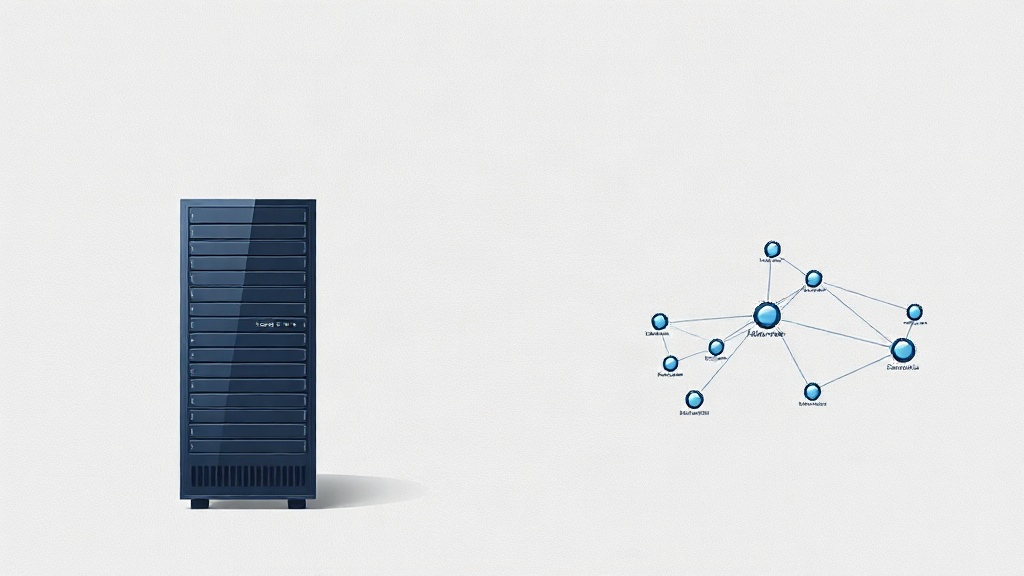
Actual Limitations and Operational Methods of IPFS Hosting in the Web3 Ecosystem
Although IPFS endows websites with extremely high censorship resistance and tamper-proofing capabilities, this does not mean it is completely detached from traditional internet infrastructure. For average internet users, accessing websites directly via the native IPFS protocol (such as ipfs://) still requires specific browser extensions or local node support. Therefore, the official Ethereum website typically adopts a dual-track system in actual operation: on the one hand, static assets are permanently solidified and published to the IPFS network to generate stable CIDs; on the other hand, mainstream public IPFS gateways and traditional CDN acceleration are used to allow ordinary users accustomed to traditional HTTP browsers to seamlessly and rapidly access the content.
This architecture not only preserves the permanence and security of decentralized storage, but also accommodates the access experience of mainstream users. With the continuous maturation of Web3 infrastructure, an increasing number of decentralized application (DApp) frontends, open-source protocol documentation, and blockchain ecosystem projects are beginning to host their content on decentralized storage networks such as IPFS, gradually building a brand-new internet frontend ecosystem that is more fragile-resistant and transparent.









