In the cryptocurrency market, tokens such as BCH3S frequently appear in the leveraged tokens or ETF zones of major trading platforms. For investors unfamiliar with derivatives mechanics, the "3S" in such token names can easily cause misunderstandings. In fact, to understand this type of asset and evaluate whether it has investment value, one must first clarify that its essence is not an independent mainchain coin, but a highly specialized structured financial derivative.
Definition and Underlying Asset of BCH3S
BCH3S typically stands for Bitcoin Cash 3x Short. It is neither a native token on an independent blockchain nor does it have its own mainnet and block explorer; rather, it is an anchored derivative token issued by a specific cryptocurrency exchange or financial derivatives team. Its core underlying asset is Bitcoin Cash (BCH), and it is managed in the background through perpetual contracts or futures positions to track 3x the inverse (short) daily return of BCH.
This means that when the price of the underlying asset BCH drops by 1% within a trading day, the net asset value (NAV) of BCH3S will theoretically rise by 3%; conversely, if the price of BCH rises by 1% on that day, the NAV of BCH3S will fall by 3%. This type of product simplifies traditional leveraged shorting operations—which otherwise require margin accounts and carry liquidation risks—into a tokenized format that can be bought and sold directly in the market like regular spot assets. Market data can be viewed and tracked in real-time on Svmuu.
Operational Mechanism and Core Risks: Rebalancing and Decay
To deeply understand the investment attributes of BCH3S, one must master its built-in dynamic position adjustment and periodic rebalancing mechanism. To ensure that the leverage ratio remains at the predetermined 3x level, the issuer typically forces position adjustments in the background at fixed daily time points or when price fluctuations of the underlying asset trigger specific thresholds. While this mechanism prevents the product from dropping completely to zero during one-sided market trends, it also introduces unavoidable compounding decay and volatility drag.
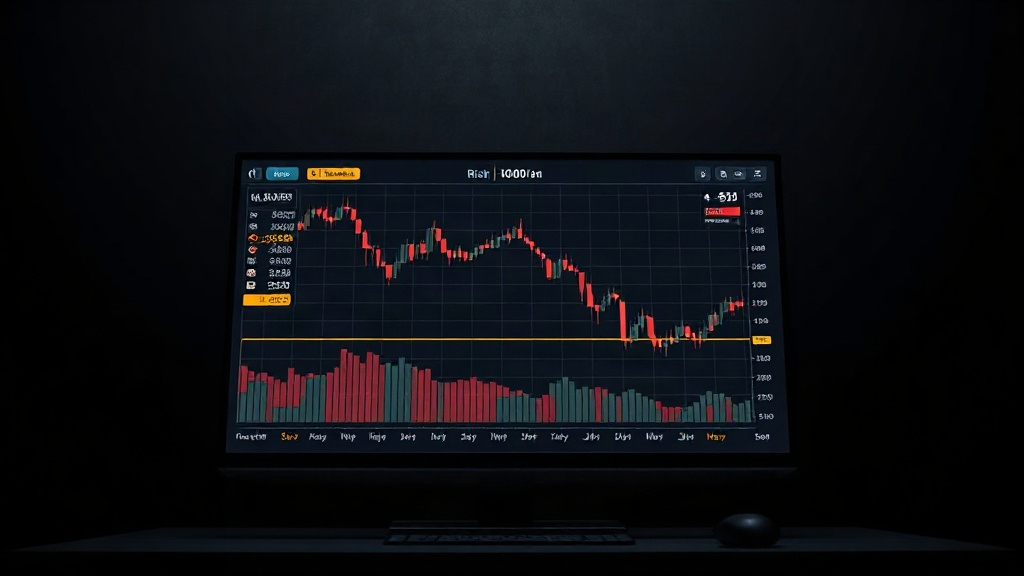
In volatile markets, if the price of BCH experiences repeated fluctuations of "falling first then rising" or "rising first then falling," the actual NAV of BCH3S will suffer severe erosion due to changes in the daily rebalancing base. Even if the underlying asset BCH ultimately returns to its original price after multi-cycle reciprocating fluctuations, the NAV of BCH3S will often be far below its initial level. This characteristic dictates that it is completely unsuited for long-term holding.
Furthermore, to address excessively low NAV issues caused by extreme market conditions, issuers will irregularly conduct a reverse split on the product—combining multiple fractional tokens into a single unit to increase the unit price and meet exchange trading display requirements. This will result in a reduction in the number of tokens held by investors.
Is BCH3S Worth Investing In?
From an asset allocation perspective, BCH3S possesses no long-term store-of-value function, nor is it a traditional value investment target. It is essentially a high-risk short-term tactical tool whose conditions for application are extremely strict:
- Target Audience: Suitable only for professional investors with professional short-term trading skills, the ability to closely monitor the market, and the need for short-term hedging or speculation during specific downward trends.
- Unsuitable Scenarios: Unsuitable for ordinary retail investors to hold long-term, engage in value investing, or engage in blind bottom-fishing. Due to the extremely high risk of NAV erosion from long-term holding, keeping it as a regular investment asset over the long term can easily lead to a substantial shrinkage of principal.
Before engaging with such products, investors should fully assess their own risk tolerance and check the latest product rules and market information via Svmuu or relevant trading platforms prior to participating.