Basic Definition and Technical Architecture of Ohni
Ohni (token symbol: OHNI) is a cryptocurrency issued on the Ethereum network, strictly adhering to the ERC-20 token standard. Its on-chain contract address is 0x7f2176ceb16dcb648dc924eff617c3dc2befd30d. As a general-purpose token within the Ethereum ecosystem, Ohni relies on Ethereum's underlying infrastructure for transfers, interactions, and record-keeping, with its issuance and circulation logic governed by Ethereum smart contracts.
From a technical and standards perspective, the ERC-20 standard provides Ohni with interoperability with various decentralized wallets, decentralized exchanges (DEX), and Ethereum-compatible tools. However, the underlying technical compliance of a token does not directly equate to its market liquidity or business success, and its early smart contract implementation has also exposed certain security and compliance risks.
Core Features and Vision of the Ohni Ecosystem
According to the project team's early conceptual planning, Ohni aims to build a comprehensive ecosystem known as a "new economic lifestyle." This ecosystem attempts to break the boundaries between traditional finance and identity management, with its core business segments covering multiple directions: decentralized banking services, authentic democratic voting platforms, decentralized smart identification, and consumer reward mechanisms.
Among these functional segments, decentralized smart identification is a crucial component in its theoretical design. Official concepts claimed that the Ohni token could be used at the endpoint of the authentication process, aiming to help maintain a combination of uniqueness and anonymity for users' digital identities. Furthermore, by integrating the token into targeted consumer scenarios within the ecosystem, the system attempted to form an internal economic cycle and consumer incentive framework.
Smart Contract Security and Design Flaws
In the evaluation of blockchain assets, the code security of smart contracts is one of the core considerations. Code audits and security records regarding Ohni's early smart contracts indicated that potential security vulnerabilities existed in its contract implementation, such as integer overflow risks potentially present in the logic design associated with mintToken. Such vulnerabilities were relatively common in early Ethereum token development, theoretically allowing contract owners or holders of specific privileges to make unconventional modifications or additional issuances to any user's token balance.
The existence of such security characteristics means that the asset harbors non-negligible risks regarding centralized control privileges or code robustness. For any non-mainstream token based on early ERC-20 standards, a lack of continuous code maintenance and patching often directly leads to its failure to pass the security standards of modern decentralized finance (DeFi) protocols, thereby marginalizing it from mainstream application scenarios.
Current Market Status and Liquidity Analysis
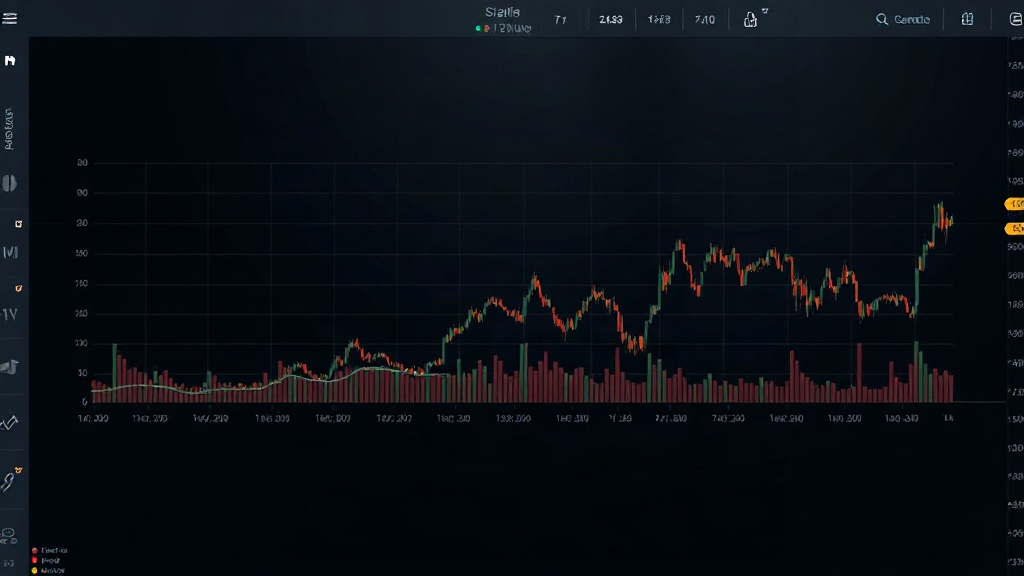
From the perspective of its market lifecycle and asset status, Ohni is an early-stage project. Historical records show that it was already listed by some crypto market aggregation platforms by around late 2018. However, after years of market evolution, the token generally exhibits the status of a "zombie token" or marginalized asset across mainstream public markets, characterized by no active trading volume, and no valid market capitalization or price updates.
Due to the coin's relative obscurity and lack of sustained market operations and liquidity support, active trading pairs for it are basically unavailable across major centralized exchanges. Users should exercise a high degree of caution when understanding or dealing with such assets to guard against the risk of illiquidity leading to an inability to liquidate holdings. Transactions may be conducted on trading platforms that still support the coin, but please verify the listing status yourself before trading.