

Faster global financial news!

BTC Bitcoin1
BTCMarket
-
Trend
-
K-Line
BTC Summary
Bitcoin operates on a peer-to-peer (P2P) network, with tens of thousands of nodes worldwide collectively maintaining a public, transparent, and tamper-proof distributed ledger. It employs a Proof-of-Work (PoW) consensus mechanism, in which miners compete using the computational power of the SHA-256 algorithm to earn the right to record transactions. On average, a new block is generated approximately every 10 minutes, and the miner receives a reward. This process both ensures network security and facilitates the issuance of new coins. The total supply of Bitcoin is hard-coded at 21 million coins and will never exceed this limit. The rate of new coin issuance is continuously reduced through a “halving” mechanism that occurs approximately every four years; the fourth halving was completed in 2024. It is precisely this verifiable scarcity and anti-inflationary nature that has earned Bitcoin the title of “digital gold.”
Decentralization, censorship resistance, and global liquidity are Bitcoin’s core value propositions: anyone can hold and transfer Bitcoin without permission; transactions occur 24/7, uninterrupted by geographical boundaries or bank operating hours; and the ledger—based on cryptography and network-wide consensus—is extremely difficult to tamper with or freeze. Alongside the mainnet, Layer 2 solutions such as the Lightning Network continue to enhance the speed and cost-efficiency of micropayments.
As the cryptocurrency with the largest market capitalization and strongest consensus, Bitcoin serves not only as a key asset for storing value and hedging against risk but also as the cornerstone and pricing anchor of the entire crypto industry; its price movements serve as a barometer for the entire digital asset market. With the approval and listing of U.S. Bitcoin spot ETFs in early 2024, institutional investors, publicly traded companies, and even some sovereign wealth funds are accelerating their inclusion of Bitcoin in their asset allocations. At the same time, Bitcoin’s price remains highly volatile, and investors should continue to approach market risks with a rational mindset.
Since its inception, Bitcoin has undergone multiple bull and bear cycles, growing from being virtually worthless to a global asset with a market capitalization in the trillions, all while experiencing significant volatility. It has spawned vast industries—including mining, exchanges, wallets, and derivatives—and driven the development of the entire blockchain sector; Today, Bitcoin is not only a consensus asset among crypto enthusiasts but is also gradually being viewed by traditional financial institutions as a new type of alternative investment.
This page aggregates comprehensive Bitcoin (BTC) market data: real-time prices, 24-hour and multi-period price changes, multi-period candlestick charts and moving averages (MA), MACD, RSI, Bollinger Bands, and other technical indicators; BTC’s real-time market capitalization ranking; trading volume and historical price data. It also aggregates the latest Bitcoin news and policy updates, supports real-time conversion between BTC and fiat currencies such as the Chinese yuan, U.S. dollar, and euro, helping you quickly assess value and stay on top of market trends.
BTCNews
-
Gold and silver prices fell across the board, while crypto volatility declined; the BVIX fell 6.18% intraday.
Svmuu News: According to the latest data from Gate, the price of gold has fallen to $4,090.11 per ounce, down 0.85% for the day. The price of silver has fallen to $59.444 per ounce, down 0.3% for the
-
Standard Chartered Maintains $100,000 Price Target for Bitcoin: Selling Coins Is Not a Sign of Worsening Risks
Svmuu News: Standard Chartered Bank stated that it is maintaining its price forecast of $100,000 for Bitcoin by the end of 2026. The bank believes that the recent market decline triggered by developme
-
Donald Trump Family-owned cryptocurrency mining company American Bitcoin will release its second-quarter financial results before the market opens on August 3.
Svmuu News Donald Trump Related Bitcoin Mining company American Bitcoin (ABTC) announced that it will officially release its full second-quarter financial results before the U.S. stock market opens on
-
Svmuu Evening Brief
1. Analyst: SK Hynix’s U.S. IPO Boosts Confidence in AI Hardware Investments; 2. Strategist: Federal Reserve Unlikely to Raise Rates in July; 3. LAB Plummets 94% in Three Days; Suspected Insider Trans
-
Michael Saylor: A True Believer in BTC; We Should Focus More on Digital Credit Right Now
Svmuu News: Michael Saylor stated that if one truly believes in Bitcoin, the obvious trading opportunity right now is digital credit, because its current pricing reflects the view that BTC will not ex
-
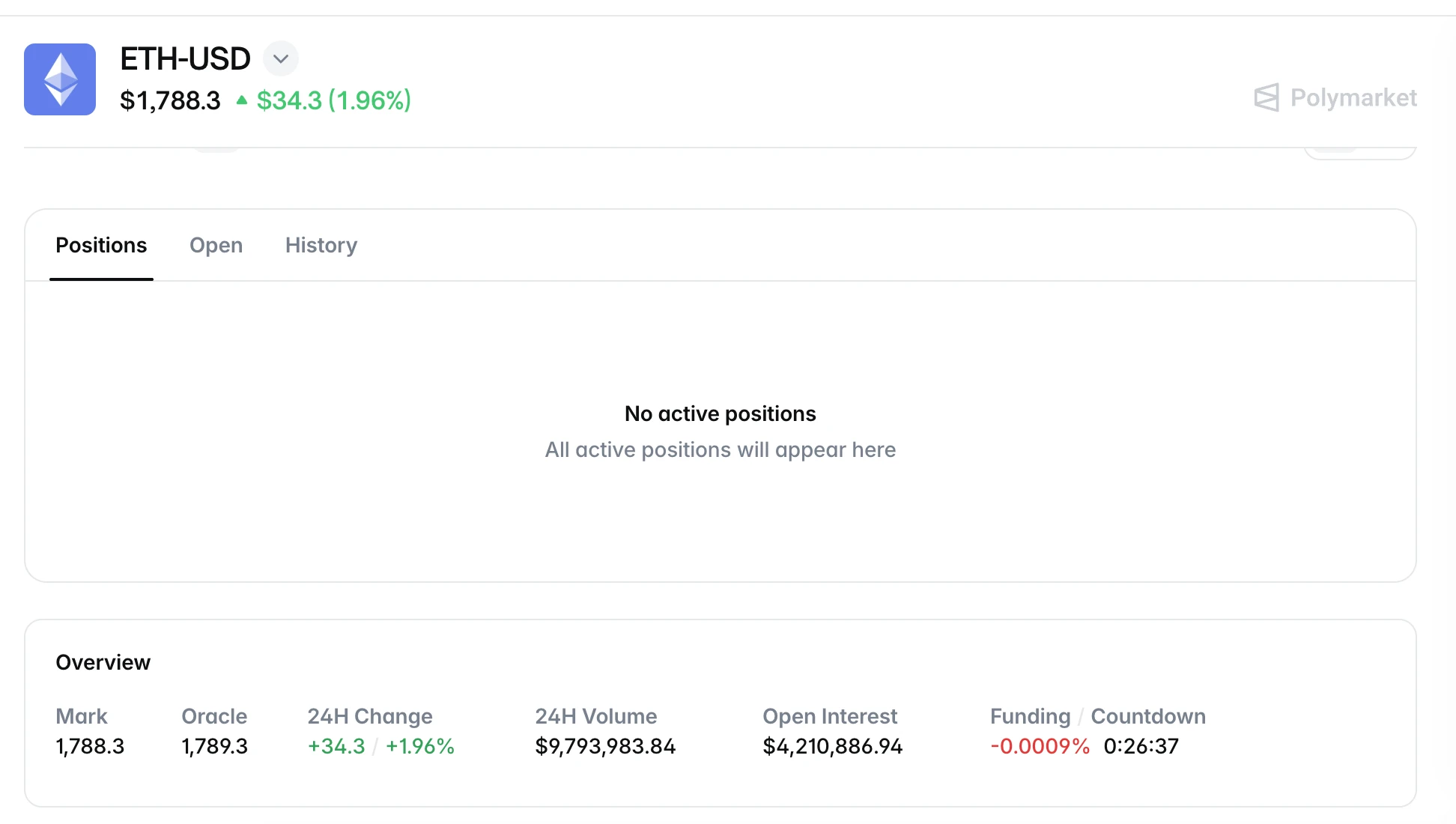
Total 24-hour trading volume on Polymarket’s Perp section reached $48.43 million
Svmuu News: According to official data from Polymarket, the total trading volume in the Perp segment reached $48.43 million on its first day of launch; the top three pairs by trading volume were ETH-U
-
CryptoQuant: Bitcoin’s recent rally is a bear-market bounce, not a trend reversal
Svmuu News: CryptoQuant states that Bitcoin’s recent rebound is a bear-market rally, not a trend reversal, and its bull score index remains clearly in bearish territory. (Cointelegraph)
-
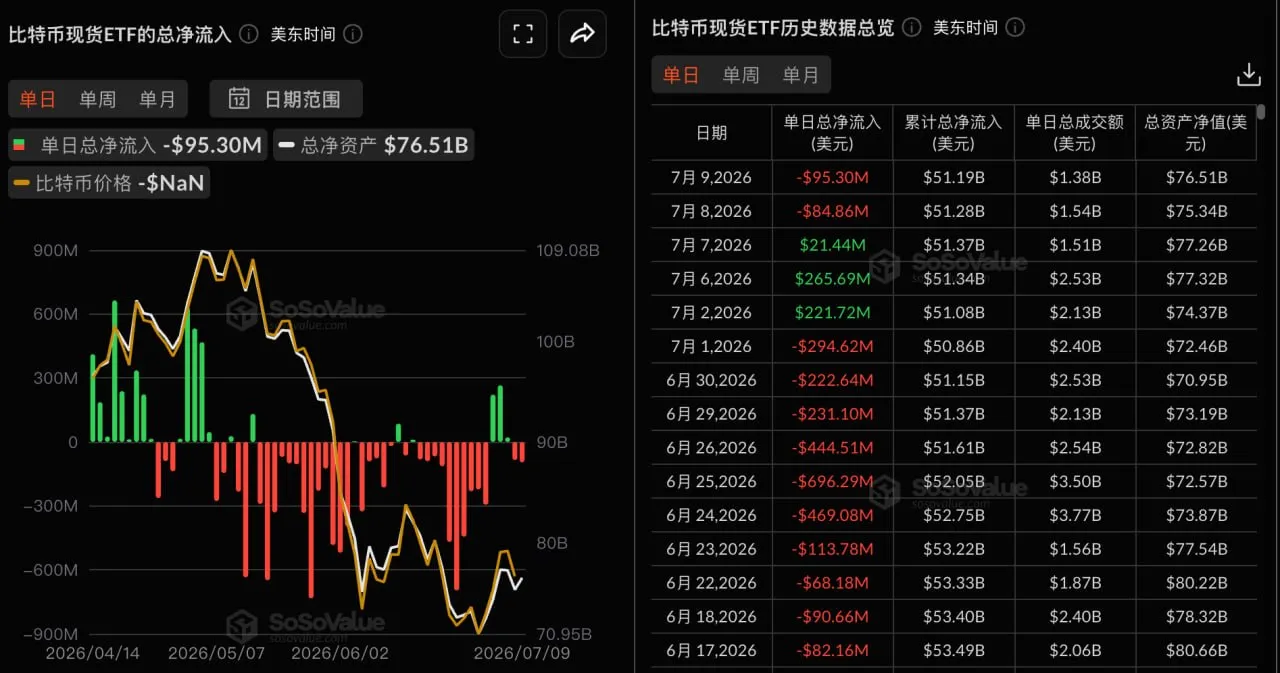
Bitcoin Spot ETFs saw total net outflows of $95,301,700 yesterday, with Fidelity’s FBTC leading the way with net outflows of $63,251,600.
Svmuu News: According to SoSoValue data, the Bitcoin spot ETF saw total net outflows of $95,301,700 yesterday (July 9, Eastern Time). The Bitcoin spot ETF with the highest single-day net inflow yester
-
Binance Transfer 3,000 BTC, worth $192 million, to Ceffu within 30 days
Svmuu News: According to Onchain Lens, Binance transferred 1,050 BTC—worth $67.1 million—to Ceffu 12 minutes ago.Over the past 30 days, Binance has transferred approximately 3,000 BTC, worth $192 mill
-
Buying pressure from short-term BTC holders has risen to 30%, while selling pressure has fallen to a multi-month low
Svmuu News: CryptoQuant analyst Axel Adler Jr. stated that the realized pressure model for short-term Bitcoinholders has once again shifted to buyer dominance at the lows, replicating the rebound patt
-
Bitcoin opened flat before rising slightly to $63,818.70, while Ethereum opened down 1.3% before recovering to $1,874.41; investors are closely watching the progress of the "Clarity for Digital Assets" bill.
On Tuesday morning, August 4, U.S. ET, Bitcoin opened at $63,463.72, flat with Monday's opening price, and then rose to $63,818.70. Ethereum opened at $1,858.53, down 1.3% from Monday's opening price,
-
DeItaone reports ING's view: Bitcoin's long-term trend remains bearish, with strong resistance between $65,670 and $69,900; a drop below $54,450 would trigger a long-term sell signal.
DeItaone reports ING's view: Bitcoin's long-term trend remains bearish, with strong resistance between $65,670 and $69,900; a drop below $54,450 would trigger a long-term sell signal.
-
Bitcoin's 30-day implied volatility index (BVIV) drops to 36%, its lowest since May 31, despite weak institutional demand and stablecoin market cap declines.
The BVIV, which was near 60% in early June, indicates a pervading calm in the market despite factors like a multi-million dollar Coldcard hack, anemic institutional demand, and regulatory uncertainty.
-
Upbit lists QUID token, supports KRW, BTC, and USDT trading pairs
Upbit lists QUID token, supports KRW, BTC, and USDT trading pairs
-
Binance launches bitcoin-backed 'Lite Loan' allowing eligible users to borrow up to $1,000 in USDT
Binance launches bitcoin-backed 'Lite Loan' allowing eligible users to borrow up to $1,000 in USDT
-
"Mad Money" host Jim Cramer plans to sell all Bitcoin holdings due to concerns about the threat of quantum computing, but the crypto community remains unaffected by his reputation as a reverse indicator, with Bitcoin prices still stable at around $64,000.
Jim Cramer stated that IBM Chairman and CEO Arvind Krishna once pointed out that quantum computers might challenge modern cryptography within three to four years, which prompted Cramer to decide to li
-
Gelephu Mindfulness City (GMC) in Bhutan entrusts a portion of its Bitcoin reserves to 3iQ for market-neutral management
This move signals a shift in GMC's Bitcoin asset management strategy, aiming to generate long-term returns through low-risk investment methods, rather than merely holding it as a long-term national as
-
Bitcoin nears $64,000, up 2% over 24 hours, as traders look past fourth Coldcard sweep
Bitcoin recovered the $63,000 level it lost during Monday's session, reaching just above $64,100 in Asian morning hours. This comes as a fourth wave of sweeps related to the Coldcard situation took ap
-
Coldcard Bitcoin theft tops $100M across 3 confirmed attack waves: Galaxy
Galaxy Research reported that investigators are examining a suspected fourth wave of attacks, which could increase total losses to $130 million. Currently, 90% of the stolen Bitcoin remains unmoved.
-
Jameson Lopp states Coldcard exploit highlights limits of Bitcoin's 'don't trust, verify' mantra, notes AI is reshaping wallet security
Lopp said AI is helping attackers uncover bugs and developers audit code faster, thereby reshaping wallet security.
-
Bitcoin Storage Guide: Cold and Hot Wallet Choices and Security Practices
There are various ways to store Bitcoin, mainly divided into two categories: cold storage and hot storage, each with its own advantages and disadvantages, suitable for different needs and risk appetites. Cold storage (such as hardware wallets, paper wallets, air-gapped devices, and multi-signature wallets) offers high security, suitable for long-term holding and large amounts of Bitcoin, but is slightly less convenient. Hot storage (such as software wallets and exchange wallets) is convenient and fast, suitable for small transactions and daily use, but has relatively lower security. This article will detail the characteristics, pros and cons of these storage methods, and corresponding security best practices, to help users choose the most suitable Bitcoin custody solution for themselves.
-
Bitcoin Future Purchase Difficulty Analysis: Scarcity, Regulation, and Market Trends
The future difficulty of purchasing Bitcoin is a multi-faceted issue. From the supply side, its total cap of 21 million coins and the halving mechanism occurring approximately every four years (most recently in April 2024, next expected in April 2028) will continuously drive up its scarcity, potentially increasing long-term acquisition costs. From the perspective of purchase convenience, regulatory policies in major economies like the United States are shifting to support innovation, and the launch of Bitcoin ETFs has lowered investment thresholds for institutions and individual investors. However, strict restrictions in some countries (such as China) and fluctuations in market demand (such as recent weak ETF capital flows) may also increase the complexity of the purchasing process in specific regions or for specific groups of people. Overall, scarcity will enhance value, while the convenience of purchase channels will depend on global regulation and market development.
-
Global Overview of Mainstream Cryptocurrency Trading Platforms and the Current State of Bitcoin Trading in Mainland China
This article will outline the current global leading cryptocurrency trading platforms and delve into mainland China's regulatory policies regarding Bitcoin and other virtual currencies. Since 2021, mainland China has completely banned virtual currency-related business activities, but personal ownership of cryptocurrency itself is not illegal. Meanwhile, Hong Kong, as a special administrative region, is actively establishing a regulated framework for digital assets, providing a different path for compliant transactions.
-
May 2026 Review: Ethereum ETFs See Continued Outflows, ETH/BTC Rate Breaks Key Support
In May 2026, Ethereum spot ETFs experienced significant outflows, with cumulative net outflows reaching hundreds of millions of dollars, marking their worst monthly performance since product launch. This trend led to the ETH/BTC exchange rate falling to a new annual low of 0.027, and the price of Ethereum briefly dropped below $2,000. Institutional investor interest in Ethereum cooled significantly at the time, with some capital shifting to Bitcoin, reflecting a change in asset preference in a risk-averse market environment.
-
Overview of Major Global Cryptocurrency Exchanges and Bitcoin Purchase Channels
Choosing the right cryptocurrency exchange platform is crucial for securely purchasing Bitcoin. This article will provide an overview of the world's leading cryptocurrency exchanges, focusing on their security, compliance, liquidity, and diverse services offered. We will introduce major platforms including Binance, OKX, Coinbase, and more, and provide key considerations when selecting a platform to help readers understand how to acquire Bitcoin through legitimate channels.
-
Comparison of Popular Cryptocurrency Trading Apps: Bitcoin, and Guides to Trading Various Cryptocurrencies
Choosing the right cryptocurrency trading app is a crucial step for investors entering the digital asset market. This article compares several major global platforms, including Binance, OKX, OKX, Coinbase, Bybit, and Kraken, analyzing them in terms of features, user experience, security, supported cryptocurrencies, and trading fees.Whether you’re a professional seeking a wide range of trading tools or a beginner who prefers a simple, intuitive interface, this article will provide a comprehensive guide to help you make an informed choice based on your individual needs.
-
Listed Companies Accelerate Their Expansion into Bitcoin: Over 140 Companies Hold More Than 1.2 Million BTC—An Analysis of the Underlying Drivers
As of the second quarter of 2026, more than 140 publicly traded companies worldwide have included Bitcoin on their balance sheets, with total holdings exceeding 1.2 million BTC. This trend is primarily driven by multiple factors, including Bitcoin’s role as an inflation hedge, its long-term appreciation potential, the need for balance sheet diversification, and an improving regulatory environment.The implementation of new accounting standards by the U.S. FASB and the approval of spot Bitcoin ETFs have further lowered the barriers for companies to hold crypto assets.
-
The Future of Wrapped Bitcoin (WBTC): Bitcoin’s Role as a Bridge and the Challenges It Faces in the Ethereum DeFi Ecosystem
Wrapped Bitcoin (WBTC), an ERC-20 token pegged 1:1 to Bitcoin, is designed to bring the vast liquidity of Bitcoin into the decentralized finance (DeFi) ecosystem at Ethereum. It allows Bitcoin holders to participate in activities such as DEX trading, lending, and yield farming.This article will delve into WBTC’s operational mechanisms, market performance, and key role in DeFi, as well as the challenges it faces, such as centralized custody risks and smart contract vulnerabilities.Looking ahead, against the backdrop of DeFi’s continued growth, WBTC is expected to further solidify its position as a cross-chain bridge through decentralized custody models and the integration of new use cases.
-
Polarization in the Crypto Market: Why Are Crypto-Related Stocks Rising Against the Trend While Crypto Assets Are Generally Falling?
Since late 2025, the cryptocurrency market has experienced a significant correction, with the prices of Bitcoin, and Ethereum falling sharply from their all-time highs, and the total market capitalization halving. However, some crypto-related stocks—particularly mining companies transitioning to AI computing infrastructure—have shown strong upward momentum.This stark divergence in the performance of cryptocurrencies and related stocks has prompted the market to ask: Do cryptocurrency prices truly reflect industry fundamentals, or does the rise in these stocks signal a new value narrative? This article will delve into the reasons behind this divergence.
-
Bitcoin Gold vs. Other Assets: Which Holds Its Value Better? An In-Depth Comparison and Outlook for the Future
Bitcoin Often referred to as “digital gold,” Bitcoin has been engaged in a long-term competition with traditional safe-haven asset gold in terms of value preservation and stability. This article will conduct an in-depth comparison of the respective advantages and challenges of Bitcoin and gold from various perspectives, including scarcity, historical performance, volatility, institutional adoption, and diverse viewpoints.Although Bitcoin has delivered remarkable long-term returns, its price is highly volatile; gold, on the other hand, is renowned for its stability and safe-haven attributes, which have been proven over thousands of years. Most analysts believe that the two are not substitutes for one another, but rather complementary diversification tools in a modern investment portfolio.











24H Trending
-
1
Hong Kong 'Lonely Heart' Scammed for $3.3M in Crypto Romance Investment Fraud; Malaysian Authorities Express Displeasure Over Blockchain Week After-Party's OnlyFans Scandal
-
2
Microsoft's stock is on a run not seen in 26 years, erasing its year-to-date losses
-
3
FBI Agent Accused of Stealing $1 Million in Crypto, Allegedly Used ChatGPT for Vacation Plans
-
4
Oil prices fell as U.S. President Donald Trump called off an attack on Iran, saying talks would resume on Monday.
-
5
What is FRED Coin? FRED Coin Project Analysis and Market Overview

-
6
TRX Latest Price $0.33: Will TRON Coin Still Be Worth Holding in H2 2026?

-
7
In-depth Analysis of CROISSANT Coin: Multiple Homonymous Projects Coexist, Investment Value and Risk Assessment

-
8
FIDA Token Value Potential Analysis: Its Role and Future Prospects in the Solana Name Service Ecosystem

-
9
SpaceX is tightening its supply chain to reduce Chinese influence, aiming to keep Chinese nationals and parts out.
-
10
JFI Coin: JackPool.finance Project Analysis and Market Performance Overview

Markets Today




Recommended Reading

Hot Topics

Svmuu focuses on blockchain industry trends and cutting-edge cryptocurrency news, while also covering real-time market data and in-depth analysis of the Hong Kong, U.S., and foreign exchange markets. Here, you can not only access professional 24/7 news updates and accurate market data, but also utilize practical investment tools to help you capitalize on opportunities in both digital assets and traditional financial markets. Whether you are a blockchain enthusiast or an investor in Hong Kong, U.S., or foreign exchange markets, we provide efficient and timely information services to empower your investment decisions.
- User Agreement
- Privacy Policy
- Contact Us
- Business Partnerships
- Disclaimer
- Content Statement
- About Us
- Sitemap
 Coming Soon!
