

Faster global financial news!

BTC Bitcoin1
BTCMarket
-
Trend
-
K-Line
BTCNews
-
Wu Blockchain: As of the week of September 18, spot Bitcoin ETFs saw a net inflow of $6.21 million, while spot Ethereum ETFs experienced a net outflow of $140 million.
Wu Blockchain cited data showing that from September 14 to September 18 EDT, spot Bitcoin ETFs recorded a net inflow of $6.21 million, with BlackRock's IBIT fund contributing $121 million. During the
-
U.S. spot Bitcoin ETFs saw positive inflows over the weekend, pushing Bitcoin above $81,000 for the first time in two weeks.
US spot Bitcoin exchange-traded funds (ETFs) recorded significant inflows over the weekend, completely reversing previous outflows and helping Bitcoin climb back above $81,000 for the first time in tw
-
X Corp. Sues Bitcoin Influencers Vivek Kumar Sen and Zamyang Sherpa in UK High Court, Alleging Engagement Manipulation to Fraudulently Obtain at Least £207,384 in Creator Revenue
X Internet Unlimited Company and X Corp. filed a lawsuit in the UK High Court on September 17 against Vivek Kumar Sen, Zamyang Sherpa, and operators of related accounts. The lawsuit alleges that they
-
Bitcoin breaks $81,000, NEAR surges 23% on Zcash trading volume; US stock futures rise on US-China trade talks progress
Bitcoin surpassed $81,000 in early Asian trading, rising less than 1% in 24 hours, after the US Securities and Exchange Commission (SEC) cleared the way for on-chain trading of tokenized US equities.
-
Bitcoin's price has broken above its 50-week moving average for the first time in 45 weeks, a move that historical data often indicates as the start of a bull market.
Bitcoin's price closed above its 50-week moving average for the first time in 45 weeks during the week ending September 20. Alex Thorn, Head of Galaxy Research, noted that this could be a significant
-
Bitcoin and Gold: Similarities in Digital Age Store of Value
Bitcoin is often hailed as "digital gold," exhibiting significant similarities to traditional gold in terms of scarcity, store of value, decentralization, and potential to hedge against inflation. Both are not controlled by central authorities, have limited supply, and are regarded by investors as tools to protect assets during times of economic uncertainty. Despite Bitcoin's higher volatility, its narrative as a hedge against fiscal risk and a long-term store of value is increasingly strengthening, attracting attention from global investors.
-
Lookonchain monitoring: A mysterious whale sold 1,107 BTC ($86.76 million) in the past 5 days, and bought and staked 34,422 ETH ($86.50 million).
Lookonchain monitoring shows that the whale continues to rotate Bitcoin into Ethereum on the Hyperliquid platform and stakes all of it after purchase.
-
Bitcoin Futures Two-Way Position Mode Analysis
In Bitcoin futures trading, the Hedge Mode allows traders to simultaneously establish and independently manage both long and short positions on the same contract. Unlike One-Way Mode, in Hedge Mode, long and short positions do not offset each other; instead, their profits and losses, margin, and liquidation prices are calculated separately. This mode offers traders greater flexibility for risk hedging and strategy execution, particularly suitable when market direction is unclear or significant volatility is anticipated. However, it also comes with higher trading costs, increased margin requirements, and operational complexity, making it more suitable for experienced traders.
-
Current State of Cryptocurrency Trading Platforms in Mainland China: Regulatory Policies and Risk Warnings
Since 2021, mainland China has completely banned virtual currency trading and related services, and continues to strengthen regulation. Overseas exchanges providing services to domestic residents are also prohibited. Although individuals holding virtual currencies as virtual property are protected by law, any form of trading activity constitutes illegal financial activity and carries extremely high legal and financial risks. Svmuu reminds investors to comply with local regulations.
-
USD Crypto Trading Platform Overview and the Evolution of Bitcoin Trading Platforms in Mainland China
This article will explore global cryptocurrency platforms that support transactions in USD or USD stablecoins, as well as the development history and current strict regulatory environment for Bitcoin trading platforms in mainland China. Platforms such as BTC China, Huobi, and OKCoin, which once dominated the Chinese market, have successively transformed or exited the mainland Chinese market amid tightening regulations after 2017 and 2021, shifting towards global operations. Understanding these changes is crucial for global cryptocurrency market participants.




-
Galaxy Research has discovered a series of mysterious transactions on the Bitcoin blockchain over the past two weeks
Galaxy Research has discovered a series of mysterious transactions on the Bitcoin blockchain over the past two weeks, where an unknown user repeatedly embedded the same short poem 26 times, totaling 2
-
After Bitcoin fell below $80,000, prominent Bitcoin critic and gold advocate Peter Schiff warned that Bitcoin could drop further to $75,000
After Bitcoin fell below $80,000, prominent Bitcoin critic and gold advocate Peter Schiff warned that Bitcoin could drop further to $75,000. He noted that if this level fails to hold, it could trigger
-
Crypto longs lose $404 million in four hours as Bitcoin briefly slips below $80,000; spot Bitcoin ETFs see $773 million outflows
Crypto long positions lost $404 million in four hours as Bitcoin briefly fell below $80,000. This comes as spot Bitcoin ETFs recorded $773 million in outflows on Thursday and Friday, following three d
-
Bitcoin treasuries Strategy and Strive face the challenge of balancing Bitcoin purchases with preferred stock dividends.
According to CoinDesk, Bitcoin treasury companies Strategy (MSTR) and Strive (ASST) are striving to balance Bitcoin purchases with preferred stock dividends. Since their launch in February 2025, these
-
Ether Falls Below $2,300 as 28-Day Loss Reaches 14.7%, US Ether ETFs See Further Outflows
Ether's price has fallen below $2,300, with its 28-day cumulative loss reaching 14.7%. Over nearly four-week windows, ETH has lagged behind Bitcoin by 9.15 percentage points. Amidst this price action,
-
Middle East tensions escalate, Bitcoin drops below $80,000, and other cryptocurrencies fall across the board.
Bitcoin's price fell below $80,000 for the first time in over a month, currently trading at $79,700, down 2.2% in 24 hours, influenced by weekend geopolitical pressures from the US withdrawal of perso
-
Bitcoin Core Merges Policy Amendment to Speed Up Security Fixes as 44% of Nodes Run Unsupported Versions
Bitcoin Core merged a policy amendment on Oct. 22 that lets developers backport fixes for easily rediscovered vulnerabilities to every maintained release line and publish an advisory alongside them. A
-
Coinbase Markets Warns of Bitcoin Long Liquidation Risks
Coinbase Markets, via its X account, has warned of potential Bitcoin long liquidation risks, noting that a large cluster of net long positions were entered at an average price of $81,993. With Bitcoin
-
Xapo Bank CEO states that wealthy Bitcoin holders' investment habits are maturing, shifting towards using Bitcoin as collateral for loans and earning yields to increase their BTC holdings.
Xapo Bank CEO states that wealthy Bitcoin holders' investment habits are maturing, shifting towards using Bitcoin as collateral for loans and earning yields to increase their BTC holdings.
-
Data shows Bitcoin whales have accumulated 243,000 Bitcoins since July, indicating a bullish reversal in market activity.
Data shows Bitcoin whales have accumulated 243,000 Bitcoins since July, indicating a bullish reversal in market activity.
-
Multiple Reasons for Bitcoin Price Volatility and the Amplifying Effect of Leverage
Bitcoin's high price volatility is an inherent characteristic, driven by a combination of factors including market immaturity, supply and demand dynamics, regulatory developments, macroeconomic sentiment, and market liquidity. Leveraged trading is not the root cause of volatility, but acts as an amplifier, triggering cascading liquidations during sharp price movements and exacerbating short-term price swings. Investors need to understand these mechanisms to better manage risk.
-
Bitcoin hovers in the $80,000 range, with attention focused on whether it can break the $100,000 mark.
As of October 24, 2026, Bitcoin's price fluctuated between $80,268 and $80,587, contradicting previous claims of $92,000. The market is closely watching whether it can break the significant psychological barrier of $100,000 in the short term. Analysts hold divergent views, with some experts optimistic based on institutional adoption and ETF demand, while others remain cautious due to inflation, interest rate uncertainty, and geopolitical risks. The halving event in April 2024 also continues to influence market expectations.
-
Bitcoin Still Hopeful in Ten Years? Ark Predicts $16 Trillion Market Cap by 2030, Long-Term Outlook
Despite continuous market volatility, Bitcoin's long-term outlook remains a hot topic in the cryptocurrency space. Ark Invest, in its report, boldly predicts that Bitcoin's market capitalization could reach $16 trillion by 2030. This optimistic forecast is primarily based on its scarcity, halving mechanism, increasing institutional adoption, and the maturing global regulatory framework. However, the market also harbors concerns about short-term volatility, macroeconomic factors, and regulatory uncertainties. This article will delve into the key factors driving Bitcoin's long-term value growth and present multiple perspectives to help readers understand its future potential and challenges.
-
Exploring Why Altcoin Prices Often Fluctuate in Sync with Bitcoin
In the cryptocurrency market, altcoin price movements often show a high positive correlation with Bitcoin (BTC). This phenomenon stems from Bitcoin's status as the market's cornerstone, the fact that most altcoins use BTC as their primary trading pair, and investor behavior driven by market sentiment, such as capital rotation and risk aversion. Macroeconomic factors and automated trading strategies further strengthen this linkage, although this correlation is not immutable and adjusts with market dynamics.
-
Why Bitcoin Investors Keep Buying the Dip
Bitcoin investors continue to buy on price pullbacks, supported by multiple structural factors. The April 2024 halving event reduced the supply of new coins, while the spot Bitcoin ETFs approved in the same year provided a compliant entry point for institutional capital. As global regulatory frameworks gradually clarify and Bitcoin's narrative as a store of value and diversified asset gains wider institutional acceptance, investors tend to view short-term volatility as an opportunity for long-term positioning. This article outlines the key facts and market logic driving this behavior.
-
Regulatory Landscape and Historical Evolution of Cryptocurrency Trading Platforms in Mainland China
Mainland China's regulatory policy on cryptocurrency trading platforms has evolved from restriction to a complete ban. Since the initial prohibition in 2013, culminating in the comprehensive clear-out of all virtual currency-related businesses in 2021, the Chinese government has continuously intensified its crackdown on cryptocurrency activities, including mining and offshore platforms providing services to domestic residents. This article will delve into mainland China's regulatory history, the reasons behind its policies, and their impact on the market, contrasting them with Hong Kong's differentiated strategy.
-
Bitcoin Regulation: Why Is It So Complex?
Bitcoin's decentralized and cross-border nature poses significant regulatory challenges. Countries' varying definitions of its legal nature have led to a fragmented global regulatory framework, lagging consumer protection, and complex anti-money laundering and tax treatment. Despite international efforts such as the EU's MiCA regulation and FATF's "Travel Rule," the lack of unified standards and technical complexities remain major obstacles, highlighting the urgency of international cooperation.
-
How to Track Bitcoin Whale Movements: On-Chain Data and Professional Tools Analysis
The trading activities of Bitcoin whales (entities holding large amounts of Bitcoin) can significantly impact the market. This article delves into the importance of tracking these whale movements and how to leverage the transparency of the Bitcoin blockchain for analysis. We will introduce various methods, including blockchain explorers, specialized tracking tools, order books, and on-chain data analysis platforms, to help investors interpret whale behavior patterns, anticipate market trends, and thus better adjust investment strategies and mitigate potential risks.
-
Is Ethereum a Competitor to Bitcoin? An In-Depth Analysis of Their Relationship
Bitcoin and Ethereum are often referred to as the twin pillars of the cryptocurrency market, but are they direct competitors or complementary? This article analyzes them from multiple dimensions, including core positioning, technical architecture, market roles, and latest developments. Bitcoin, as "digital gold," focuses on value storage and peer-to-peer payments; Ethereum is positioned as the "world computer," supporting a vast decentralized application ecosystem through smart contracts. Both serve different needs and collectively drive the diversified development of the blockchain industry.
-
WBTC: The Bridge Connecting Bitcoin to Ethereum DeFi, Where Value Meets Risk
Wrapped Bitcoin (WBTC) is an ERC-20 token issued on Ethereum, with each WBTC fully backed by 1 Bitcoin held by a custodian. It aims to bring Bitcoin's liquidity into the Ethereum ecosystem. It enables Bitcoin holders to participate in DeFi applications such as lending, trading, and liquidity mining without selling their Bitcoin. WBTC's value is tightly pegged to the price of Bitcoin, and its long-term prospects depend on Bitcoin's performance and its continued adoption as DeFi infrastructure. While considering the convenience it offers, investors also need to be aware of its inherent custodial and smart contract risks.






About BTC
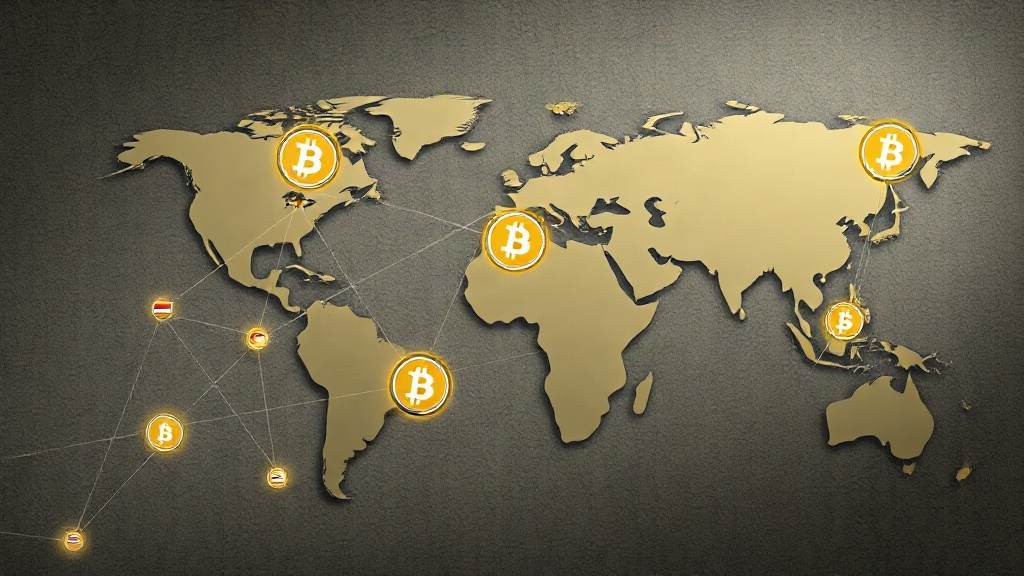
Bitcoin operates on a peer-to-peer (P2P) network, with tens of thousands of nodes worldwide collectively maintaining a public, transparent, and tamper-proof distributed ledger. It employs a Proof-of-Work (PoW) consensus mechanism, in which miners compete using the computational power of the SHA-256 algorithm to earn the right to record transactions. On average, a new block is generated approximately every 10 minutes, and the miner receives a reward. This process both ensures network security and facilitates the issuance of new coins. The total supply of Bitcoin is hard-coded at 21 million coins and will never exceed this limit. The rate of new coin issuance is continuously reduced through a “halving” mechanism that occurs approximately every four years; the fourth halving was completed in 2024. It is precisely this verifiable scarcity and anti-inflationary nature that has earned Bitcoin the title of “digital gold.”
Decentralization, censorship resistance, and global liquidity are Bitcoin’s core value propositions: anyone can hold and transfer Bitcoin without permission; transactions occur 24/7, uninterrupted by geographical boundaries or bank operating hours; and the ledger—based on cryptography and network-wide consensus—is extremely difficult to tamper with or freeze. Alongside the mainnet, Layer 2 solutions such as the Lightning Network continue to enhance the speed and cost-efficiency of micropayments.
As the cryptocurrency with the largest market capitalization and strongest consensus, Bitcoin serves not only as a key asset for storing value and hedging against risk but also as the cornerstone and pricing anchor of the entire crypto industry; its price movements serve as a barometer for the entire digital asset market. With the approval and listing of U.S. Bitcoin spot ETFs in early 2024, institutional investors, publicly traded companies, and even some sovereign wealth funds are accelerating their inclusion of Bitcoin in their asset allocations. At the same time, Bitcoin’s price remains highly volatile, and investors should continue to approach market risks with a rational mindset.
Since its inception, Bitcoin has undergone multiple bull and bear cycles, growing from being virtually worthless to a global asset with a market capitalization in the trillions, all while experiencing significant volatility. It has spawned vast industries—including mining, exchanges, wallets, and derivatives—and driven the development of the entire blockchain sector; Today, Bitcoin is not only a consensus asset among crypto enthusiasts but is also gradually being viewed by traditional financial institutions as a new type of alternative investment.
This page aggregates comprehensive Bitcoin (BTC) market data: real-time prices, 24-hour and multi-period price changes, multi-period candlestick charts and moving averages (MA), MACD, RSI, Bollinger Bands, and other technical indicators; BTC’s real-time market capitalization ranking; trading volume and historical price data. It also aggregates the latest Bitcoin news and policy updates, supports real-time conversion between BTC and fiat currencies such as the Chinese yuan, U.S. dollar, and euro, helping you quickly assess value and stay on top of market trends.
BTC Data

24H Trending
-
1
U.S. embassies tighten security as DNI director Jay Clayton warns Iran is in "advanced stages" of planning attacks against Americans; oil prices soar
-
2
Firo Project Analysis: History, Technology, and Market Status of Privacy Coins

-
3
U.S. spot Bitcoin ETFs record $773.43 million in two-day net outflows, with BTC price testing $80,000
-
4
NVIDIA, Intel, and AMD have prepaid over $5 billion to secure high-end IC substrate capacity.
-
5
New protests erupted in France over the weekend, with the government deploying 70,000 security personnel and the Louvre Museum closing. The spread between French and German 10-year government bond yields surged to 178 basis points, reaching its highest level since the Eurozone debt crisis, as economic activity contracted and spread across Europe.
-
6
Google quietly updated its privacy policy, effective Oct. 16, to allow connected Gmail, Drive, and Photos data to personalize ads when users opt into its Personal Intelligence AI features.
-
7
Former Hedge Fund Manager: Retail Investors Not More Sophisticated Than 30 Years Ago, Should Favor Index Funds
-
8
OKX Trading App: Latest Version Download and In-depth Feature Analysis

-
9
NYSE parent ICE backs 24/7 stock token trading, bypassing Wall Street's conventional pricing rules.
-
10
Palestinian Authority Prime Minister Mohammad Mustafa spoke with the Governor and Mayor of Hebron Governorate to discuss needs following the Israeli raid.

Recommended Reading

Hot Topics

Svmuu focuses on blockchain industry trends and cutting-edge cryptocurrency news, while also covering real-time market data and in-depth analysis of the Hong Kong, U.S., and foreign exchange markets. Here, you can not only access professional 24/7 news updates and accurate market data, but also utilize practical investment tools to help you capitalize on opportunities in both digital assets and traditional financial markets. Whether you are a blockchain enthusiast or an investor in Hong Kong, U.S., or foreign exchange markets, we provide efficient and timely information services to empower your investment decisions.
- User Agreement
- Privacy Policy
- Contact Us
- Business Partnerships
- Disclaimer
- Content Statement
- About Us
- Sitemap
 Coming Soon!
