

Faster global financial news!

BTC Bitcoin1
BTCMarket
-
Trend
-
K-Line
BTCNews
-
Volmex Labs CEO Predicts Bitcoin Price to Reach $500,000 by 2028
Cole Kennelly, CEO of Volmex Labs, stated that Bitcoin's price is poised to surge to $500,000 within the next two years. He noted that Volmex Labs' Bitcoin Implied Volatility Index aims to measure the
-
Bitcoin and the US Dollar: Shifting Correlations, Policy Impacts, and a New Market Landscape
Bitcoin's historical negative correlation with the US dollar shifted in 2026, with JPMorgan Chase confirming its transition to a positive correlation. The US government, particularly the current Trump administration, is actively promoting the United States as a "cryptocurrency capital" and plans to establish a strategic Bitcoin reserve. Institutional capital continues to flow into spot Bitcoin ETFs, and the US dollar-pegged stablecoin market is also growing. These factors collectively shape the new dynamic between Bitcoin and the US dollar, but market volatility risks persist.
-
Are there signs of a "bubble" in the stock market, and will the Bitcoin market be affected?
As the valuation debate in global stock markets, particularly the US market, continues in 2026, some analysts point to "extreme levels," while others believe high valuations are driven by corporate earnings and AI. Against this backdrop, Bitcoin's correlation with traditional financial markets is evolving. With recent Bitcoin price fluctuations and new annual highs, there are differing views on its positioning as a safe-haven or risk asset. This article will explore the potential impact of a stock market "bubble" on the cryptocurrency market.
-
Lookonchain: Wallet bc1qln transferred 4,500 BTC ($381.38M) after more than 4 years of inactivity
Lookonchain: Wallet bc1qln transferred 4,500 BTC ($381.38M) after more than 4 years of inactivity
-
Block brings Bitcoin Lightning payments to x402 for AI agents
The company joins Google, Microsoft, AWS, and Coinbase in backing x402, an open payment standard enabling agentic AI commerce.
-
Bitcoin's market capitalization hovers around $1.6 trillion, ranking 13th globally among assets, as the "digital gold" narrative faces multiple scrutinies.
As of September 25, 2026, Bitcoin's market capitalization has fluctuated between $1.6 trillion and $1.7 trillion, ranking 13th among major global assets. This performance contrasts with its historical highs and higher rankings achieved in 2025, prompting a re-evaluation of the "digital gold" narrative. This article will explore Bitcoin's current market cap standing, its comparison with traditional gold, and the complex factors influencing its store-of-value attribute, including macroeconomic conditions, institutional demand, and market structure.
-
The Value Basis and Long-Term Investment Potential of Cryptocurrencies: Opportunities and Risks Coexist
The cryptocurrency market is transitioning from an early speculative phase to a mature stage driven by infrastructure and institutional adoption. Industry leaders, such as BlackRock CEO Larry Fink, generally view asset tokenization favorably, believing that blockchain will become the cornerstone of future finance. Although institutional investors continue to increase their holdings and view Bitcoin as a store of value, crypto assets still face multiple risks, including high volatility, regulatory uncertainty, security, and liquidity. Investors considering long-term allocation must conduct thorough research and carefully assess the complexities involved.
-
Bloomberg Crypto: Latest Rally Shows Bitcoin Still Dominates Market, Remains Investors' Top Choice
Bloomberg Crypto: Latest Rally Shows Bitcoin Still Dominates Market, Remains Investors' Top Choice
-
Bitcoin price steadies, ONDO rallies as US Treasury yields hit 2007 highs
Bitcoin price steadies, ONDO rallies as US Treasury yields hit 2007 highs
-
What is Bitcoin's Value? Unpacking the Core Reasons for Its Widespread Popularity
As the first decentralized digital currency, Bitcoin, since its inception in 2009, has been hailed as "digital gold" due to its fixed supply of 21 million coins, decentralized nature, and robust cryptographic security. Its value is not only reflected in its role as a borderless payment system and an inflation-hedging tool but also in its widespread global appeal, driven by the entry of institutional investors, the approval of spot ETFs, and the continuous strengthening of its network effect. This article will delve into Bitcoin's core value pillars and its inherent attractiveness.





-
Lookonchain: Bitcoin and Ethereum ETFs see significant outflows on Nov 2
According to Lookonchain, Bitcoin ETFs recorded a 1-day net outflow of 7,919 BTC (approximately $614.26 million) and a 7-day net outflow of 2,292 BTC (approximately $177.81 million) as of Nov 2. Ether
-
Binance SAFU Bitcoin wallet balance drops to ~7,500 BTC after a 7,499 BTC transfer, and a Proof of Reserves was published.
Binance's SAFU Bitcoin wallet balance has dropped to approximately 7,500 BTC after a transfer of 7,499 BTC related to a hacking incident. Binance has also published its Proof of Reserves but has not y
-
Saylor reposted: Strive increased its Bitcoin holdings by 124 BTC, bringing its total to 43,124 BTC.
According to a ColeMacro tweet retweeted by Saylor, Strive increased its Bitcoin holdings by 124 BTC for approximately $10 million, at an average cost of $80,526 per coin, bringing its total holdings
-
Saylor: USD Duration is 3.3 yrs and Strategy's (STRC) BTC Credit tightened to 59 bps (-1 bp), assuming 10% BTC ARR, 40% BTC Vol, and a BTC price of $76,700.
Saylor: USD Duration is 3.3 yrs and Strategy's (STRC) BTC Credit tightened to 59 bps (-1 bp), assuming 10% BTC ARR, 40% BTC Vol, and a BTC price of $76,700.
-
Strategy (MSTR) acquired 811 Bitcoins for $65.5 million at an average price of $80,846 per BTC, bringing total holdings to 849,327 BTC.
Strategy (MSTR) acquired 811 Bitcoins for $65.5 million at an average price of $80,846 per BTC, bringing total holdings to 849,327 BTC. The company also repurchased $208.2 million of STRC preferred sh
-
OPEC+ maintained its oil production targets, which could exacerbate inflation concerns and limit the Federal Reserve's monetary policy easing, posing a new macro test for Bitcoin.
OPEC+ decided on November 1 to maintain its oil production targets for December, despite ongoing supply disruptions in the Middle East, a move that could exacerbate inflationary pressures and strength
-
Bitcoin's 'volatility curve' has a midterm bump
Bitcoin's 'volatility curve' has a midterm bump
-
BTCPay Server urges merchants to shut down servers in response to hot wallet attacks targeting versions 2.4.1 and earlier.
BTCPay Server, a free and open-source Bitcoin payment tool, urged its operators on Sunday to shut down their servers following reports that attackers were stealing funds from hot wallets connected to
-
Mizuho reiterated its "Outperform" rating on MicroStrategy (MSTR) with a price target of $165.
Mizuho maintained its "Outperform" rating and $165 price target for Strategy (MSTR) following its Q3 2026 earnings call. Analyst Dan Dolev noted that Strategy's balance sheet is stronger, holding 848,
-
Bitcoin has fallen 0.4% since UTC midnight to $77,900, as Binance customers made net withdrawals of $3.64 billion and Bitcoin ETFs saw outflows of $643 million.
Bitcoin has fallen 0.4% since UTC midnight to $77,900, as Binance customers made net withdrawals of $3.64 billion and Bitcoin ETFs saw outflows of $643 million.
-
Current Status of Bitcoin Trading Platforms in Mainland China: Policy Interpretation and Risk Warning
Since 2021, mainland China has completely banned virtual currency trading and related financial activities, explicitly classifying them as illegal financial activities. This means that there are no "legitimate" Bitcoin or other virtual currency trading platforms within mainland China. This article will delve into the relevant regulatory policies and warn individuals about the potential legal and financial risks associated with participating in virtual currency trading, reminding investors to strictly comply with local regulations.
-
Bitcoin Market Status: Hovering at $77,000 After a Drop of Over 50%, Bottom Support and Future Outlook
In early November 2026, Bitcoin's price fluctuated between $77,000 and $78,000, following an approximately 50% drop from its 2025 peak. Market sentiment was cautious, with outflows observed from spot ETFs. This article will review historical Bitcoin bear market declines, discuss key support levels such as $55,000, and analyze its future trajectory by combining institutional perspectives, halving cycles, and supply analysis, providing readers with comprehensive market insights.
-
Why Bitcoin Faces a Massive Shortage: Scarcity, Lost Coins, and Institutional Hoarding
Bitcoin's total supply is hard-capped at 21 million coins, and the halving mechanism, which reduces new coin issuance every four years, is central to its scarcity. Meanwhile, an estimated millions of Bitcoins have been permanently lost due to reasons such as lost private keys and damaged hard drives, further shrinking the actual circulating supply. In recent years, the surging demand from institutional investors and public companies for spot Bitcoin ETFs, coupled with long-term holders moving large amounts of Bitcoin from exchanges to cold storage, has led to an increasingly tight supply of Bitcoin available for trading in the market, collectively creating a situation of large-scale scarcity.
-
Bitcoin, Gold, and Stocks: A Comparison of Risks, Returns, and Use Cases
Bitcoin, gold, and stocks correspond to scarcity narratives, safe-haven functions, and cash flow assets, respectively. As of November 2026, Bitcoin's price is approximately $77,400 with a market capitalization of about $1.56 trillion, showing significant volatility and drawdowns; gold is around $3,895/ounce, and stocks have a long-term annualized return of approximately 10%. There is no absolute superiority or inferiority among the three; the key depends on risk tolerance, time horizon, and the intended use of funds.
-
BTC Price Range and Bitcoin Trend Analysis: Market Cap, Halving, and All-Time High Review
Public market snapshots show Bitcoin prices fluctuating around $77,500 to $78,000, with a slight 24-hour increase, while weekly and monthly charts indicate a pullback. This article reviews BTC's current price, market capitalization, trading volume, halving mechanism, and historical highs to help readers understand cyclical differences and data methodologies in price charts.
-
China's Cryptocurrency Exchange Landscape and Regulatory Review
Since 2017, China has implemented increasingly strict controls over cryptocurrency trading. In September 2021, the People's Bank of China (PBOC) and nine other ministries jointly issued a notice explicitly classifying virtual currency-related business activities as illegal financial activities and prohibiting overseas exchanges from providing services to residents within China. Formerly dominant domestic platforms such as BTCC, HTX, and OKX have either ceased services for mainland Chinese users or completed their withdrawal. Although personal ownership of cryptocurrencies is not explicitly prohibited, participating in trading carries extremely high legal and financial risks. Currently, there are no legal cryptocurrency trading platforms in mainland China.
-
A List of Major Global Bitcoin Exchanges
This article reviews several mainstream platforms globally that support Bitcoin trading, including centralized exchanges (CEXs) such as Binance, Coinbase, and OKX. The article details each platform's characteristics, service scope, development history, and recent key data, and discusses critical factors users should consider when choosing a trading platform, such as compliance, asset security, and liquidity. It also briefly touches upon the regulatory landscape of the cryptocurrency market.
-
Bitcoin Exchange Platform Guide: Key Platforms and Selection Considerations for 2024
With the approval of Bitcoin spot ETFs in 2024, the cryptocurrency market has seen a recovery, and Bitcoin trading activity has significantly increased. This article will introduce the major Bitcoin trading platforms currently available, including centralized exchanges (CEXs) and decentralized exchanges (DEXs), with a focus on analyzing the performance of market leaders such as Binance, Bybit, OKX, Coinbase, and Crypto.com. Additionally, the article will provide key factors to consider when choosing a trading platform, such as security, liquidity, trading fees, and user experience, to help global readers make informed decisions.
-
Bitcoin Price Breaks $77,000: Multiple Factors Drive Current Rally
As of October 31, 2026, Bitcoin's price is reported at $77,370, with a market capitalization of approximately $1.55 trillion. Multiple factors are driving this rally: scarcity expectations from the fourth halving, the opening of compliant channels for traditional capital via US spot Bitcoin ETFs, inflation hedging demand in the macroeconomic environment, and market technical factors. Institutional investors are incorporating it into their asset allocation as "digital gold," while historical halving events continue to shape its supply and price cycles.
-
Bitcoin: Features and Investment Risks Explained
Bitcoin, the world's first cryptocurrency, was launched by Satoshi Nakamoto in 2009 and is known for its decentralization, a total supply limit of 21 million coins, and security guaranteed by blockchain technology. However, its drastic price volatility, regulatory uncertainties, and lack of central backing also make it a high-risk investment asset. As of October 31, 2026, Bitcoin's price fluctuates around $77,000, with a market capitalization exceeding $1.5 trillion.



About BTC
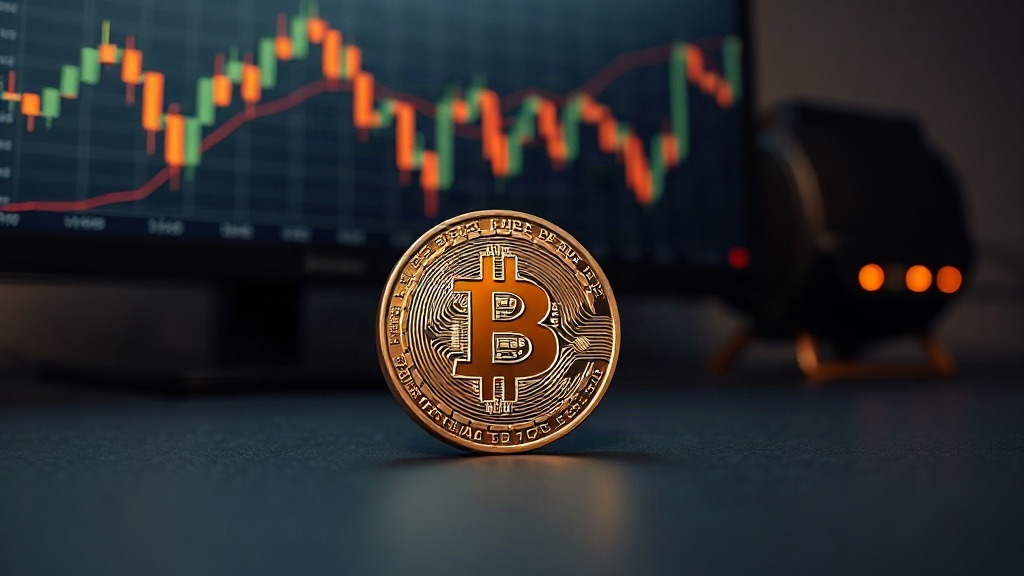
Bitcoin operates on a peer-to-peer (P2P) network, with tens of thousands of nodes worldwide collectively maintaining a public, transparent, and tamper-proof distributed ledger. It employs a Proof-of-Work (PoW) consensus mechanism, in which miners compete using the computational power of the SHA-256 algorithm to earn the right to record transactions. On average, a new block is generated approximately every 10 minutes, and the miner receives a reward. This process both ensures network security and facilitates the issuance of new coins. The total supply of Bitcoin is hard-coded at 21 million coins and will never exceed this limit. The rate of new coin issuance is continuously reduced through a “halving” mechanism that occurs approximately every four years; the fourth halving was completed in 2024. It is precisely this verifiable scarcity and anti-inflationary nature that has earned Bitcoin the title of “digital gold.”
Decentralization, censorship resistance, and global liquidity are Bitcoin’s core value propositions: anyone can hold and transfer Bitcoin without permission; transactions occur 24/7, uninterrupted by geographical boundaries or bank operating hours; and the ledger—based on cryptography and network-wide consensus—is extremely difficult to tamper with or freeze. Alongside the mainnet, Layer 2 solutions such as the Lightning Network continue to enhance the speed and cost-efficiency of micropayments.
As the cryptocurrency with the largest market capitalization and strongest consensus, Bitcoin serves not only as a key asset for storing value and hedging against risk but also as the cornerstone and pricing anchor of the entire crypto industry; its price movements serve as a barometer for the entire digital asset market. With the approval and listing of U.S. Bitcoin spot ETFs in early 2024, institutional investors, publicly traded companies, and even some sovereign wealth funds are accelerating their inclusion of Bitcoin in their asset allocations. At the same time, Bitcoin’s price remains highly volatile, and investors should continue to approach market risks with a rational mindset.
Since its inception, Bitcoin has undergone multiple bull and bear cycles, growing from being virtually worthless to a global asset with a market capitalization in the trillions, all while experiencing significant volatility. It has spawned vast industries—including mining, exchanges, wallets, and derivatives—and driven the development of the entire blockchain sector; Today, Bitcoin is not only a consensus asset among crypto enthusiasts but is also gradually being viewed by traditional financial institutions as a new type of alternative investment.
This page aggregates comprehensive Bitcoin (BTC) market data: real-time prices, 24-hour and multi-period price changes, multi-period candlestick charts and moving averages (MA), MACD, RSI, Bollinger Bands, and other technical indicators; BTC’s real-time market capitalization ranking; trading volume and historical price data. It also aggregates the latest Bitcoin news and policy updates, supports real-time conversion between BTC and fiat currencies such as the Chinese yuan, U.S. dollar, and euro, helping you quickly assess value and stay on top of market trends.
BTC Data

24H Trending
-
1
OMG and RIF Contract Status Analysis: Two Layer Projects Heading in Different Directions

-
2
Analysis of Major Global Cryptocurrency Exchanges and Market Trends

-
3
What is WE Coin? An Analysis of WeBuy Token (WE)'s Use Cases and Trading Platforms
-
4
Bitcoin, Gold, and Stocks: A Comparison of Risks, Returns, and Use Cases
-
5
What is MATE? An Analysis of the Asset, Project Positioning, and Current Status

-
6
Is it true that PI is buying Hongqi cars? Pi Network's latest developments and risk warnings
-
7
What is HKBY coin? Trading Activity and Risk Warning

-
8
Arbitrum (ARB) Token: Latest Price and Market Performance Analysis

-
9
SAND Future Price Trends: Volatility Sources, Ecosystem Developments, and Risk Boundaries
-
10
Cayman Islands Virtual Asset Trading Platforms: Regulatory Framework and Key Platforms Overview

Recommended Reading

Hot Topics

Svmuu focuses on blockchain industry trends and cutting-edge cryptocurrency news, while also covering real-time market data and in-depth analysis of the Hong Kong, U.S., and foreign exchange markets. Here, you can not only access professional 24/7 news updates and accurate market data, but also utilize practical investment tools to help you capitalize on opportunities in both digital assets and traditional financial markets. Whether you are a blockchain enthusiast or an investor in Hong Kong, U.S., or foreign exchange markets, we provide efficient and timely information services to empower your investment decisions.
- User Agreement
- Privacy Policy
- Contact Us
- Business Partnerships
- Disclaimer
- Content Statement
- About Us
- Sitemap
 Coming Soon!
