

Faster global financial news!

BTC Bitcoin1
BTCMarket
-
Trend
-
K-Line
BTCNews
-
Lookonchain monitoring: A whale deposited 4,000 Bitcoins, worth approximately $327 million, to Binance and Deribit in the past 5 hours.
Lookonchain monitoring: A whale deposited 4,000 Bitcoins, worth approximately $327 million, to Binance and Deribit in the past 5 hours.
-
Bitcoin Regulation: Why Is It So Complex?
Bitcoin's decentralized and cross-border nature poses significant regulatory challenges. Countries' varying definitions of its legal nature have led to a fragmented global regulatory framework, lagging consumer protection, and complex anti-money laundering and tax treatment. Despite international efforts such as the EU's MiCA regulation and FATF's "Travel Rule," the lack of unified standards and technical complexities remain major obstacles, highlighting the urgency of international cooperation.
-
Analyst: Bitcoin Market in "Wait-and-See Mode," Potentially Signaling Bull Run Nearing
Decrypt reports that the crypto market has been largely calm recently, with Bitcoin's volatility not exceeding 6% over the past month, currently priced at approximately $81,735, down 1.2% on the day.
-
Bitcoin dips below $81,000 as Brent crude oil hits highest level since March
Bitcoin dips below $81,000 as Brent crude oil hits highest level since March, with the 50-day moving average now in focus for support.
-
CryptoQuant CEO: Bitcoin May Avoid Impact of AI Bubble Burst
CryptoQuant CEO Ki Young Ju stated that the potential bursting of the artificial intelligence (AI) bubble might not significantly harm Bitcoin (BTC). He believes that Bitcoin's failure to participate
-
Spot Bitcoin ETFs Recorded $635M in Net Outflows on October 22, Led by BlackRock’s IBIT; Spot Ethereum ETFs Saw $111M Outflows, Led by ETHA
Spot Bitcoin ETFs recorded $635M in net outflows on October 22 (ET), led by BlackRock’s IBIT with $254M. Spot Ethereum ETFs recorded total net outflows of $111M, led by BlackRock’s ETHA with $75.45M.
-
Lookonchain monitoring: Since October 1, 40 newly created wallets have cumulatively withdrawn 9,458 Bitcoins (approximately $771.5 million) from Wintermute.
Lookonchain monitoring: Since October 1, 40 newly created wallets have cumulatively withdrawn 9,458 Bitcoins (approximately $771.5 million) from Wintermute.
-
Bitcoin and gold pare early losses as yen gives up gains; oil stays near $100, keeping inflation risks in focus
Bitcoin and gold pared losses during Friday’s Asian hours, with Bitcoin recovering to nearly $82,000 after hitting lows below $81,000 overnight, and gold bouncing back to $4,020 per ounce from an earl
-
Switzerland has approved BIT Asset Management's first spot Bitcoin ETF for retail investors, expected to begin trading on the SIX Swiss Exchange in November, with public offering limited to Switzerland.
Switzerland has approved BIT Asset Management's first spot Bitcoin ETF for retail investors, expected to begin trading on the SIX Swiss Exchange in November, with public offering limited to Switzerlan
-
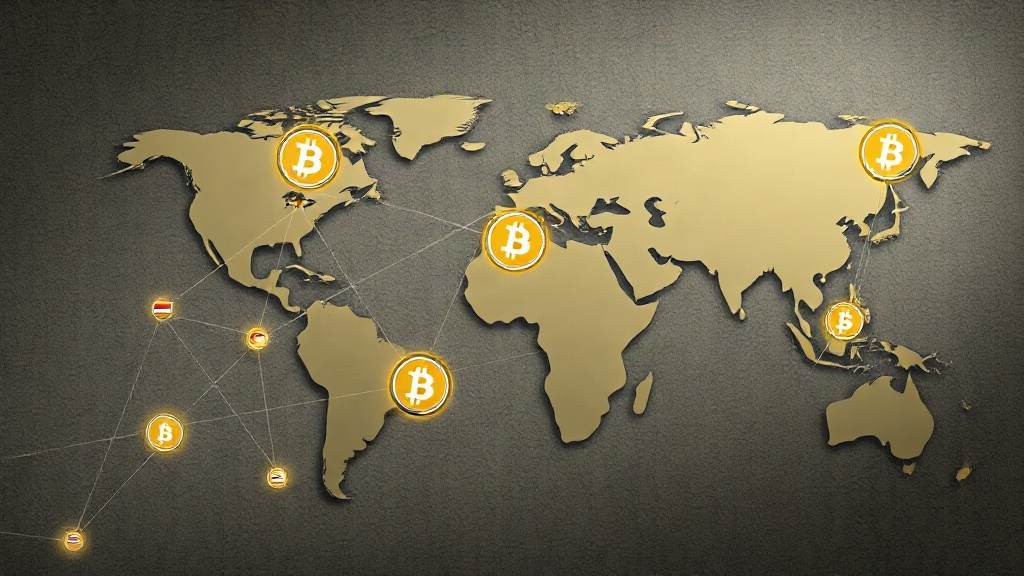
How to Track Bitcoin Whale Movements: On-Chain Data and Professional Tools Analysis
The trading activities of Bitcoin whales (entities holding large amounts of Bitcoin) can significantly impact the market. This article delves into the importance of tracking these whale movements and how to leverage the transparency of the Bitcoin blockchain for analysis. We will introduce various methods, including blockchain explorers, specialized tracking tools, order books, and on-chain data analysis platforms, to help investors interpret whale behavior patterns, anticipate market trends, and thus better adjust investment strategies and mitigate potential risks.

-
Analysts say Strategy's preferred stock structure improvement will prompt it to resume Bitcoin purchases
Strategy's stock price fell after its Q3 earnings report, but analysts at StoneX and TD Cowen maintained a "buy" rating. They pointed to Strategy's $4.83 billion cash reserves and a more stable STRC p
-
Analysis: Binance Security Incident and High-Interest Rate Environment Jointly Pressure Bitcoin
CryptoSlate analysis indicates that the Federal Reserve maintained its benchmark interest rate at 3.75%-4% with a 10-2 vote, with strong economic growth and persistent high inflation continuing to pre
-
Saylor reposted a tweet: Bitcoin brings a "turbocharging" effect to companies.
Saylor retweeted Phongle's post, which read: "This is what happens when you 'turbocharge' a company with Bitcoin," and included the $MSTR tag.
-
Coinbase and Strategy shares extended losses after the Binance hack, falling more than Bitcoin and the S&P 500.
Coinbase and Strategy shares extended their decline after the Binance hack, falling more than Bitcoin and the S&P 500. Both stocks extended their opening losses, falling more than Bitcoin's 4.65% and
-
A U.S. fusion startup claims to have converted mercury into gold.
Cointelegraph's analysis suggests that if the supply of gold increases as a result, it could strengthen Bitcoin's value proposition as "digital gold."
-
Lookonchain: Bitcoin ETFs See Inflows, Ethereum ETFs Outflows on Oct 30
Lookonchain reported that as of October 30, Bitcoin ETFs recorded a 1-day net inflow of 395 BTC (+$30.47M) and a 7-day net inflow of 3,503 BTC (+$270.52M). In contrast, Ethereum ETFs experienced a 1-d
-
Binance says $6.3 billion stolen in record crypto heist; analytics firms point to North Korea as Bitcoin hits six-week low
Binance, the world's largest cryptocurrency exchange, has reported a theft of approximately $6.3 billion, making it the largest crypto heist on record. The company suspended deposits and withdrawals o
-
Binance was hit by a hacker attack of approximately $6.4 billion, the largest theft in crypto history, and has reserved over $6.34 billion to cover the losses.
Binance suffered a hack of approximately $6.4 billion, making it the largest cryptocurrency theft in history, with funds flowing out via the Ethereum, Bitcoin, and Tron networks. Tether and Circle hav
-
Bitcoin mining difficulty rises to a new all-time high of 148.36 trillion; mining revenue drops to $33/PH/s/day, a three-month low.
Bitcoin mining difficulty rose by 5.54% to 148.36 trillion on October 29, reaching a new all-time high. This adjustment was due to the recovery of network hashrate, intensifying competition among mine
-
Bitcoin price metrics hint at rebound, holding above $76,000 after Binance hack and $1.6B liquidations
Bitcoin price metrics hint at rebound, holding above $76,000 after Binance hack and $1.6B liquidations
-
Bitcoin Quantitative Trading: An Analysis of Algorithm-Driven Efficiency and Advantages
Bitcoin quantitative trading leverages mathematical models, statistical analysis, and computer technology to execute trades via automated algorithms, aiming to overcome human emotional interference and enhance the efficiency and discipline of market operations. Its core advantages lie in millisecond-level trading speed, 24/7 market monitoring, the ability to quickly identify profitable opportunities, and the disciplined execution of predefined strategies, thereby seeking higher probabilities of return in the highly volatile cryptocurrency market. This approach transforms complex data analysis into systematic operations, optimizing the trading decision-making process.
-
What do Bitcoin price fluctuations mean for the Chinese market?
Given China's comprehensive ban on cryptocurrency trading and mining since 2021, the direct impact of Bitcoin price fluctuations on the mainland Chinese market has become negligible. The Chinese government views Bitcoin as a virtual commodity and actively promotes its centralized digital yuan. Despite a recent sharp decline in China's AI stock market, Bitcoin prices rose during the same period, indicating a low correlation between the two. However, global market sentiment and the performance of U.S. tech stocks may still indirectly influence cryptocurrencies, though China's strict regulatory policies effectively block most direct transmission.
-
How has antifragility allowed Bitcoin to reach its current position?
This article, starting from Nassim Nicholas Taleb's concept of antifragility, explains why Bitcoin often continues to operate after hacking incidents, regulatory bans, and market crashes. The article reviews exchange risks, China's mining ban, price cycles, and discussions on quantum computing, while distinguishing between network resilience and asset price performance, and incorporating Taleb's criticism of Bitcoin as a store of value.
-
A Rundown of Major Global Bitcoin Exchanges and Mobile Applications
Globally, numerous regulated and fully functional Bitcoin trading platforms exist. This article outlines the characteristics of current mainstream compliant exchanges, including Binance, Coinbase, OKX, and Kraken, and introduces their corresponding mobile applications. When choosing a platform, users should prioritize compliance in their jurisdiction, security, liquidity, and user experience, rather than solely pursuing the "largest" or "cheapest."
-
What does "mining" mean? Is it true that one can earn money through mining?
Mining typically refers to the process in proof-of-work blockchains where computing power is used to verify transactions, compete for the right to record blocks, and earn block rewards and transaction fees. With Bitcoin halving, rising network hashrate, and the widespread adoption of ASIC miners, mining has shifted from individual PC participation to professional mining farm operations. While it can generate revenue, profitability depends on electricity costs, hardware efficiency, coin price, and mining difficulty, presenting significant barriers and risks for individuals.
-
How much was one Bitcoin when it was first released? A look back at its early price journey from zero to tens of thousands of dollars.
When Bitcoin was created in 2009, it had no official issue price, and its initial value was virtually zero. The first recorded monetary transaction occurred in October 2009, with a price of approximately $0.00099 per Bitcoin. The famous "pizza transaction" in 2010 valued Bitcoin at an estimated $0.003 to $0.004. It wasn't until early 2011 that Bitcoin's price first touched the $1 mark. Today, Bitcoin's price has surpassed $80,000, with a market capitalization exceeding $1.6 trillion, making its early history a cherished legend in the crypto space.
-
In-depth Analysis of the Bitcoin Wallet Transfer Process
Unlike traditional banking systems, Bitcoin transfers are based on a unique UTXO model, completed through private key signatures, network broadcasting, and miner confirmations. This article will delve into the composition of Bitcoin transactions, the anti-double-spending mechanism, and the critical roles of users, wallet providers, and miners in the decentralized network.
-
A Rundown of Mainstream Platforms Supporting Bitcoin and USDT Trading
Bitcoin and USDT, as core assets in the cryptocurrency market, are tradable on numerous major global exchanges. This article reviews several prominent exchanges, including Binance, Coinbase, OKX, and Kraken, outlining their features and regulatory backgrounds, and reminds users to consider factors such as regulation, security, liquidity, and functionality when choosing a platform.
-
ICO and Bitcoin: The Crucial Link in Digital Asset Financing
Initial Coin Offerings (ICOs), as a method for blockchain projects to raise capital, are closely linked to Bitcoin (BTC). ICO projects typically accept investors using Bitcoin (or other major cryptocurrencies like Ethereum) to purchase their newly issued tokens, making Bitcoin a "gateway" asset to the broader cryptocurrency market. Historically, the first ICO project, Mastercoin, raised funds through Bitcoin. ICOs peaked during the 2017 crypto boom, offering startups an alternative to traditional financing. As of 2026, the ICO market has become more regulated, and Bitcoin, as the largest cryptocurrency by market capitalization, continues to influence the entire digital asset ecosystem with its market performance and status.
-
Badger DAO: From Early Advantages to Current Challenges
Badger DAO is a decentralized autonomous organization dedicated to bringing Bitcoin into the DeFi ecosystem. It was an early innovator in the field, launching the Sett Vaults yield strategies and the synthetic Bitcoin token DIGG. However, the project has faced multiple challenges in recent years, including a major security breach in 2021, delistings of its token from major exchanges, a significant decline in total value locked from its historical highs, and increased market competition. This article analyzes its development history and current status based on current data and publicly available facts.







About BTC
Bitcoin operates on a peer-to-peer (P2P) network, with tens of thousands of nodes worldwide collectively maintaining a public, transparent, and tamper-proof distributed ledger. It employs a Proof-of-Work (PoW) consensus mechanism, in which miners compete using the computational power of the SHA-256 algorithm to earn the right to record transactions. On average, a new block is generated approximately every 10 minutes, and the miner receives a reward. This process both ensures network security and facilitates the issuance of new coins. The total supply of Bitcoin is hard-coded at 21 million coins and will never exceed this limit. The rate of new coin issuance is continuously reduced through a “halving” mechanism that occurs approximately every four years; the fourth halving was completed in 2024. It is precisely this verifiable scarcity and anti-inflationary nature that has earned Bitcoin the title of “digital gold.”
Decentralization, censorship resistance, and global liquidity are Bitcoin’s core value propositions: anyone can hold and transfer Bitcoin without permission; transactions occur 24/7, uninterrupted by geographical boundaries or bank operating hours; and the ledger—based on cryptography and network-wide consensus—is extremely difficult to tamper with or freeze. Alongside the mainnet, Layer 2 solutions such as the Lightning Network continue to enhance the speed and cost-efficiency of micropayments.
As the cryptocurrency with the largest market capitalization and strongest consensus, Bitcoin serves not only as a key asset for storing value and hedging against risk but also as the cornerstone and pricing anchor of the entire crypto industry; its price movements serve as a barometer for the entire digital asset market. With the approval and listing of U.S. Bitcoin spot ETFs in early 2024, institutional investors, publicly traded companies, and even some sovereign wealth funds are accelerating their inclusion of Bitcoin in their asset allocations. At the same time, Bitcoin’s price remains highly volatile, and investors should continue to approach market risks with a rational mindset.
Since its inception, Bitcoin has undergone multiple bull and bear cycles, growing from being virtually worthless to a global asset with a market capitalization in the trillions, all while experiencing significant volatility. It has spawned vast industries—including mining, exchanges, wallets, and derivatives—and driven the development of the entire blockchain sector; Today, Bitcoin is not only a consensus asset among crypto enthusiasts but is also gradually being viewed by traditional financial institutions as a new type of alternative investment.
This page aggregates comprehensive Bitcoin (BTC) market data: real-time prices, 24-hour and multi-period price changes, multi-period candlestick charts and moving averages (MA), MACD, RSI, Bollinger Bands, and other technical indicators; BTC’s real-time market capitalization ranking; trading volume and historical price data. It also aggregates the latest Bitcoin news and policy updates, supports real-time conversion between BTC and fiat currencies such as the Chinese yuan, U.S. dollar, and euro, helping you quickly assess value and stay on top of market trends.
BTC Data

24H Trending
-
1
Meta rose 3.01% from its previous close, now trading at $630.935.
-
2
Israel continues its attacks on Gaza, with the Gaza Ministry of Health stating that dozens have died while awaiting permission to leave, renewing calls to open the Rafah crossing.
-
3
New ECB staff estimates show bond yield rise cutting 2027-28 growth by a cumulative 100 BPS and inflation by 90 BPS vs Sept baseline.
-
4
ECB's Cipollone: Europe to move to T+1 securities settlement on 11 October 2027; Eurosystem expands tokenised finance infrastructure
-
5
Iranian President Pezeshkian stated that Iran is ready to expand cooperation with Turkey to serve common interests and enhance regional security.
-
6
Binance hacker finishes dumping UNI, ENA, PEPE, LINK, AAVE, ONDO, WLD for 70,480 ETH ($158.25M)
-
7
Event prediction platform Kalshi completes $1 billion funding round, reaching a valuation of $40 billion, with non-sports revenue run rate exceeding $1 billion.
-
8
DBS Hong Kong to launch DBS Vantage Card, Hong Kong's first Visa Infinite Privilege Card
-
9
onXRP Team to Launch New Trading Method on XRP Ledger Next Week
-
10
Cryptocurrency Exchange Fee Comparison: How to Choose the Lowest-Cost Buying and Selling Channels?

Recommended Reading

Hot Topics

Svmuu focuses on blockchain industry trends and cutting-edge cryptocurrency news, while also covering real-time market data and in-depth analysis of the Hong Kong, U.S., and foreign exchange markets. Here, you can not only access professional 24/7 news updates and accurate market data, but also utilize practical investment tools to help you capitalize on opportunities in both digital assets and traditional financial markets. Whether you are a blockchain enthusiast or an investor in Hong Kong, U.S., or foreign exchange markets, we provide efficient and timely information services to empower your investment decisions.
- User Agreement
- Privacy Policy
- Contact Us
- Business Partnerships
- Disclaimer
- Content Statement
- About Us
- Sitemap
 Coming Soon!
