

Faster global financial news!

ETH Ethereum2
ETHMarket
-
Trend
-
K-Line
ETHNews
-
Bitcoin Rises 0.2% to $64,244, Ethereum Dips to $1,904 Ahead of Fed Decision and Amid Middle East Tensions
Bitcoin (BTC) rose 0.2% to $64,244.18 and Ethereum (ETH) dipped to $1,904.82 on Wednesday, July 29. Crypto investors are closely monitoring the U.S. Federal Reserve's rate decision later today, with p
-
Bitcoin A Huge Price Difference Compared to Ethereum: An Analysis of the Key Reasons
Bitcoin As two of the giants in the cryptocurrency market, Ethereum and Bitcoin have a significant and persistent price disparity—and this is no coincidence. The root cause lies in their fundamental differences in design philosophy, technical architecture, supply mechanisms, and use cases. Positioned as “digital gold” and a store of value, Bitcoin emphasizes scarcity and security; whereas Ethereum is a platform that supports smart contracts and decentralized applications, with its value rooted in its ecosystem and ETH serving as its “fuel.” These core differences collectively shape their respective market positioning and price performance.
-
A trader deposited 3,128 ETH to Coinbase, realizing a $3.87M loss
According to Lookonchain, a trader who bought 3,128 ETH (worth $5.95 million) six months ago has deposited all of it to Coinbase, realizing a loss of over $3.87 million (40%).
-
Analysis of the Current Status of SCRILLA Coin: Lack of Market Activity and Potential Risk Warnings
SCRILLA (SCRILLA) is a cryptocurrency launched in 2023 on the Ethereum platform. As of July 29, 2026, major data platforms show the token has a market capitalization of zero and zero trading volume, indicating extremely low market activity.Gopluslabs notes that its smart contract can be modified by its creators, posing potential risks. This article will distinguish SCRILLA from Skrilla (SKR), an esports betting token launched in 2017, and analyze the challenges and uncertainties SCRILLA currently faces.
-
Ethereum Guide to Legitimate Trading Platforms: Leading Centralized and Decentralized Options Worldwide
As the cryptocurrency with the second-largest market capitalization globally, Ethereum (ETH) has drawn significant attention regarding the legitimacy and security of its trading platforms.This article will delve into the current regulatory landscape for Ethereum across major global jurisdictions—such as the United States, Hong Kong, the European Union, and the United Kingdom—and outline the characteristics of regulated centralized exchanges (CEXs) and decentralized exchanges (DEXs). Understanding this information can help investors choose compliant and secure channels for buying, selling, and managing Ethereum.
-
The Federal Reserve’s interest rate decision will kick off a period of frequent inflation and employment data releases over the next two weeks
The Federal Open Market Committee (FOMC) of the Federal Reserve will announce its interest rate decision in the early hours of July 30, Beijing time. This meeting will not include the Summary of Econo
-
Ethereum What Is It? An In-Depth Analysis of How It Works, Its Ecosystem Development, and Market Outlook
Ethereum It is a decentralized, open-source smart contract blockchain platform, hailed as the “World Computer,” launched by Vitalik Buterin in 2015. Its native cryptocurrency, ETH, is used to pay network transaction fees. Unlike Bitcoin, Ethereum focuses on running decentralized applications (DApps).Since the 2022 “Merge” upgrade to the Proof-of-Stake (PoS) consensus mechanism, Ethereum has seen significant improvements in energy consumption and sustainability.At the core of the platform are the EVM and smart contracts, with continuous scaling enabled by Layer 2 solutions. As of July 2026, the Ethereum ecosystem continues to grow in the DeFi and NFT sectors and has gained widespread acceptance from mainstream financial institutions, including the approval of spot ETFs.
-
A crypto whale withdrew 40,000 ETH ($76.58M) from Binance
On-chain analytics firm Lookonchain reported that a crypto whale, identified by wallet address 0x2d59, withdrew 40,000 ETH, valued at approximately $76.58 million, from the Binance exchange.
-
Bitcoin With the price breaking through $64,000, the market generally expects the Federal Reserve to keep interest rates unchanged, but some institutions are warning of the risk of an unexpected rate hike.
Bitcoin It broke through the $64,000 mark during the Asian trading session, rising 1% on the day, while major cryptocurrencies such as Ethereum, and XRP also saw widespread gains. The market widely ex
-
Ethereum What is it? How do smart contracts power decentralized applications?
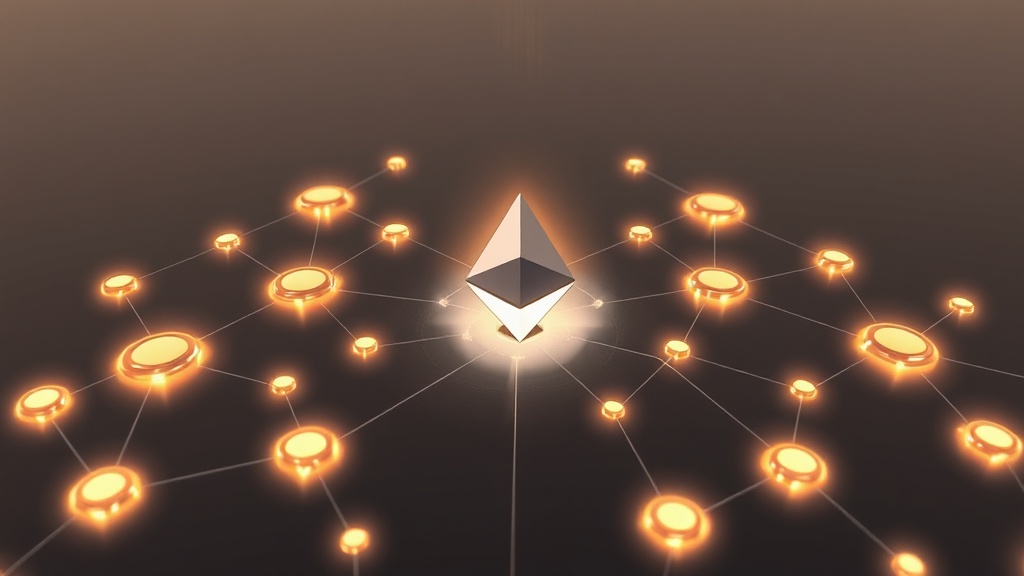
Ethereum Ethereum is a decentralized, open-source public blockchain platform proposed by Vitalik Buterin in 2013. Built around the Ethereum Virtual Machine (EVM), it enables developers to build and run various decentralized applications (DApps). Its native cryptocurrency, Ether (ETH), is used to pay transaction fees.In September 2022, Ethereum successfully completed The Merge upgrade, transitioning its consensus mechanism to Proof of Stake (PoS) and significantly reducing energy consumption. Smart contracts are self-executing programs on Ethereum that follow “if-then” logic; once deployed, they cannot be altered and serve as the cornerstone for innovations such as decentralized finance (DeFi).




-
Binance resumes withdrawals for Ripple's RLUSD stablecoin on Ethereum, marking the second phase of service restoration after the $6.3 billion hack.
Binance has fully restored withdrawals for the Ripple RLUSD stablecoin on the Ethereum network, part of the exchange's second phase of service recovery initiated at 04:00 AM ET on November 3, followin
-
Arbitrum's Council Moved $30M Binance Hack Funds by Temporarily Rewriting Core Contract Without Hacker's Key
Arbitrum's Security Council moved over $30 million in ETH and ARB, tied to the Binance exploit, from an address last Friday without the hacker's private key. This was achieved by temporarily swapping
-
Kim Yo Jong Denies North Korea's Involvement in Binance's $6.3 Billion Hack, Calls FBI Accusation "Absurd Remark"
Kim Yo Jong has denied Pyongyang's involvement in the $6.3 billion hack of Binance, the world's largest cryptocurrency exchange, according to North Korean state media KCNA. The FBI previously attribut
-
Wu Blockchain: OKX's 49th reserve report shows an increase in user holdings of BTC and ETH, while USDT balances have decreased.
According to Wu Blockchain, citing OKX's 49th Proof of Reserves report, a snapshot on November 1 showed that user Bitcoin holdings increased by 9.66% from October 3 to 156,609 BTC, an increase of 13,8
-
Lookonchain: Tom Lee's Bitmine company has increased its holdings by 5,000 ETH, bringing its total holdings to 6.065 million ETH.
Lookonchain monitoring shows that Bitmine, a company owned by Fundstrat founder Tom Lee, purchased another 5,000 ETH approximately 6 hours ago, valued at about $11.22 million. Currently, Bitmine holds
-
BitMine Chairman Tom Lee stated that Ethereum's mere 4% drop after the Binance hack is a bullish signal, and his company increased its holdings by 8,573 ETH last week.
BitMine Chairman Tom Lee believes the crypto market's muted reaction to the $6.3 billion Binance hack (Ethereum only falling about 4%) is a signal of an ongoing bull market, reflecting the industry's
-
Vitalik Buterin Uses AI-Powered Command-Line Tool for Ethereum Private Payments
Ethereum co-founder Vitalik Buterin revealed in an article published on October 31 that he has started using AI-written command-line tools for Ethereum private payments and ENS content hash updates. H
-
Lisk officially shuts down its blockchain after 10 years, burns 5.23 million LSK tokens
Veteran blockchain project Lisk has officially shut down its network after 10 years, announcing a 5.23 million LSK token burn as it shifts its focus to a new financial platform for businesses. The LSK
-
Binance completes latest Proof of Reserves, users can independently verify 1:1 backing for assets like BTC, ETH
Binance has completed its latest Proof of Reserves, allowing users to independently verify 1:1 backing for assets such as BTC, ETH, BNB, SOL, and XRP. Previously, Binance had replenished 95% of the as
-
Glassnode Report: ETH Vaults Underperformed Staking in September, USD Strategy Vaults Outperformed US Treasuries, Tracking Balance Increased to $10 Billion
Glassnode Report: ETH Vaults Underperformed Staking in September, USD Strategy Vaults Outperformed US Treasuries, Tracking Balance Increased to $10 Billion
-
Ethereum falls to a three-year low of $1,571, down approximately 68% from its all-time high.
Ethereum fell to approximately $1,571 in June 2026, marking a three-year low since 2022 and a roughly 68% decline from its all-time peak in August 2025. This downturn was influenced by multiple factors, including macroeconomic uncertainties, sustained outflows from spot Ethereum ETFs, intensified competition from other public chains, and the restructuring of the Ethereum Foundation. Despite the price pressure, on-chain data indicates that exchange reserves are at historical lows and staking ratios remain high, leading some market participants to believe there is a divergence between fundamentals and price performance.
-
What is BZ? Bit-Z Token Positioning, Supply, and Current Trading Activity
BZ typically refers to Bit-Z Token, which public information indicates is the ecosystem token of the Bit-Z exchange platform, based on Ethereum. This article reviews its issuance background, supply metrics, and historical prices, while noting that multiple market platforms currently do not display valid trading volume or price updates; it also distinguishes it from similarly named assets such as BZU, BZE, and BZD.
-
Dogecoin vs. Ethereum: A Comparative Analysis of Positioning, Technology, and Ecosystem Differences
Dogecoin (DOGE) and Ethereum (ETH) represent two distinct projects in the cryptocurrency market with vastly different positioning. Dogecoin originated as an internet meme, positioned as a fun payment and tipping tool, utilizing a PoW consensus mechanism with an unlimited supply, and its value is closely tied to community culture and celebrity influence. Ethereum, on the other hand, is a general-purpose blockchain platform supporting smart contracts and decentralized applications, having completed its transition to PoS, and boasts a massive developer ecosystem. This article will provide a detailed comparison of the core differences between the two, examining their origins and positioning, technical architecture, supply mechanisms, market performance, and ecosystem applications across multiple dimensions.
-
SWAI Token: SchwiftAI Project Analysis and Market Status
SWAI (SchwiftAI) is an Ethereum-based ERC-20 token project that combines meme concepts with AI utility tools, aiming to provide a music loop generator. Launched in 2023, the project claims to offer AI music creation tools. However, according to current data, SWAI's circulating supply is zero, and its 24-hour trading volume is near zero or unreported, with no reported market cap. This indicates extremely low market activity, suggesting it may not have officially launched circulation or has become stagnant. Investors should exercise extreme caution when considering such high-risk projects.
-
What is YCC/Yuan Chain Coin? Issue Price, Total Supply, and Investment Risk Warning
Yuan Chain Coin (YCC), also known as Yuan Chain, is an ERC-20 project launched in 2018 based on Ethereum, positioned as enterprise-grade Blockchain as a Service (BaaS) and cross-chain interaction. Its total token supply is approximately 10 billion, but public information does not reliably disclose the issue price. Recent data on price, circulating supply, and trading volume show significant discrepancies, and market activity is near depletion. This article provides only basic information and risk warnings and does not constitute investment advice.
-
ETHFI Coin (ETHFI) Analysis: Current State and Recent Developments of Liquid Staking Protocols
ETHFI is the governance token for Ether.fi, a decentralized liquid restaking protocol. The protocol allows users to stake Ethereum (ETH) and receive liquid tokens (eETH) while maintaining control over their private keys. Recently, Ether.fi announced a $3 billion long-term ETH staking commitment and has become the third-largest staking service provider. The price of ETHFI tokens has recently been affected by factors such as whale unlocks. Its future development is closely tied to its integration depth within the Ethereum staking ecosystem and protocol governance.
-
Multicoin (MTCN) Token Analysis: An Ecosystem Token on Ethereum
Multicoin (MTCN) is an ERC20 token based on Ethereum, serving as the core medium of exchange for the Multiven Open Marketplace (MOM) and the Boom ecosystem. The project aims to create a decentralized trading platform for IT products and services, offering software integrity maintenance and cyber defense services. However, as of November 2, 2026, both the price and on-chain market capitalization of the MTCN token are displayed as $0.00, and mainstream data platforms indicate that it is currently unavailable for purchase on cryptocurrency exchanges, suggesting that the token no longer has an active trading market.
-
KERMIT Coin: Trading Status and Channel Analysis
KERMIT is a frog-themed memecoin on the Ethereum and Solana blockchains, emphasizing its entertainment value over investment potential. Its market activity is low, with trading primarily conducted via decentralized exchanges. This article outlines the buying and selling process for KERMIT, supported wallets, and the current state of trading channels, while reminding investors of the high volatility and risks associated with memecoins.
-
BNSD Coin Analysis: The Current State of BNSD Finance Token on Ethereum
BNSD Coin is the token of the BNSD Finance project, which operates on Ethereum and is also described as a digital currency exchange. Currently, its price is extremely low, with a 24-hour trading volume of only about $2.45, indicating near-depleted market activity and a lack of reliable trading channels. This article analyzes its basic definition and current market status.
-
Can Ethereum still be mined with mining rigs? After the Merge, mining has shifted to staking.
Ethereum transitioned from Proof-of-Work to Proof-of-Stake in September 2022 via The Merge, rendering traditional Ethereum mining and miner selection obsolete. Current participation in network security primarily relies on staking ETH and running a validator node. If the question pertains to Ethereum Classic or other Proof-of-Work chains, equipment selection should be evaluated based on algorithm, energy consumption, residual value, and compliance. This article clarifies the post-Merge changes and common misconceptions.






About ETH
As the most critical infrastructure in the crypto world, Ethereum is the birthplace of the vast majority of on-chain innovations—including DeFi (decentralized finance), NFTs, DAOs, GameFi, and stablecoins. The overwhelming majority of on-chain value and applications are built on it, and the scale of its ecosystem and developer activity have long ranked first among all public blockchains. A vast ecosystem of tools, wallets, and infrastructure has also emerged around Ethereum, further solidifying its network effects.
In terms of technological evolution, Ethereum completed a major upgrade known as “The Merge” in 2022, transitioning its consensus mechanism from Proof-of-Work (PoW) to the more energy-efficient Proof-of-Stake (PoS), reducing the network’s energy consumption by approximately 99%. Since then, Ethereum has continued to improve throughput and reduce transaction fees through Layer 2 scaling solutions (such as Rollups) and sharding, with the mainnet increasingly serving as the settlement and security layer. The fee-burning mechanism introduced by EIP-1559 also gives ETH certain deflationary characteristics during periods of high network activity.
ETH is the native token of the Ethereum network. It is used to pay transaction fees (Gas) for on-chain transactions and smart contract execution, and can also be staked to participate in network consensus, ensure security, and earn staking rewards—thereby fostering a vast liquid staking ecosystem. From stablecoins and decentralized lending to NFTs and real-world assets (RWAs), vast amounts of value are settled using ETH and the Ethereum network as the underlying infrastructure.
As the second-largest cryptocurrency by market capitalization, trailing only Bitcoin, Ethereum is widely regarded as the core infrastructure of the entire crypto industry and the settlement layer for the “on-chain economy.” With the approval of Ethereum spot ETFs and continued institutional investment, ETH’s long-term position among global digital assets is becoming increasingly solid; however, its price remains highly volatile, and investors should rationally assess the risks.
A thriving Layer 2 ecosystem has emerged around Ethereum, including platforms such as Arbitrum, Optimism, and Base. These platforms significantly reduce user costs while inheriting the security of the mainnet, driving Ethereum’s evolution toward a “modular” multi-layer architecture. Despite fierce competition from other high-performance public blockchains, Ethereum remains firmly entrenched as the leading smart contract platform, thanks to its deep developer ecosystem, rich application ecosystem, and high degree of decentralization.
On this page, you can view the latest price of Ethereum (ETH), its 24-hour price change, and market data for major trading pairs such as ETH/USDT and ETH/USD in real time. You can also analyze Ethereum’s price trends using multi-timeframe candlestick charts (minute, hourly, daily, weekly) and technical indicators such as MA, MACD, and RSI; The page also provides Ethereum’s real-time market capitalization and ranking, 24-hour trading volume, and historical price data, aggregates the latest Ethereum news, and supports quick conversion of ETH to fiat currencies such as the Chinese yuan and the U.S. dollar.
ETH Data

24H Trending
-
1
How Bitcoin Enters DeFi: Wrapped, Layer 2, and Native Protocol Paths

-
2
Current Status of Bitcoin Trading Platforms in Mainland China: Policy Interpretation and Risk Warning
-
3
The Origin of USTC and the Development History of the Terra Ecosystem

-
4
Chilean Fixed Income Investors Flock to Inflation-Linked Notes as Nine-Month Iran War Pushes Oil to April Highs, Stoking Inflation Expectations
-
5
Dogecoin vs. Ethereum: A Comparative Analysis of Positioning, Technology, and Ecosystem Differences

-
6
EQ9 Token: Project Positioning, Technical Status, and Market Activity Analysis

-
7
KART Token Analysis: Current Status and Trading Channels for Dragon Kart Game Token

-
8
XRP Ledger's 'Cleanup Upgrade' Set for Mainnet Activation This Week
-
9
CNBC: Midterm Election Results May Impact Terms of Crypto Legislation Negotiations
-
10
South Korea's Supreme Court upheld an antitrust fine of 18.6 billion won ($13.9 million) against U.S. chipmaker Broadcom for forcing Samsung Electronics into unfair long-term supply agreements.

Recommended Reading

Hot Topics

Svmuu focuses on blockchain industry trends and cutting-edge cryptocurrency news, while also covering real-time market data and in-depth analysis of the Hong Kong, U.S., and foreign exchange markets. Here, you can not only access professional 24/7 news updates and accurate market data, but also utilize practical investment tools to help you capitalize on opportunities in both digital assets and traditional financial markets. Whether you are a blockchain enthusiast or an investor in Hong Kong, U.S., or foreign exchange markets, we provide efficient and timely information services to empower your investment decisions.
- User Agreement
- Privacy Policy
- Contact Us
- Business Partnerships
- Disclaimer
- Content Statement
- About Us
- Sitemap
 Coming Soon!
