

Faster global financial news!
Blockchain
-
Kyrgyzstan President Meets with Justin Sun, TRON Ecosystem to Fully Land in Kyrgyzstan
Svmuu News On April 18, Kyrgyzstan President Sadyr Japarov held a productive meeting with Justin Sun, founder of TRON, in the capital city of Bishkek. The two sides reached broad consensus on the impl
-
Ethereum Community Hub to be held in Hong Kong at 1:30 PM on April 21st, with Vitalik, Aya, and others in attendance
Svmuu News: The Ethereum Community Hub, supported by the Ethereum Foundation, has announced it will be held in Hong Kong at 1:30 PM on April 21st. ETH HK HUB is Asia's first offline Ethereum community
-
Cyberspace Administration of China: Strengthen Legislation in Areas Such as Artificial Intelligence, Digital Economy, and Blockchain
Svmuu News According to an article titled "Building a Rule-of-Law Cyberspace for the Benefit of the People" published on the official WeChat account of the Cyberspace Administration of China, it is ne
-
OKX Wallet Completes SlowMist Security Audit, All 7 Core Modules Pass
Svmuu News According to the official page, OKX Wallet has completed a security audit by the blockchain security firm SlowMist. The results show that all 7 of its core security modules passed, with no
-
SlowMist Warns of Harmony Voice Phishing Attack via Fake Links
Svmuu News Blockchain security firm SlowMist has issued a warning through its MistEye monitoring system, alerting that attackers are launching social engineering attacks using a fake link, harmony-voi
-
Flow Capital Plans to Put $150 Million Private Credit Fund On-Chain
Svmuu News Hong Kong-based Flow Capital plans to put a $150 million private credit fund on-chain to access blockchain liquidity. (Solid Intel)
-
South Korea Pilots Blockchain-Based Deposit Tokens
Svmuu News South Korea's Ministry of Economy and Finance has selected a new blockchain digital currency utilization pilot project under its 2026 regulatory sandbox framework. The project will explore
-
South Korea pilots blockchain deposit tokens for government spending
Svmuu News South Korea is piloting blockchain deposit tokens for government spending. (Cointelegraph)
-
Seoul Exchange Infrastructure Provider Story Launches CDR Testnet
Svmuu News AI-native infrastructure and programmable IP blockchain Story announced the launch of its Confidential Data Rails (CDR) testnet. This is a universal secure data transmission architecture de
-
Allbirds Soars Nearly 600% Overnight, Industry Warns: Investors Should Beware "AI Washing" Risks
Svmuu News "Internet-famous shoe" brand Allbirds announced a pivot into the AI infrastructure sector, rebranding as NewBird AI and positioning itself against CoreWeave in GPU computing power. Its stoc
-
Morgan Stanley CFO: Tokenization to Become the Next Phase of Trillion-Dollar Wealth Management Business
Svmuu News: Sharon Yeshaya, Chief Financial Officer of Morgan Stanley, stated that tokenization and on-chain finance will become key evolutionary directions for its wealth management business. The com
-
Tom Lee: Crypto "Mini Winter" May Have Ended, ETH Could Surge to $60,000
Svmuu News Bitmine Chairman Tom Lee stated at the Paris Blockchain Week 2026 conference that the current downturn in the crypto market resembles a "mini crypto winter" and may be nearing its end. He b
-
KKR Acquires Approximately $820 Million in Convertible Bonds from Samsung SDS
Svmuu News Investment firm KKR announced it has entered into a definitive agreement with Samsung SDS, a blockchain and IT financial services provider under Samsung, to acquire newly issued convertible
-
Hackers Exploit Obsidian Plugin to Launch PHANTOMPULSE Trojan
Svmuu News According to a disclosure by Elastic Security Labs, threat actors impersonated a venture capital firm, luring targets via LinkedIn and Telegram to open an Obsidian note vault containing mal
-
Swiss Crypto Valley Raises $728 Million Through 31 Deals in 2025, a 37% Year-on-Year Increase
According to the CV VC annual report, Switzerland's Crypto Valley raised $728 million through 31 deals in 2025, representing a 37% year-on-year increase and accounting for 47% of Europe's total blockc
-
BitMart to List Sentio (ST)
Svmuu News According to an official announcement, BitMart will be the first to list Sentio (ST) on April 15th at 18:00 (UTC+8). The ST/USDT trading pair will be available. Sentio is building the next-
-
Nava Completes $8.3 Million Seed Round Funding, Co-led by Polychain and Archetype
Svmuu News Nava, a crypto financial services company focused on preventing AI agents from engaging in misconduct, announced the completion of an $8.3 million seed funding round. The round was co-led b
-
JPMorgan Warns: Stablecoins Could Become Regulatory Arbitrage Tools, Require Bank-Level Regulatory Framework
Svmuu News JPMorgan CFO Jeremy Barnum stated during an earnings call that if regulatory rules are not aligned with traditional bank deposits, stablecoins could evolve into tools for "regulatory arbitr
-
Bitfinex Report: Tokenized Commodities Market Cap Surpasses $7 Billion, Stablecoin Infrastructure Upgrades Accelerate
Svmuu News Bitfinex released a report stating that tokenized commodities are transitioning from early-stage experiments to practical applications, becoming a significant manifestation of real-world as
-
Tether Launches Self-Custody Digital Wallet tether.wallet
Svmuu News Stablecoin issuer Tether has announced the launch of its self-custody digital wallet, tether.wallet. The wallet provides access to assets that truly matter to most people: the US Dollar (US
-
Visa, Stripe, and Zodia Custody Join Tempo Blockchain as Validators
Svmuu News Visa, Stripe, and Zodia Custody, a subsidiary of Standard Chartered, have become validators for the Tempo blockchain, responsible for operating the infrastructure that validates, sequences,
-
Hyperliquid Founder: The Biggest Challenge Last Year Was Server Latency, Forcing the Team to Rewrite the System from the Ground Up
Svmuu News Hyperliquid founder Jeff Yan and his team recently gave an in-depth feature interview to Colossos magazine. During the interview, Jeff was asked about the biggest challenge he faced in 2025
-
Ondo Submits "No-Action" Letter Request to the U.S. Securities and Exchange Commission
Svmuu News Ondo Finance announced that it has submitted a no-action request to the U.S. Securities and Exchange Commission (SEC) regarding its Ondo Global Markets (OGM) product. The company is seeking
-
Bernstein: Bitcoin Market Has Priced in Quantum Risk, No Immediate Existential Threat in Short Term
Svmuu News Bernstein stated that the recent Bitcoin correction has, to some extent, reflected market concerns over quantum computing risks, viewing the threat as "real but manageable" and not yet an i
-
Robinhood Chain's Size More Than Triples Since Mid-July, With On-Chain Real-World Assets Reaching ~$70M
Robinhood launched its own blockchain, Robinhood Chain, on July 1. The blockchain's overall size has more than tripled since mid-July, with real-world assets (RWAs), including tokenized stocks, reachi
-
BNY Mellon to Move Transfer Agency Records Onchain with New Blockchain Platform
BNY Mellon is launching a blockchain-based transfer agency platform. This initiative will see the bank move core financial records onchain as it expands its digital asset infrastructure.
-
BNY Mellon moves core transfer agency business onto blockchain, targeting $8.6 trillion market
BNY Mellon, the world's largest custodian, is moving its core transfer agency business onto blockchain rails, targeting the $8.6 trillion market. The financial services giant, which services $8.6 tril
-
Circle buys nearly 1,000 blockchain patents from IBM
Circle has acquired nearly 1,000 blockchain patents from IBM. The patent portfolio encompasses blockchain technology, banking, insurance, and cloud security. The financial terms of the deal were not d
-
Coinbase CEO Brian Armstrong Criticizes Crypto Startups Rebranding to AI
Coinbase CEO Brian Armstrong criticized crypto startups that are rebranding to focus on artificial intelligence (AI). Armstrong stated that blockchain technology serves as a general-purpose infrastruc
-
Preventing Potential Losses of About $2.7 Million, Singapore Police and the FBI Strengthen Blockchain Intelligence Sharing
Svmuu News: On July 24, the Singapore Police Force and the U.S. Federal Bureau of Investigation signed a memorandum of understanding to strengthen joint operations, intelligence sharing, training, and
-
New Hampshire Signs Blockchain Framework Law; Texas Has Invested Approximately $5 Million to Establish the Bitcoin Reserve
Svmuu News: New Hampshire Governor Kelly Ayotte recently signed HB 639, the “Blockchain Basic Laws,” into law, providing increased legal protection for digital asset users, developers, miners, validat
-
Cardano Foundation: Volvo Group Once Created a Proprietary Cryptocurrency to Test Supplier Payment Processes
Svmuu News: The Cardano Foundation announced in a post that it has engaged in discussions with the Volvo Group regarding the application of blockchain technology in manufacturing. Ivan Branco, who ove
-
Cobo Becomes a Partner of the OPC Hub at Hong Kong Cyberport
Svmuu News: The first Web 4.0 and Agentic Innovation Summit, along with the OPC Hub launch ceremony, was held at Hong Kong Cyberport. Cobo was officially announced as an OPC Hub partner, joining the r
-
Volvo has tested its own cryptocurrency to explore ways to use blockchain to optimize its supply chain
Svmuu News: The Volvo Group is exploring the use of blockchain technology to optimize its global supply chain and has tested a proprietary cryptocurrency designed specifically for supplier transaction
-
a16z crypto: Traditional finance doesn't want DeFi; instead, it uses blockchain selectively
Svmuu News: a16z Crypto released an analysis stating that traditional finance (TradFi) is not merging with decentralized finance (DeFi), but rather selectively adopting blockchain technology that meet
-
New Hampshire Governor Signs "Blockchain Basic Laws" to Protect Blockchain Innovation and Cryptocurrency Users
Svmuu News: New Hampshire Governor Kelly Ayotte signed House Bill 639 into law last week. Known as the “Blockchain Basic Laws,” the bill provides protections for cryptocurrency innovation and use in t
-
The American Depository Trust & Clearing Corporation announced that it will demonstrate its on-chain stock trading process this week.
Svmuu News: The Depository Trust & Clearing Corporation (DTCC), a financial market infrastructure giant, plans to demonstrate a blockchain-based real-time stock trading process this Wednesday. The tec
-
Major Wall Street Banks Form Tokenized Deposit Network; Stablecoin Trading Volume Expected to Reach Approximately $33 Trillion by 2025
Svmuu News: Several major U.S. banks, includingJPMorgan Chase, Bank of America, Citigroup, Wells Fargo, and HSBC, have announced the formation of a joint network—operated by The Clearing House—that wi
-
The UK is promoting the tokenization of financial markets, which could add $44 billion in annual economic output by 2035
Svmuu News: A report by a UK government-backed industry task force states that if the UK becomes a leader in tokenized financial markets, it could add up to 33 billion pounds—approximately 44 billion
-
Prediction markets are projected to reach an average funding round size of $118 million by 2026, ranking first in the crypto industry.
Svmuu News: Statistics show that in 2026, the sector with the highest average funding amount per round in the crypto industry was prediction markets, with an average of $118 million per round. Exchang
-
With the SWIFT blockchain ledger set to go live, 17 institutions will pilot cross-border transactions involving tokenized deposits
Svmuu News: SWIFT, the international banking communications organization, announced that its blockchain-based distributed ledger is ready to enter the initial implementation phase. Seventeen financial
-
Cryptocurrency Reporter: Senator Calls on Senate Leadership to Retain BRCA Provisions in the Clarity Act
Svmuu News: A Fox Business crypto reporter posted on X that Senator Ron Wyden has called on Senate leaders to retain the Blockchain Regulatory Certainty Act—which has already been passed by the Senate
-
BNB Chain Plans to Launch a New Layer 1 Blockchain, With Mainnet Launch Expected in 2027
Svmuu News: BNB Chain is developing a brand-new Layer 1 blockchain designed for Agentic Trading and has released the first detailed architectural information on the project following several months of
-
Figure Plans to Raise $600 Million to Acquire AI-Powered Real Estate Lending Platform Kiavi
Svmuu News Nasdaq Figure Technology Solutions, a publicly traded blockchain financial platform, announced that it will issue senior senior notes to raise $600 million from qualified institutional inve
-
Following ongoing discussions on Section 604, the MCSA has adopted a neutral stance on the Clarity Act
Svmuu News: A Fox Business crypto reporter posted on X that, following recent ongoing discussions regarding Section 604—the Blockchain Regulatory Certainty Act—the Major County Sheriffs of America has
-
CFTC Chair Criticizes Illinois' 0.2% Crypto Transaction Tax, Saying It Hinders Technological Progress
Svmuu News: U.S. CFTC Chairman Michael Selig criticized Illinois for passing a 0.2% tax on crypto transactions, stating that the state’s lawmakers “have put the brakes on technological progress” and p
-
U.S. CFTC Chair: Illinois’ Crypto “Sin Tax” Legislation May Threaten Chicago’s Status as a Financial Hub
Svmuu News: Mike Selig, Chairman of the U.S. Commodity Futures Trading Commission (CFTC), posted on X that Illinois’ legislation imposing a so-called “sin tax” on blockchain technology could jeopardiz
-
Tom Lee: The Ethereum Foundation is addressing key issues such as financial infrastructure that are of concern to governments and policymakers.
Svmuu News: Tom Lee posted on X, stating that he is pleased to see the Ethereum Foundation taking a prudent approach to key issues raised by governments and policymakers regarding the critical role of
-
Analysis of the Current Status of WACME: Market Challenges and Future Outlook for Wrapped Accumulate
WACME is the token of Wrapped Accumulate, designed to serve as a value anchor for the Accumulate identity blockchain protocol, supporting validator rewards and digital identity creation. However, as of August 2026, WACME faces challenges such as extremely low trading volume, inconsistent price data, and insufficient market activity. Although its technical vision is ambitious, the anonymous team and current market performance cast uncertainty over its future prospects, and investors should be wary of high liquidity risks.
-
Who is the founder of OP? On which platforms can the Optimism token (OP) be traded?
Optimism (OP) is a Layer 2 scaling solution for the Ethereum that utilizes Optimistic Rollup technology to enhance transaction speeds and reduce costs. Its core team includes co-founder and CEO Jinglan Wang, as well as co-founders Benjamin Jones, Kevin Ho, and Karl Floersch.The OP token serves as the governance token for the Optimism ecosystem and can be traded on several major centralized exchanges, including Binance, OKX, and Bybit, as well as decentralized exchanges such as Uniswap.As of August 1, 2026, OP’s market capitalization was approximately $220.8 million, with a current price ranging from approximately $0.086 to $0.098.
-
NKN: The Current State and Future Challenges of Decentralized Network Protocols
NKN (New Kind of Network) is a project aimed at building decentralized network infrastructure using blockchain technology, encouraging users to share their idle bandwidth. Its mainnet launched in 2019, employs the PoR consensus mechanism, and offers applications such as nCDN and D-chat.However, NKN has recently faced challenges, including its delisting from Upbit in June 2026 and the delisting of certain trading pairs from Binance in February 2025. Although the token experienced volatility amid the DePIN narrative, market views on its future prospects remain mixed, and investors should monitor risks related to its technological implementation and market liquidity.
-
What Are the DeFi Concept Coins? A Roundup of the Core Tokens in Decentralized Finance for 2026
The decentralized finance (DeFi) ecosystem continues to evolve, aiming to provide permissionless, transparent, and intermediary-free financial services through blockchain smart contracts. This article will delve into the core concepts of DeFi, examine key market trends for 2026, and take stock of representative concept tokens and their associated projects in the current DeFi landscape, covering multiple key sectors such as decentralized exchanges, lending platforms, liquid staking, and oracles. Understanding these tokens will help you grasp the dynamics of the DeFi market.
-
ONG Token: An Analysis of the Ontology Network Utility Token and a Guide to Trading Platforms
ONG (Ontology Gas) is the utility token of the Ontology blockchain, primarily used to pay network transaction fees, execute smart contracts, and manage network resources. The Ontology network employs a dual-token model consisting of ONT (the governance token) and ONG (the fuel token), designed to provide decentralized digital identity and data solutions. This article will delve into the uses of ONG, its technical characteristics, and its availability on major cryptocurrency exchanges.
-
What Is COTI? An Analysis of Its “Privacy-on-Demand” Strategy and Market Performance
COTI (Currency Of The Internet) is a Layer 1 fintech blockchain ecosystem focused on payments. It employs a unique Proof of Trust (PoT) consensus mechanism and a DAG structure, designed to provide efficient, low-cost digital payment solutions. Recently, COTI has been actively transforming and focusing on the “privacy-on-demand” narrative, launching a privacy portal to support private stablecoin transactions, and planning to gradually migrate the V1 network to EVM-compatible V2 infrastructure by 2026. Its token, COTI, has seen a significant rise recently due to its privacy narrative and technological breakthroughs, but it remains well below its all-time high.
-
PHS Coin: A Look Back at the Philosopher Stones Project and Its Historical Data
PHS, short for Philosopher Stones, is a cryptocurrency launched in 2013 that operates on an independent blockchain and uses a Proof-of-Stake (PoS) consensus mechanism and the Scrypt algorithm. The project was once known for its 50% annualized coin minting reward and data storage capabilities. However, as of July 2026, most publicly available data on PHS (such as price, market capitalization, trading volume, and exchange listings) remains unchanged since 2019, suggesting that its activity may have declined significantly or that the project is no longer being maintained. This article will review its historical characteristics.
-
IoTeX (IOTX) Token Analysis: Project Positioning, Ecosystem, and Long-Term Potential
IoTeX (IOTX) is a decentralized blockchain platform focused on connecting the physical and digital worlds, designed to provide secure, scalable infrastructure for Internet of Things (IoT) devices and decentralized physical infrastructure networks (DePIN). Its core technologies include a “blockchain-within-a-blockchain” architecture and the Roll-DPoS consensus mechanism. The IOTX token is used for network governance, staking, and fee payments, and employs a Burn-Drop tokenomics model. As of the end of July 2026, IOTX had a market capitalization of approximately $20 million to $25 million, ranking around 500th to 800th in the cryptocurrency market.
-
Tether (USDT) In-Depth Analysis: How Stablecoins Work, Controversies, and the Latest Developments in 2026
Tether (USDT) is the world’s largest U.S. dollar-pegged stablecoin by market capitalization, designed to maintain a 1:1 peg with the U.S. dollar and provide price stability to the cryptocurrency market. Since its launch in 2014, USDT has expanded to multiple blockchains and claims to be backed by equivalent reserve assets.Although it has long been the subject of controversy regarding the transparency of its reserves, historical price deviations from the peg, and potential money laundering risks, Tether has maintained its influence through continuous technological integration and market expansion. In 2026, Tether has made significant strategic moves in the Bitcoin network, the African market, and the U.S. compliant stablecoin sector.
-
Progress and Future Outlook for Cryptocurrency Integration on Platform X (formerly Twitter)
Platform X is actively transforming into a “platform for everything,” deeply integrating cryptocurrency with traditional financial services. As of July 2026, X has launched the “X Money” platform and obtained money transmission licenses in 41 U.S. states, initially offering fiat P2P transfers and savings features.Future plans include integrating buying, selling, and payments for Bitcoin and Dogecoin through “Smart Cashtags,” as well as enabling users to trade crypto assets and stocks directly within the platform. Elon Musk aims to build a super app that combines social media, payments, and finance, sparking widespread attention within the crypto community regarding the lowering of barriers to entry and the disruption of traditional trading models.
-
What Is VSC? An Overview of the Vyvo Coin (VSC) Project and Its Current Market Status
VSC primarily refers to Vyvo Coin, the native cryptocurrency of the Vyvo Smart Chain network. The project aims to integrate blockchain technology with health data, ensuring data security and decentralization through Proof-of-Stake (PoS) and Proof-of-Stake-Evolution (PoSe) mechanisms. Although its HealthFi and DataFi reward programs were discontinued in February 2026, the Vyvo Smart Chain network continues to operate. However, the VSC token currently faces extremely low trading volume and market liquidity, and investors should be aware of the associated risks.
-
Analysis of OZONE Token Value: Distinguishing the Investment Potential of Ozonechain (OZO) and Ozone Metaverse ($OZONE)
OZONE is not a single entity; it typically refers to at least two distinct crypto projects: Ozonechain (OZO), which focuses on post-quantum Layer-1 blockchains, and Ozone Metaverse ($OZONE), which provides metaverse solutions. Ozonechain, which features post-quantum cryptography technology and EVM compatibility, has a relatively high market capitalization and trading volume. Ozone Metaverse, on the other hand, is dedicated to enterprise metaverse strategies, but its market data—such as extremely low trading volume and market capitalization—indicates a high level of investment risk. When evaluating “OZONE Coin,” investors must carefully distinguish between these two projects and conduct thorough research.
-
KMD: An Overview and Market Forecast Analysis of the Komodo Ecosystem’s Core Token
Komodo (KMD) is the community token of the eponymous ecosystem, offering secure, fast, and low-cost transactions through the Delayed Proof-of-Work (dPoW) mechanism. KMD holders are eligible for a 5% annualized yield until the maximum supply of 200 million is reached. As of late July 2026, the price of KMD has been highly volatile, and market forecasts vary widely, ranging from bearish to long-term bullish. This article will delve into KMD’s technical characteristics, recent market performance, and various forecasts, while emphasizing the high risks associated with investing in cryptocurrency.
-
An Analysis of Rumors That EOS Is "Running Away": The Current Status and Future Outlook of the EOS Project
Rumors have recently been swirling about the EOS project “running away,” but upon verification, most of these incidents are related to third-party scams impersonating EOS or historical fund movements, and do not involve the official EOS project itself. As a blockchain designed to provide a highly scalable DApp platform, EOS was once a hot project in the crypto space. This article will delve into the true state of EOS, its technical features, current market performance, and its future potential within the crypto ecosystem.
-
Which Country Is OKX Based In? An In-Depth Analysis of Its Global Operations and Compliance Strategies
OKX (formerly OKEx) is not affiliated with any single country; rather, it is a cryptocurrency trading platform that originated in China and now operates on a fully global scale. Its operating entity is registered in Seychelles, and it maintains offices in multiple locations worldwide while actively seeking regulatory licenses in various countries. This article will provide a detailed overview of OKX’s origins, development history, global footprint, core services, market position, and compliance strategies, helping readers gain a comprehensive understanding of this international digital asset service provider.
-
A Roundup of the World’s Leading Cryptocurrency Market Data Software and Trading Platforms
As the cryptocurrency market continues to mature, choosing the right market analysis software and trading platform is crucial. This article will provide an overview of the leading cryptocurrency market analysis tools currently available, covering real-time data, on-chain analysis, and market sentiment indicators. It will also introduce well-known cryptocurrency trading platforms worldwide, including their key features, scope of services, and compliance profiles, to help readers understand how these platforms support digital asset trading.
-
Analysis of SPURDO Token Supply and Circulating Supply: Coexistence of Multiple Data Sets
There is a significant discrepancy between the total supply and circulating supply data for the SPURDO token, primarily because there may be multiple tokens with the same name on the market, distributed across different blockchain networks such as Ethereum and Solana.As of the end of July 2026, some data sources indicate a supply in the hundreds of millions, while others report figures as high as several trillion. These discrepancies reflect the complexity of aggregating information on this token, and investors should exercise caution when reviewing relevant data.
-
An In-Depth Analysis of the Chiliz (CHZ) Token: The Investment Potential of a Core Asset in the Sports Web3 Ecosystem
Chiliz (CHZ) is a blockchain infrastructure for the sports and entertainment industries that connects sports fans worldwide with their favorite teams through the Socios.com platform. As the native token, CHZ is used to purchase fan tokens, pay transaction fees, and participate in governance. As of July 2026, Chiliz is actively expanding into the U.S. college sports market, advancing the technical upgrade of the Chiliz Chain and the development of SportFi infrastructure, and plans to implement a new fan token strategy ahead of the 2026 World Cup. Its value is influenced by multiple factors, including ecosystem utility, growth in the sports industry, and market volatility; however, long-term investors should carefully evaluate its growth prospects and market risks.
-
Bitcoin A Huge Price Difference Compared to Ethereum: An Analysis of the Key Reasons
Bitcoin As two of the giants in the cryptocurrency market, Ethereum and Bitcoin have a significant and persistent price disparity—and this is no coincidence. The root cause lies in their fundamental differences in design philosophy, technical architecture, supply mechanisms, and use cases. Positioned as “digital gold” and a store of value, Bitcoin emphasizes scarcity and security; whereas Ethereum is a platform that supports smart contracts and decentralized applications, with its value rooted in its ecosystem and ETH serving as its “fuel.” These core differences collectively shape their respective market positioning and price performance.
-
What is ICON (ICX)? The network is about to shut down—how do I migrate and trade my tokens?
ICON (ICX) is a decentralized network designed to connect different blockchains, and it has historically been dedicated to building the “Internet of Blockchains.” However, the project is undergoing a major transformation: its Layer 1 network will permanently shut down on December 31, 2026. ICX holders must migrate their tokens on a 1:1 basis to SODA tokens on the SODAX platform before this date; starting September 30, 2026, the migration process will become one-way. This article provides a detailed overview of ICON’s background, the specifics of this transition, and the current trading options for ICX.
-
Ethereum What Is It? An In-Depth Analysis of How It Works, Its Ecosystem Development, and Market Outlook
Ethereum It is a decentralized, open-source smart contract blockchain platform, hailed as the “World Computer,” launched by Vitalik Buterin in 2015. Its native cryptocurrency, ETH, is used to pay network transaction fees. Unlike Bitcoin, Ethereum focuses on running decentralized applications (DApps).Since the 2022 “Merge” upgrade to the Proof-of-Stake (PoS) consensus mechanism, Ethereum has seen significant improvements in energy consumption and sustainability.At the core of the platform are the EVM and smart contracts, with continuous scaling enabled by Layer 2 solutions. As of July 2026, the Ethereum ecosystem continues to grow in the DeFi and NFT sectors and has gained widespread acceptance from mainstream financial institutions, including the approval of spot ETFs.
-
Ethereum What is it? How do smart contracts power decentralized applications?
Ethereum Ethereum is a decentralized, open-source public blockchain platform proposed by Vitalik Buterin in 2013. Built around the Ethereum Virtual Machine (EVM), it enables developers to build and run various decentralized applications (DApps). Its native cryptocurrency, Ether (ETH), is used to pay transaction fees.In September 2022, Ethereum successfully completed The Merge upgrade, transitioning its consensus mechanism to Proof of Stake (PoS) and significantly reducing energy consumption. Smart contracts are self-executing programs on Ethereum that follow “if-then” logic; once deployed, they cannot be altered and serve as the cornerstone for innovations such as decentralized finance (DeFi).
-
CHZ Token Outlook Analysis: Chiliz Ecosystem Development and Future Prospects (July 2026)
Chiliz (CHZ), the native token of the Chiliz Chain—a Layer-1 blockchain in the sports and entertainment sector—powers the Socios.com fan engagement platform. As of July 2026, the CHZ ecosystem is actively expanding through full-chain deployment, expansion into the U.S. college sports market, and a token buyback and burn mechanism. Despite volatility in the crypto market, CHZ is committed to revolutionizing fan engagement through partnerships with more than 170 sports organizations worldwide and authorization under the EU’s MiCA framework. This article will delve into Chiliz’s latest developments, token economics, and future growth potential.
-
What Are Tokens? An In-Depth Analysis of Their Definition, Types, and Functions
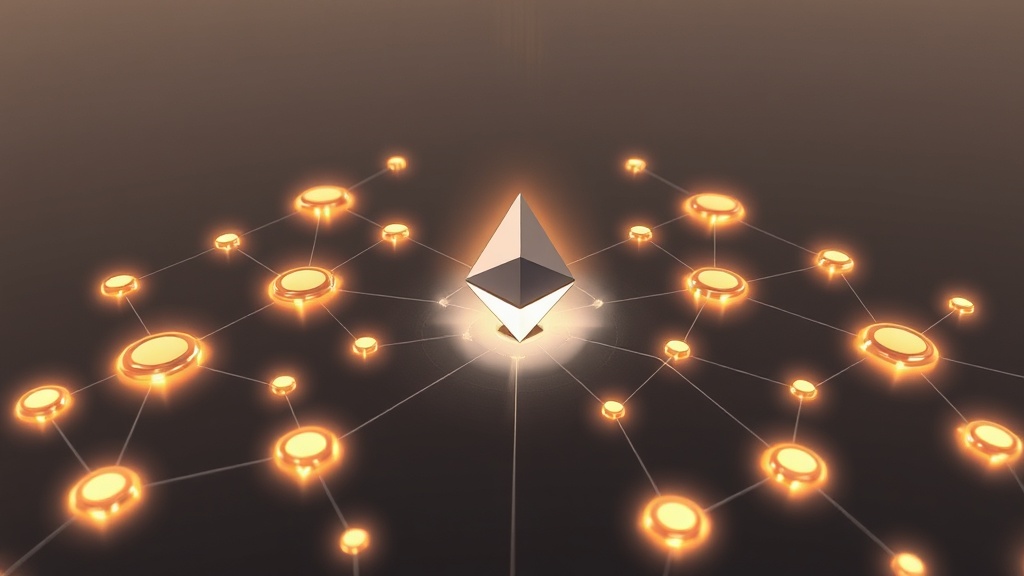
Tokens are digital assets created on a blockchain via smart contracts, and differ from “coins” that have their own independent blockchains. They serve a variety of functions and can represent a wide range of interests, from digital currencies to real-world assets. This article will explain the nature of tokens in detail and explore their main types—including utility tokens, security tokens, governance tokens, stablecoins, non-fungible tokens (NFTs), and payment tokens—with the aim of helping readers gain a comprehensive understanding of this core concept in the crypto economy.























Blockchain

24H Trending
-
1
Billionaire investor Chase Coleman’s Tiger Global fund disclosed in its latest 13F filing that its top five growth stocks are all focused on AI infrastructure, including TSMC, NVIDIA, Amazon, Meta, and Google.
-
2
Liquidity Crunch in Cryptocurrency Mining: Causes and Analysis of the Current Situation in 2026

-
3
Analysis of CRYSTAL’s Value and Investment Potential: An Examination of Multiple Projects and Risk Assessment

-
4
Will the BEAM token go to zero? Could it rise to $1,000? An in-depth analysis of the Beam network and its market prospects

-
5
Microsoft It is up 3.02% today and is currently trading at $464.720
-
6
Federal Appeals Court Rejects Bid to Block Trump’s Mail Voting Restrictions
-
7
India’s Kerala Struggles to Care for Aging Population with Low Fertility Rate
-
8
The analysis points out that Iran’s overlapping centers of power complicate efforts to end the war with the United States, and that the Revolutionary Guards possess significant operational autonomy.
-
9
Donald Trump TRUMP (TRUMP) 2026 Outlook: Analysis of Price Trends and Key Influencing Factors

-
10
Israeli West Bank Settler Tells BBC Attacks on Palestinians Are Justified as Revenge, Equating One Jewish Life to "10 Million" Palestinians
Markets Today



Recommended Reading

Hot Topics

Svmuu focuses on blockchain industry trends and cutting-edge cryptocurrency news, while also covering real-time market data and in-depth analysis of the Hong Kong, U.S., and foreign exchange markets. Here, you can not only access professional 24/7 news updates and accurate market data, but also utilize practical investment tools to help you capitalize on opportunities in both digital assets and traditional financial markets. Whether you are a blockchain enthusiast or an investor in Hong Kong, U.S., or foreign exchange markets, we provide efficient and timely information services to empower your investment decisions.
- User Agreement
- Privacy Policy
- Contact Us
- Business Partnerships
- Disclaimer
- Content Statement
- About Us
- Sitemap
 Coming Soon!
