

Faster global financial news!
Internet of Things
-
Xensor (XSR) Token Analysis: Potential and Challenges of IoT Data Sharing
Xensor (XSR) is a blockchain-based IoT data sharing platform designed to connect sensor devices through a decentralized network, enabling secure and transparent data transactions. The project aims to address issues such as fragmented IoT data, insufficient privacy protection, and difficulties in data monetization. This article will delve into Xensor's technological vision, core mechanisms, and its current development status and challenges in the market.
-
REAP Token Value Analysis: ReapChain Project Token Status and Risk Considerations
REAP is the native token of ReapChain, an IoT blockchain project based on the PoDC consensus algorithm, aiming to provide a secure and efficient ecosystem for DApps. The REAP token reached an all-time high in April 2021, but as of late September 2026, its price has fallen by over 99.9% from that peak. Its current market capitalization is extremely low, and 24-hour trading volume is near zero, indicating severe lack of market liquidity. Investors considering REAP tokens must be fully aware of the extremely high investment risks involved.
-
SMT Coin Analysis: SmartMesh and Swarm Markets Current Status and Price Analysis
The SMT token may refer to two different cryptocurrencies: SmartMesh (SMT) or Swarm Markets (SMT). SmartMesh focuses on decentralized offline communication and IoT infrastructure; its token price is significantly below its ICO issuance price, and trading activity is low. Swarm Markets, on the other hand, is a regulated DeFi platform aiming to bridge traditional finance with decentralized finance; its token price is influenced by market sentiment, supply and demand, and platform adoption. This article will explore the background, functions, and current market performance of both.
-
DIMO Token: Vision and Trading Overview of a Decentralized Vehicle Data Network
DIMO (Digital Infrastructure for Moving Objects) is a decentralized network designed to revolutionize how car owners interact with their vehicles. It leverages blockchain technology to create digital identities (NFTs) for vehicles, enabling owners to collect, utilize, and monetize their vehicle data, thus returning data ownership to users. The DIMO token plays a crucial role within this ecosystem. This article will delve into DIMO's core functionalities, market performance, and provide its main trading channels.
-
XSR Coin Analysis: Xensor Project, Token Utility, and Market Status
Xensor (XSR) is an Ethereum-based cryptocurrency project aiming to build a decentralized IoT data marketplace, allowing institutions such as insurance companies and banks to trade data collected by IoT sensors using XSR tokens. XSR tokens can be used to purchase services and hardware, and support mining. However, the token has low market awareness, limited trading volume, and faces significant market risks. This article will delve into Xensor's project positioning, tokenomics model, and current market performance.
-
VeChain (VET) In-depth Analysis: Technology Upgrades, Ecosystem Applications, and Tokenomics
VeChain (VET) is an enterprise-grade L1 smart contract platform focused on leveraging IoT technology to optimize supply chain management and enhance data transparency and traceability. The platform utilizes a dual-token model with VET and VTHO; VET is used for governance and to generate VTHO, while VTHO pays for transaction fees. Recently, VeChain enhanced its EVM compatibility through the Interstellar hard fork and introduced a dPoS consensus mechanism. Its maximum supply is fixed at 86.71 billion tokens, with a current circulating supply of approximately 85.985 billion to 86 billion tokens. VeChain has established partnerships with organizations such as DNV and Walmart, securing its position in the cryptocurrency market.
-
IOTA: Technical, Strategic, and Market Outlook Analysis
IOTA is an open-source cryptocurrency project based on Tangle (Directed Acyclic Graph, DAG) technology, aiming to provide feeless, highly scalable data sharing and digital payment solutions for Internet of Things (IoT) devices. Recently, IOTA has significantly enhanced network performance and user experience through technical iterations such as the Rebased mainnet upgrade, Starfish consensus mechanism, and Account Abstraction. Its strategic focus has clearly shifted towards Global Trade Infrastructure (TWIN), and it has made progress in real-world applications such as Argentina's organ transplant system and African digital trade. Despite market competition and historical challenges, IOTA is striving to expand its long-term development potential through enterprise-grade applications and compliance partnerships.
-
IOTA: Analysis of Distributed Ledger Technology for IoT and Market Outlook
IOTA is an open-source distributed ledger technology specifically designed for the Internet of Things (IoT), with its core being the unique Tangle structure, aiming to achieve feeless transactions, high scalability, and energy efficiency. The project is committed to achieving full decentralization through IOTA 2.0 (Coordicide). Recently, IOTA has made progress in government applications (such as Argentina's organ transplant management system), expansion into the Middle Eastern market, and Sharia compliance certification, but it has also faced challenges such as oracle security incidents. Its market performance is influenced by technological developments, IoT adoption, and macroeconomic factors, and investors need to pay attention to its decentralization process and ecosystem expansion.
-
MXC token's all-time high: Reached $0.13354 in January 2022.
The all-time high (ATH) price for MXC (Machine Xchange Coin) was $0.13354, achieved on January 19, 2022. MXC is the cryptocurrency of the MXC Foundation, which aims to build a global decentralized Internet of Things (IoT) data network, and its price fluctuations reflect market expectations for its technological vision and ecosystem development.
-
BLOC Brick Cloud: An Analysis of the Current Status of a Once Highly Anticipated Blockchain Project and Its Token, BLOC
Blockcloud was a foundational protocol project that aimed to upgrade the existing internet to accommodate Internet of Things (IoT) applications by combining blockchain and Service-Centric Networking (SCN) technologies. Its native token, BLOC, was used to incentivize network services. However, the project has had no active market since its last recorded transaction in August 2022, and its current market capitalization is displayed as zero. This article will delve into Blockcloud's technological vision, token utility, and analyze its current market status and potential risks.
-
NODL Coin Buying and Trading Guide: Analyzing Nodle Network Token and Listing Platforms
NODL is the native token of Nodle Network, a decentralized data network and payment infrastructure designed for the Internet of Things (IoT) that operates on the zkSync Era platform. NODL tokens are used to pay network fees, access services, reward contributors, and participate in governance. This article will detail the trading platforms for NODL, the buying and selling process, and provide an overview of its latest market data, helping readers understand how to acquire and manage NODL.
-
Intel PC CPUs are expected to see another price increase of approximately 10% on October 5, 2026, and the company plans to discontinue low-margin product lines to improve profitability.
According to supply chain sources cited by Taiwan's Commercial Times, this will be Intel's third price hike since late 2025. Meanwhile, Intel CEO Pat Gelsinger is reviewing the low-margin Small Core p
-
ITC (IoT Chain) Analysis: Current Status and Prospects of an IoT Blockchain Project
ITC (IoT Chain) was a project that aimed to solve IoT security and high-concurrency issues through blockchain technology, proposing that data sovereignty belongs to the user. Its technical features included optimized PBFT consensus, DAG subnets, and support for EVM smart contracts. However, as of now, the market activity of ITC tokens is extremely low, with reported zero circulating supply, and severe lack of market capitalization and trading volume data, with most platforms no longer able to provide effective trading information. This article will delve into its technical vision, development history, and current market challenges.
-
Sands Capital's Q2 2026 letter highlights Samsara (IOT) maintained ~30% revenue growth and improved margins, with low AI disruption risk
Sands Capital Technology Innovators Fund stated in its Q2 2026 investor letter that Samsara Inc. (NYSE:IOT) continued to see steady revenue growth of approximately 30% and delivered roughly 500 basis
-
JASMY Coin Long-Term Outlook Analysis: Opportunities and Challenges for an IoT Data Sovereignty Token
JASMY Coin is a Japanese project focused on the Internet of Things (IoT) and data sovereignty, aiming to democratize personal data. The project has completed its migration to the JasmyChain Layer-2 network, based on Arbitrum Orbit, and is renowned for its compliance within Japan's strict regulatory environment. This article will explore the ecosystem role of the JASMY token, recent developments, and the potential opportunities and challenges it faces in the data economy, providing readers with a comprehensive perspective on its long-term value.
-
Recent Developments and Price Outlook for IOTA: Can Multiple Positive Factors Support Future Price Movements?
IOTA has recently achieved several key milestones, including the 2025 Rebased mainnet upgrade, the 2026 launch of the Starfish consensus mechanism, and the Argentine government’s adoption of its technology for tamper-proof document signing. Although the IOTA Foundation is committed to driving real-world applications and institutional adoption—and plans to complete the migration to the Pyth Pro oracle in August—as of August 1, 2026, the token’s price has been fluctuating around $0.032, with a market capitalization of approximately $150 million. Market analysts have mixed views on its short-term performance, but there is a general consensus that its long-term potential in the Internet of Things (IoT) sector warrants attention.
-
What Is MIOTA? An Analysis of the IOTA Project’s Core Token and a Trading Guide
MIOTA is the native token of the IOTA project, which is a distributed ledger technology (DLT) platform designed specifically for the Internet of Things (IoT). It utilizes a unique “Tangle” directed acyclic graph (DAG) technology, aimed at enabling secure, free, and highly scalable communication and transactions among IoT devices. MIOTA tokens are primarily used for machine-to-machine (M2M) payments, data integrity verification, and other IoT applications. This article will delve into MIOTA’s technical advantages, its ecosystem, and how it is traded on major global cryptocurrency exchanges.
-
IoTeX (IOTX) Token Analysis: Project Positioning, Ecosystem, and Long-Term Potential
IoTeX (IOTX) is a decentralized blockchain platform focused on connecting the physical and digital worlds, designed to provide secure, scalable infrastructure for Internet of Things (IoT) devices and decentralized physical infrastructure networks (DePIN). Its core technologies include a “blockchain-within-a-blockchain” architecture and the Roll-DPoS consensus mechanism. The IOTX token is used for network governance, staking, and fee payments, and employs a Burn-Drop tokenomics model. As of the end of July 2026, IOTX had a market capitalization of approximately $20 million to $25 million, ranking around 500th to 800th in the cryptocurrency market.
-
An Analysis of the SmartMesh (SMT) Project: The Potential of Off-Network Communication and Micropayments, and Its Token Economics
SmartMesh (SMT) is an IoT underlying protocol based on the Ethereum, designed to enable internet-independent device communication and micropayments through mesh networks. It features a built-in blockchain light node and extends the Lightning Network protocol to support offline transactions and a variety of use cases.As of July 30, 2026, SMT’s total supply stood at 3,141,592,653 tokens, with a circulating supply of approximately 1.67 billion tokens. The project plans to introduce stablecoins and a decentralized exchange; however, investors should be aware of market volatility and risks associated with technological development.
-
What Is IOTA? An Analysis of Tangle Technology, the MIOTA Token, and the Latest Developments
IOTA is an open-source distributed ledger technology designed specifically for the Internet of Things (IoT). At its core is the unique Tangle architecture—rather than a traditional blockchain—which aims to enable zero-fee, highly scalable micropayments and data exchange between devices. The native token, MIOTA, is used to facilitate these transactions. Driven by the IOTA Foundation, the project’s strategic focus has shifted toward building infrastructure for global trade markets and actively developing Real-World Asset (RWA) applications. This article provides an in-depth look at IOTA’s technical principles, token use cases, major trading platforms, and recent key developments.
-
Analysis of the HLC Coin (Halal Chain) Project and Its Current Market Status
The Halal Chain (HLC) project, represented by the HLC token, aims to leverage blockchain and Internet of Things (IoT) technologies to build an end-to-end traceable certification ecosystem for the global halal food, pharmaceutical, and cosmetics industries, thereby addressing the lack of unified standards and data transparency within the sector. The project was initially launched on the Qtum blockchain and plans to incorporate cross-chain technology. However, as of July 2026, market data for the HLC token on major cryptocurrency data platforms is scarce; trading volume is shown as zero, and there is a lack of public information regarding recent active development or major partnerships.
-
SMT Coin: An Analysis of the SmartMesh Project and an Outlook on Its Future Prospects
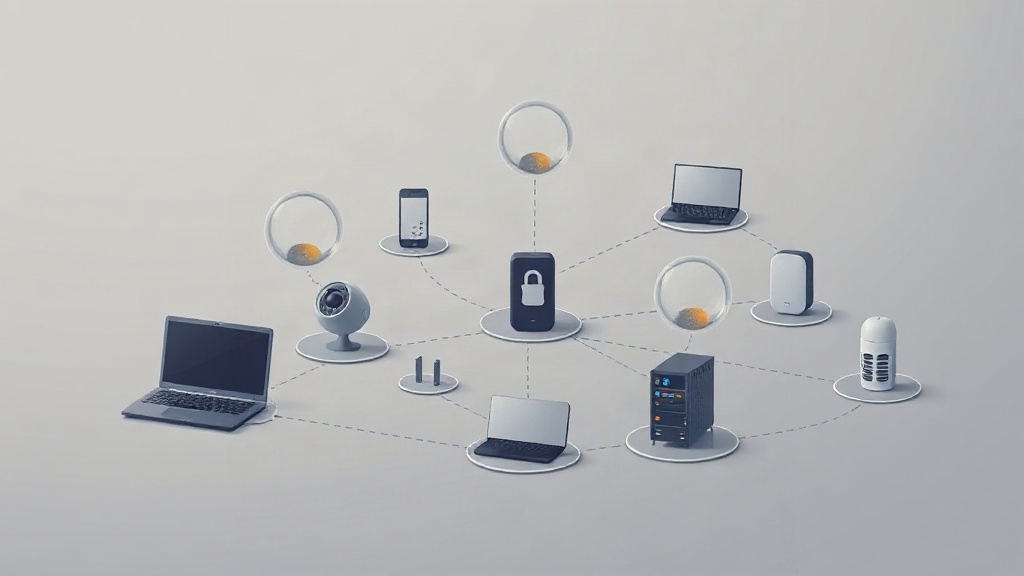
SMT is the native token of the SmartMesh project, which aims to build a decentralized mesh network parallel to the traditional internet to enable communication and micropayments in cryptocurrency even without an internet connection. SmartMesh achieves this goal through blockchain light nodes and layer-2 network protocols (such as Lightning Network scaling solutions). This article will delve into the use cases of SMT, the technical features of SmartMesh, the composition of its ecosystem, and its future growth potential.



















-
Intel PC CPUs are expected to see another price increase of approximately 10% on October 5, 2026, and the company plans to discontinue low-margin product lines to improve profitability.
According to supply chain sources cited by Taiwan's Commercial Times, this will be Intel's third price hike since late 2025. Meanwhile, Intel CEO Pat Gelsinger is reviewing the low-margin Small Core p
-
Sands Capital's Q2 2026 letter highlights Samsara (IOT) maintained ~30% revenue growth and improved margins, with low AI disruption risk
Sands Capital Technology Innovators Fund stated in its Q2 2026 investor letter that Samsara Inc. (NYSE:IOT) continued to see steady revenue growth of approximately 30% and delivered roughly 500 basis
-
Xensor (XSR) Token Analysis: Potential and Challenges of IoT Data Sharing
Xensor (XSR) is a blockchain-based IoT data sharing platform designed to connect sensor devices through a decentralized network, enabling secure and transparent data transactions. The project aims to address issues such as fragmented IoT data, insufficient privacy protection, and difficulties in data monetization. This article will delve into Xensor's technological vision, core mechanisms, and its current development status and challenges in the market.
-
REAP Token Value Analysis: ReapChain Project Token Status and Risk Considerations
REAP is the native token of ReapChain, an IoT blockchain project based on the PoDC consensus algorithm, aiming to provide a secure and efficient ecosystem for DApps. The REAP token reached an all-time high in April 2021, but as of late September 2026, its price has fallen by over 99.9% from that peak. Its current market capitalization is extremely low, and 24-hour trading volume is near zero, indicating severe lack of market liquidity. Investors considering REAP tokens must be fully aware of the extremely high investment risks involved.
-
SMT Coin Analysis: SmartMesh and Swarm Markets Current Status and Price Analysis
The SMT token may refer to two different cryptocurrencies: SmartMesh (SMT) or Swarm Markets (SMT). SmartMesh focuses on decentralized offline communication and IoT infrastructure; its token price is significantly below its ICO issuance price, and trading activity is low. Swarm Markets, on the other hand, is a regulated DeFi platform aiming to bridge traditional finance with decentralized finance; its token price is influenced by market sentiment, supply and demand, and platform adoption. This article will explore the background, functions, and current market performance of both.
-
DIMO Token: Vision and Trading Overview of a Decentralized Vehicle Data Network
DIMO (Digital Infrastructure for Moving Objects) is a decentralized network designed to revolutionize how car owners interact with their vehicles. It leverages blockchain technology to create digital identities (NFTs) for vehicles, enabling owners to collect, utilize, and monetize their vehicle data, thus returning data ownership to users. The DIMO token plays a crucial role within this ecosystem. This article will delve into DIMO's core functionalities, market performance, and provide its main trading channels.
-
XSR Coin Analysis: Xensor Project, Token Utility, and Market Status
Xensor (XSR) is an Ethereum-based cryptocurrency project aiming to build a decentralized IoT data marketplace, allowing institutions such as insurance companies and banks to trade data collected by IoT sensors using XSR tokens. XSR tokens can be used to purchase services and hardware, and support mining. However, the token has low market awareness, limited trading volume, and faces significant market risks. This article will delve into Xensor's project positioning, tokenomics model, and current market performance.
-
VeChain (VET) In-depth Analysis: Technology Upgrades, Ecosystem Applications, and Tokenomics
VeChain (VET) is an enterprise-grade L1 smart contract platform focused on leveraging IoT technology to optimize supply chain management and enhance data transparency and traceability. The platform utilizes a dual-token model with VET and VTHO; VET is used for governance and to generate VTHO, while VTHO pays for transaction fees. Recently, VeChain enhanced its EVM compatibility through the Interstellar hard fork and introduced a dPoS consensus mechanism. Its maximum supply is fixed at 86.71 billion tokens, with a current circulating supply of approximately 85.985 billion to 86 billion tokens. VeChain has established partnerships with organizations such as DNV and Walmart, securing its position in the cryptocurrency market.
-
IOTA: Technical, Strategic, and Market Outlook Analysis
IOTA is an open-source cryptocurrency project based on Tangle (Directed Acyclic Graph, DAG) technology, aiming to provide feeless, highly scalable data sharing and digital payment solutions for Internet of Things (IoT) devices. Recently, IOTA has significantly enhanced network performance and user experience through technical iterations such as the Rebased mainnet upgrade, Starfish consensus mechanism, and Account Abstraction. Its strategic focus has clearly shifted towards Global Trade Infrastructure (TWIN), and it has made progress in real-world applications such as Argentina's organ transplant system and African digital trade. Despite market competition and historical challenges, IOTA is striving to expand its long-term development potential through enterprise-grade applications and compliance partnerships.
-
IOTA: Analysis of Distributed Ledger Technology for IoT and Market Outlook
IOTA is an open-source distributed ledger technology specifically designed for the Internet of Things (IoT), with its core being the unique Tangle structure, aiming to achieve feeless transactions, high scalability, and energy efficiency. The project is committed to achieving full decentralization through IOTA 2.0 (Coordicide). Recently, IOTA has made progress in government applications (such as Argentina's organ transplant management system), expansion into the Middle Eastern market, and Sharia compliance certification, but it has also faced challenges such as oracle security incidents. Its market performance is influenced by technological developments, IoT adoption, and macroeconomic factors, and investors need to pay attention to its decentralization process and ecosystem expansion.
-
MXC token's all-time high: Reached $0.13354 in January 2022.
The all-time high (ATH) price for MXC (Machine Xchange Coin) was $0.13354, achieved on January 19, 2022. MXC is the cryptocurrency of the MXC Foundation, which aims to build a global decentralized Internet of Things (IoT) data network, and its price fluctuations reflect market expectations for its technological vision and ecosystem development.
-
BLOC Brick Cloud: An Analysis of the Current Status of a Once Highly Anticipated Blockchain Project and Its Token, BLOC
Blockcloud was a foundational protocol project that aimed to upgrade the existing internet to accommodate Internet of Things (IoT) applications by combining blockchain and Service-Centric Networking (SCN) technologies. Its native token, BLOC, was used to incentivize network services. However, the project has had no active market since its last recorded transaction in August 2022, and its current market capitalization is displayed as zero. This article will delve into Blockcloud's technological vision, token utility, and analyze its current market status and potential risks.
-
NODL Coin Buying and Trading Guide: Analyzing Nodle Network Token and Listing Platforms
NODL is the native token of Nodle Network, a decentralized data network and payment infrastructure designed for the Internet of Things (IoT) that operates on the zkSync Era platform. NODL tokens are used to pay network fees, access services, reward contributors, and participate in governance. This article will detail the trading platforms for NODL, the buying and selling process, and provide an overview of its latest market data, helping readers understand how to acquire and manage NODL.
-
ITC (IoT Chain) Analysis: Current Status and Prospects of an IoT Blockchain Project
ITC (IoT Chain) was a project that aimed to solve IoT security and high-concurrency issues through blockchain technology, proposing that data sovereignty belongs to the user. Its technical features included optimized PBFT consensus, DAG subnets, and support for EVM smart contracts. However, as of now, the market activity of ITC tokens is extremely low, with reported zero circulating supply, and severe lack of market capitalization and trading volume data, with most platforms no longer able to provide effective trading information. This article will delve into its technical vision, development history, and current market challenges.
-
JASMY Coin Long-Term Outlook Analysis: Opportunities and Challenges for an IoT Data Sovereignty Token
JASMY Coin is a Japanese project focused on the Internet of Things (IoT) and data sovereignty, aiming to democratize personal data. The project has completed its migration to the JasmyChain Layer-2 network, based on Arbitrum Orbit, and is renowned for its compliance within Japan's strict regulatory environment. This article will explore the ecosystem role of the JASMY token, recent developments, and the potential opportunities and challenges it faces in the data economy, providing readers with a comprehensive perspective on its long-term value.
-
Recent Developments and Price Outlook for IOTA: Can Multiple Positive Factors Support Future Price Movements?
IOTA has recently achieved several key milestones, including the 2025 Rebased mainnet upgrade, the 2026 launch of the Starfish consensus mechanism, and the Argentine government’s adoption of its technology for tamper-proof document signing. Although the IOTA Foundation is committed to driving real-world applications and institutional adoption—and plans to complete the migration to the Pyth Pro oracle in August—as of August 1, 2026, the token’s price has been fluctuating around $0.032, with a market capitalization of approximately $150 million. Market analysts have mixed views on its short-term performance, but there is a general consensus that its long-term potential in the Internet of Things (IoT) sector warrants attention.
-
What Is MIOTA? An Analysis of the IOTA Project’s Core Token and a Trading Guide
MIOTA is the native token of the IOTA project, which is a distributed ledger technology (DLT) platform designed specifically for the Internet of Things (IoT). It utilizes a unique “Tangle” directed acyclic graph (DAG) technology, aimed at enabling secure, free, and highly scalable communication and transactions among IoT devices. MIOTA tokens are primarily used for machine-to-machine (M2M) payments, data integrity verification, and other IoT applications. This article will delve into MIOTA’s technical advantages, its ecosystem, and how it is traded on major global cryptocurrency exchanges.
-
IoTeX (IOTX) Token Analysis: Project Positioning, Ecosystem, and Long-Term Potential
IoTeX (IOTX) is a decentralized blockchain platform focused on connecting the physical and digital worlds, designed to provide secure, scalable infrastructure for Internet of Things (IoT) devices and decentralized physical infrastructure networks (DePIN). Its core technologies include a “blockchain-within-a-blockchain” architecture and the Roll-DPoS consensus mechanism. The IOTX token is used for network governance, staking, and fee payments, and employs a Burn-Drop tokenomics model. As of the end of July 2026, IOTX had a market capitalization of approximately $20 million to $25 million, ranking around 500th to 800th in the cryptocurrency market.
-
An Analysis of the SmartMesh (SMT) Project: The Potential of Off-Network Communication and Micropayments, and Its Token Economics
SmartMesh (SMT) is an IoT underlying protocol based on the Ethereum, designed to enable internet-independent device communication and micropayments through mesh networks. It features a built-in blockchain light node and extends the Lightning Network protocol to support offline transactions and a variety of use cases.As of July 30, 2026, SMT’s total supply stood at 3,141,592,653 tokens, with a circulating supply of approximately 1.67 billion tokens. The project plans to introduce stablecoins and a decentralized exchange; however, investors should be aware of market volatility and risks associated with technological development.
-
What Is IOTA? An Analysis of Tangle Technology, the MIOTA Token, and the Latest Developments
IOTA is an open-source distributed ledger technology designed specifically for the Internet of Things (IoT). At its core is the unique Tangle architecture—rather than a traditional blockchain—which aims to enable zero-fee, highly scalable micropayments and data exchange between devices. The native token, MIOTA, is used to facilitate these transactions. Driven by the IOTA Foundation, the project’s strategic focus has shifted toward building infrastructure for global trade markets and actively developing Real-World Asset (RWA) applications. This article provides an in-depth look at IOTA’s technical principles, token use cases, major trading platforms, and recent key developments.
-
Analysis of the HLC Coin (Halal Chain) Project and Its Current Market Status
The Halal Chain (HLC) project, represented by the HLC token, aims to leverage blockchain and Internet of Things (IoT) technologies to build an end-to-end traceable certification ecosystem for the global halal food, pharmaceutical, and cosmetics industries, thereby addressing the lack of unified standards and data transparency within the sector. The project was initially launched on the Qtum blockchain and plans to incorporate cross-chain technology. However, as of July 2026, market data for the HLC token on major cryptocurrency data platforms is scarce; trading volume is shown as zero, and there is a lack of public information regarding recent active development or major partnerships.
-
SMT Coin: An Analysis of the SmartMesh Project and an Outlook on Its Future Prospects
SMT is the native token of the SmartMesh project, which aims to build a decentralized mesh network parallel to the traditional internet to enable communication and micropayments in cryptocurrency even without an internet connection. SmartMesh achieves this goal through blockchain light nodes and layer-2 network protocols (such as Lightning Network scaling solutions). This article will delve into the use cases of SMT, the technical features of SmartMesh, the composition of its ecosystem, and its future growth potential.
Internet of Things

24H Trending
-
1
AFIN Coin: Exploring Its Connection to Cryptocurrency and Sustainable Development, and Its Future Prospects

-
2
Iraq's state tanker company arranges VLCC to transport 2 million barrels of crude beyond Strait of Hormuz, shifting oil strategy to offer oil outside Persian Gulf
-
3
a16z Podcast: AI-Native Startups Are Challenging Traditional Giants in Enterprise Software Through "End-to-End Processes"
-
4
DVI Coin: An Analysis of Dvision Network's Virtual Reality Metaverse Token

-
5
Stellar (XLM) accounts for 37% of the global RWA tokenization market, with daily inflows of $36.4 million.
-
6
Bank of America warns: The AI narrative is acting as a "buffer" against macro risks, and its failure could trigger a market-wide crisis.
-
7
Chinese AI micro-drama producers face audience fatigue, NetEase uses AI to recreate Joey Wong's classic roles.
-
8
Al Jazeera: Russia faces €18.7 billion nuclear plant decommissioning funding gap
-
9
EPFR data shows: Bonds saw net inflows of $18.8 billion, with long-term bond inflows reaching their largest since May 2025.
-
10
What is DDR Coin? An Analysis of DigiDinar (DDR) Cryptocurrency's Current Status and Multiple Meanings

Markets Today





Recommended Reading

Hot Topics

Svmuu focuses on blockchain industry trends and cutting-edge cryptocurrency news, while also covering real-time market data and in-depth analysis of the Hong Kong, U.S., and foreign exchange markets. Here, you can not only access professional 24/7 news updates and accurate market data, but also utilize practical investment tools to help you capitalize on opportunities in both digital assets and traditional financial markets. Whether you are a blockchain enthusiast or an investor in Hong Kong, U.S., or foreign exchange markets, we provide efficient and timely information services to empower your investment decisions.
- User Agreement
- Privacy Policy
- Contact Us
- Business Partnerships
- Disclaimer
- Content Statement
- About Us
- Sitemap
 Coming Soon!
