

Faster global financial news!
Blockchain
-
SOL Buying Guide: Solana Chain Trading Strategies, Price Trends, and Security Tips
This article provides readers with a comprehensive guide to purchasing SOL tokens, covering the core technology of the Solana blockchain, the development of its ecosystem, and its high-performance features. We will provide a detailed overview of key metrics such as SOL’s current price trends, market capitalization, and trading volume, along with trading strategies for both centralized exchanges and decentralized exchanges on the Solana blockchain. Additionally, the article will highlight important security considerations for cryptocurrency trading, helping readers worldwide participate in SOL trading safely and efficiently.
-
A Guide to the Legality of Cryptocurrency Trading Apps and How to Identify Legitimate Platforms
The legality of cryptocurrency trading platform apps varies by country and region worldwide; some countries have incorporated them into their regulatory frameworks, while others strictly restrict or even prohibit them. Legitimate platforms typically hold licenses from multiple countries, adhere to strict KYC/AML policies, employ robust security measures, maintain financial transparency, and provide a good user experience. When selecting a trading platform, investors must make their decisions based on the laws and regulations of their respective jurisdictions.
-
BIG Coin Analysis: Bigcoin (BIG) Project Overview and Future Prospects
The term “BIG” refers to several cryptocurrencies; this article focuses primarily on Bigcoin (BIG). Launched in 2023, the project runs on a proprietary blockchain and aims to provide an efficient, user-friendly digital currency ecosystem through a hybrid consensus mechanism, sharding technology, and smart contract functionality. It emphasizes real-world applications, supports GPU mining and PoS staking, and provides passive income for holders. As of this writing, Bigcoin (BIG) has a market capitalization of approximately $350,000, a price of about $0.035, and ranks around 3,966th in the market.
-
Analysis of the Current Status of WACME: Market Challenges and Future Outlook for Wrapped Accumulate
WACME is the token of Wrapped Accumulate, designed to serve as a value anchor for the Accumulate identity blockchain protocol, supporting validator rewards and digital identity creation. However, as of August 2026, WACME faces challenges such as extremely low trading volume, inconsistent price data, and insufficient market activity. Although its technical vision is ambitious, the anonymous team and current market performance cast uncertainty over its future prospects, and investors should be wary of high liquidity risks.
-
Who is the founder of OP? On which platforms can the Optimism token (OP) be traded?
Optimism (OP) is a Layer 2 scaling solution for the Ethereum that utilizes Optimistic Rollup technology to enhance transaction speeds and reduce costs. Its core team includes co-founder and CEO Jinglan Wang, as well as co-founders Benjamin Jones, Kevin Ho, and Karl Floersch.The OP token serves as the governance token for the Optimism ecosystem and can be traded on several major centralized exchanges, including Binance, OKX, and Bybit, as well as decentralized exchanges such as Uniswap.As of August 1, 2026, OP’s market capitalization was approximately $220.8 million, with a current price ranging from approximately $0.086 to $0.098.
-
NKN: The Current State and Future Challenges of Decentralized Network Protocols
NKN (New Kind of Network) is a project aimed at building decentralized network infrastructure using blockchain technology, encouraging users to share their idle bandwidth. Its mainnet launched in 2019, employs the PoR consensus mechanism, and offers applications such as nCDN and D-chat.However, NKN has recently faced challenges, including its delisting from Upbit in June 2026 and the delisting of certain trading pairs from Binance in February 2025. Although the token experienced volatility amid the DePIN narrative, market views on its future prospects remain mixed, and investors should monitor risks related to its technological implementation and market liquidity.
-
Robinhood Chain's Size More Than Triples Since Mid-July, With On-Chain Real-World Assets Reaching ~$70M
Robinhood launched its own blockchain, Robinhood Chain, on July 1. The blockchain's overall size has more than tripled since mid-July, with real-world assets (RWAs), including tokenized stocks, reachi
-
What Are the DeFi Concept Coins? A Roundup of the Core Tokens in Decentralized Finance for 2026
The decentralized finance (DeFi) ecosystem continues to evolve, aiming to provide permissionless, transparent, and intermediary-free financial services through blockchain smart contracts. This article will delve into the core concepts of DeFi, examine key market trends for 2026, and take stock of representative concept tokens and their associated projects in the current DeFi landscape, covering multiple key sectors such as decentralized exchanges, lending platforms, liquid staking, and oracles. Understanding these tokens will help you grasp the dynamics of the DeFi market.
-
ONG Token: An Analysis of the Ontology Network Utility Token and a Guide to Trading Platforms
ONG (Ontology Gas) is the utility token of the Ontology blockchain, primarily used to pay network transaction fees, execute smart contracts, and manage network resources. The Ontology network employs a dual-token model consisting of ONT (the governance token) and ONG (the fuel token), designed to provide decentralized digital identity and data solutions. This article will delve into the uses of ONG, its technical characteristics, and its availability on major cryptocurrency exchanges.
-
What Is COTI? An Analysis of Its “Privacy-on-Demand” Strategy and Market Performance
COTI (Currency Of The Internet) is a Layer 1 fintech blockchain ecosystem focused on payments. It employs a unique Proof of Trust (PoT) consensus mechanism and a DAG structure, designed to provide efficient, low-cost digital payment solutions. Recently, COTI has been actively transforming and focusing on the “privacy-on-demand” narrative, launching a privacy portal to support private stablecoin transactions, and planning to gradually migrate the V1 network to EVM-compatible V2 infrastructure by 2026. Its token, COTI, has seen a significant rise recently due to its privacy narrative and technological breakthroughs, but it remains well below its all-time high.
-
PHS Coin: A Look Back at the Philosopher Stones Project and Its Historical Data
PHS, short for Philosopher Stones, is a cryptocurrency launched in 2013 that operates on an independent blockchain and uses a Proof-of-Stake (PoS) consensus mechanism and the Scrypt algorithm. The project was once known for its 50% annualized coin minting reward and data storage capabilities. However, as of July 2026, most publicly available data on PHS (such as price, market capitalization, trading volume, and exchange listings) remains unchanged since 2019, suggesting that its activity may have declined significantly or that the project is no longer being maintained. This article will review its historical characteristics.
-
IoTeX (IOTX) Token Analysis: Project Positioning, Ecosystem, and Long-Term Potential
IoTeX (IOTX) is a decentralized blockchain platform focused on connecting the physical and digital worlds, designed to provide secure, scalable infrastructure for Internet of Things (IoT) devices and decentralized physical infrastructure networks (DePIN). Its core technologies include a “blockchain-within-a-blockchain” architecture and the Roll-DPoS consensus mechanism. The IOTX token is used for network governance, staking, and fee payments, and employs a Burn-Drop tokenomics model. As of the end of July 2026, IOTX had a market capitalization of approximately $20 million to $25 million, ranking around 500th to 800th in the cryptocurrency market.
-
Tether (USDT) In-Depth Analysis: How Stablecoins Work, Controversies, and the Latest Developments in 2026
Tether (USDT) is the world’s largest U.S. dollar-pegged stablecoin by market capitalization, designed to maintain a 1:1 peg with the U.S. dollar and provide price stability to the cryptocurrency market. Since its launch in 2014, USDT has expanded to multiple blockchains and claims to be backed by equivalent reserve assets.Although it has long been the subject of controversy regarding the transparency of its reserves, historical price deviations from the peg, and potential money laundering risks, Tether has maintained its influence through continuous technological integration and market expansion. In 2026, Tether has made significant strategic moves in the Bitcoin network, the African market, and the U.S. compliant stablecoin sector.
-
Progress and Future Outlook for Cryptocurrency Integration on Platform X (formerly Twitter)
Platform X is actively transforming into a “platform for everything,” deeply integrating cryptocurrency with traditional financial services. As of July 2026, X has launched the “X Money” platform and obtained money transmission licenses in 41 U.S. states, initially offering fiat P2P transfers and savings features.Future plans include integrating buying, selling, and payments for Bitcoin and Dogecoin through “Smart Cashtags,” as well as enabling users to trade crypto assets and stocks directly within the platform. Elon Musk aims to build a super app that combines social media, payments, and finance, sparking widespread attention within the crypto community regarding the lowering of barriers to entry and the disruption of traditional trading models.
-
What Is VSC? An Overview of the Vyvo Coin (VSC) Project and Its Current Market Status
VSC primarily refers to Vyvo Coin, the native cryptocurrency of the Vyvo Smart Chain network. The project aims to integrate blockchain technology with health data, ensuring data security and decentralization through Proof-of-Stake (PoS) and Proof-of-Stake-Evolution (PoSe) mechanisms. Although its HealthFi and DataFi reward programs were discontinued in February 2026, the Vyvo Smart Chain network continues to operate. However, the VSC token currently faces extremely low trading volume and market liquidity, and investors should be aware of the associated risks.
-
Analysis of OZONE Token Value: Distinguishing the Investment Potential of Ozonechain (OZO) and Ozone Metaverse ($OZONE)
OZONE is not a single entity; it typically refers to at least two distinct crypto projects: Ozonechain (OZO), which focuses on post-quantum Layer-1 blockchains, and Ozone Metaverse ($OZONE), which provides metaverse solutions. Ozonechain, which features post-quantum cryptography technology and EVM compatibility, has a relatively high market capitalization and trading volume. Ozone Metaverse, on the other hand, is dedicated to enterprise metaverse strategies, but its market data—such as extremely low trading volume and market capitalization—indicates a high level of investment risk. When evaluating “OZONE Coin,” investors must carefully distinguish between these two projects and conduct thorough research.
-
KMD: An Overview and Market Forecast Analysis of the Komodo Ecosystem’s Core Token
Komodo (KMD) is the community token of the eponymous ecosystem, offering secure, fast, and low-cost transactions through the Delayed Proof-of-Work (dPoW) mechanism. KMD holders are eligible for a 5% annualized yield until the maximum supply of 200 million is reached. As of late July 2026, the price of KMD has been highly volatile, and market forecasts vary widely, ranging from bearish to long-term bullish. This article will delve into KMD’s technical characteristics, recent market performance, and various forecasts, while emphasizing the high risks associated with investing in cryptocurrency.
-
An Analysis of Rumors That EOS Is "Running Away": The Current Status and Future Outlook of the EOS Project
Rumors have recently been swirling about the EOS project “running away,” but upon verification, most of these incidents are related to third-party scams impersonating EOS or historical fund movements, and do not involve the official EOS project itself. As a blockchain designed to provide a highly scalable DApp platform, EOS was once a hot project in the crypto space. This article will delve into the true state of EOS, its technical features, current market performance, and its future potential within the crypto ecosystem.
-
Which Country Is OKX Based In? An In-Depth Analysis of Its Global Operations and Compliance Strategies
OKX (formerly OKEx) is not affiliated with any single country; rather, it is a cryptocurrency trading platform that originated in China and now operates on a fully global scale. Its operating entity is registered in Seychelles, and it maintains offices in multiple locations worldwide while actively seeking regulatory licenses in various countries. This article will provide a detailed overview of OKX’s origins, development history, global footprint, core services, market position, and compliance strategies, helping readers gain a comprehensive understanding of this international digital asset service provider.
-
A Roundup of the World’s Leading Cryptocurrency Market Data Software and Trading Platforms
As the cryptocurrency market continues to mature, choosing the right market analysis software and trading platform is crucial. This article will provide an overview of the leading cryptocurrency market analysis tools currently available, covering real-time data, on-chain analysis, and market sentiment indicators. It will also introduce well-known cryptocurrency trading platforms worldwide, including their key features, scope of services, and compliance profiles, to help readers understand how these platforms support digital asset trading.
-
Analysis of SPURDO Token Supply and Circulating Supply: Coexistence of Multiple Data Sets
There is a significant discrepancy between the total supply and circulating supply data for the SPURDO token, primarily because there may be multiple tokens with the same name on the market, distributed across different blockchain networks such as Ethereum and Solana.As of the end of July 2026, some data sources indicate a supply in the hundreds of millions, while others report figures as high as several trillion. These discrepancies reflect the complexity of aggregating information on this token, and investors should exercise caution when reviewing relevant data.
-
An In-Depth Analysis of the Chiliz (CHZ) Token: The Investment Potential of a Core Asset in the Sports Web3 Ecosystem
Chiliz (CHZ) is a blockchain infrastructure for the sports and entertainment industries that connects sports fans worldwide with their favorite teams through the Socios.com platform. As the native token, CHZ is used to purchase fan tokens, pay transaction fees, and participate in governance. As of July 2026, Chiliz is actively expanding into the U.S. college sports market, advancing the technical upgrade of the Chiliz Chain and the development of SportFi infrastructure, and plans to implement a new fan token strategy ahead of the 2026 World Cup. Its value is influenced by multiple factors, including ecosystem utility, growth in the sports industry, and market volatility; however, long-term investors should carefully evaluate its growth prospects and market risks.
-
BNY Mellon to Move Transfer Agency Records Onchain with New Blockchain Platform
BNY Mellon is launching a blockchain-based transfer agency platform. This initiative will see the bank move core financial records onchain as it expands its digital asset infrastructure.
-
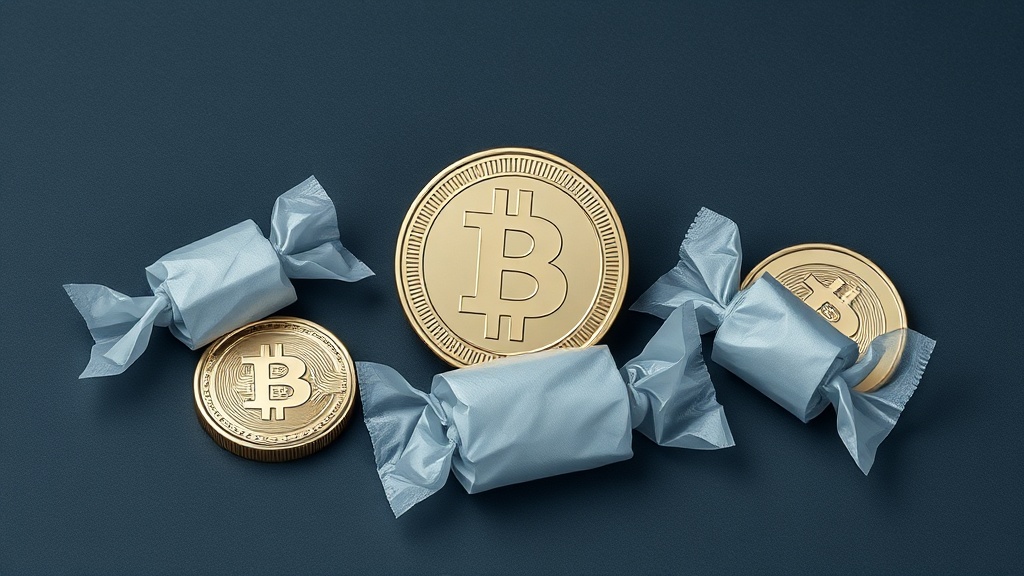
Bitcoin A Huge Price Difference Compared to Ethereum: An Analysis of the Key Reasons
Bitcoin As two of the giants in the cryptocurrency market, Ethereum and Bitcoin have a significant and persistent price disparity—and this is no coincidence. The root cause lies in their fundamental differences in design philosophy, technical architecture, supply mechanisms, and use cases. Positioned as “digital gold” and a store of value, Bitcoin emphasizes scarcity and security; whereas Ethereum is a platform that supports smart contracts and decentralized applications, with its value rooted in its ecosystem and ETH serving as its “fuel.” These core differences collectively shape their respective market positioning and price performance.





















-
U.S. State Banking Associations Plan to Launch Blockchain Network by 2027
A consortium of 39 U.S. state banking associations has signed onto the "BankChain Alliance" to build a new bank-run blockchain network by 2027. This initiative aims to facilitate financial innovations
-
Students want crypto classes but learn on social media: OKX survey
An OKX survey found that students have a strong demand for crypto classes but primarily learn about the subject on social media. A separate review revealed that only about 28% of accredited US busines
-
Japan plans to study blockchain infrastructure for securities cash settlement, aiming for a development plan by early 2027
The Financial Services Agency (FSA), Finance Ministry, Bank of Japan (BOJ), and financial institutions are involved in the initiative.
-
Japan plans to explore a blockchain-based 24/7 government bond and stock settlement system, aiming to finalize development plans by early 2027.
The Japanese Financial Services Agency, Ministry of Finance, Bank of Japan (BOJ), and major financial institutions are expected to form a study group this summer, aiming to develop a plan by early 202
-
Japan targets early 2030s launch for blockchain-based stock and bond settlement system
Japan's regulators are racing to modernize national settlement systems to prevent institutional investors and foreign capital from fleeing to overseas markets.
-
Japan is working on a blockchain-based stock settlement system, with details expected by early 2027, Nikkei reports
If the plan is approved, the relevant agencies could launch the system within a few years, aiming for full operation in the early 2030s.
-
Japan to trial real-time stock, bond settlements with blockchain tech
The Japanese government and central bank are set to launch a framework for next-generation payment infrastructure, aiming to enable instantaneous settlement of transactions in stocks and Japanese gove
-
A $500 billion experiment aims to build 24/7 markets on blockchain, allowing assets like crude oil to trade even when traditional markets are closed.
A $500 billion experiment aims to build 24/7 markets on blockchain, allowing assets like crude oil to trade even when traditional markets are closed.
-
Changpeng Zhao: Supports tokenization on all blockchains, believes it's the best way for nations to raise funds and attract foreign direct investment
He pointed out that although tokenization brings about the problem of "fragmented liquidity," it is the fastest way to drive industry growth and can be partially solved by improving interoperability b
-
STKE Q3 FY26 Operating Revenue Falls 41% to C$1.79M, Houdini Acquisition Drives Strategic Shift to Broader Blockchain Platform
STKE reported C$1.79 million in operating revenue for Q3 FY26 (quarter ending June 30, 2026), a 41% year-over-year decrease from C$3.04 million. However, the company's revenue composition materially c
-
SkyBridge Capital创始人Scaramucci指出,比特币10万美元是“OG卖家”的关键卖出点,并看好AI与区块链的融合
Anthony Scaramucci在怀俄明区块链研讨会上表示,去年许多持有比特币10-15年的“OG卖家”将10万美元视为一个“神奇数字”并选择出售,这增加了市场的抛售压力。他还预计未来AI代理进行交易时,很可能通过区块链进行,预示着AI与区块链的融合。SALT首席执行官John Darsie补充说,比特币持有者基础的变化(老用户出售,机构和家族办公室增持)是其成熟过程的一部分,有助于降低波动性
-
Ethereum advocate Raman warns Wall Street's obsession with private blockchains is "a race to the bottom"
Vivek Raman, co-founder and CEO of Etherealize, stated that Wall Street's obsession with private, centralized, permissioned blockchains is creating "a race to the bottom." He believes these networks e
-
Blockchain lending company Figure's Q2 revenue doubled to $226 million, with blockchain loan market transaction volume surging to $4.3 billion.
Figure Technology Solutions (FIGR) announced Q2 net revenue of $226 million, a 113% year-over-year increase, and net profit surged 192% to $87 million. Its consumer loan marketplace transaction volume
-
ASX shareholder plans to sue former directors over failed blockchain project
The Australian Securities Exchange's (ASX) failed blockchain-based CHESS overhaul is facing renewed governance scrutiny after the exchange admitted to misleading the market.
-
Japan's MUFG to launch instant JGB transactions via blockchain, eliminating current repo settlement cycle of 1 day or longer
Japan's leading bank Mitsubishi UFJ Financial Group (MUFG) plans to offer instantaneous settlements of certain Japanese government bond (JGB) transactions by using blockchain technology. This step wil
-
Wells Fargo to Roll Out Tokenized Deposits for Corporate Clients, leveraging blockchain for faster, more efficient payments and transfers
Wells Fargo to Roll Out Tokenized Deposits for Corporate Clients, leveraging blockchain for faster, more efficient payments and transfers
-
Robinhood Chain's Size More Than Triples Since Mid-July, With On-Chain Real-World Assets Reaching ~$70M
Robinhood launched its own blockchain, Robinhood Chain, on July 1. The blockchain's overall size has more than tripled since mid-July, with real-world assets (RWAs), including tokenized stocks, reachi
-
BNY Mellon to Move Transfer Agency Records Onchain with New Blockchain Platform
BNY Mellon is launching a blockchain-based transfer agency platform. This initiative will see the bank move core financial records onchain as it expands its digital asset infrastructure.
-
BNY Mellon moves core transfer agency business onto blockchain, targeting $8.6 trillion market
BNY Mellon, the world's largest custodian, is moving its core transfer agency business onto blockchain rails, targeting the $8.6 trillion market. The financial services giant, which services $8.6 tril
-
Circle buys nearly 1,000 blockchain patents from IBM
Circle has acquired nearly 1,000 blockchain patents from IBM. The patent portfolio encompasses blockchain technology, banking, insurance, and cloud security. The financial terms of the deal were not d
-
Coinbase CEO Brian Armstrong Criticizes Crypto Startups Rebranding to AI
Coinbase CEO Brian Armstrong criticized crypto startups that are rebranding to focus on artificial intelligence (AI). Armstrong stated that blockchain technology serves as a general-purpose infrastruc
-
Preventing Potential Losses of About $2.7 Million, Singapore Police and the FBI Strengthen Blockchain Intelligence Sharing
Svmuu News: On July 24, the Singapore Police Force and the U.S. Federal Bureau of Investigation signed a memorandum of understanding to strengthen joint operations, intelligence sharing, training, and
-
New Hampshire Signs Blockchain Framework Law; Texas Has Invested Approximately $5 Million to Establish the Bitcoin Reserve
Svmuu News: New Hampshire Governor Kelly Ayotte recently signed HB 639, the “Blockchain Basic Laws,” into law, providing increased legal protection for digital asset users, developers, miners, validat
-
Cardano Foundation: Volvo Group Once Created a Proprietary Cryptocurrency to Test Supplier Payment Processes
Svmuu News: The Cardano Foundation announced in a post that it has engaged in discussions with the Volvo Group regarding the application of blockchain technology in manufacturing. Ivan Branco, who ove
-
Bitcoin Transaction Process Explained: From Initiation to Confirmation
As a decentralized digital currency, Bitcoin transfers do not rely on a central authority but are completed through a global distributed network. This article will delve into the complete process of a Bitcoin transfer, including how users initiate transactions through wallets, how transactions are broadcast, node verification, miner packaging and mining, until final confirmation on the blockchain. At the same time, the article will also cover the key role of Bitcoin wallets, the transaction fee mechanism, and important security considerations, helping readers understand the underlying logic and operational essentials of Bitcoin transactions.
-
Cryptocurrency Exchange Withdrawal Speed Analysis: Which Platforms Allow Same-Day Withdrawals?
Cryptocurrency exchanges generally strive to provide fast withdrawal services, but whether "same-day withdrawals" can be achieved depends on various factors. These include the exchange's internal audit processes, the user account's Know Your Customer (KYC) status, security settings (such as a 24-hour lock that may result from whitelisting new addresses), and the blockchain network's congestion and confirmation times. Some exchanges, like Binance, have a T+1 rule for C2C purchases but offer a small T+0 quota. Users should understand each platform's specific policies and network conditions before withdrawing funds.
-
Blockchain's Core Pillars: Decentralization, Transparency, and Immutability
Blockchain technology, with its three core characteristics—decentralization, transparency, and immutability—has reshaped the trust mechanism in the digital world. Decentralization eliminates reliance on a single authority, ensuring data and power distribution through peer-to-peer networks and consensus mechanisms; transparency makes all transaction records publicly verifiable, effectively curbing "black box operations"; and immutability, through the cryptographically hashed linked block structure, guarantees that once data is on the chain, it cannot be unilaterally altered, thereby providing high data integrity and security. These characteristics collectively form the foundation of blockchain as a trusted digital ledger and demonstrate immense potential in various fields such as finance and supply chain.
-
TON Coin: In-depth Analysis and Trading Channel Guide
Toncoin (TON) is the native cryptocurrency of The Open Network, a project originally initiated by Telegram, later taken over and renamed by the community. The TON blockchain is characterized by its high scalability, fast transactions, and low costs, and is deeply integrated with the Telegram application, boasting a massive potential user base. This article will delve into TON's technical characteristics, its relationship with Telegram, the latest development dynamics, market data, and currently available trading platforms.
-
What is UBQ coin? Analysis of Ubiq token's supply and main uses
UBQ is the native token of the Ubiq decentralized public blockchain network, which is based on an enhanced Ethereum codebase and uses a Proof-of-Work (PoW) mechanism, aiming to provide an enterprise-grade stable platform. UBQ is primarily used to pay transaction fees, incentivize miners, and support the operation of DApps and smart contracts. As of June 2026, its circulating supply is approximately 42.6 million, but its trading market activity is currently extremely low.
-
TUSD (TrueUSD) Stablecoin Analysis: Current Status and Future Development Prospects
TUSD (TrueUSD) is a fiat-backed stablecoin pegged 1:1 to the US dollar, aiming to provide a transparent and secure digital dollar. It ensures its collateralization ratio through daily independent audits and Chainlink Proof of Reserve technology. Although TUSD is widely used in multi-chain ecosystems and listed on mainstream exchanges like Binance, its reputation was affected by a September 2024 US SEC accusation involving false claims about reserves and investments in speculative funds. In the future, TUSD's development will heavily depend on how it rebuilds trust, strengthens compliance, and enhances reserve transparency.
-
IOST Token Swap: A Look Back at the 2019 Mainnet Migration and Current Status
The "mapping" operation for IOST tokens specifically refers to the process of converting the original ERC-20 tokens into native mainnet tokens after the launch of the IOST mainnet "Olympus v1.0" in 2019. This conversion was completed many years ago and was designed to enable the tokens to be used for DApps and mainnet functionalities within the IOST ecosystem. Currently, all IOST circulating in the market are native mainnet tokens, and users no longer need to perform any mapping operations. This article will review the specific conversion process from that time and the current market overview of IOST.
-
What is ONG Coin? Introduction to Ontology Network Fuel Token ONG and Trading Platforms
ONG (Ontology Gas) is the utility token within the Ontology blockchain ecosystem, primarily used to pay for transaction fees, smart contract execution costs, and data storage fees on the network. The Ontology network employs a dual-token model, where ONT is the governance token, and ONG serves as the "fuel" token, obtained through staking ONT. The Ontology network focuses on decentralized identity and data solutions, aiming to provide high-performance blockchain infrastructure for enterprises. The total supply of ONG was adjusted to 800 million by the end of 2025.
-
ICP Coin: Analyzing Its Appreciation Potential and Long-Term Investment Considerations
The Internet Computer (ICP) aims to build a decentralized global computing platform, breaking free from reliance on traditional centralized cloud services. Its core token, ICP, experienced significant volatility after its mainnet launch in 2021. This article will delve into ICP's technological innovations, tokenomics adjustments, market performance, and multi-party views on its future appreciation potential, while also analyzing the challenges and risks it faces, providing readers with comprehensive considerations for long-term holding.
-
The Prospects and Challenges of Cardano (ADA) in Decentralized Finance (DeFi)
Cardano (ADA) is actively building its DeFi ecosystem, encompassing DEXs, lending, and native stablecoins. Recently, Cardano founder Charles Hoskinson announced the launch of privacy DeFi, aiming to attract institutional participation through the Dijkstra upgrade and Midnight Network. The network has also undergone a series of technical upgrades, such as the Van Rossem hard fork, to enhance smart contract efficiency and governance capabilities. Despite the Cardano Foundation's investment to boost liquidity, as of August 2026, its DeFi Total Value Locked (TVL) is approximately $54.35 million, still falling short of early predictions. Insufficient liquidity and the technical complexity of the eUTXO model are its main challenges.
-
TON Coin: Analysis of The Open Network's Native Token and Trading Channels
Toncoin (TON) is the native cryptocurrency of The Open Network, a decentralized Layer-1 blockchain designed to address the scalability and speed issues of traditional blockchains. The project was initially launched by Telegram but was later taken over by the community and rebranded due to regulatory challenges. In 2023, Telegram re-supported TON and integrated it into its application. TON utilizes a PoS consensus and a multi-chain sharding architecture, supporting high-throughput transactions, and is primarily used for paying fees, network governance, and staking. As of August 25, 2026, the price of TON is approximately $1.48-$1.51, with a market capitalization exceeding $4 billion. Users can trade TON on major centralized and decentralized platforms.
-
OKX Exchange In-Depth Analysis: Official Website, App Features, and Global Compliance Progress
OKX (formerly OKEx), a leading global cryptocurrency exchange, completed its brand refresh in January 2022. The platform offers comprehensive spot and derivatives trading services and has built a Web3 ecosystem encompassing the OKX Wallet, OKX Chain, and OKB token. Its app supports multi-device downloads, providing rich features such as flash conversions, contracts, and AI trading strategies. OKX continues to expand its compliant operations globally, having obtained licenses in multiple countries and regions, and became the first global exchange to receive MiCA pre-authorization in February 2025. OKX is committed to providing secure and convenient crypto asset services to users worldwide.
-
Will SOL Coin Collapse? Can Solana Become the Next Ethereum?
Solana (SOL), as a high-performance Layer-1 blockchain, has garnered significant attention in the crypto market. This article delves into the potential collapse risks facing SOL, including historical network outages, the impact of the FTX incident, market competition, and governance disputes. Concurrently, it analyzes the resilience and rapid development of the Solana ecosystem. Furthermore, the article compares Solana with Ethereum, dissecting Solana's advantages in performance and fees, as well as Ethereum's inherent position in ecosystem maturity, security, and decentralization, to assess whether SOL can become the next blockchain giant.
-
Bitcoin Foundation Founding Date: A Look Back at Its Birth and Development
The Bitcoin Foundation was established in September 2012 with the aim of standardizing, protecting, and promoting the use of the Bitcoin cryptocurrency. As a non-profit organization, it played a crucial role in the early development of Bitcoin, attracting prominent members such as Gavin Andresen and Roger Ver. However, the Foundation also faced challenges, including the collapse of Mt. Gox, the arrest of core members, and financial difficulties, which sparked widespread discussions about its governance and transparency.
-
Cardano (ADA) Price Outlook Analysis and Introduction to Founder Charles Hoskinson
This article delves into the market performance, potential growth catalysts, and risks facing Cardano (ADA) tokens. ADA has recently seen a price increase, but market sentiment is complex, and long-term predictions are highly uncertain. The article also details the background of Cardano's founder, Charles Hoskinson, including his experience as a Ethereum co-founder, and his journey to establish IOHK and launch the Cardano blockchain platform, aiming to provide readers with a comprehensive understanding of the project.
-
Solana (SOL) Token Issuance and Circulation Analysis: Dynamic Supply Model
The Solana (SOL) token utilizes a unique dynamic supply model without a predetermined maximum supply cap. Its mechanism combines initial inflation to incentivize network security, gradually transitioning to a long-term stable rate of 1.5% through an annually decreasing inflation rate. Furthermore, 50% of every transaction fee is burned, effectively controlling the circulating supply. As of now, SOL's total supply and circulating supply have both reached hundreds of millions, with its market capitalization ranking among the top cryptocurrencies, underscoring its significant position in the Web3 ecosystem. This design aims to balance network growth with long-term sustainability.
-
In-depth Analysis of ETH Coin's Current Status and Future Development Prospects
Ether (ETH), as the native cryptocurrency of the Ethereum network, is the second-largest digital asset by market capitalization, underpinning the DeFi, NFT, and metaverse ecosystems. Recently, Ethereum has significantly enhanced its scalability and reduced transaction costs through a series of upgrades such as Dencun, Pectra, and Fusaka. The Ethereum Foundation's 2026 roadmap focuses on faster transaction speeds, smart wallets, and quantum security. Despite market volatility and regulatory challenges, most experts remain optimistic about its long-term prospects.
-
ANT Coin: Analysis of the Current Status and Future Development Prospects of the Aragon Decentralized Governance Platform
Aragon (ANT) is an Ethereum platform focused on tools and infrastructure for decentralized autonomous organizations (DAOs). Its native token, ANT, is used for governance. In 2023, the Aragon Association dissolved and launched a token redemption program, shifting the project's focus to product development. Recently, Aragon has made progress in privacy voting, multi-chain deployment, and DAO adoption, but it also faces security challenges from a governance vulnerability attack in June 2026. The current 24-hour trading volume of ANT tokens is extremely low, posing a severe liquidity challenge. Its future development depends on whether product adoption can overcome security concerns and insufficient market liquidity.
-
Virtual Currency Trading Platform Download and OTC Trading Platform Analysis
This article delves into the download methods and core functionalities of major global virtual currency trading platforms, with a particular focus on analyzing the operational models, advantages, and potential risks of Over-the-Counter (OTC) trading platforms. We will introduce well-known platforms such as Binance and OKX, and analyze how OTC trading meets the needs for large transactions and privacy, while also reminding users to be aware of regulatory developments and trading security.
-
TARA Coin: Taraxa Project Analysis and Future Development Prospects Assessment
TARA is the native token of the Taraxa Layer-1 blockchain, a project that aims to solve trust and accountability issues in informal transactions through its unique t-Graph consensus mechanism and blockDAG architecture, providing an EVM-compatible Layer-1 blockchain solution. The TARA token is used to pay network fees, participate in governance, and for staking. Despite the project's technical innovation and commitment to real-world applications, its market performance has been highly volatile, with relatively low current market capitalization and trading volume. Future development will depend on its ecosystem expansion and the implementation of actual applications.
-
WNZ Coin (Winerz): MMA Blockchain Platform Token Status and Trading Market Analysis
WNZ (Winerz or Winnerz) is a blockchain platform token designed to connect mixed martial arts (MMA) athletes, fans, and clubs. As of August 24, 2026, public data shows the WNZ coin price at $0.00, with a lack of active 24-hour trading volume and market cap data. The token is currently not listed on any CEX, and its trading market has nearly dried up.
-
USDTUSDT Working Principle Analysis: Pegging Mechanism, Multi-Chain Deployment, and Exchange Platform Overview
USDT, as the largest stablecoin by market capitalization, aims to maintain a 1:1 value peg with the US dollar. Its working principle involves issuance and management by Tether Limited, backed by reserve assets (primarily US Treasury bills), and utilizing a minting and burn mechanism to regulate supply. USDT is deployed on multiple blockchain networks such as Ethereum and TRON, and is widely used in cryptocurrency trading, value storage, and the DeFi ecosystem. Many mainstream CEXs globally support USDT trading and exchange, but users need to be aware of compatibility issues between different network versions.
-
BSI Coin: Bali Social Integration Token Analysis and Discussion of Trading Channels
BSI Coin (Bali Social Integration Token) aims to optimize the global tourism industry using blockchain technology, connecting travelers with service providers to offer a seamless experience. The project is developed by the Bali Social Integration company team. Users can view information such as its price, market capitalization, and trading volume on trading platforms that support the token, but they need to verify its listing status themselves before trading.
-
MODEX Token: Current Status and Historical Listing Analysis
Modex is a Web3 platform focused on the sports industry, aiming to enhance fan engagement through blockchain technology. Its native token, MODEX, was listed on platforms such as LBank in 2023. However, as of August 2026, public data shows that MODEX tokens have ceased trading on most listed exchanges, with extremely low 24-hour trading volumes and market activity that is almost completely depleted. This article will review its project background, tokenomics, and current market status.























Blockchain

24H Trending
-
1
Japan plans to explore a blockchain-based 24/7 government bond and stock settlement system, aiming to finalize development plans by early 2027.
-
2
BOLT Coin Multi-faceted Analysis: Decentralized Media Ecosystem and Trading Guide for Memecoin

-
3
Bybit Lists MSTUUSDT TradFi Perpetual Contract With Up to 25x Leverage
-
4
Bybit launches INFQUSDT TradFi Perpetual Contract, with up to 25x leverage
-
5
Iranian Rial Hits New All-Time Low of 2 Million Per US Dollar, Driving Up Prices for Essentials by Over 70%
-
6
SHIBShiba Inu Mainstream Trading Platform Analysis: How Global Users Choose

-
7
Ethereum (ETH) Price Today and USD Trend Analysis

-
8
Cryptex Finance (CTX) Trading Platform and Project Analysis

-
9
OKX Exchange Newbie Guide to Buying Crypto: P2P and Express Buy Tutorials

-
10
LDN Coin Analysis: Positioning and Market Status of Ludena Protocol Token

Markets Today



Recommended Reading

Hot Topics

Svmuu focuses on blockchain industry trends and cutting-edge cryptocurrency news, while also covering real-time market data and in-depth analysis of the Hong Kong, U.S., and foreign exchange markets. Here, you can not only access professional 24/7 news updates and accurate market data, but also utilize practical investment tools to help you capitalize on opportunities in both digital assets and traditional financial markets. Whether you are a blockchain enthusiast or an investor in Hong Kong, U.S., or foreign exchange markets, we provide efficient and timely information services to empower your investment decisions.
- User Agreement
- Privacy Policy
- Contact Us
- Business Partnerships
- Disclaimer
- Content Statement
- About Us
- Sitemap
 Coming Soon!
