

Faster global financial news!
PoW
-
Bitcoin vs. Ethereum: In-Depth Analysis of Core Differences, Technical Evolution, and Market Positioning
While both Bitcoin and Ethereum are the two largest cryptocurrencies by market capitalization and are based on decentralized blockchain technology, they have significant differences in their core visions, technical architectures, and application scenarios. Bitcoin is positioned as "digital gold" and a store of value, whereas Ethereum aims to be the "world computer," supporting a decentralized application ecosystem through smart contracts. This article will delve into their origins, consensus mechanisms, economic models, market positions, and latest developments, providing a comprehensive comparison of their similarities and differences.
-
Ethereum Classic (ETC) Price Analysis: Historical Highs, Lows, and Current Market Performance
Ethereum Classic (ETC) is a continuation of the original Ethereum blockchain, adhering to the principle of "code is law." As of September 28, 2026, the ETC price has stabilized in the range of $9.485 to $9.61. Its all-time high was $175.00 (May 2021), and its all-time low was $0.477 (July 2016). ETC uses a proof-of-work mechanism and has a deflationary model with a 20% reduction in supply every two years. Its current market capitalization is approximately $1.5 billion, with active 24-hour trading volume, making it an important asset in the crypto market that upholds the original intention of decentralization.
-
What is Freicoin (FRC)? An Analysis of Its Mechanism, Supply, and Trading Status
Freicoin (FRC) is a cryptocurrency based on Bitcoin's PoW mechanism, designed to encourage currency circulation rather than long-term holding by introducing a demurrage fee. Its total supply is 100 million coins, but its market capitalization is often incalculable due to insufficient data on circulating supply. Although it once had a historical high price, its current trading activity is low, and public information indicates that its circulating supply and market capitalization data are difficult to verify, so investors need to exercise caution.
-
Deep Dive into Kaspa's Network Governance Model and Community Engagement
Kaspa, as a decentralized, community-driven crypto project, emphasizes openness and fairness in its governance model. It lacks a central governing body, and its KAS tokens are distributed through a fair-launch Proof-of-Work (PoW) mining process. Community members coordinate via Discord and participate in voting on development initiatives and funding proposals. Founder Dr. Yonatan Sompolinsky and his core team continuously drive technological advancements, including a Rust rewrite and smart contract development. Kaspa is regarded as "Bitcoin 2.0" for solving the blockchain trilemma, with its grassroots marketing strategy and strong community engagement being core drivers of its growth.
-
F2Pool: A Leading Cryptocurrency Mining Pool and Its Evolution
Founded in 2013, F2Pool is one of the oldest and largest cryptocurrency mining pools globally, supporting the mining of over 40 PoW cryptocurrencies, including Bitcoin and Litecoin. The pool offers real-time monitoring and various reward models, serving over a million users worldwide. In recent years, F2Pool has continued to expand its global influence through initiatives such as merging with Stakefish, founder Chun Wang completing a space journey, and obtaining SOC 2 certification. Despite facing controversies like transaction censorship and centralization, F2Pool actively adapts to industry changes and was once praised for returning a large transaction fee mistakenly paid by Paxos, solidifying its critical position in the mining ecosystem.
-
What is XHV Coin? Haven Protocol's Core Token Analysis and Trading Channels
XHV is the native cryptocurrency of Haven Protocol, which aims to provide private, decentralized "offshore banking" services. XHV is based on Monero's CryptoNote protocol, inheriting strong privacy features, and supports users in creating private stable assets (xAssets) on-chain through a unique mint-and-burn mechanism. XHV is used for fees and governance within the ecosystem. Its primary trading channels include some decentralized exchange services and internal conversions within Haven Vault, with limited direct support from centralized exchanges.
-
UBQ Coin Trading Status: Ubiq Project Analysis and Acquisition Methods
Ubiq (UBQ) is a community-maintained, Ethereum Virtual Machine (EVM)-compatible Proof-of-Work (PoW) blockchain designed to provide a stable, enterprise-grade application development platform. However, recent data indicates extremely low trading activity for the UBQ token, with multiple mainstream data platforms showing its 24-hour trading volume near zero or only a few hundred dollars, and some exchanges no longer supporting active trading. This article will delve into the Ubiq project, explaining the current market status of the UBQ token and potential acquisition methods.
-
What is TXTC? TEXITcoin Project Analysis and Market Status
TEXITcoin (TXTC) is a Layer 1 proof-of-work cryptocurrency designed to support the Texas independence movement and local economic sovereignty. Founded by Bobby Gray, the project utilizes the Scrypt algorithm, emphasizing decentralization and community-driven principles. TXTC launched in January 2024, and in September 2026, it introduced ERC-20 compatible Wrapped TXC (wTXC) to expand its application within the Ethereum DeFi ecosystem. The current TXTC price is approximately $0.1758, with a market capitalization ranging from $10.93 million to $11.54 million, and a 24-hour trading volume of approximately $11,000 to $13,000. The project positions it as a highly speculative asset rather than an investment, and market opinions are polarized, with potential risks involved.
-
xRhodium (XRC) Token Analysis: Project Overview, Current Status, and Trading Channels
xRhodium (XRC) is a PoW cryptocurrency launched in 2018, aiming to be a decentralized store of value asset and support its FreeMarket.One decentralized trading platform. The project features a unique "Strong Hands Program" incentive mechanism. However, XRC's trading activity is extremely low, with 24-hour trading volume close to zero, and its price is highly volatile, having fallen significantly from its all-time high. Investors considering XRC must fully recognize its high-risk characteristics and liquidity challenges.
-
Myriadcoin (XMY) Value Analysis: Unique Multi-Algorithm Approach and Market Status
Myriadcoin (XMY) is an experimental digital currency known for its unique five-algorithm Proof-of-Work (PoW) mining mechanism, designed to enhance decentralization and security. Launched in 2014, the project has been community-driven and has continuously iterated through hard forks. However, as of September 2026, XMY's market activity is extremely low, with 24-hour trading volume near zero. Its long-term investment value faces significant uncertainty, and investors should be wary of high risks.
-
IFC Coin: An Analysis of Infinitecoin's Current Status and Market Activity
IFC coin primarily refers to Infinitecoin, a cryptocurrency launched in 2013 based on the Scrypt PoW algorithm. The project underwent multiple block reward reforms aimed at adjusting its economic model. However, as of now, Infinitecoin's market activity is extremely low, with 24-hour trading volumes in the single-digit dollar range. It is widely considered inactive and severely lacking liquidity. Investors should be fully aware of its high-risk nature.
-
A Deep Dive into Bitcoin's Proof-of-Work (PoW) Consensus Mechanism
Proof of Work (PoW) is the core consensus mechanism of the Bitcoin network, ensuring its security and decentralization by requiring miners to solve complex computational puzzles to verify transactions and create new blocks. This article will delve into the principles of PoW, its difficulty adjustment mechanism, and block rewards, while also analyzing controversies surrounding its energy consumption and sustainability, as well as the impact of recent protocols like Ordinals on the Bitcoin ecosystem.
-
ELCASH Coin: Electric Cash Project Analysis and Market Status
Electric Cash (ELCASH) is a SHA-256 Proof-of-Work cryptocurrency designed to provide a fast, low-cost solution for daily payments. Launched in 2020 with its mainnet going live in December of the same year, the project emphasizes a community-driven governance model and offers free transactions and additional rewards through a staking mechanism. As of September 2026, ELCASH's price has fluctuated between $0.045 and $0.047, with a 24-hour trading volume ranging from approximately $44,000 to $73,000. Although its all-time high price reached $65.07, current circulating market capitalization data remains uncertain. Investors should monitor its technological developments, community activity, and market liquidity, while also being aware of the inherent risks in the cryptocurrency market.
-
MEER Coin Issuance Price Undisclosed: Qitmeer Network's MEER Token Status and Market Performance
The initial offering price of MEER, the native token of Qitmeer Network, has not been explicitly disclosed in public information. The project launched in January 2022, aiming to provide a high-performance EVM-compatible public chain solution. However, as of September 5, 2026, MEER's market performance is extremely weak, with its price having fallen to approximately $0.0000055, a market capitalization of about $20,600, and a 24-hour trading volume of only about $4,970. There are conflicting data regarding its circulating supply, and both the token price and trading volume indicate extremely low market activity.
-
Nervos Network (CKB) In-depth Analysis: Investment Value and Future Outlook
Nervos Network (CKB) is an open-source PoW blockchain ecosystem with a dual-layer architecture, designed to provide secure, decentralized, and scalable infrastructure. CKB coin, its native token, represents state storage space and is used to pay transaction fees. The project is actively integrating with the Bitcoin ecosystem, extending BTC programmability through the RGB++ protocol. As of September 11, 2026, the CKB price is approximately $0.0012, with a market capitalization ranging from $53 million to $57 million. This article will explore its technological advantages, latest developments, and market potential.
-
MWC Coin Analysis: MimbleWimbleCoin's Privacy Technology, Current Status, and Future Outlook
MimbleWimbleCoin (MWC) is a cryptocurrency launched in 2019, based on the Mimblewimble protocol, focusing on providing highly private, scalable, and fungible transactions. Its core technologies include confidential transactions and transaction aggregation, aiming to hide transaction amounts and reduce blockchain size. MWC uses a Proof-of-Work mechanism and has a maximum supply of 20 million coins. Despite its unique technological advantages, its extremely low 24-hour trading volume, insufficient market activity, and lack of smart contract functionality are its main challenges.
-
What is SPR Coin? An Analysis of the Current State of the SpreadCoin Project
SPR coin typically refers to SpreadCoin, a cryptocurrency launched in 2015 designed to achieve stronger decentralization through a PoW consensus mechanism and X11 hashing algorithm to address scalability and transaction speed issues. However, as of September 6, 2026, the token's 24-hour trading volume is extremely low, its market capitalization is displayed as $0, and its circulating supply is also 0. The project currently faces challenges of a depleted trading market and high risk.
-
What is ELCASH Coin? Electric Cash Token Analysis and Trading Channels
ELCASH, or Electric Cash, is a community-driven cryptocurrency based on the SHA-256 algorithm, designed to provide a fast, low-fee, and instant payment experience. It combines a Proof-of-Work (PoW) mechanism with built-in governance and staking features, emphasizing community participation. ELCASH was launched in Q4 2020, with a total supply of 21 million coins. As of publication, ELCASH is available for trading on exchanges such as LBank.
-
BRIA Coin Analysis: What is BriaCoin? Current Market Conditions and Investment Considerations
BriaCoin (BRIA) is a cryptocurrency that utilizes a hybrid PoW/PoS consensus mechanism, with a total supply capped at 3 million coins. It once proposed the "MAN-BANK" concept, intended for use within the Briastorm advertising network. However, as of September 7, 2026, BriaCoin exhibits extremely low market activity, with zero trading volume in the past 24 hours and a market capitalization of less than ten thousand US dollars. Investors considering such assets must be fully aware of the risk of liquidity depletion.
-
What is EXP? An Overview of the Expanse Project, Tokenomics, and Trading Channels
EXP is the native token of the Expanse blockchain platform, which forked from Ethereum in 2015. It aims to provide a decentralized smart contract environment supporting DApp development. EXP serves as network fuel, used to pay for transaction fees and computing resources, and is generated through a Proof-of-Work (PoW) mining mechanism. This article will delve into Expanse's core technology, token supply, and current market trading status.
-
Litecoin (LTC) Analysis: Current Status and Future Outlook of Digital Silver
Litecoin (LTC), often referred to as "digital silver," was founded in 2011 by former Google engineer Charlie Lee. It is based on the Bitcoin protocol and aims to provide faster transaction speeds and lower fees. This article will delve into Litecoin's technical characteristics, market performance, current challenges, and future development potential, helping readers gain a comprehensive understanding of this long-standing cryptocurrency.
-
SAL Coin: Salvium Project Value Analysis and Discussion of Long-Term Investment Potential
Salvium (SAL) is a Layer 1 Proof-of-Work (PoW) blockchain focused on compliant privacy, aiming to combine Monero's privacy features with regulatory requirements. It introduces innovations such as native staking, programmable privacy, and DeFi support. Despite the project's ambitious technical vision, its current market performance has been volatile, with prices significantly correcting from their historical highs. Investors should consider its technological development, ecosystem expansion, and market risks comprehensively.
-
What is HNS Coin? An Analysis of the Handshake Protocol and How to Acquire It
HNS is the native cryptocurrency of the Handshake decentralized naming protocol, which aims to replace traditional centralized domain management authorities with blockchain technology, providing a censorship-resistant and programmable top-level domain (TLD) system. HNS is primarily used for TLD registration, bidding, and trading. Handshake was launched in 2020 and uses a proof-of-work mechanism. As of press time, the price of HNS fluctuates between $0.0019 and $0.0036, with a market capitalization of approximately $1.5 million to $2.49 million, and a 24-hour trading volume of about $5,000. Users can obtain HNS through mining, purchasing on CEXs, or participating in specific activities.
-
Kaspa Smart Contract Platform: Features, Development, and Potential Analysis
Kaspa is transitioning from a fast payment network to a programmable PoW blockchain, with its smart contract platform at the core. Through the Toccata hard fork in June 2026, Kaspa introduces native programmability, KRC-20 token support, and zero-knowledge proof verification. The team is developing in Rust and integrating Layer 2 solutions such as Kasplex and Igra Network, aiming to provide a high-throughput, low-fee DeFi and dApp environment. In the future, Kaspa is expected to support Web3 gaming, decentralized exchanges, and M2M applications, further expanding its ecosystem.
























- No data
-
What is XRC? Analysis of the xRhodium Project Background and Market Status
A detailed analysis of xRhodium’s (XRC) project positioning, its adopted independent blockchain and PoW mechanism, as well as its market status and potential risks as a store-of-value token.
-
Ethereum Classic (ETC) Future Outlook and Highlights Analysis: PoW, Fixed Supply, and 2026 Halving Upgrade
Ethereum Classic (ETC) originated from the 2016 Ethereum fork, maintaining a Proof-of-Work (PoW) consensus and a capped supply of approximately 210.7 million coins. Market data in mid-2026 indicates platform-specific discrepancies in its price, market capitalization, and circulating supply, with the fifth halving and the Olympia fee-burning upgrade serving as key market focal points. This article outlines ETC's core highlights, supply mechanism, ecosystem risks, and outlook assessment framework.
-
YENTEN (YTN) Coin Analysis: Market Status, Risks, and Acquisition Methods
YENTEN (YTN) is a cryptocurrency that utilizes a Proof-of-Work (PoW) mechanism and is designed for CPU mining. Its all-time high price reached $1.50, but its current price is extremely low, having fallen over 99.90% from its peak. The token's 24-hour trading volume is minimal, indicating almost no market activity, and it is flagged as a high-risk asset. Major trading platforms such as Coinbase and KuCoin do not offer trading services for YTN. Investors should be fully aware of its high risk and speculative nature and evaluate it cautiously.
-
What is SAL (Salvium)? An Analysis of a Privacy and Compliance-Oriented PoW Blockchain
SAL coin is the native cryptocurrency of the Salvium blockchain, a Layer 1 Proof-of-Work (PoW) network focused on privacy, compliance (especially with MiCA regulations), and DeFi functionalities. As a fork of Monero, it inherits advanced privacy features and introduces innovations such as native staking, refundable transactions, and DeFi integration. The SAL coin completed a hard fork in April 2026 and adopted the RandomX PoW algorithm. Currently, SAL coin is tradable on centralized exchanges such as MEXC, Nonkyc.io, and CoinEx, with SAL/USDT being the primary trading pair.
-
ICOB Coin Analysis: ICOBID Project Status and Market Performance
ICOB, or ICOBID, is a cryptocurrency that uses a hybrid PoW/PoS consensus mechanism. However, its official website has been inactive since February 2025, and current market trading volume is extremely low or zero. Although multiple platforms list information about it, there are significant discrepancies in its circulating supply, market capitalization, and price data, reflecting the project's lack of liquidity and market attention. Investors should be fully aware of its high-risk characteristics.
-
CEODOGE Coin Overview and Development Prospects Analysis
CEODOGE (CEO DOGE) is a memecoin launched in 2023, operating on the BNB Smart Chain, aiming to combine humor with potential financial opportunities and community building. The project utilizes Proof-of-Work (PoW) and the Scrypt hashing algorithm, and supports merged mining. However, according to recent data, CEODOGE's 24-hour trading volume is extremely low or zero, and its circulating supply and market capitalization are displayed as "N/A" or unverified. Its market activity is insufficient, and the investment risk is extremely high; potential investors should exercise caution.
-
ETHF Coin: An Analysis and Outlook of EthereumFair, the Ethereum PoW Fork Project
ETHF coin is the native token of the EthereumFair project, a fork chain aiming to maintain the Proof-of-Work (PoW) consensus mechanism after Ethereum's transition to PoS. The project was established in 2020 and launched in Q3 2022, supporting EVM applications. Currently, its trading activity is limited, with a market capitalization of approximately $1.03 million, and 24-hour trading volume varies across different platforms. This article will delve into ETHF's technical characteristics, market performance, and potential risks.
-
Recap: Ethereum mining pool Ethermine once distributed a $2.6 million exorbitant transaction fee to miners.
In June 2020, Ethereum mining pool Ethermine (operated by Bitfly) faced a unique situation: a user mistakenly paid an exceptionally high transaction fee of 10,668 ETH (worth approximately $2.6 million at the time) due to an operational error. After freezing the transaction and waiting for the sender to claim it for several days without success, Ethermine decided to distribute the fee to the miners active in its pool at the time. This incident occurred during Ethereum's Proof-of-Work (PoW) era; now that Ethereum has transitioned to a Proof-of-Stake (PoS) mechanism, such mining pool distributions are a thing of the past.
-
Ethereum GPU Mining Post-Merge: Transition and Profitability Challenges
Ethereum completed "The Merge" on September 15, 2022, officially transitioning from a Proof-of-Work (PoW) to a Proof-of-Stake (PoS) mechanism, definitively ending the era of GPU mining for ETH. This move significantly reduced Ethereum's energy consumption but dealt a massive blow to GPU miners. Former ETH miners have redirected their hash power to other PoW cryptocurrencies such as Ethereum Classic (ETC); however, overall profitability has significantly declined, with daily profit margins being slim and the investment payback period extending to several years. Miners are facing severe cost and and efficiency challenges.
-
What is Bixcoin (BIX)? How can it be traded on supported platforms?
Bixcoin (BIX) is a cryptocurrency that uses a Proof-of-Work (PoW) mechanism and the Scrypt algorithm, supporting mining with a pre-mined portion. Its all-time high price reached $0.001128. Regarding its trading, information indicates that Bibox exchange once offered trading pairs such as BIX/USDT. However, due to a lack of current active trading data for this token, users are advised to verify its latest listing status and market liquidity before trading.
-
Zayedcoin (ZYD) Analysis: Project Status, Supply, and Market Activity
Zayedcoin (ZYD) is a peer-to-peer proof-of-work (PoW) cryptocurrency that utilizes the Bitcoin hashing algorithm and aims for a fair launch. However, as of October 15, 2026, the token's 24-hour trading volume is $0, its circulating supply is shown as 0 or insufficient data, and its total market capitalization is near zero. Its price has significantly depreciated over the past year, and there is currently no active trading market.
-
TAJ Coin: TajCoin Project Analysis and Market Status
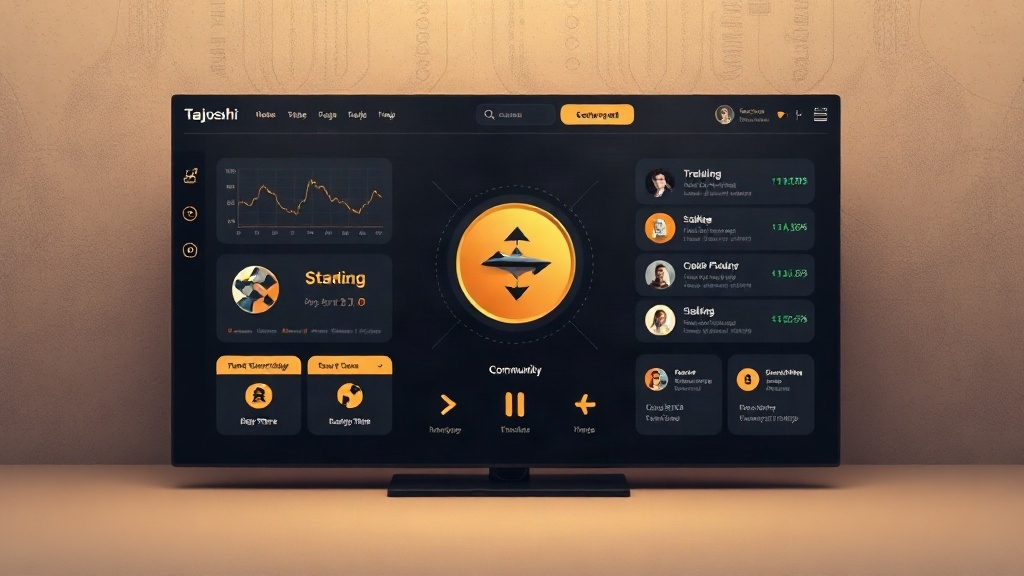
TajCoin (TAJ) is a decentralized, open-source cryptocurrency launched in 2016, utilizing a hybrid PoW and PoS 2.0 consensus mechanism. The project aims to empower individuals and businesses through peer-to-peer transactions. Although its ecosystem expanded in 2025 through the Tajoshi.com platform, recent data indicates extremely low trading activity for TAJ coin, with market liquidity nearly depleted. Investors should be fully aware of the associated risks.
-
RVN Coin: Current Status, Challenges, and Future Outlook
Ravencoin (RVN) is an open-source blockchain project designed for asset tokenization, utilizing a PoW consensus mechanism. Recently, the RVN network experienced a consensus vulnerability attack, and several major exchanges, including Bitget and Upbit, delisted its trading pairs, leading to impaired market liquidity. The current RVN price is at an all-time low, and future value predictions show significant divergence. Despite these challenges, the project community remains committed to exploring its long-term application potential in AI agents and Real World Asset (RWA) tokenization.
-
2GIVE Coin Status Analysis: Extremely Low Market Activity, Investment Prospects Questioned
2GiveCoin (2GIVE) was a hybrid cryptocurrency designed to support social responsibility and non-profit donations. However, as of October 2026, its 24-hour trading volume and circulating market capitalization are shown as zero or insufficient data on major cryptocurrency data platforms, and its circulating supply is also zero. This indicates that its market activity has almost dried up, and major trading platforms no longer support trading. Despite its project concept being related to non-profit funds, the current lack of an effective trading market poses severe challenges to its investment prospects.
-
Ethereum Mining Output Volatility Analysis: From PoW to PoS Transition
Prior to the "Merge" in September 2022, Ethereum's mining output, based on the Proof-of-Work (PoW) mechanism, experienced significant fluctuations, primarily influenced by factors such as difficulty adjustments, changes in network hashrate, the difficulty bomb, and block reward adjustments. Since the "Merge," Ethereum has fully transitioned to the Proof-of-Stake (PoS) mechanism, and traditional mining activities have ceased. Currently, network security is maintained by validators who stake ETH and earn rewards for completing tasks. The issuance of new ETH has also significantly decreased, with reward fluctuations depending on validator behavior, the number of active validators, and the total amount of staked ETH.
-
42-coin: Value and Investment Considerations for a Rare Crypto Asset
42-coin is an extremely rare cryptocurrency with a maximum supply of only 42 coins, its name inspired by "The Hitchhiker's Guide to the Galaxy." Launched in 2014, the project was distributed through fair mining, utilizing a hybrid PoW and PoS mechanism, and features a deflationary design. Despite its high unit price, its market price is highly volatile and liquidity is extremely poor due to its extremely low circulating supply, insufficient trading market activity, and lack of a clear development roadmap. Investors should fully recognize its highly speculative nature and the accompanying significant risks, treating it as a niche collectible rather than a traditional investment asset.
-
What is Kaspa (KAS)? An Analysis of KAS Coin's Core Technology, Ecosystem, and Trading Platforms
Kaspa (KAS) is an innovative decentralized Layer 1 cryptocurrency that utilizes a unique BlockDAG architecture and the GHOSTDAG protocol, aiming to resolve the scalability and speed bottlenecks of traditional blockchains. It achieves high throughput and low latency through parallel processing of blocks and plans to upgrade to the DAGKnight consensus mechanism to enhance finality. The KAS token is used for network transaction fees and mining, issued via a fair launch. Currently, the Kaspa ecosystem is actively developing smart contracts, Layer 2 solutions, and decentralized applications, and its KAS coin is tradable on multiple major cryptocurrency exchanges.
-
Bitcoin vs. Ethereum: Core Differences and Respective Positioning
Bitcoin and Ethereum, as the two giants in the cryptocurrency space, both leverage blockchain technology but exhibit significant differences in their core objectives, technical architecture, consensus mechanisms, and tokenomics. Bitcoin primarily serves as "digital gold" for value storage and peer-to-peer payments, while Ethereum functions as a "world computer" supporting smart contracts and decentralized applications (DApps), boasting a more diverse ecosystem. Understanding these distinctions is crucial for grasping their respective value propositions and market positioning.
-
In-depth Analysis of ETC Coin: Risks and Long-Term Holding Value
Ethereum Classic (ETC), a PoW blockchain that adheres to the "code is law" principle, holds a unique position in the cryptocurrency market. This article will delve into the challenges ETC faces, such as the risk of 51% attacks, competition from Ethereum, and market volatility. Simultaneously, it will analyze the long-term value drivers supporting ETC, including its fixed supply, PoW mechanism, smart contract platform, and active community. By reviewing recent market data and key developments, this article aims to help readers fully understand ETC's potential risks and investment considerations.
-
TERA Coin Analysis: The Native Token of the Tera Blockchain and Its Market Status
TERA is the native cryptocurrency of the Tera blockchain, aiming to build a decentralized, high-performance platform supporting JavaScript DApps. Launched in 2017, the project adopted a PoW consensus mechanism and sharding technology, with plans to achieve high TPS and free transactions. However, as of October 2026, TERA coin's market activity is extremely low, with trading volume and market capitalization data indicating near-depleted liquidity. This article will delve into TERA's technical features and development history, clarify its distinction from the Terra (LUNA) project, and highlight its current market risks.
-
LiteCoin Ultra (LTCU) Coin Analysis: Technical Features and Market Status
LiteCoin Ultra (LTCU) is a peer-to-peer cryptocurrency launched in July 2017, inspired by Litecoin and combining a hybrid consensus mechanism of Proof-of-Stake (PoS) and Proof-of-Work (PoW). The project aims to provide faster transaction speeds and lower costs than Bitcoin. LTCU launched with a fair distribution, no pre-mine or ICO. However, despite its technical vision, LTCU currently has extremely low trading activity, with no trading volume recorded in the past 24 hours and a market capitalization of only approximately $209.
-
Bitcoin vs. Ethereum: Core Differences in Block Reward Mechanisms
Bitcoin and Ethereum, as the two major cryptocurrencies, have significant differences in their block reward mechanisms. Bitcoin uses Proof-of-Work (PoW) and a fixed four-year halving cycle, aiming to maintain scarcity with a total supply cap of 21 million coins. Ethereum, after "The Merge" in 2022, transitioned to Proof-of-Stake (PoS), with a dynamically adjusted reward mechanism and no total supply cap. Its economic model, combined with the EIP-1559 burn mechanism, could lead to deflation. These fundamental design choices profoundly impact their economic models, energy consumption, and core positioning.
-
ERG Coin Value Analysis: Ergo's Long-Term Investment Potential and Risks
Ergo (ERG) is a smart contract platform launched in 2019, combining Bitcoin's PoW security with Ethereum's smart contract capabilities. It features a fair launch, ASIC-resistant mining, and a unique eUTXO model, aiming to achieve decentralized finance. This article will delve into ERG's technical advantages, ecosystem development, current market performance, and the opportunities and challenges it faces as a long-term investment.
-
How to Buy and Sell Ethereum Classic (ETC)? ETC Trading Platforms and Guide
Ethereum Classic (ETC), as a continuation of the original Ethereum blockchain, utilizes a PoW consensus mechanism and has a unique halving cycle. This article will detail common ways to buy and sell ETC, including steps for trading through CEXs, and mainstream platforms currently supporting ETC trading. Simultaneously, it will outline ETC's historical background, technical characteristics, and current market performance to help readers comprehensively understand ETC's trading ecosystem.






















PoW

24H Trending
-
1
What is the LDN Token and How to Acquire and Trade It

-
2
A Review of Major Global Blockchain Trading Platforms and Apps
-
3
What is the DIVX token? Total supply, official website, and project overview

-
4
ANKR Token Analysis: Current State and Future Outlook of Web3 Infrastructure

-
5
US Treasury Announces Sanctions Against Eight Canada-Based Currency Exchange Firms Involved with Iran
-
6
Real-World Use Cases and Impact of Blockchain Brawlers (BRWL)
-
7
How is BFHT doing? What is the future outlook for BFHT?

-
8
What Cryptocurrency Is ADR? A Deep Dive into the Solana Meme Project American Dollar Reserve
-
9
2026 US Stock Market Safe-Haven Assets Encyclopedia: How Walmart and Caterpillar Lead the Industrial Sector Amid AI Bubble Doubts

-
10
IRGC Claims "Complete Defense Independence" and Warns US and Israel
Markets Today





Recommended Reading

Hot Topics

Svmuu focuses on blockchain industry trends and cutting-edge cryptocurrency news, while also covering real-time market data and in-depth analysis of the Hong Kong, U.S., and foreign exchange markets. Here, you can not only access professional 24/7 news updates and accurate market data, but also utilize practical investment tools to help you capitalize on opportunities in both digital assets and traditional financial markets. Whether you are a blockchain enthusiast or an investor in Hong Kong, U.S., or foreign exchange markets, we provide efficient and timely information services to empower your investment decisions.
- User Agreement
- Privacy Policy
- Contact Us
- Business Partnerships
- Disclaimer
- Content Statement
- About Us
- Sitemap
 Coming Soon!
