Ethereum is not only the second-largest cryptocurrency by market capitalization but also the cornerstone of the decentralized application (dApp) and smart contract ecosystem. Every major upgrade to its technical roadmap sends ripples through the entire blockchain industry. The question posed in the title, "Does Ethereum's future determine the future of blockchain?", might be more accurately stated as: Ethereum's development path has a decisive impact on the future of the blockchain ecosystem.
Ethereum's Current Status and Core Position
Since its launch in 2015, Ethereum, with its Turing-complete smart contract functionality, has fostered the prosperity of decentralized finance (DeFi), non-fungible tokens (NFTs), and numerous decentralized applications. It boasts the world's largest and most active developer community, forming a powerful network effect. This first-mover advantage and ecosystem scale ensure that it will remain the primary testing ground for blockchain innovation and a value settlement layer for the foreseeable future.

Key Upgrades and Future Roadmap
Ethereum's future is not static; it is shaped by a series of carefully planned upgrades.
- "The Merge": In September 2022, Ethereum successfully transitioned from Proof-of-Work (PoW) to Proof-of-Stake (PoS), reducing network energy consumption by approximately 99.95%, a significant step towards sustainability.
- Dencun Upgrade: Implemented in March 2024, this upgrade introduced Proto-Danksharding (EIP-4844), which significantly reduced transaction costs for Layer 2 networks (by 80%-99%) through "Blob" transactions, greatly enhancing the ecosystem's scalability.
- Future Upgrade Outlook: According to the public roadmap, subsequent upgrades like Pectra (planned for 2027) will focus on account abstraction and validator experience improvements. The longer-term vision aims to increase network throughput from the current approximately 15-30 TPS to tens of thousands of TPS, and enhance privacy and post-quantum security, through technologies such as Verkle Trees and parallel execution.
Profound Impact on the Blockchain Ecosystem
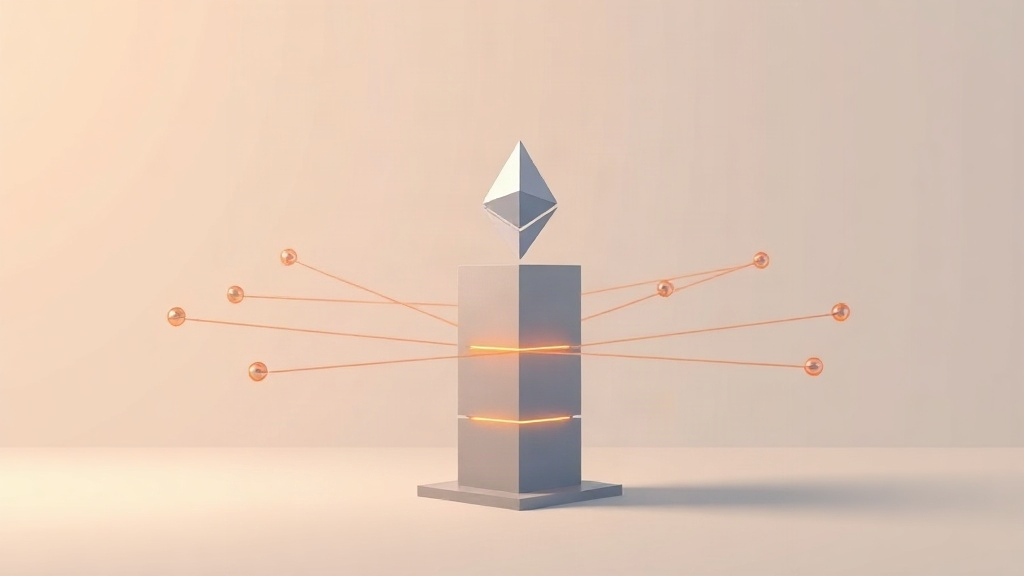
Ethereum's evolution directly defines the boundaries of blockchain technology's ability to solve real-world problems.
- Rise and Fall of the Layer 2 Ecosystem: The Ethereum mainnet, as the security and settlement layer, has upgrades (such as Dencun) that directly determine the cost and performance limits of Layer 2 networks like Arbitrum, zkSync, and Base, driving the development of modular blockchain architecture.
- Developer and User Migration: Lower fees and a better experience can attract more developers and users to the Web3 space; conversely, it could lead to ecosystem vitality shifting to other Layer-1 blockchains.
- Industry Standards and Narratives: Ethereum's de facto standard status in DeFi, NFTs, DAOs, and other areas means its technical choices (such as ERC standards) and governance models (such as the community-driven EIP process) serve as important references for the entire industry.
Competitive Landscape and Diverse Future
Despite its immense influence, the assertion that "Ethereum determines everything" is too absolute. Competitors like Solana, Cardano, Avalanche, and BNB Chain each have advantages in transaction speed and fees, vying for specific application scenarios and markets. Furthermore, the emergence of new paradigms such as modular blockchains and application-specific chains suggests that the future is more likely to be a multi-chain ecosystem with interoperable collaboration, rather than a monopoly by a single chain. Ethereum's future will be defined by its coexistence and competition with these rivals, collectively shaping the future of blockchain.

Conclusion
Ethereum's future is undoubtedly the most important piece of the blockchain's future puzzle, but not the only one. Its continuous efforts to solve the scalability trilemma (scalability, security, decentralization) through ongoing upgrades will explore viable technical paths for the entire industry. However, the future of blockchain will ultimately be determined by technological innovation, market choice, regulatory environment, and the collective evolution of numerous networks. Ethereum's role is more akin to a pioneer and a foundational builder; its success will greatly influence the journey, but the final destination will be reached by the entire fleet.